Showing posts with label Osan. Show all posts

Friday, May 25, 2012

U.S. and Korean pilots expand partnerships through bilateral training

By Staff Sgt. Stefanie Torres
51st Fighter Wing Public Affairs

Two Republic of Korea Air Force KA-1 Woongbi forward air control aircraft pilots flew to Osan Air Base to train with their U.S. counterparts May 22-23. Aptly named the Buddy Wing program, these ROKAF pilots from the 237th Tactical Control Squadron at Seoul Air Base conduct bilateral training with the U.S. Air Force a few times a year. (U.S. Air Force photo by Staff Sgt. Stefanie Torres) Hi-res

5/25/2012 - OSAN AIR BASE, Republic of Korea -- Two Republic of Korea Air Force KA-1 Woongbi forward air control aircraft pilots flew to Osan Air Base to train with their U.S. counterparts May 23-25.

Aptly named the Buddy Wing program, these ROKAF pilots from the 237th Tactical Control Squadron at Seoul Air Base conduct bilateral training with the U.S. Air Force a few times a year, explained 1st Lt. Dustin Merritt, 25th Fighter Squadron A-10 Thunderbolt II pilot.

For this scenario, the Korean pilots flew alongside A-10 pilots from the 25th Fighter Squadron for forward air control airborne missions. "For this mission, the KA-1s communicated with the guys on the ground and the A-10s were used as the fighters," he said. "The purpose of this program is for us to exchange ideas and share tactics in operability between Air Force and ROKAF fighter squadrons."

Interactions like this Buddy Wing event, place the ROKAF pilots in the same briefings and flying rules as U.S. pilots, which is all a part of working together as a combined force.

"The best part about training with the Koreans is getting to know them and interacting with them," said Merritt. "We get to learn from each other, and it's a great experience."

The language barrier can pose a challenge, he explained, but translators were used during the training. For the most part, they train and fight for a common goal to protect and defend the Republic of Korea.

See slideshow for photos of KA-1 aircraft arrival to Osan Air Base.

Source

Please note: At the moment, 51st Fighter Wing Public Affairs didn't release any related A-10C shot.

Wednesday, May 2, 2012

Moody Airmen support Korea

by Airman 1st Class Jarrod Grammel
23d Wing Public Affairs

A-10C Thunderbolt II prepare to depart for a deployment at Moody Air Force Base, Ga., April 23, 2012. The aircraft are assigned to the 75th Fighter Squadron that recently had Airmen deploy for six months in support of operations at Osan Air Base, Republic of Korea. (U.S. Air Force photo by Staff Sgt. Ciara Wymbs) Hi-res

5/1/2012 - MOODY AIR FORCE BASE, Ga. -- On April 22, couples embraced and parents played with their children one last time while waiting to board an aircraft bound for Osan Air Base, Republic of Korea.

Approximately 250 pilots, maintenance and other support personnel deployed to support A-10C Thunderbolt IIs. The 75th Fighter Squadron trains to provide close air support, forward air control and personnel recovery capabilities, enabling the U.S. Pacific Command commander to carry out his mission in a time of war. The team of Airmen is deployed as an expeditionary force for approximately six months.

However, for the Airmen on the flightline waiting to leave, many had mixed feelings. The excitement of seeing a new part of the world was balanced with leaving their loved ones behind.

"I'm excited to travel and get the opportunity to experience other cultures," said Staff Sgt. Brandon Hill, 23d Aircraft Maintenance Squadron electrical and environmental craftsman. "It hurts to be leaving my home. I know it will be hard at first but I will be looking forward to getting back home."

Airman 1st Class Kody Fields, 23d Aircraft Maintenance Squadron A-10 crew chief, had similar feelings. This will be his first deployment, and he will be leaving behind his wife, Amy, and son, Titus.

"It is bittersweet," said Fields. "I'm glad to get out there to complete the mission and do my family name proud. But it's going to be hard not coming home to my family at night. "It is exciting to go out there and do what I'm trained to do," he added. "This is what I joined for. It is an excellent opportunity to get out there and get some real experience."

For these professionals, the mission of providing air power stays the same, only the place has changed.

As the hours passed and the sun went down, the Airmen said their final goodbyes and as they boarded a plane, they took their last step on Moody until their return in six months.

A-10C Thunderbolt II, assigned to the 75th Fighter Squadron taxi down the flightline prior to take off at Moody Air Force Base, Ga., April 23, 2012. Airmen assigned to the 75th FS and 23d Aircraft Maintenance Squadron deployed to support operations at Osan Air Base, Republic of Korea as an air expeditionary fighter squadron. (U.S. Air Force photo by Staff Sgt. Ciara Wymbs) Hi-res

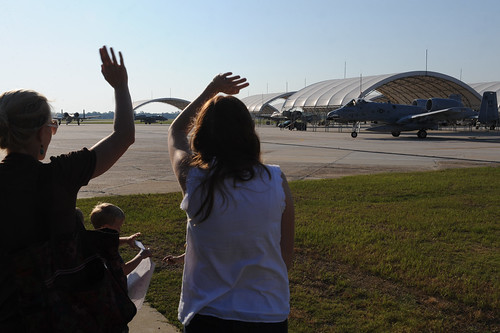
Families of Airmen assigned to the 75th Fighter Squadron wave goodbye to deploying Airmen at Moody Air Force Base, Ga., April 23, 2012. While at Osan, 75th EFS pilots will fly a combination of close air support, airborne forward air controller and search and rescue training sorties. (U.S. Air Force photo by Staff Sgt. Ciara Wymbs) Hi-res

Source

Thursday, April 26, 2012

Osan's jets participate in Beverly Midnight 12-02

by Staff Sgt. Stefanie Torres 51st Fighter Wing Public Affairs

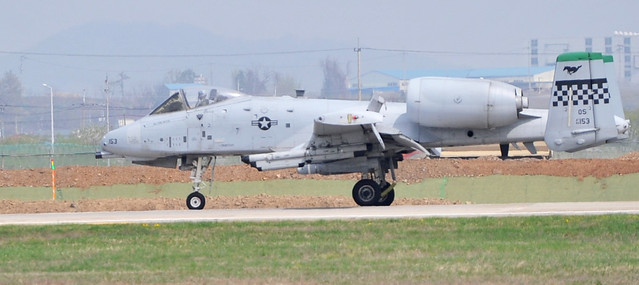
Pictured is A-10C 153 from the 25th Fighter Squadron. (U.S. Air Force photo by Staff Sgt. Stefanie Torres) Hi-res

4/26/2012 - OSAN AIR BASE, Republic of Korea -- The first A-10 Thunderbolt II sorties for operational readiness exercise Beverly Midnight 12-02 return to the Osan Air Base flight line, April 24, 2012. Beverly Midnight 12-02 is the second half of a two-week consolidated unit inspection where Osan Air Base Exercise Evaluation Team members are graded by Pacific Air Force inspectors on how well they conduct an ORE. Osan's Airmen provide combat ready forces for close air support, air strike control, counter air, interdiction, theater airlift, and communications in the defense of the Republic of Korea, and the ORE tests these abilities during a heightened state of readiness.

Source

Tuesday, April 24, 2012

PACAF inspectors check Osan readiness

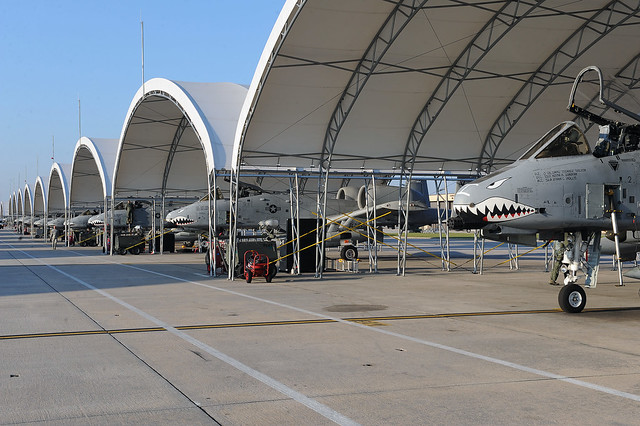
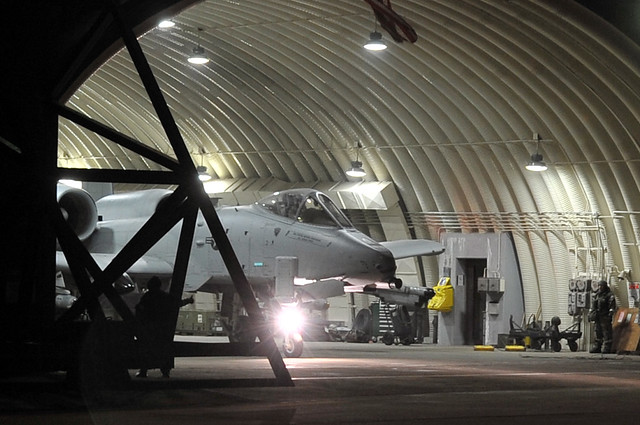
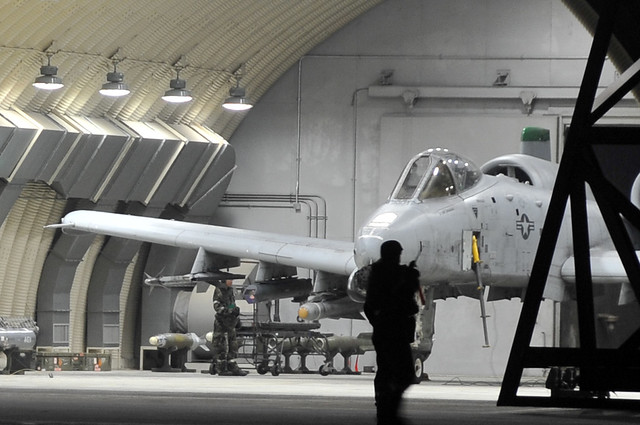
An A-10 Thunderbolt II sits inside a hardened aircraft shelter awaiting weapons loading during Beverly Midnight 12-02, an operational readiness exercise at Osan Air Base, Republic of Korea, April 23, 2012. BM 12-02 is the second half of Team Osan’s two-week consolidated unit inspection. (U.S. Air Force photo by Staff Sgt. Craig Cisek) Hi-res

by Airman 1st Class Michael Battles
51st Fighter Wing Public Affairs


4/22/2012 - OSAN AIR BASE, Republic of Korea  -- Team Osan reported for duty April 22 in response to a base-wide recall for operational readiness exercise Beverly Midnight 12-02.

Beverly Midnight 12-02 is the second half of a two-week consolidated unit inspection where Osan Air Base Exercise Evaluation Team members are graded by Pacific Air Force inspectors on how well they conduct an ORE.

"Operation Readiness Exercises are great opportunities to put all our training together and demonstrate our ability to defend, execute and receive," said Col. Mark DeLong, 51st Fighter Wing vice commander.

Last week Osan completed the first part of the CUI where more than 100 inspectors went over the programs, plans and procedures for the base.

Throughout week two EET will evaluate Osan Airmen's ability to survive and operate in a wartime environment, as well as defend the base, execute combat operations and receive follow-on forces.

"Our exercises also have a 'real world' purpose," DeLong said.. "By demonstrating our outstanding ability to fight and win tonight, we send a powerful message to our adversary up north."

During the week, Airmen will showcase their ability to position, employ and sustain forces during a variety of simulated attacks and simulations. Participants will also demonstrate the ability to administer self-aid and buddy-care and survive and operate in a chemically contaminated environment.

"We're off to a great start, and we've done some great preparation over the last several months," said Maj. Glen Goossen, 51st Fighter Wing exercise and plans. "As long as Osan Airmen continue to execute in world-class fashion, the rest of the inspection will take care of itself."

Results of Osan's CUI and ORE will be released during a base-wide commander's call April 30.


Source

Tuesday, March 20, 2012

Fire breathing launch: Osan's jets are ready

by Staff Sgt. Craig Cisek
51st Fighter Wing Public Affairs

3/19/2012 - OSAN AIR BASE, Republic of Korea -- As the sun begins to rise March 20, 2012, F-16 Fighting Falcons and an A-10 Thunderbolt II launch from Osan Air Base as part of the operational readiness exercise Beverly Midnight 12-01. Osan's Airmen provide combat ready forces for close air support, air strike control, counter air, interdiction, theater airlift, and communications in the defense of the Republic of Korea, and the exercise tests these abilities during a heightened state of readiness


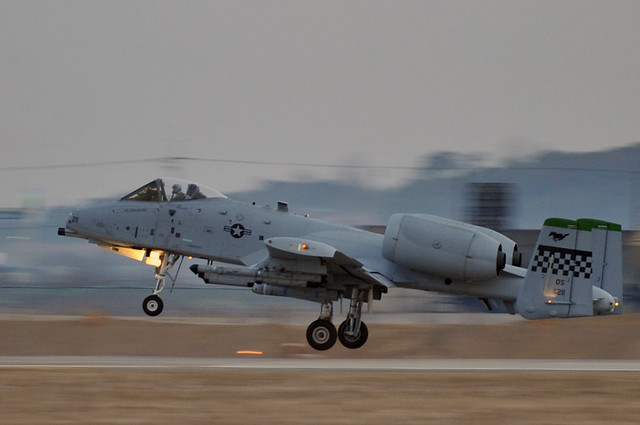
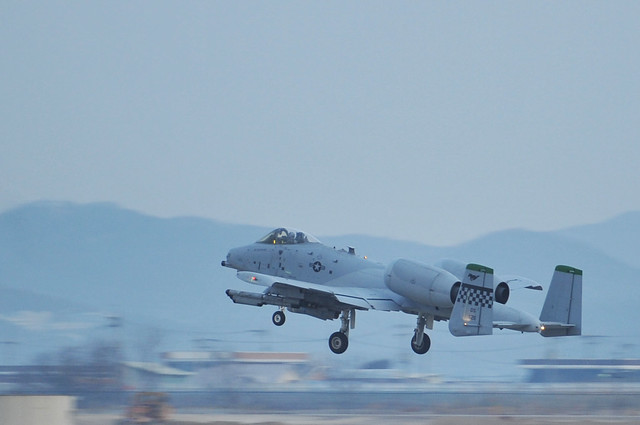
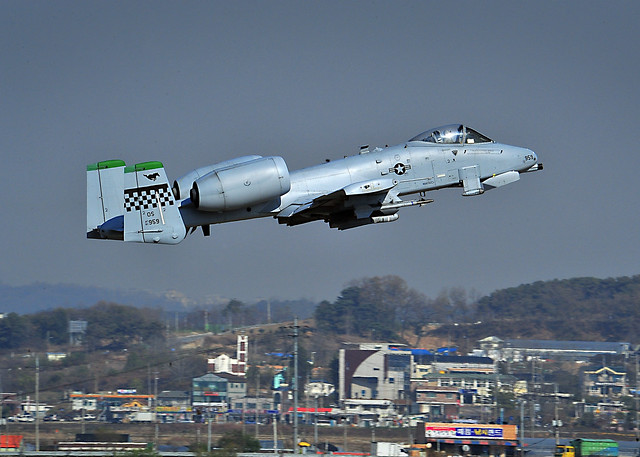
The first A-10 Thunderbolt II sortie for operational readiness exercise Beverly Midnight 12-01 takes off from Osan Air Base, March 20, 2012. Osan’s Airmen provide combat ready forces for close air support, air strike control, counter air, interdiction, theater airlift, and communications in the defense of the Republic of Korea, and the exercise tests these abilities during a heightened state of readiness. (U.S. Air Force photo by Staff Sgt. Craig R. Cisek) Hi-res


The first A-10 Thunderbolt II sortie for operational readiness exercise Beverly Midnight 12-01 takes off from Osan Air Base, March 20, 2012. Osan’s Airmen provide combat ready forces for close air support, air strike control, counter air, interdiction, theater airlift, and communications in the defense of the Republic of Korea, and the exercise tests these abilities during a heightened state of readiness. (U.S. Air Force photo by Staff Sgt. Craig R. Cisek) Hi-res

Note: Pictured is A-10C 79???-0211 from the 25th Fighter Squadron.

Source

Tuesday, March 13, 2012

Jets require 'health' assessment to stay fit to fight

by Staff Sgt. Stefanie Torres
51st Fighter Wing Public Affairs


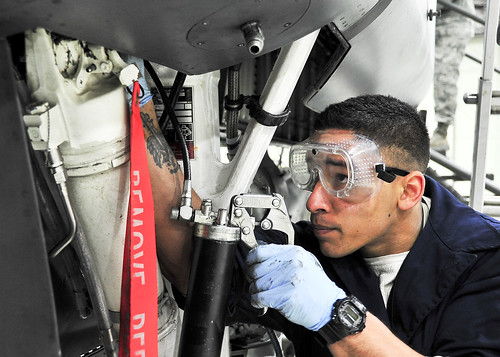
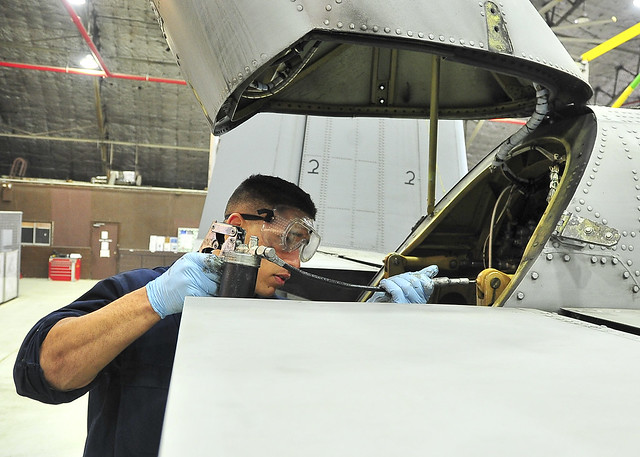
Senior Airman Christopher Blackstone, 51st Maintenance Squadron phase crew chief, applies lubrication to the nose landing gear struts of an A-10 here, March 7, 2012. Blackstone is applying the lubrication to ensure points are able to maneuver freely without corrosion. (U.S. Air Force photo by Senior Airman Adam Grant) Hi-res


3/7/2012 - OSAN AIR BASE, Republic of Korea -- Airmen are required to be fit to fight, and same goes for aircraft.

Osan's F-16 Fighting Falcons and A-10 Thunderbolt IIs are constantly flying. Just like Air Force members are required to get an annual health assessment, aircraft go through a similar process through the phase dock.

"Our aircraft go through an in-depth inspection after so many hours," said Staff Sgt. Matthew Torres, floor chief for the phase dock process. "During the phase process, we are looking at areas that we don't normally look at when (aircraft) are on a normal flying schedule."

Jets are taken through an extensive inspection that requires them to be taken apart and pieced back together in order for maintainers to view every detail of the aircraft.

"Once the jet comes in, they de-panel it, start removing parts and perform leak checks, and they also look for cracks and anything else on the aircraft that is not normally seen on the flightline."

Jets go through a lot of stressors and have some natural wear and tear, especially as aircraft parts get older, Torres explained. Often maintenance crews can patch up the planes and go, but for every 500 hours of flying, a more extensive maintenance process is required.

The aircraft go through two phases; phase dock teams are allotted five days in the first phase and 10 days in the second phase. Specialized equipment can be used to pinpoint problems that can't be physically seen as planes are disassembled and pieced back together.

Senior Airman William Lavender, 51st Maintenance Squadron non destructive inspection journeyman, uses electric currents to look for cracks that can cause structural problems later.

"The machine sends off what is called an eddy current, and if there is a crack, the current will come back and show it on the machine," he said. "We also X-ray certain parts and go through the sheet metal shop to see if we can fix it. We do what we have to in order to get the plane flying again."

Attention to detail is especially important when it comes to the safety of the aircrew and to keep the aircraft in good condition.

"There are critical inspection areas that we look at, and some areas have a higher chance for something to be wrong, so we pay close attention to that," Torres said. "Each piece is critical to the aircraft, so we make sure that those areas are good to go and that there's nothing damaged, broken or out of limits. So it's important to make sure that the aircraft are structurally sound and we continue to give aircrew safe, reliable airplanes."

After the process is complete, the jets are reintroduced to the flightline and ready to fly again. Phase dock personnel then repeat the process with another aircraft due for a "health" assessment.


Senior Airman Christopher Blackstone, 51st Maintenance Squadron phase crew chief, applies lubrication to different parts of an A-10 here, March 7, 2012. The lubrication placed on the different parts of the aircraft ensures the aircraft maneuvers properly. (U.S. Air Force photo by Senior Airman Adam Grant) Hi-res

Note: That's a rare view of a raised A-10 tail cone.

Source

Thursday, March 1, 2012

US Air Force A-10s in Korea Complete 30 Years of Service

by John A. Okonski
51st Fighter Wing Historian


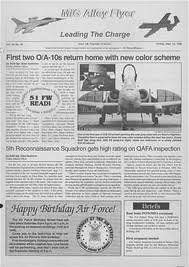
Front page of Osan's newspaper MiG Alley Flyer from Sept. 15, 1995. Osan's paper changed it's name to MiG Alley Flyer in 1982.

2/28/2012 - OSAN AIR BASE, Republic of Korea -- Although President Obama's Fiscal Year 2013 Department of Defense budget proposal recently presented to Congress calls for inactivation of five of the 16 A-10C Thunderbolt II squadrons from the U.S. Air Force active, reserve, and air national guard inventory, the 25th Fighter Squadron at Osan Air Base will remain a vital air asset in the defense of the Republic of Korea.

The 25th FS became the last A-10A unit of the U.S. Air Force total force components to complete conversion to the A-10C in 2011. But, more importantly, the A-10 in the ROK recently reached an important milestone. Thirty years ago on Jan. 28 1982, the first two A-10As assigned to the 25th FS landed at Osan Air Base. These aircraft served as trainer aircraft for maintenance crews as the ROK Government completed construction of facilities at Suwon Air Base to serve as the main operating base for the A-10A.

A little more than a month later, on March 3, 1982, the first six operational A-10As landed at Suwon to begin a new era of deterrence and offensive firepower of the US Air Force in the ROK. By January 1983, the 25th FS was equipped with 26 A-10As to include the two trainer aircraft.

The A-10 was the first U.S. Air Force aircraft specially designed and built for close air support of ground forces. Its development resulted from the deadly experiences of numerous jet fighters and US Army helicopters being shot down over South Vietnam. The U.S. Air Force consequently initiated a design study in 1967 for a low-cost attack aircraft that could have long loiter time, low-speed maneuverability, massive cannon firepower, and extreme survivability. Fairchild-Republic, which was awarded the contract on March 1, 1973, built the aircraft essentially around its 30mm GAU-8/A Gatling gun that can fire 3,900 rounds a minute. Coupled with a large ordnance capacity, the A-10 is particularly effective against enemy armor and tanks.

Discussions between the U.S. and ROK Governments to base an A-10 squadron in the ROK had been ongoing since the mid 1970s as the A-10A entered the U.S. Air Force inventory on March 20, 1976 with the 355th Tactical Fighter Wing at Davis-Monthan Air Force Base, Ariz. Two 355 TFW A-10As deployed to Osan AB 15 months later on June 19, 1977 to participate in a combined ROK-US exercise to demonstrate its capabilities. Col. Ralph E. Adams, 355 TFS vice commander, had the distinction of landing the first A-10A in the ROK.

Earlier as the aircraft was being built, the U.S. experienced an inglorious withdrawal of military forces from South Vietnam in April 1975 followed by the fatal U.S.S Mayaguez incident off the coast of Cambodia in May 1975. These events greatly affected the American public, and in 1976, elected Jimmy Carter as president who, among his foreign affairs positions, advocated for withdrawal of all U.S. military forces from the ROK. Unlike the Vietnam setback, debate within Congress ensued during the next three years over this course of action. Later events proved the deliberate debate fortuitous regarding the long-standing U.S. military role in the ROK.

In early 1979, Soviet Union military forces entered Afghanistan. This event resulted in the Carter Administration reversing its position, and rethinking its military strategy in the Pacific and Far East. At the 12th ROK-U.S. Security Consultative Meetings held in Seoul in October 1979, Secretary of Defense Harold Brown announced that the U.S. would base an A-10A squadron in the ROK by the early 1980s with Suwon AB selected as the bed-down site.

The announcement resulted in Pacific Air Forces activating the 25th Tactical Fighter Squadron on February 1, 1981 in an unmanned status with assignment to the 51st Composite Wing (Tactical) at Osan AB. This move was preparatory to arrival of the A-10A. As the date neared for arrival of the A-10A on the ROK, the 25 TFS became fully manned with Maj Harry J. Keiling Jr as the first 25 TFS commander at Suwon AB. He flew the second A-10A into Osan AB on January 28, 1982 after Col. Eugene G. Myers, 51 CW (T) commander, landed the first A-10A on that date. Both members later flew the first two operational A-10As into Suwon AB.

Between March 3, 1982 and September 30, 1989, the 25 TFS operated with the 6151st Consolidated Aircraft Maintenance Squadron from Suwon AB. On September 23, 1989, the 25 TFS flew its last A-10A sortie from Suwon AB. Earlier, the squadron transferred 13 A-10As to the 19th Tactical Air Support Squadron between January and March 1989. The 19 TASS, assigned to the 5th Tactical Air Control Group at Osan AB, had been flying the OV-10 Bronco which, in turn, transferred its aircraft to stateside units. After September 30, 1989, the 25 TFS returned to unmanned status and finally was inactivated on July 31, 1990.

The 19 TASS later was assigned to the 51st Operations Group on October 1, 1990 as part of the service-wide "Objective Wing" reorganization directed by Air Force chief of staff, Gen. Merrill A. McPeak. Refinements to the "Objective Wing" concept continued over the following 3 years. McPeak further advocated that the most historic units replace newer unit designations. As a result, the 25th FS, which had been a charter unit of the 51st Fighter Group before World War II, replaced the 19 TASS designation on October 1, 1993.

Even though the A-10 proved its worth in combat during Operation Desert Storm in 1991, some U.S. Air Force planners wanted to retire the aircraft given extensive reductions in the military during the post-Cold War period. However, the A-10 survived these efforts, and has continued to serve exemplary during operations in Afghanistan.

During the 1990s, one measure the U.S. Air Force took to provide a more cost effective force structure given funding constraints was to inactivate a number of combat squadrons, but increase the number of aircraft in its remaining units. In 1995, the 25th FS went from a 12 primary aircraft authorized unit to 18. Four years later in 1999, the 25th FS again increased in authorized aircraft to 24.

Although the A-10 has been in the US Force inventory for more than 35 years, the US Air Force sought to extend its service life and improve combat capabilities. The A-10 service life has been extended through the Service Life Extension Program. Its combat capabilities have been upgraded with the latest weapons, targeting, and avionics technology through such programs as the low altitude safety and targeting enhancement system, Pave Penny laser tracking pod, liteningadvanced targeting pod, and precision engagement (PE) modifications. The latter program resulted in all A-10As being redesignated as A-10Cs.

Source

Wednesday, February 22, 2012

Child becomes Pilot-for-a-Day

by Staff Sgt. Stefanie Torres
51st Fighter Wing Public Affairs


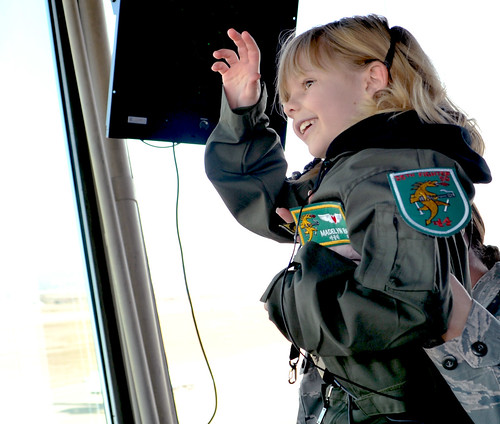
Madelyn Ray waves hello to an A-10 Thunderbolt II pilot while visiting Osan Air Base's traffic control tower Feb. 17, 2012. Madelyn is an honorary Pilot-for-a-Day, which consisted of touring the flightline and learning about the combat capabilities of the F-16 Fighting Falcon and A-10. Madelyn toured two fighter squadrons and the air traffic control tower, and flew in a simulator as part of her day. (U.S. Air Force photo by Staff Sgt. Stefanie Torres) Hi-res

Note: Madelyn wears the 25th Fighter Squadron patch.

2/21/2012 - OSAN AIR BASE, Republic of Korea -- Standing just over 4 feet tall, Madelyn Ray walks through the fighter squadron with a big smile as she prepares herself to become an honorary Pilot-for-a-Day here Feb. 17.

Touring two fighter squadrons and an air traffic control tower, and shooting the enemy in the flight simulator where she was eluded to as a "natural" were all a part of her big day as a flyer.

For her father, Master Sgt. Jerry Ray, 51st Civil Engineering Squadron Operations Management NCO in charge, his hopes are for her to take back the sense of responsibility Air Force members carry every day and to show her a part of the base not everyone gets to travel.

"This is not a part of the base that we see on an everyday basis," he said. "I believe it's a good experience for her to come over and see what our pilots do."

In only its second run, the program here is tailored to motivate school age children who may be struggling in school, which has been successful in the past, explained 1st Lt. Lance Tucker, 36th Fighter Squadron scheduler.

"We hope that it inspires them to realize that their goals could be limitless, and they can do whatever they put their mind to," he said. "The teachers from our last Pilot-for-a-Day said that his grades really turned around, especially in math, which is the class he was struggling in. So our goal is to give kids inspiration to do better in school."

Tucker worked with 1st Lt. Erik Gonsalvez, from the 25th Fighter Squadron, to put together the day-long program where the children receive their own flight suits, squadron patches and their own set of pilot wings.

Her tour consisted of learning to fly from a flight simulator; and viewing the cockpits of an A-10 Thunderbolt II from the 25th FS, and an F-16 Fighting Falcon from the 36th FS. Her visit also allowed her to watch A-10s take off and land from Osan's air traffic control tower, where a wave to an incoming pilot landed her a return "wiggle-waggle" from the Thunderbolt.

With two impressive aircraft at her reach, her favorite plane the A-10 left an impression, but it was the 36th FS's motto that made her want to change her name.

"My new name is going to be 'Harumph,'" said Madelyn. "I thought it was pretty awesome I got to do this. It's kind of scary with how big the planes are and to see how high they can go. I feel kind of happy about all the stuff I've learned, and I can't wait to tell my class about everything."

The 10-year-old was picked from her 4th grade class after her name was submitted in a drawing.

"I was excited, kind of nervous and really happy that I got chosen," she said.

However, being a pilot is going to take a back seat for now as she continues to go to school and work on cheerleading, even though Tucker feels she is well on her way.


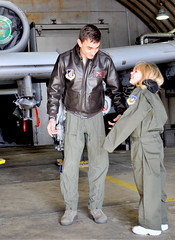
1st Lt. Lance Tucker, 36th Fighter Squadron scheduler, shows Madelyn Ray around the A-10 Thunderbolt II during Osan's Pilot-for-a-Day program Feb. 17, 2012. Madelyn toured two fighter squadrons and an air traffic control tower, and flew in a simulator as part of her day. (U.S. Air Force photo by Staff Sgt. Stefanie Torres) Hi-res

Source

Tuesday, January 31, 2012

A-10's prepare for first flight during Beverly Bulldog 12-01

Released by 51st Fighter Wing Public Affairs


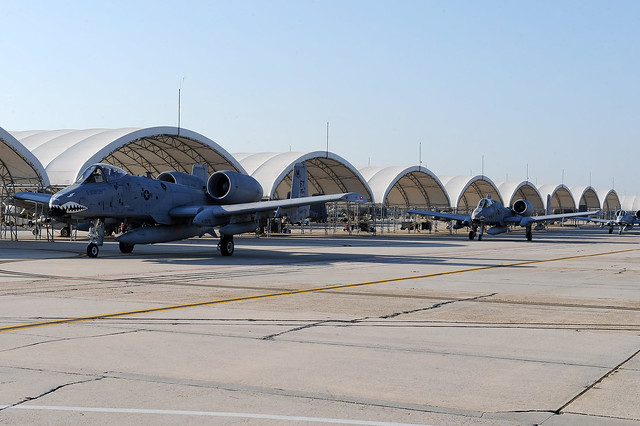
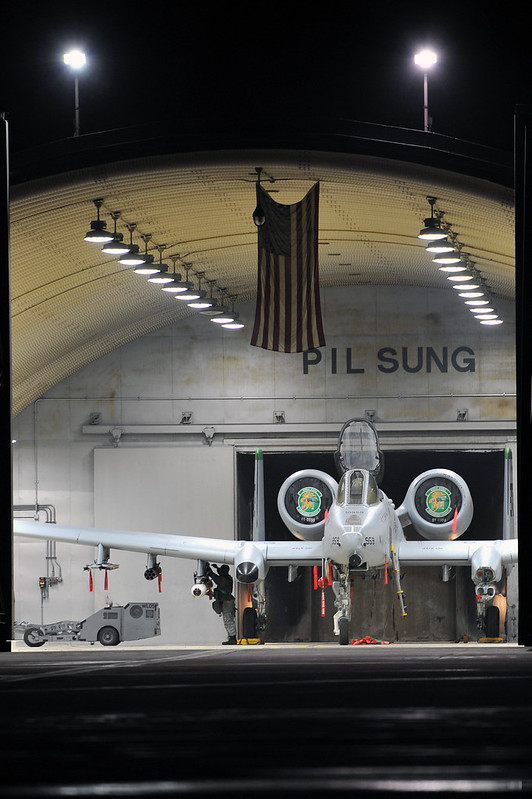
1/31/2012 - An A-10 Thunderbolt II from the 51st Fighter Wing is ready to taxi onto the flight line to start the flying mission as a part of exercise Beverly Bulldog 12-01 Jan. 31,2012. The exercise is a peninsula-wide operational readiness exercise held to train U.S. forces throughout South Korea. (U.S. Air Force photo/Staff Sgt. Craig R. Cisek) Hi-res

Note: Nice HAS (Hardened Aircraft Shelter) shot. But no chance to identify this "Hog" because lack of bow number (like in the next shot). Any "Hog" professional from Osan who can/will clear up that?


1/31/2012 - An A-10 Thunderbolt II from the 51st Fighter Wing is ready to taxi onto the flight line to start the flying mission as a part of exercise Beverly Bulldog 12-01 Jan. 31,2012. The exercise is a peninsula-wide operational readiness exercise held to train U.S. forces throughout South Korea. (U.S. Air Force photo/Staff Sgt. Craig R. Cisek) Hi-res

Note: SNIPER XR targeting pod on station 10.


1/31/2012 - Two A-10 Thunderbolt IIs from the 51st Fighter Wing taxi onto the flight line to start the flying mission as a part of exercise Beverly Bulldog 12-01 Jan. 31,2012. The exercise is a peninsula-wide operational readiness exercise held to train U.S. forces throughout South Korea. (U.S. Air Force photo/Staff Sgt. Craig R. Cisek) Hi-res

Note: Pictured in the foreground is A-10C 80-0283 from the 25th Fighter Squadron.

Source

Monday, January 30, 2012

Osan demonstrates mission readiness during exercise

by Airman 1st Class Michael Battles
51st Fighter Wing Public Affairs


Staff Sgt. Jimmy Mills, 25th Aircraft Maintenance Unit weapons load crew member, attaches a GBU-38 to an A-10 Thunderbolt II during an exercise at Osan Air Base, Republic of Korea Jan. 30. Beverly Bulldog 12-01 is the first week-long simulated wartime contingency exercise designed to test the base’s response during a wartime contingency. (U.S. Air Force photo by Staff Sgt. Stefanie Torres) Hi-res

1/30/2012 - OSAN AIR BASE, Republic of Korea -- Team Osan reported for duty Jan. 29 in response to a base-wide recall for operational readiness exercise Beverly Bulldog 12-01.

Beverly Bulldog 12-01 is the first week-long simulated wartime contingency exercise executed in the Republic of Korea for 2012.

Airmen are evaluated every quarter on their skills to survive and operate in a wartime environment, as well as defend the base, execute combat operations and receive follow-on forces.

"We exercise because of the location we are in," said Capt. Rommel Villanueva, 51st Fighter Wing plans and programs. "We need to be ready to defend Osan and the Republic of Korea; it's why we are here."

The base exercises regularly due to the high-threat area and large personnel turn over each year, he said.

During the week, Airmen will showcase their ability to position, employ and sustain forces during a variety of simulated attacks and situations. Participants will also demonstrate the ability to administer self-aid and buddy-care and operate in a chemical environment.

Another challenge during the exercise is the environmental elements participants must endure throughout the week, such as extreme cold and precipitation.

The 51st FW Safety office advises members to keep exposed skin to a minimum during cold weather and remember to hydrate.

"Every day, Team Osan proves they are capable of successfully executing the mission," said Col. Mark DeLong, 51st Fighter Wing vice commander. "This week will show that we have trained to defend, execute and receive and will highlight that we are ready to fight and win tonight."

In the spring, Osan Air Base will participate in a Consolidated Unit Inspection, which will evaluate the programs and mission readiness of the base.

Source
Wednesday, January 25, 2012

25th AMU wins Load Crew of the Quarter

by Staff Sgt. Stefanie Torres
51st Fighter Wing Public Affairs


Staff Sergeants Christopher DeGrizio (left) and Brian Crews, 25th Aircraft Maintenance Unit load crew members, work together to load a GBU-38 on an A-10 Thunderbolt II during the 4th quarter load crew competition here Jan. 20, 2012. The three-man team competed against the 36th AMU and won. They now compete against other load crews at U.S. Air Force bases in the Pacific. (U.S. Air Force photo by Staff Sgt. Craig Cisek) Hi-res

1/24/2012 - OSAN AIR BASE, Republic of Korea -- Two weapons loading teams competed against each other during the 4th quarter load crew competition here Jan. 20.

A three-person weapons load crew team under the 25th Aircraft Maintenance Unit loaded munitions onto an A-10 Thunderbolt II while another team under the 36th AMU loaded an F-16 Fighting Falcon during the competition.

"These two teams were the top-rated loaders for this quarter," said Senior Airman Jonathan Eusebio, 51st Maintenance Operations Squadron load crew trainer. "They had the greatest statistics from their individual squadrons, and now they are competing for the top spot for the base."

These competitions are always open for squadrons to watch as their top Airmen vie for the trophy, but the actual load is only a minor portion. The competitors also prepare for a written examination and a dress and appearance evaluation, Eusebio explained. Safety standards are extremely important in this type of environment, especially when teams are being graded for speed and accuracy.

Munitions loaders prepare the aircraft for combat, and working together as a team is a must in this high-stress environment, said Staff Sgt. Nathaniel Calvert, 36th Aircraft Maintenance Unit load crew member. Load crew members here practice day in and day out because they support the mission to continue to protect the Republic of Korea.

Even though a lot of pressure goes into the competition, it's all worth it to competitors, said Staff Sgt. Brian Crews, 25th AMU load crew member.

"This is my first competition and I'm ecstatic," he said. "We all know our jobs and it's great to be recognized in an organization like this."

"These competitions showcase our combat capabilities, improve morale and shows off their hard work," Eusebio said. "We are ready to fight tonight."

The 25th AMU took the lead in the competition for all categories. Team members include Staff Sergeants Dorinda Becker, Christopher DeGrizio and Crews. The winners will be submitted to compete against other Air Force bases in the Pacific.


Senior Master Sgt. James Faucette, 25th Aircraft Maintenance Unit weapons superintendent, performs dress and appearance inspections on the 25th AMU load crew team during the 4th quarter competition here Jan. 20, 2012. The 25th AMU won the competition and will go on to compete against other loaders in the Pacific Air Forces. (U.S. Air Force photo by Staff Sgt. Stefanie Torres) Hi-res

Please note: This photo includes Staff Sgt. Dorinda Becker, the third member of the team.

Source (including video)

Monday, November 28, 2011

Some more 25th Fighter Squadron A-10C shots of 2011 Air Power Day at Osan

The following additional photos of A-10Cs from the 25th Fighter Squadron, 51st Fighter Wing (PACAF), Osan AB, Republic of Korea (Tailcode OS), has been published on the well-recommended airliners.net:


What a great shot, taken on October 30, 2011! From front: A-10Cs 80-0283, ...183, 78-0685 and ...615 (possible 78-0615), all from the 25th Fighter Squadron. (Photo by Yunjin Lee - Korea Aero Photos)


October 30, 2011: A-10C 80-0283 from the 25th Fighter Squadron. (Photo by Chang Kyu Kim - Korea Aero Photos)


October 30, 2011: A-10C 78-0685 from the 25th Fighter Squadron drops flares. (Photo by Yunjin Lee - Korea Aero Photos)

Thursday, November 17, 2011

First Osan sorties take off during peninsula wide exercise

Released by 51st Fighter Wing Public Affairs


11/16/2011 - An A-10 Thunderbolt II, close air-support aircraft, takes off from Osan Air Base, Republic of Korea Nov. 15, 2011, during Beverly Bulldog 11-03, a peninsula-wide operational readiness exercise. The exercise allows Airmen to demonstrate their ability to complete the mission in a simulated hostile environment while executing their primarily duties. (U.S. Air Force photo by Staff Sgt. Daylena Gonzalez) Hi-res

Note: Pictured is A-10C 81-0959 from the 25th Fighter Squadron.

Thursday, November 10, 2011

25th Fighter Squadron A-10C drops flare galore during 2011 Air Power Day at Osan

By Joachim Jacob, Warthog News Editor

The following stunning shots, both taken on October 30, 2011, has been published on Airliners.net. Pictured is A-10C 78-0615 from the 25th Fighter Squadron, 51st Fighter Wing (PACAF), Osan AB, Republic of Korea.


(Photo by Yunjin Lee - Korea Aero Photos) Full size


(Photo by Andreas Zeitler - Flying-Wings) Full size

Monday, November 7, 2011

From student to pilot

Released by 51st Fighter Wing Public Affairs


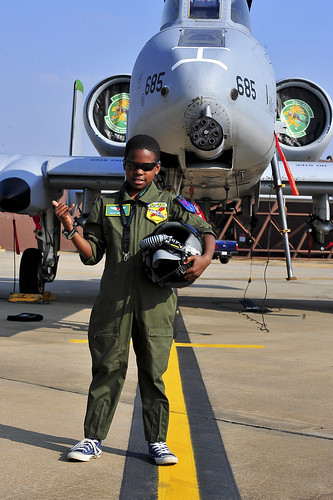
Miles Bryant, pilot for a day, poses for a photo in front of an A-10 Nov. 3, 2011. Miles is a 5th grader selected for the pilot for a day program out of 18 students from grade levels k-12. (U.S. Air Force photo by Senior Airman Adam Grant) Hi-res

Note: Pictured is A-10C 78-0685 from the 25th Fighter Squadron.


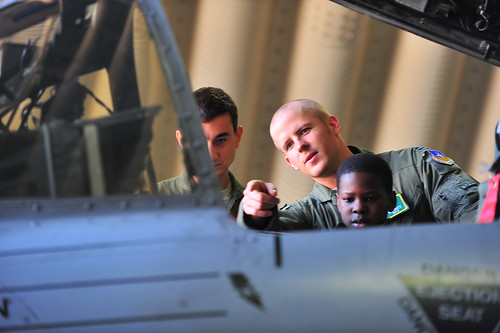
1st Lt. Dustin Merritt, 25th Fighter Squadron pilot, gives Miles Bryant a tour of the A-10 Nov. 3, 2011. (U.S. Air Force photo by Senior Airman Adam Grant) Hi-res


1st Lt. Erik Gonsalves, 25th Fighter Squadron pilot, gives Miles Bryant a tour of the A-10 Nov. 3, 2011. (U.S. Air Force photo by Senior Airman Adam Grant) Hi-res


Miles Bryant, pilot for a day, gives the thumbs up after placing his helmet on Nov. 3, 2011. Throughout the day Miles received mission briefings, as well as tours of both the 25th and 36th Fighter Squadrons. (U.S. Air Force photo by Senior Airman Adam Grant) Hi-res

Monday, October 31, 2011

Osan, ROK showcase capabilities at Air Power Day


More than 50,000 service members and Korean spectators looked toward the sky and witnessed aerial stunts, jumps and performances from across the globe, at Air Power Day 2011 here, Oct. 29 and 30. A-10's perform a high speed fly by, wing tip to wing tip formation. (U.S. Air Force Photo by Staff Sgt. Daylena Gonzalez) Hi-res

Note: Pictured (from top) are A-10Cs 685, 183 and 283, all three from the 25th Fighter Squadron.

by Airman 1st Class Michael Battles
51st Fighter Wing Public Affairs

10/30/2011 - OSAN AIR BASE, Republic of Korea -- More than 50,000 visitors looked toward the sky and witnessed aerial acts from across the globe at the 2011 Air Power Day at Osan Air Base Oct. 29 and 30.

Headlining Air Power Day was the Republic of Korea Air Force's official aerial demonstration team the Black Eagles. Their overwhelming force and precise aerobatic formations brought roaring cheers from the crowd as well as some tears of joy from a few spectators at the event.

The audience also witnessed performances by Air Combat Command's A-10 Thunderbolt II demonstration team, ROKAF's T-50 Golden Eagles and a fly-over by the Air Force's U-2 reconnaissance and surveillance aircraft.

"I've been to this event four times," said Taegyu Kim, APD spectator. "I love airplanes, so I thank the Air Force for having this event; it's a great way for Koreans to build relationships with American military."

Spectators not only got a chance to get an up close look at Osan's war fighting capabilities such as the F-16 Fighting Falcon and A-10, but many Air Force airframes including the C-17 Globemaster III, C-130 Hercules and KC-135 Stratotanker.

The demonstration of air power also included static displays of ROKAF's mobility capabilities like the F-5E Tiger II and F-4 Phantom II.

Taking a break from the skies on-lookers were treated to ground demonstrations by the 51st Security Forces dog handlers, Combat Search and Rescue, as well as Osan's honor guard.

"From the months of planning to setting up the air show to the final FOD walk on Monday morning, members of Team Osan came together to give us a memorable weekend," said Col. Patrick McKenzie, 51st Fighter Wing commander. "This weekend has given Team Osan a chance to build partnerships not only with our Republic of Korea Air Force counterparts, but the Korean community as a whole."

With the touchdown of the A-10 Oct. 30, which was the final aerial demonstration for the day the sound of the ROKAF band filled the air as the final performance for the two-day event.

"This was a great event,' said Staff Sgt. Robert Drew, 51st SFS APD augmentee. "This weekend we truly got to show Korea air power at its best."

Source

Tuesday, October 18, 2011

Airman Spotlight: First Lieutenant Ian Osterreicher

51st Fighter Wing Public Affairs spotlights A-10C pilot First Lieutenant Ian Osterreicher from the 25th Fighter Squadron:


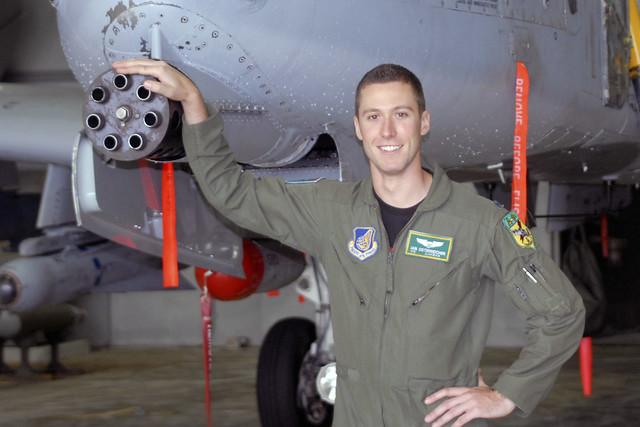
First Lieutenant Ian Osterreicher, 25th Figther Squadron. (U.S. Air Force photo by 1st Lt. Sara Greco) Hi-res

from Staff Reports 51st Fighter Wing Public Affairs

10/16/2011 - OSAN AIR BASE, Republic of Korea -- Name: First Lieutenant Ian Osterreicher

Unit: 25th Fighter Squadron

Job title: A-10C Attack Pilot; Weapons Tracking Officer; Squadron Duty Officer

Job description and its impact on the overall mission:
- CMR A-10 pilot; maintains readiness for day, night & adverse weather CAS, CSAR & air interdiction combat msns
- Trains to conduct air strikes in support of United Nations ground forces in critical airspace near Demilitarized Zone
- Responsible for processing/tracking/validating all weapons deliveries to ensure CMR status for 51 FW A-10 pilots
- Squadron Duty Officer; problem-solving liaison between operations and maintenance ensuring the success of up to 52 daily sorties

Time in the military: 3+ years

Time at Osan: 8 Months

DEROS: September 2012

Family: Single

Hometown: East Amherst, NY

Hobbies: Activities, lots of them ... biking, hiking, snowboarding, hockey, exploring Korea and learning the language.

Why did you join the military? To serve my country

Where do you see yourself in 10 or 20 years? Still flying the A-10C supporting our ground troops!

What do you do for fun here? The current Draggin LPA and I enjoy traveling to a new city in Korea every chance we get.

What's your favorite Air Force memory or story? Red Flag Alaska 11-2; shooting the gun, mavericks and dropping bombs then flying LATNs through the Alaskan mountain ranges.

What accomplishment are you most proud of? Flying the A-10C

Who are your role models? My father and Robin Olds

Source

Please note: On October 19, 2011, Ian's father told me via e-mail: Sooner or later I knew you'd get a photo of him. Thanks for posting. At least he can't blame me for his own base PR. Once again thanks for all you do to keep the A-10 community updated, I greatly appreciate it. (By the way: I'm in personal contact with Ian's father since a couple of months)

Tuesday, October 11, 2011

25th AMU takes load crew competition honors


Staff Sgt. Malinda Lyons, Staff Sgt. Kenneth Thompson, and Airman 1st Class Charles Clayton, Crew 3 of the 25th Aircraft Maintenance Unit won the 3rd Quarter Load Crew Competition Oct. 4. (U.S. Air Force photo by Tech. Sgt. Eric Petosky)

by Tech. Sgt. Eric Petosky
51st Fighter Wing Public Affairs

10/11/2011 - OSAN AIR BASE, Republic of Korea -- Weapon loaders from the 25th Aircraft Maintenance Unit won the 3rd Quarter Load Crew Competition Oct. 4, putting the travelling trophy back into Osan Air Base hands.

Staff Sgt. Malinda Lyons, Staff Sgt. Kenneth Thompson, and Airman 1st Class Charles Clayton, Crew 3 of the 25th AMU, defeated Staff Sgt. Chris Fleming, Staff Sgt. Terry White, and Airman 1st Class Jack Eiler, Crew 5 of the 36th AMU. Crew 3 wrested the top title from the 354th EAMU which had won the competition for the first and second quarters of 2011.

Crew 3 scored 801 points out of 1,000 possible, compared to the Crew 5 which scored 651. The crews scored points based on a 25-question weapons knowledge test, dress and appearance inspection, tool kit inspection, and overall technical accuracy while loading a GBU-31 bomb and AIM-9LM on an aircraft.

"There's a lot of effort that goes into training these crews every day, and the competition is the culmination of that effort," said Chief Master Sgt. Mike Burton, 51st Maintenance Group, wing weapons manager. "We're at the tip of the spear here - only 60 minutes away from the DMZ. We can be called upon to generate combat airpower on very short notice. These weapons loaders make that combat airpower possible. I'm very proud of their accomplishments."

The 25th AMU will defend their bragging rights during the Weapons Load Crew of the Year competition.


Staff Sgt. Malinda Lyons (left), 25th Aircraft Maintenance Unit weapons loader, signals instructions to Airman 1st Class Charles Clayton while loading a GBU-31 bomb on an A-10 during the 3rd Quarter Load Crew Competition Oct. 4. Crew 3 from the 25th AMU won the competition. (U.S. Air Force photo by Tech. Sgt. Eric Petosky)

Source

Note: Pictured in the photo on top is A-10C 78-0716 from the 25th Fighter Squadron.

Wednesday, September 21, 2011

Bulldogs and MXG return from Osan


DAVIS-MONTHAN AIR FORCE BASE, Ariz. – Lt. Col. Clarence Johnson, 354th Fighter Squadron commander, navigates an A-10 into a sunshade after returning here from Osan Air Base, Republic of Korea Sept. 19. Members of the 354th FS, as well as squadron assets and members of the 355th Maintenance Group, recently returned from a 6-month deployment in Osan. (U.S. Air Force photo by Airman 1st Class Timothy D. Moore)

by Airman 1st Class Saphfire Cook
355th Fighter Wing Public Affairs

9/20/2011 - DAVIS-MONTHAN AIR FORCE BASE, Ariz. -- Airmen from the 354th Fighter Squadron and the 355th Maintenance Group returned here from a deployment Sept. 19.

Pilots, maintainers and other personnel were deployed to Osan Air Base, Republic of Korea for a six-month tour.

Six A-10s piloted by members of the 354th FS taxied onto the D-M flightline around 3 p.m.

"I'm just so excited for him to come home," said Nicole Yoakley, whose husband Capt. William Yoakley, 354th FS, was one of the returning pilots. "I'm especially excited for him to see Claire, our daughter, because she's grown so much since he's been gone."

As the pilots pulled into separate sunshades, the families were told which jet contained their loved-one.

"She's gotten so big, and she talks so well now," said Captain Yoakley of Claire Yoakley after he'd greeted his family.

Personnel and equipment from the 354th FS and 355th MXG arrived in a C-17 at approximately 6:45 p.m. and were bused to the hangar where their families waited.

"He's been gone for seven months," said Rhonda Zielinski of her husband Chief Master Sgt. Michael Zielinski, 354th Aircraft Maintenance Unit.

Also in the welcoming party was Chief Zielinski's grandson, Isaiah, who was born while he was deployed.

"This is the first time he's going to see Isaiah in person, so we can't wait for him to get off that bus," Mrs. Zielinski said.

Returnees piled off the bus and were warmly welcomed by family members, co-workers and commanders.

"The only pictures I've ever seen were from when he was first born," Chief Zielinski said. "He's grown so much already."

Before the families were released for the night, Col. Mark Murphy, 355th Maintenance Group commander, had a few words for the returnees.

"I just wanted to personally thank you all for your service to this great country," Colonel Murphy said. "Welcome home."

Lt. Col. Terry Koester, 355th Aircraft Maintenance Group commander, had a message for the spouses.

"Thank you to the spouses and families who came out for this homecoming," Colonel Koester said. "While your Airmen have been away working hard and fighting the good fight, you all have been here taking care of the home front."

The pilots, personnel and equipment from D-M were deployed to Osan to help with the defense of the Republic of Korea and to maintain stability in Northeast Asia.


DAVIS-MONTHAN AIR FORCE BASE, Ariz. – Capt. William Yoakley, 354th Fighter Squadron A-10 pilot, greets his family as he returns here from a deployment Sept. 19. Captain Yoakley just was on a six-month deployment at Osan Air Base, Republic of Korea. (U.S. Air Force photo by Airman 1st Class Timothy D. Moore) Hi-res

Source

Saturday, September 10, 2011

Osan maintainer awarded for discovering a better way to troubleshoot a fuel-flow problem with the A-10

Released by 51st Fighter Wing Public Affairs on their public website's photo section, titled: What could you do with 10,000 dollars


Tech. Sgt. Tremaine Smith, 51st Maintenance Group, was recently awarded $10,000 through the IDEA program for discovering a better way to troubleshoot a fuel-flow problem with the A-10 Thunderbolt II close air support aircraft. He fought for almost two years to make the change, which was finally approved and saved the Air Force almost $90,000. (U.S. Air Force photo by Tech. Sgt. Chad Thompson)


The fuel-flow transmitter regulates the fuel that goes to the engine and sends a signal back to the pilot that tells how much fuel is being sent to the engines. "It's a critical system component that gets the engines going and keeps the aircraft in the air," Tech. Sgt. Tremaine Smith said. "Without it the pilots would never get off the ground." Hundreds of feet of wire connect the fuel-flow gauge in the cockpit to the fuel-flow transmitter in the engine. Smith found two wires that were swapped in this harness that was causing a problem in an A-10 Thunderbolt II when he was stationed at Davis Monthan Air Force Base, Ariz. (U.S. Air Force photo by Tech. Sgt. Chad Thompson)


Tech. Sgt. Tremaine Smith holds the seven-pin cannon plug that connects the A-10 Thunderbolt II close air support aircraft engine to the fuel-flow transmitter. Smith found two wires that were swapped that was causing a fuel-flow problem. (U.S. Air Force photo by Tech. Sgt. Chad Thompson)


A view of the 39-pin cannon plug (top right) that connects the A-10 Thunderbolt II close air support aircraft engine to the fuel-flow gauge in the cockpit. Smith found two wires that were swapped in the wiring harness that was causing a fuel-flow problem. Hundreds of feet of wire connect the fuel-flow gauge in the cockpit to the fuel-flow transmitter in the engine. Had Smith not found the issue with the swapped wires the next step in the technical orders would have been replacing the wiring harness, which would have taken hundreds of man hours and cost hundreds of thousands of dollars to replace. (U.S. Air Force photo by Tech. Sgt. Chad Thompson)