Released by 355th Fighter Wing Public Affairs
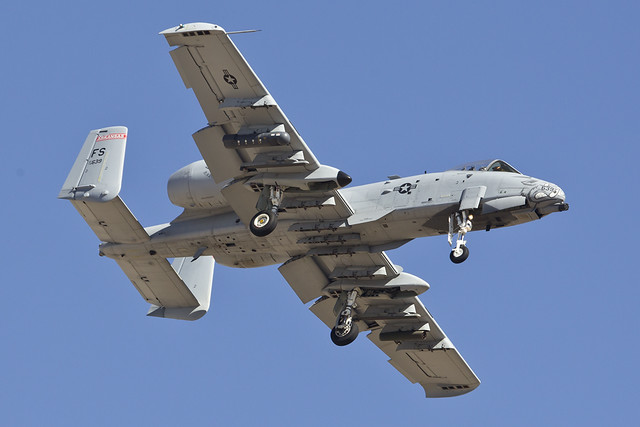
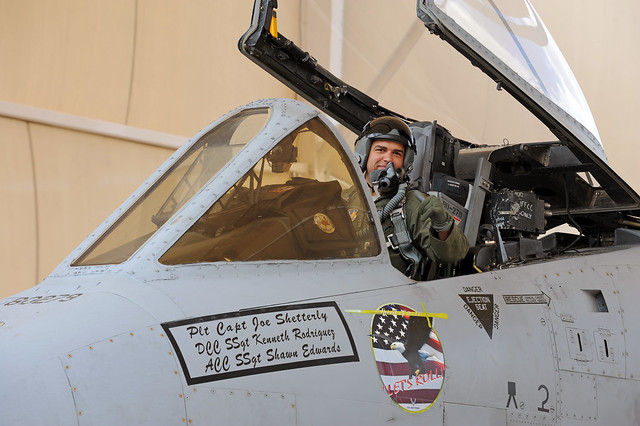
U.S. Air Force Maj. Jesus Cosme, U.S. Air Force test pilot school student, parks an A-10 at Davis-Monthan Air Force Base, Ariz., April 26, 2012. This was the first time Major Cosme has flown in an A-10. (U.S. Air Force photo by Airman 1st Class Camilla Griffin) Hi-res
Note: Pictured is A-10C 80-0279, still wearing the "LET'S ROLL" logo, related to Nine Eleven and Operation Enduring Freedom. Crew inscriptions: Plt Capt Joe Shetterly, DCC SSgt Kenneth Rodriguez, ACC SSgt Shawn Edwards
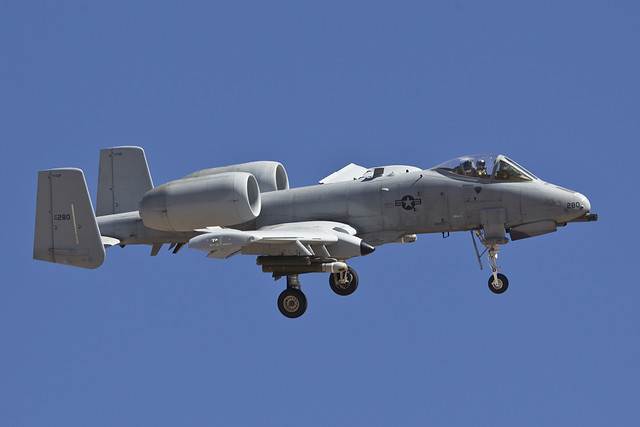
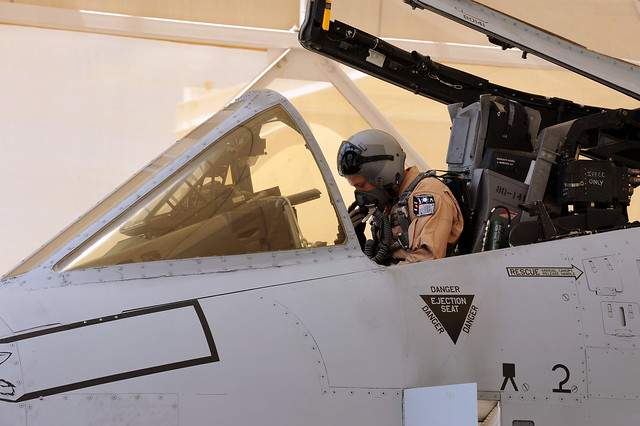
U.S. Marine Corps Capt. Douglas Rosenstock, U.S. Air Force test pilot school student, parks an A-10 at Davis-Monthan Air Force Base, Ariz., April 26, 2012. This was the first time Captain Douglas has flown in an A-10. (U.S. Air Force photo by Airman 1st Class Camilla Griffin) Hi-res
Note: Pictured is A-10C 80-0141 without any crew inscriptions.
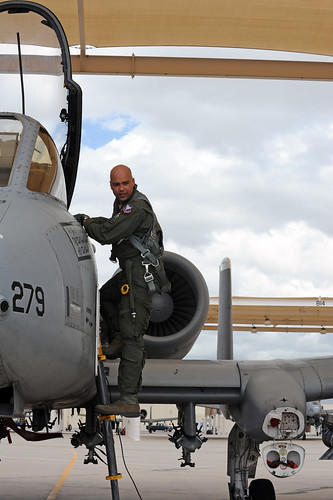
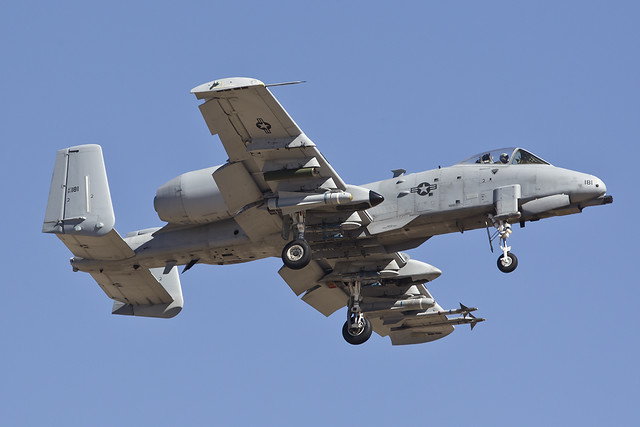
U.S. Air Force Maj. Jesus Cosme, U.S. Air Force test pilot school student, climbs down from an A-10 at Davis-Monthan Air Force Base, Ariz., April 26, 2012. This was the first time Major Cosme has flown in an A-10. (U.S. Air Force photo by Airman 1st Class Camilla Griffin) Hi-res
Note: White fin band
Showing posts with label Davis-Monthan. Show all posts
Friday, May 4, 2012
Saturday, April 14, 2012
358th FS reestablishes 'First Friday' with Easter extravaganza
by Airman 1st Class Michael Washburn
355th Fighter Wing Public Affairs

U.S. Air Force 1st Lt. Jared Graham, 355th Training Squadron A-10 pilot, holds up his son, William, as he picks an egg out of a tree at the 358th Fighter Squadron Easter egg hunt on Davis-Monthan Air Force Base, Ariz., April 6. (U.S. Air Force photo by Airman 1st Class Michael Washburn) Hi-res
4/11/2012 - DAVIS-MONTHAN AIR FORCE BASE, Ariz. -- The 358th Fighter Squadron held an Easter egg hunt for their military members' children here April 6.
The Easter egg hunt helped the Airmen meet each other's family. About nine children participated in the hunt, all of them looking for more than 60 eggs.
"I recently took command and really wanted to get the 'first Friday' reestablished," said Col. Jennifer Short, 358th FS commander. "The first Friday of every month, we try and get the spouses and the families of our Airmen in our Heritage room and participate in an event. It just made sense to do an Easter egg hunt for the kids this month."
As the children waited for everyone to arrive before searching for the eggs, they started their sugar-high-filled Friday by decorating and devouring cookies. When it came to the decorating the cookies with sugary toppings, the "less is more" saying didn't hold true. The cookies looked like they weighed about a pound from all the layers of frosting and sprinkles smeared on them.
When everyone arrived, the hunt was about to commence. When the front doors of the Heritage room swung open, an onslaught of eager kids poured out to attack the outdoor area of the 358th FS in search of the treat-filled plastic eggs.
With the looting at an end and each child with a number of eggs in their possession, the parents and their children took the party back inside, where they mingled, laughed and enjoyed each other's company for the rest of the evening.
Hosting events like these are a way for the 358th FS to meet the families of the Airmen they work with. They can strip away the coworker moniker and start calling each other friends.
"I think having these events where everyone can mingle together and meet each other's family makes us different than other jobs," Short said. "I think with other companies, you go home on a Friday and spend time with your family and forget about work. We really know and take care of each other. We have people who deploy and you need that support back home when the Airman is deployed to keep that family together. I think that's why we're so good at what we do, because we take care of not just the Airman, but also their family."
Source
From Warthog News: Good luck for your career as 358th FS commander, Col. Jennifer Short!
355th Fighter Wing Public Affairs
U.S. Air Force 1st Lt. Jared Graham, 355th Training Squadron A-10 pilot, holds up his son, William, as he picks an egg out of a tree at the 358th Fighter Squadron Easter egg hunt on Davis-Monthan Air Force Base, Ariz., April 6. (U.S. Air Force photo by Airman 1st Class Michael Washburn) Hi-res
4/11/2012 - DAVIS-MONTHAN AIR FORCE BASE, Ariz. -- The 358th Fighter Squadron held an Easter egg hunt for their military members' children here April 6.
The Easter egg hunt helped the Airmen meet each other's family. About nine children participated in the hunt, all of them looking for more than 60 eggs.
"I recently took command and really wanted to get the 'first Friday' reestablished," said Col. Jennifer Short, 358th FS commander. "The first Friday of every month, we try and get the spouses and the families of our Airmen in our Heritage room and participate in an event. It just made sense to do an Easter egg hunt for the kids this month."
As the children waited for everyone to arrive before searching for the eggs, they started their sugar-high-filled Friday by decorating and devouring cookies. When it came to the decorating the cookies with sugary toppings, the "less is more" saying didn't hold true. The cookies looked like they weighed about a pound from all the layers of frosting and sprinkles smeared on them.
When everyone arrived, the hunt was about to commence. When the front doors of the Heritage room swung open, an onslaught of eager kids poured out to attack the outdoor area of the 358th FS in search of the treat-filled plastic eggs.
With the looting at an end and each child with a number of eggs in their possession, the parents and their children took the party back inside, where they mingled, laughed and enjoyed each other's company for the rest of the evening.
Hosting events like these are a way for the 358th FS to meet the families of the Airmen they work with. They can strip away the coworker moniker and start calling each other friends.
"I think having these events where everyone can mingle together and meet each other's family makes us different than other jobs," Short said. "I think with other companies, you go home on a Friday and spend time with your family and forget about work. We really know and take care of each other. We have people who deploy and you need that support back home when the Airman is deployed to keep that family together. I think that's why we're so good at what we do, because we take care of not just the Airman, but also their family."
Source
From Warthog News: Good luck for your career as 358th FS commander, Col. Jennifer Short!
Saturday, April 7, 2012
Royal Air Force trains with A-10s
by Senior Airman Brittany Dowdle
355th Fighter Wing Public Affairs
4/6/2012 - DAVIS-MONTHAN AIR FORCE BASE, Ariz. -- The Royal Air Force's Tornado GR4 is scheduled to be at Davis-Monthan until April 23 for Exercise Torpedo Focus.
Torpedo Focus is a heavy weapons training exercise for Tornados to work with A-10 pilots in D-M's vast airspace. The Royal Air Force comes to D-M annually for this training that allows them to train side by side A-10 pilots in live-round detonations.
"In the U.S. you have fantastic bombing ranges which allow us to employ our heavy weapons said Flight Lt. Steven Eccles, 31 squadron pilot. "We don't have those back home in the U.K. It's great for us to drop live heavy weapons on the huge range complexes here."
While Lieutenant Eccles appreciates the amenities the US bases offer, he's more thankful for the real world application that training affords.
"The training is especially important because it allows us to practice what we'll do for real in operation," Eccles said. "It allows us to work with our coalition allies, the U.S. Air Force. We can practice for operations in Afghanistan and any potential conflicts which may happen around the globe."
Not only do the British Tornado GR4's train here at D-M, they also go to Nellis Air Force Base, Nev., for Exercise Red Flag and Exercise Green Flag.
Red Flag is the Air Force's premier air-to-air combat training exercise. The exercise gives pilots the experience of multiple, intensive air combat sorties in the safety of a training environment.
Exercise Green Flag is air-to-ground training exercise. Aircraft and crews fly from Nellis AFB in support of ground combat training at Fort Irwin, Calif.
The Tornado GR4 is a variable geometry, two-seat, day or night, all-weather attack aircraft capable of delivering a wide variety of weapons. The GR4 also has a Ground Mapping Radar to identify fix-points and update navigation systems as well as providing an air-to-air search facility. The Tornado GR4 is a world leader in the specialized field of all-weather, day and night tactical reconnaissance.
Source
355th Fighter Wing Public Affairs
4/6/2012 - DAVIS-MONTHAN AIR FORCE BASE, Ariz. -- The Royal Air Force's Tornado GR4 is scheduled to be at Davis-Monthan until April 23 for Exercise Torpedo Focus.
Torpedo Focus is a heavy weapons training exercise for Tornados to work with A-10 pilots in D-M's vast airspace. The Royal Air Force comes to D-M annually for this training that allows them to train side by side A-10 pilots in live-round detonations.
"In the U.S. you have fantastic bombing ranges which allow us to employ our heavy weapons said Flight Lt. Steven Eccles, 31 squadron pilot. "We don't have those back home in the U.K. It's great for us to drop live heavy weapons on the huge range complexes here."
While Lieutenant Eccles appreciates the amenities the US bases offer, he's more thankful for the real world application that training affords.
"The training is especially important because it allows us to practice what we'll do for real in operation," Eccles said. "It allows us to work with our coalition allies, the U.S. Air Force. We can practice for operations in Afghanistan and any potential conflicts which may happen around the globe."
Not only do the British Tornado GR4's train here at D-M, they also go to Nellis Air Force Base, Nev., for Exercise Red Flag and Exercise Green Flag.
Red Flag is the Air Force's premier air-to-air combat training exercise. The exercise gives pilots the experience of multiple, intensive air combat sorties in the safety of a training environment.
Exercise Green Flag is air-to-ground training exercise. Aircraft and crews fly from Nellis AFB in support of ground combat training at Fort Irwin, Calif.
The Tornado GR4 is a variable geometry, two-seat, day or night, all-weather attack aircraft capable of delivering a wide variety of weapons. The GR4 also has a Ground Mapping Radar to identify fix-points and update navigation systems as well as providing an air-to-air search facility. The Tornado GR4 is a world leader in the specialized field of all-weather, day and night tactical reconnaissance.
Source
D-M Airmen paint planes for protection
by Airman 1st Class Michael Washburn
355th Fighter Wing Public Affairs
4/5/2012 - DAVIS-MONTHAN AIR FORCE BASE, Ariz. -- Stepping into the paint barn on D-M feels like being on the set of the movie "E.T." or "Outbreak." Airmen are dressed up in white hazardous material suits like the actors in those films, except they're not looking for a candy-munching life form or trying to stop a deadly disease from spreading.
The Airmen are trying to stop the disastrous spread of rust and corrosion on the equipment the men and women of D-M use every day. They accomplish their mission by sanding, priming and painting. One of the larger projects that takes a considerable amount of time, are the aircraft D-M is known for, the A-10C Thunderbolt II.
"Painting an A-10 takes two weeks," said Airman 1st Class Jonathan Hart, 355th Equipment Maintenance Squadron aircraft structural maintenance. "One week to sand everything and one to paint. The whole reason why we paint the planes is to protect them from corrosion. We also want to have presentable planes. We don't want nasty looking planes flying around."
With all the A-10s on D-M, plus all the other equipment coming in for a fresh coat of paint, there's never a lack of work to do. It's a constant rotation of incoming aircraft.
"We do a full paint job on a plane once a month," Hart said. "We'll sand it down and mask it off with tape. We always start a plane with the landing gear because it's a different color. After that, we can cover that up, tape off the other areas of the plane and finish off with grey paint."
With a job of such magnitude, a group of Airmen often help with the daunting task.
"There are usually multiple people working on a plane," Hart said. "One person will work on one wing tip while someone works on the other. At the same time, an Airman is working on the front of the plane and another is at the back of it. We'll sand toward the center, finish up and check our work over for any spots we missed."
These aircraft are multimillion dollar machines. To get the most out of them, they need to be properly maintained. The process of adding paint to the aircraft ensures they have a long life-span.
"If we didn't paint these planes, corrosion would set in," Hart said. "They would rust up and the metal would begin to get eaten away. We use primer to stop that from happening. After the primer, we can then paint the planes to make them look presentable for D-M."
Although the process of painting an A-10 may be a long endeavor, for Airman Hart, seeing the finished product makes it all worthwhile.
"After that two-week process of repainting a plane and you get to see it when it's finished, it's a good feeling," Hart said. "You want people to look at it and say 'that's a nice looking plane.'"
Source
355th Fighter Wing Public Affairs
4/5/2012 - DAVIS-MONTHAN AIR FORCE BASE, Ariz. -- Stepping into the paint barn on D-M feels like being on the set of the movie "E.T." or "Outbreak." Airmen are dressed up in white hazardous material suits like the actors in those films, except they're not looking for a candy-munching life form or trying to stop a deadly disease from spreading.
The Airmen are trying to stop the disastrous spread of rust and corrosion on the equipment the men and women of D-M use every day. They accomplish their mission by sanding, priming and painting. One of the larger projects that takes a considerable amount of time, are the aircraft D-M is known for, the A-10C Thunderbolt II.
"Painting an A-10 takes two weeks," said Airman 1st Class Jonathan Hart, 355th Equipment Maintenance Squadron aircraft structural maintenance. "One week to sand everything and one to paint. The whole reason why we paint the planes is to protect them from corrosion. We also want to have presentable planes. We don't want nasty looking planes flying around."
With all the A-10s on D-M, plus all the other equipment coming in for a fresh coat of paint, there's never a lack of work to do. It's a constant rotation of incoming aircraft.
"We do a full paint job on a plane once a month," Hart said. "We'll sand it down and mask it off with tape. We always start a plane with the landing gear because it's a different color. After that, we can cover that up, tape off the other areas of the plane and finish off with grey paint."
With a job of such magnitude, a group of Airmen often help with the daunting task.
"There are usually multiple people working on a plane," Hart said. "One person will work on one wing tip while someone works on the other. At the same time, an Airman is working on the front of the plane and another is at the back of it. We'll sand toward the center, finish up and check our work over for any spots we missed."
These aircraft are multimillion dollar machines. To get the most out of them, they need to be properly maintained. The process of adding paint to the aircraft ensures they have a long life-span.
"If we didn't paint these planes, corrosion would set in," Hart said. "They would rust up and the metal would begin to get eaten away. We use primer to stop that from happening. After the primer, we can then paint the planes to make them look presentable for D-M."
Although the process of painting an A-10 may be a long endeavor, for Airman Hart, seeing the finished product makes it all worthwhile.
"After that two-week process of repainting a plane and you get to see it when it's finished, it's a good feeling," Hart said. "You want people to look at it and say 'that's a nice looking plane.'"
Source
Thursday, April 5, 2012
Friends and family greet pilot
The Press-Enterprise
Published: 31 March 2012 04:00 PM

Riverside residents Jan and Steve McKee greeted their son, Mike McKee, a U.S. Air Force major, on March 30, 2012, after he flew an A-10 Thunderbolt II jet fighter into the Riverside Municipal Airport. (Photo by Jerry Soifer, freelance photographer)
Riverside residents Jan and Steve McKee greeted their son, Air Force Maj. Mike McKee on Friday after he flew an A-10 Thunderbolt II jet fighter into the Riverside Municipal Airport for display at the Riverside Airshow, which was held Saturday.
More than 20 friends and relatives including Mike's first flight instructor, Steve Scott, were on hand at the airport to greet the hometown pilot.
Source
See also:
Riverside native soaring home for air show
Published: 31 March 2012 04:00 PM
Riverside residents Jan and Steve McKee greeted their son, Mike McKee, a U.S. Air Force major, on March 30, 2012, after he flew an A-10 Thunderbolt II jet fighter into the Riverside Municipal Airport. (Photo by Jerry Soifer, freelance photographer)
Riverside residents Jan and Steve McKee greeted their son, Air Force Maj. Mike McKee on Friday after he flew an A-10 Thunderbolt II jet fighter into the Riverside Municipal Airport for display at the Riverside Airshow, which was held Saturday.
More than 20 friends and relatives including Mike's first flight instructor, Steve Scott, were on hand at the airport to greet the hometown pilot.
Source
See also:
Riverside native soaring home for air show
Sunday, April 1, 2012
Riverside native soaring home for air show
By Jerry Soifer, Correspondent
The Press Enterprise
Published: 24 March 2012 04:37 PM
U.S. Air Force Maj. Mike McKee, a Riverside native, will come home to help the city celebrate its 20th air show, an event he first attended as a Riverside Poly High student.
The show has had military participation every year, but McKee will be the first active duty airman from Riverside to take part with the jet fighter he flies.
Riverside Airshow Coordinator Tom Miller said, "We always thought it would be wonderful to have one of our home town boys come home bringing a real fighter jet with him. It (McKee coming home) doesn't get any better than that."
McKee, flying an A-10 Thunderbolt II, will accompany Maj. John Collier, also flying an A-10, to Riverside from Davis-Monthan Air Force Base near Tucson, Ariz., where they are stationed. They will exhibit their planes on the flight line with about 200 aircraft. Collier will take part in a Heritage Flight with the P-38 Lightning, a World War II-era fighter, Saturday afternoon. Two Navy F/A-18s will also fly in and be on display.
McKee, 37, is a decorated combat pilot of the A-10, a twin-engine jet that was originally designed to take out Soviet tanks. When McKee fires the Gatling gun in the plane's nose, he said, "The entire aircraft rumbles violently."
McKee has flown in the wars in Afghanistan and Iraq. In the early days of the Iraq war in 2003, his A-10 was part of an attack on Iraqi anti-aircraft guns and surface-to-air missile sites defending the Baghdad Airport. He received an air medal for his role in the attack that enabled coalition forces to seize the airport quickly and secure the capital of Iraq.
McKee's parents, Steve and Jan, said they are thrilled to see their son fly the A-10 for the first time. They and Mike McKee's first flight instructor, Steve Scott, will be on hand Friday to see him land in Riverside.
McKee said the trip is as thrilling to him as it is to his parents. He said he's worked hard to draw the assignment to Riverside. While his Air Force colleagues bunk at the Mission Inn, McKee will stay at his parents' home, now in the Hawarden Hills.
"To show my jet up close will be a career highlight," said McKee. He especially wants to show his plane to Scott, who taught him how to fly a Piper Cherokee 20 years ago.
Scott, the safety officer of the Riverside Pilots Club, said he is not surprised that McKee grew up to be an Air Force pilot.
Scott said, "He caught on right away. It was his enthusiasm and natural feel for the controls. He was meant to fly."
The McKee family is rooted in Riverside. Steve McKee, also a pilot, served eight years on the Riverside Airport commission. Mike McKee said he intends to settle his wife, Kathee, and their three children, Olivia, 8, Caden, 5, and Lincoln, 3, in Southern California when his career, now at 15 years, in the service ends.
McKee was an honor student and a member of Poly High Class of 1993. He then gained an appointment to the Air Force Academy. He graduated with a Bachelor of Science degree in physics in 1997.
His love of military aviation took shape at his first home in Riverside, which was near March Air Force Base. The Cold War was on, and there were plenty of planes coming and going. The F-4 Phantom was his favorite.
"I've been looking at planes in the sky as long as I can remember," McKee said.
When he graduated from the academy he was given his first choice of assignments: Euro-NATO Joint Jet Pilot Training, which at the time graduated only fighter/attack pilots at the base in Wichita Falls, Tex. The Air Force was in need of A-10 pilots when he graduated, so he was assigned to the A-10, not the sleek, supersonic jets he sought to pilot.
The A-10 is the ugly ducking of the nation's war planes. Its top speed is 420 mph, well below the speed of sound.
"Pilots affectionately call the A-10 the 'Warthog,'" said McKee. "It gained that reputation because of its unsightly and bumpy appearance, similar to a real warthog."
McKee added, "I feel truly blessed to fly the A-10. It's a fantastically fun aircraft to fly and it does its primary mission (close air support) plus a whole lot more. The aircraft was designed around a 30 mm Gatling gun, which is optimized to penetrate armor on Soviet tanks in the Cold War era … What it's like to fly the A-10 centers mostly on shooting the gun."
Shortly after the 9/11 terrorist attacks, McKee was assigned with his squadron to the Al Jaber base in Kuwait. After Al Qaeda and Taliban forces were routed on the ground, he was one of the first American pilots to be transferred to the Bagram base in Afghanistan.
McKee was rotated back to Pope Air Force Base in North Carolina. While stationed there he met Kathee, his future wife. He and Kathee planned a wedding in the summer of 2003. Then word came down that he would be sent to Kuwait to be ready for the start of the Iraq war. They decided to marry in the church where they had met.
McKee flew missions in support of Army troops as they moved up the corridor of the Euphrates and Tigris rivers in Iraq. As the Army moved toward Baghdad, he flew missions aimed at Iraqi military supplies. When the Army and Marines had Baghdad isolated, he said his plane took out Iraqi Republican Guard tanks, armored personnel carriers and other equipment from as low as 100 feet above the ground.
He has also served in South Korea, Thailand and the Philippines. Due to the earthquake and tsunami in Japan last year and a shift of U.S. personnel, he was put in command of U.S. Air Force personnel — 150 people — in the Philippines.
"(It was) a completely unexpected leadership opportunity which turned out to be very rewarding," said McKee.
Source
Please note: This news article is about Maj. Mike McKee and Maj. John Collier. Both of them are A-10C pilots with the 355th FW from D-M who will participate in the 20th Riverside Airshow on March 31, 2012.
The Press Enterprise
Published: 24 March 2012 04:37 PM
U.S. Air Force Maj. Mike McKee, a Riverside native, will come home to help the city celebrate its 20th air show, an event he first attended as a Riverside Poly High student.
The show has had military participation every year, but McKee will be the first active duty airman from Riverside to take part with the jet fighter he flies.
Riverside Airshow Coordinator Tom Miller said, "We always thought it would be wonderful to have one of our home town boys come home bringing a real fighter jet with him. It (McKee coming home) doesn't get any better than that."
McKee, flying an A-10 Thunderbolt II, will accompany Maj. John Collier, also flying an A-10, to Riverside from Davis-Monthan Air Force Base near Tucson, Ariz., where they are stationed. They will exhibit their planes on the flight line with about 200 aircraft. Collier will take part in a Heritage Flight with the P-38 Lightning, a World War II-era fighter, Saturday afternoon. Two Navy F/A-18s will also fly in and be on display.
McKee, 37, is a decorated combat pilot of the A-10, a twin-engine jet that was originally designed to take out Soviet tanks. When McKee fires the Gatling gun in the plane's nose, he said, "The entire aircraft rumbles violently."
McKee has flown in the wars in Afghanistan and Iraq. In the early days of the Iraq war in 2003, his A-10 was part of an attack on Iraqi anti-aircraft guns and surface-to-air missile sites defending the Baghdad Airport. He received an air medal for his role in the attack that enabled coalition forces to seize the airport quickly and secure the capital of Iraq.
McKee's parents, Steve and Jan, said they are thrilled to see their son fly the A-10 for the first time. They and Mike McKee's first flight instructor, Steve Scott, will be on hand Friday to see him land in Riverside.
McKee said the trip is as thrilling to him as it is to his parents. He said he's worked hard to draw the assignment to Riverside. While his Air Force colleagues bunk at the Mission Inn, McKee will stay at his parents' home, now in the Hawarden Hills.
"To show my jet up close will be a career highlight," said McKee. He especially wants to show his plane to Scott, who taught him how to fly a Piper Cherokee 20 years ago.
Scott, the safety officer of the Riverside Pilots Club, said he is not surprised that McKee grew up to be an Air Force pilot.
Scott said, "He caught on right away. It was his enthusiasm and natural feel for the controls. He was meant to fly."
The McKee family is rooted in Riverside. Steve McKee, also a pilot, served eight years on the Riverside Airport commission. Mike McKee said he intends to settle his wife, Kathee, and their three children, Olivia, 8, Caden, 5, and Lincoln, 3, in Southern California when his career, now at 15 years, in the service ends.
McKee was an honor student and a member of Poly High Class of 1993. He then gained an appointment to the Air Force Academy. He graduated with a Bachelor of Science degree in physics in 1997.
His love of military aviation took shape at his first home in Riverside, which was near March Air Force Base. The Cold War was on, and there were plenty of planes coming and going. The F-4 Phantom was his favorite.
"I've been looking at planes in the sky as long as I can remember," McKee said.
When he graduated from the academy he was given his first choice of assignments: Euro-NATO Joint Jet Pilot Training, which at the time graduated only fighter/attack pilots at the base in Wichita Falls, Tex. The Air Force was in need of A-10 pilots when he graduated, so he was assigned to the A-10, not the sleek, supersonic jets he sought to pilot.
The A-10 is the ugly ducking of the nation's war planes. Its top speed is 420 mph, well below the speed of sound.
"Pilots affectionately call the A-10 the 'Warthog,'" said McKee. "It gained that reputation because of its unsightly and bumpy appearance, similar to a real warthog."
McKee added, "I feel truly blessed to fly the A-10. It's a fantastically fun aircraft to fly and it does its primary mission (close air support) plus a whole lot more. The aircraft was designed around a 30 mm Gatling gun, which is optimized to penetrate armor on Soviet tanks in the Cold War era … What it's like to fly the A-10 centers mostly on shooting the gun."
Shortly after the 9/11 terrorist attacks, McKee was assigned with his squadron to the Al Jaber base in Kuwait. After Al Qaeda and Taliban forces were routed on the ground, he was one of the first American pilots to be transferred to the Bagram base in Afghanistan.
McKee was rotated back to Pope Air Force Base in North Carolina. While stationed there he met Kathee, his future wife. He and Kathee planned a wedding in the summer of 2003. Then word came down that he would be sent to Kuwait to be ready for the start of the Iraq war. They decided to marry in the church where they had met.
McKee flew missions in support of Army troops as they moved up the corridor of the Euphrates and Tigris rivers in Iraq. As the Army moved toward Baghdad, he flew missions aimed at Iraqi military supplies. When the Army and Marines had Baghdad isolated, he said his plane took out Iraqi Republican Guard tanks, armored personnel carriers and other equipment from as low as 100 feet above the ground.
He has also served in South Korea, Thailand and the Philippines. Due to the earthquake and tsunami in Japan last year and a shift of U.S. personnel, he was put in command of U.S. Air Force personnel — 150 people — in the Philippines.
"(It was) a completely unexpected leadership opportunity which turned out to be very rewarding," said McKee.
Source
Please note: This news article is about Maj. Mike McKee and Maj. John Collier. Both of them are A-10C pilots with the 355th FW from D-M who will participate in the 20th Riverside Airshow on March 31, 2012.
Sunday, March 11, 2012
Unique shot of 188th Fighter Wing's Boss Bird taken at D-M during Operation Snowbird
Released by 355th Fighter Wing Public Affairs as part of their news article It's ORI "go time"

Original photo caption: An A-10 prepares to land on the flightline after completing its mission at Davis-Monthan Air Force Base, Ariz. Feb., 14. (U.S. Air Force photo by Airman 1st Class Michael Washburn) Hi-res
Note: Pictured is A-10C 80-0188, marked 188 FW as 188th Fighter Wing's Boss Bird or Wing King, from the 184th Fighter Squadron, 188th Fighter Wing (Arkansas Air National Guard), Fort Smith. This "Hog" was part of a 188th FW aircraft package which participated in Operation Snowbird at D-M in preparation of the "Flying Razorback's" upcoming Afghanistan deployment this summer. And from my viewpoint: This shot is unique due to the industrial area in the background. Anybody who can/will tell me some more about this "smoking" site?
Original photo caption: An A-10 prepares to land on the flightline after completing its mission at Davis-Monthan Air Force Base, Ariz. Feb., 14. (U.S. Air Force photo by Airman 1st Class Michael Washburn) Hi-res
Note: Pictured is A-10C 80-0188, marked 188 FW as 188th Fighter Wing's Boss Bird or Wing King, from the 184th Fighter Squadron, 188th Fighter Wing (Arkansas Air National Guard), Fort Smith. This "Hog" was part of a 188th FW aircraft package which participated in Operation Snowbird at D-M in preparation of the "Flying Razorback's" upcoming Afghanistan deployment this summer. And from my viewpoint: This shot is unique due to the industrial area in the background. Anybody who can/will tell me some more about this "smoking" site?
Sunday, March 4, 2012
355th Fighter Wing A-10Cs caught at D-M during Heritage Flight training March 2, 2012
At Davis-Monthan AFB, Arizona, Warthog News contributor Ned Harris from the United States had the opportunity to take the following shots:

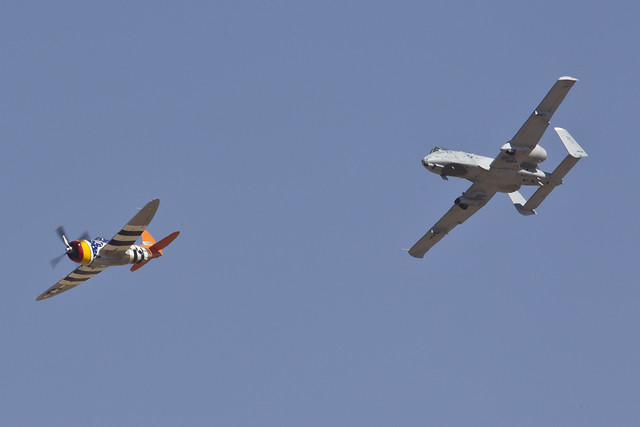
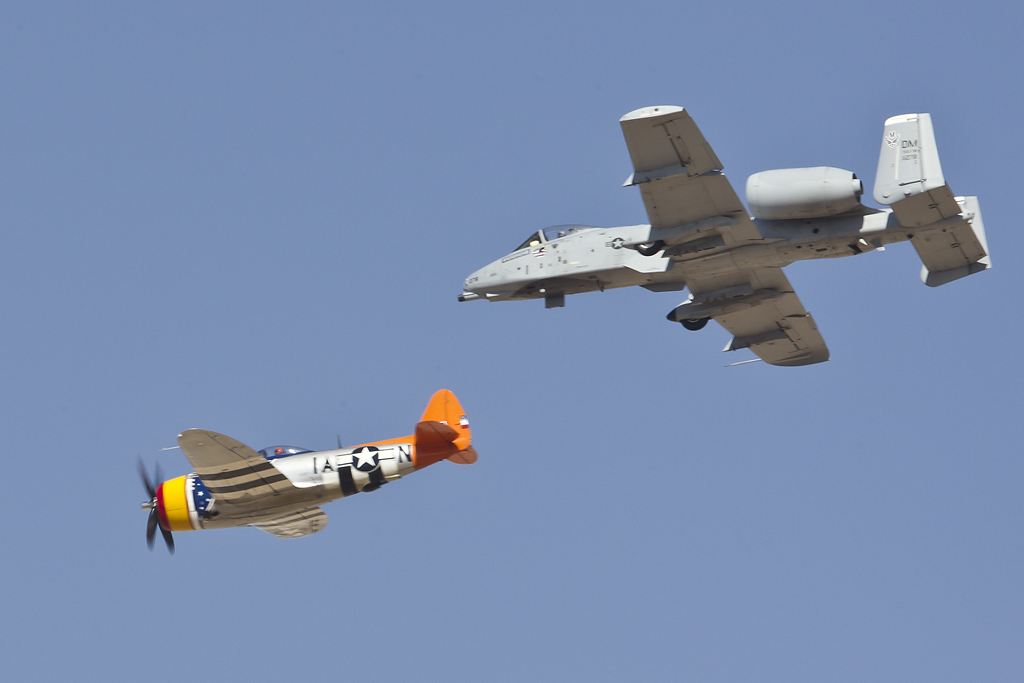
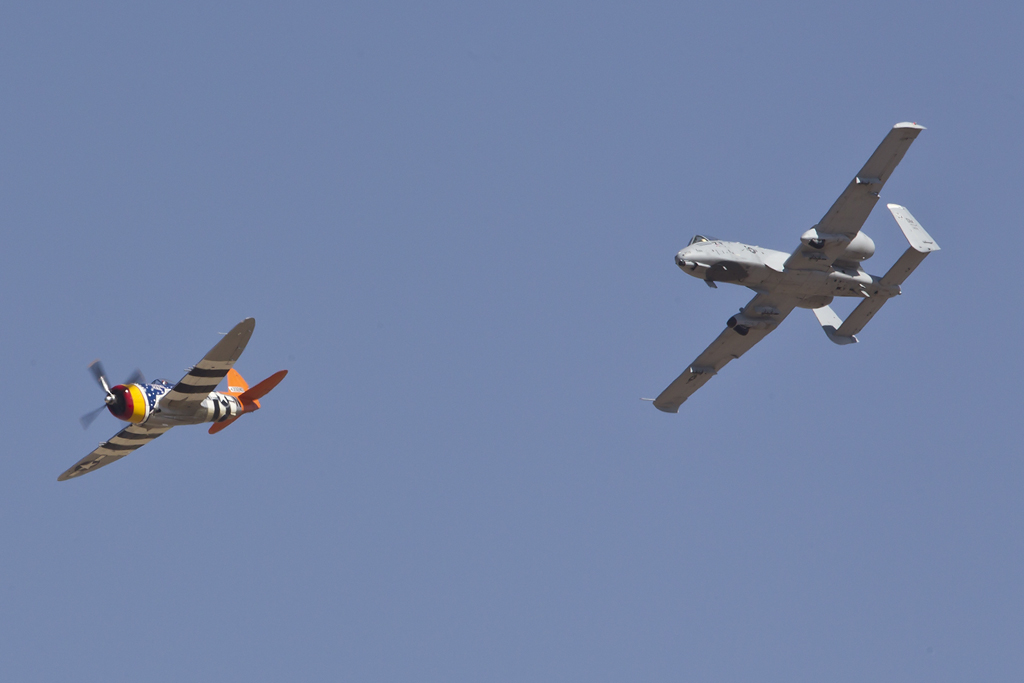
Thunderbolts of two generations: P-47 Thunderbolt together with an A-10C Thunderbolt II from the 355th Fighter Wing. (Photo by Ned Harris) Full size

Thunderbolts of two generations: P-47 Thunderbolt together with an A-10C Thunderbolt II from the 355th Fighter Wing. (Photo by Ned Harris) Full size

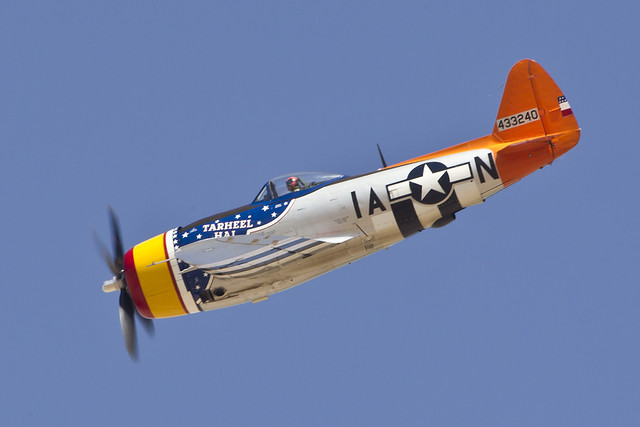
P-47 Thunderbolt "Tarheel Hal". (Photo by Ned Harris) Full size
Please note: More pictures will be uploaded soon.
Thunderbolts of two generations: P-47 Thunderbolt together with an A-10C Thunderbolt II from the 355th Fighter Wing. (Photo by Ned Harris) Full size
P-47 Thunderbolt "Tarheel Hal". (Photo by Ned Harris) Full size
Please note: More pictures will be uploaded soon.
104th Fighter Squadron A-10C caught at D-M February 29, 2012
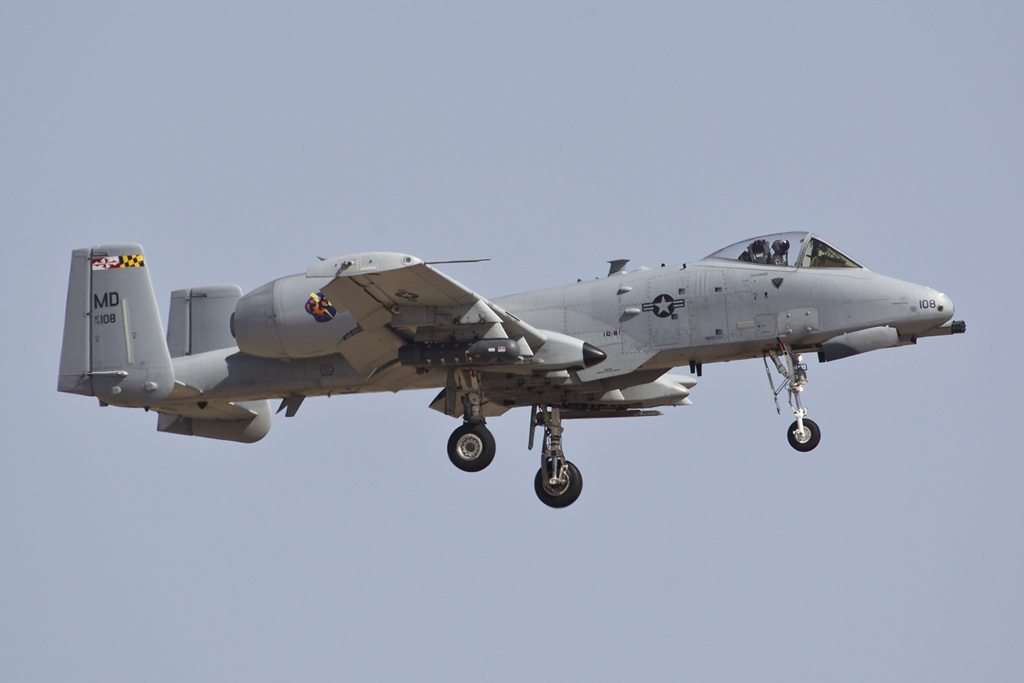
At Davis-Monthan AFB, Arizona, Warthog News contributor Ned Harris from the United States had the opportunity to take the following shots of an A-10C from the 104th Squadron, 175th Wing (Maryland ANG), Martin State AP:

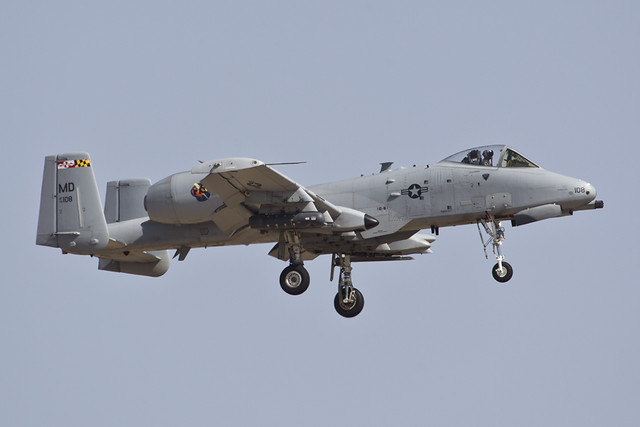
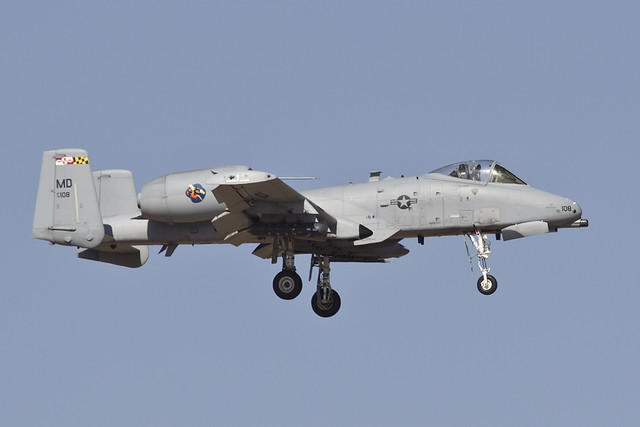
A-10C 79-0108. (Photo by Ned Harris) Full size

A-10C 79-0108. (Photo by Ned Harris) Full size
Question: Are there 104th Fighter Squadron A-10Cs to participate in Operation Snowbird?
A-10C 79-0108. (Photo by Ned Harris) Full size
Question: Are there 104th Fighter Squadron A-10Cs to participate in Operation Snowbird?
355th Fighter Wing A-10Cs caught at D-M February 29, 2012
At Davis-Monthan AFB, Arizona, Warthog News contributor Ned Harris from the United States had the opportunity to take the following shots:

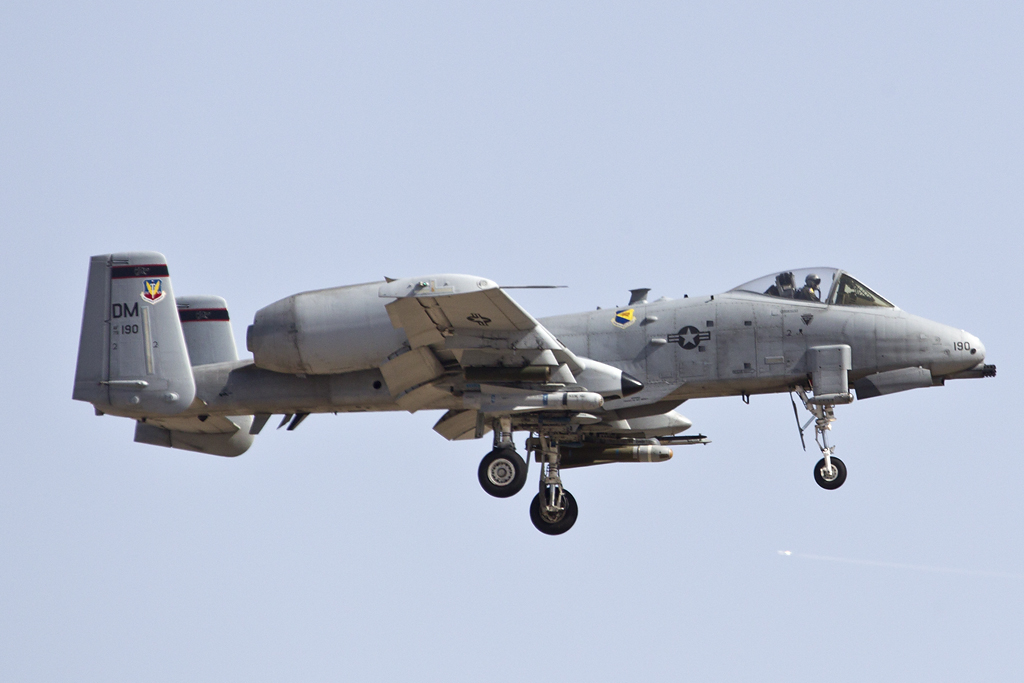
A-10C 79-0190 from the 358th Fighter Squadron. (Photo by Ned Harris) Full size

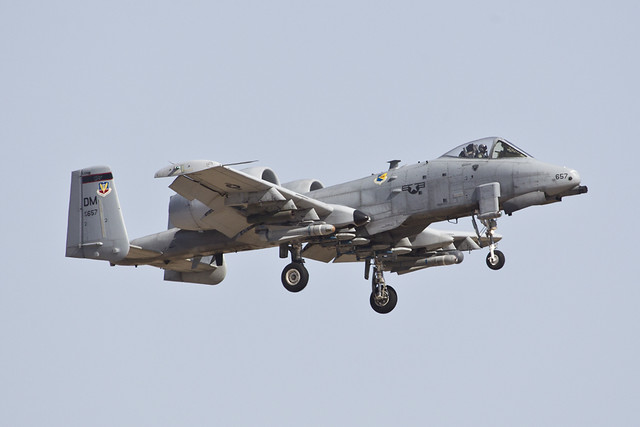
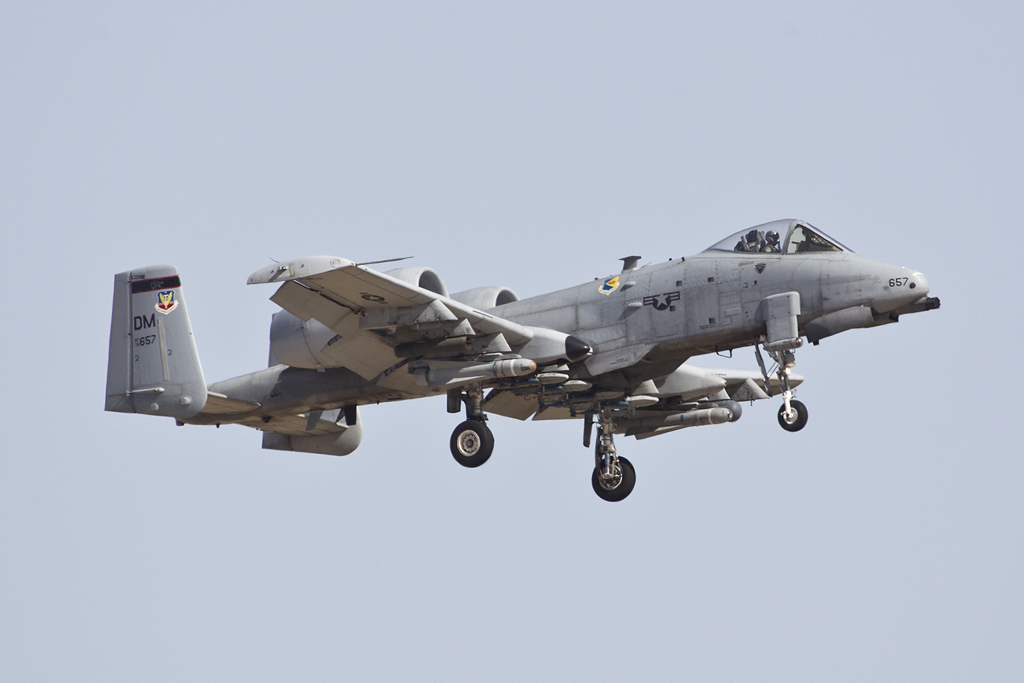
A-10C 78-0657 from the 358th Fighter Squadron. (Photo by Ned Harris) Full size

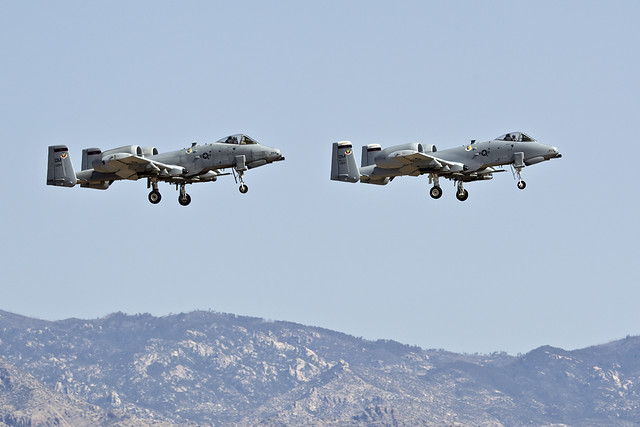
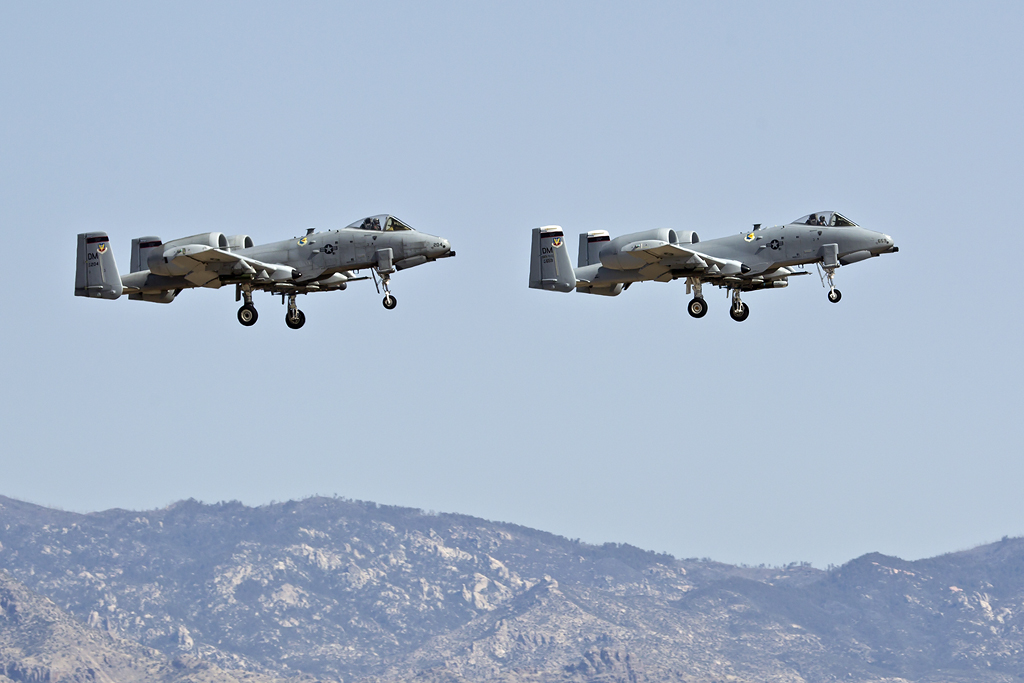
Lobo's RTB. Two A-10s over Catalina Mountains. (Photo by Ned Harris) Full size
Please note: A lot of more related pictures will be uploaded soon.
A-10C 79-0190 from the 358th Fighter Squadron. (Photo by Ned Harris) Full size
A-10C 78-0657 from the 358th Fighter Squadron. (Photo by Ned Harris) Full size
Lobo's RTB. Two A-10s over Catalina Mountains. (Photo by Ned Harris) Full size
Please note: A lot of more related pictures will be uploaded soon.
Wednesday, February 29, 2012
Operation Snowbird: Stunning air-to-air shots of 184th Fighter Squadron A-10Cs by Jim Haseltine
By Joachim Jacob, Warthog News Editor
I'm surprised by the following three stunning shots, copied this night from the 188th Fighter Wing's official newspaper "The Flying Razorback", March 2012 online PDF issue. These professional photos were taken by Jim "Hazy" Haseltine of HIGH-G Productions.

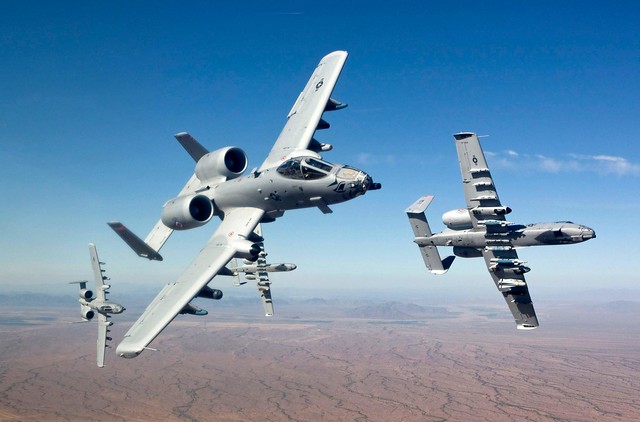
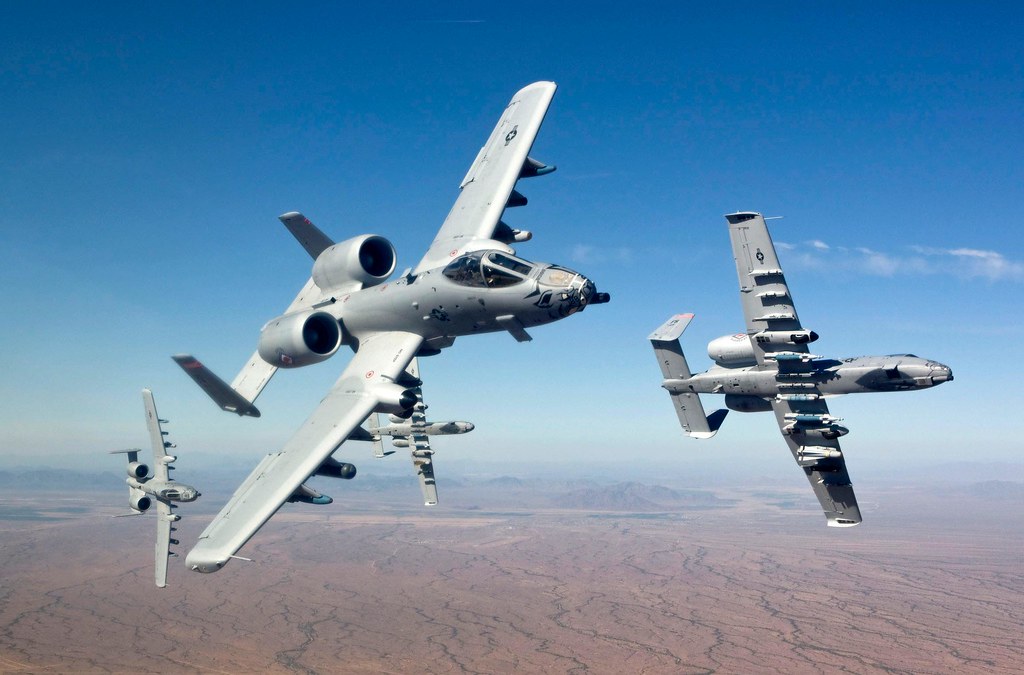
A four ship of A-10C Thunderbolt II "Warthogs" with the 188th Fighter Wing train during a deployment to Davis-Monthan Air Force Base, Ariz., Feb. 21 as part of Operation Snowbird. The objective of Operation Snowbird was to prepare the Flying Razorbacks for their deployment to Afghanistan this summer. (Photo by Jim Haseltine) Full size
Note: WOW!!! Very best A-10 "Air Ballet" ever seen, probably inspirated by the photographer.

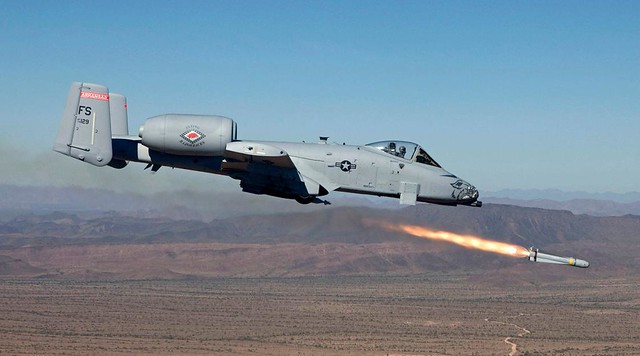
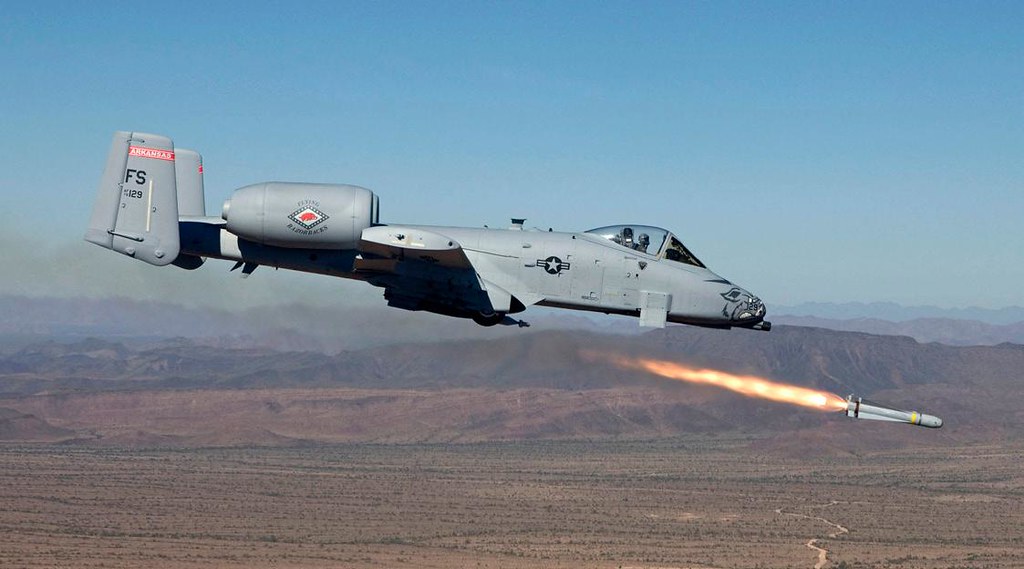
Capt. Josh Parnell, also a pilot with the 188th, fires an AGM-65 Maverick near Davis-Monthan Feb. 20. (Photo by Jim Haseltine) Full size
Note: Pictured is A-10C 79-0129, firing a live AGM-65 Maverick.

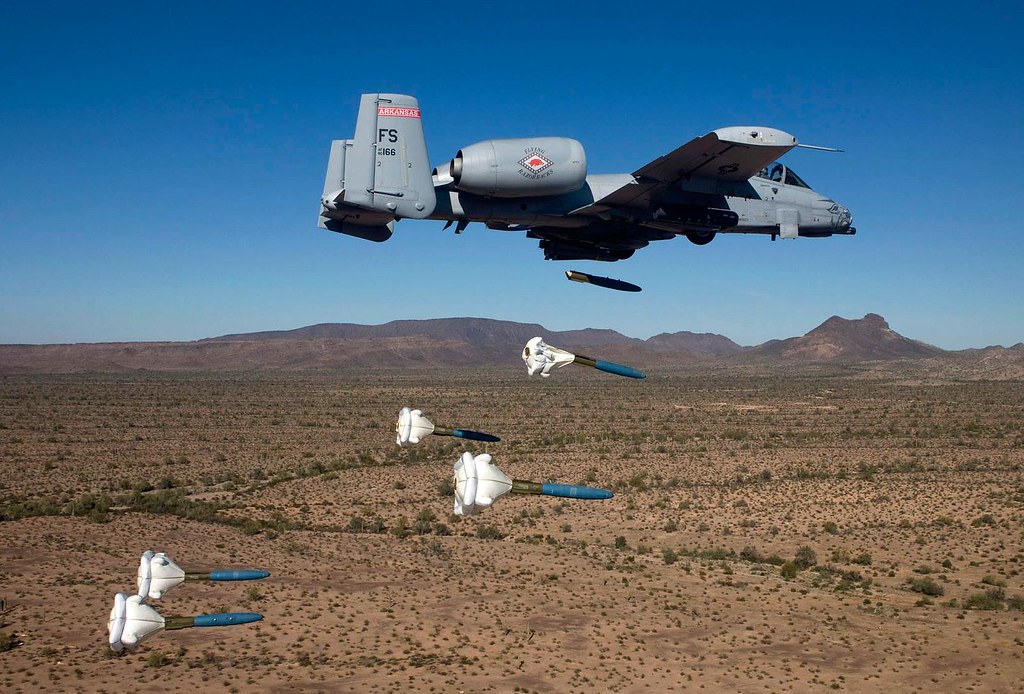
Capt. B.J. Ginger, an A-10C Thunderbolt II "Warthog" pilot with the 188th Fighter Wing, drops MK-82s at a range near Davis-Monthan Air Force Base, Ariz., Feb. 20 as part of Operation Snowbird training. The objective of Operation Snowbird was to prepare the 188th for its upcoming Air Expeditionary Forces (AEF) rotation to Afghanistan. The Flying Razorbacks deployed approximately 300 operations, maintenance and support personnel to Davis-Monthan. Full size
Note: Pictured is A-10C 80-0166, dropping 500lb Mk. 82 Air Inflatable Retard (AIR) inert training bombs (blue bodies). The Mk. 82 AIR has a parachute pack in the rear of the tailkit that deploys to slow the bomb's descent after drop. This allows the A-10 to escape the impact area, thus decreasing the chances of the jet being damaged by its own bomb's explosion at low altitude.

Source
I'm surprised by the following three stunning shots, copied this night from the 188th Fighter Wing's official newspaper "The Flying Razorback", March 2012 online PDF issue. These professional photos were taken by Jim "Hazy" Haseltine of HIGH-G Productions.
A four ship of A-10C Thunderbolt II "Warthogs" with the 188th Fighter Wing train during a deployment to Davis-Monthan Air Force Base, Ariz., Feb. 21 as part of Operation Snowbird. The objective of Operation Snowbird was to prepare the Flying Razorbacks for their deployment to Afghanistan this summer. (Photo by Jim Haseltine) Full size
Note: WOW!!! Very best A-10 "Air Ballet" ever seen, probably inspirated by the photographer.
Capt. Josh Parnell, also a pilot with the 188th, fires an AGM-65 Maverick near Davis-Monthan Feb. 20. (Photo by Jim Haseltine) Full size
Note: Pictured is A-10C 79-0129, firing a live AGM-65 Maverick.
Capt. B.J. Ginger, an A-10C Thunderbolt II "Warthog" pilot with the 188th Fighter Wing, drops MK-82s at a range near Davis-Monthan Air Force Base, Ariz., Feb. 20 as part of Operation Snowbird training. The objective of Operation Snowbird was to prepare the 188th for its upcoming Air Expeditionary Forces (AEF) rotation to Afghanistan. The Flying Razorbacks deployed approximately 300 operations, maintenance and support personnel to Davis-Monthan. Full size
Note: Pictured is A-10C 80-0166, dropping 500lb Mk. 82 Air Inflatable Retard (AIR) inert training bombs (blue bodies). The Mk. 82 AIR has a parachute pack in the rear of the tailkit that deploys to slow the bomb's descent after drop. This allows the A-10 to escape the impact area, thus decreasing the chances of the jet being damaged by its own bomb's explosion at low altitude.
Source
Monday, February 27, 2012
Operation Snowbird: Training preps 188th for Afghanistan deployment
by Maj. Heath Allen
188th Fighter Wing Public Affairs

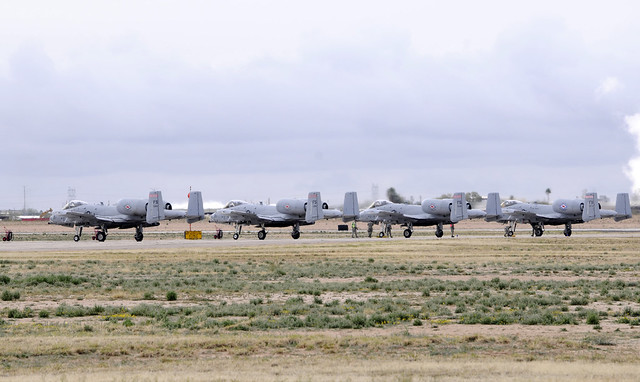
A-10C Thunderbolt II "Warthogs" with the 188th Fighter Wing prepare for takeoff during a deployment to Davis-Monthan Air Force Base, Ariz., Feb. 21 to participate in Operation Snowbird in preparation for the Flying Razorbacks' deployment to Afghanistan this summer. (National Guard photo by Senior Master Sgt. Dennis Brambl, 188th Fighter Wing Public Affairs) Hi-res
2/27/2012 - DAVIS-MONTHAN AIR FORCE BASE, Ariz -- To achieve an effective battle rhythm, one must first rehearse the cadence of combat.
The Flying Razorbacks tested their mettle and practiced their aim during a recent deployment to Davis-Monthan Air Force Base in Tucson, Ariz., Feb. 11-26 to participate in Operation Snowbird.
Operation Snowbird, which is a National Guard Bureau program located at Davis-Monthan and supported through the Arizona Air National Guard's 162nd Fighter Wing, was established in 1975.
The objective of Operation Snowbird was to prepare the 188th for its upcoming Air Expeditionary Forces (AEF) rotation to Afghanistan in support of Operation Enduring Freedom (OEF). This will be the 188th's second combat deployment in the A-10 Thunderbolt II "Warthog."
"Snowbird provided us with a great opportunity to train like we're going to fight," said Lt. Col. Brian Burger, 184th Fighter Squadron commander. "It's great training for the weapons load crews, munitions, crew chiefs and support personnel. It's a team effort where everyone can get used to doing what they will be doing in wartime. It's great preparation for going downrange."
The 188th's last AEF tasking occurred in 2010 when the unit deployed approximately 300 operations, maintenance and support personnel to Kandahar, Afghanistan, also in support of OEF. The 188th deployed a similar grouping to Davis-Monthan.
"It's a stair-step process," said Lt. Col. Tim Eddins, 188th Operations Group commander. "The first week was our crawl before we walked and next time we will be running and then we will sprint. We got the chance to get used to the weapons and used to how the airplane operates when you drop live weapons and how the system works. The second week we stepped it up and got a lot more complicated."
The 188th dropped myriad live munitions at Snowbird that it doesn't have opportunity to accomplish at Razorback Range, including GBU-38 JDAMs, GBU-12 LGBs, MK-82s, MK-66 rockets and AGM-65 Mavericks. The 188th also fired 30 MM rounds from the A-10's GAU-8/A seven-barrel Gatling gun.
"The airspace in Fort Smith is very good and we have a top notch range and restricted area as well as a very large military operations area right in our own backyard that goes from 100 feet to 23,000 feet," Burger said. "But we're still a little limited on what types of weapons we can drop because it is still a fairly heavily populated area. At Snowbird, there are several, large tactical ranges carved out where we can drop live ordnance and heavyweight full-scale inert weapons, including laser- and GPS-guided."
The trip to Davis-Monthan also furnished the 188th with the opportunity to hone its skills by conducting training and logging operational experience in a mountainous, desert terrain, which closely mimics the climate and conditions in Afghanistan.
"It's not only an opportunity for the experienced pilots to mentor the pilots who don't have that combat experience," Eddins said. "It's also a great chance for the pilots and maintainers to come together and learn how to work through issues in a training setting so that we'll have a better idea of what the fixes are when we get into combat."
While this summer's deployment will be the 188th's second in the A-10, Eddins said about 30 percent of the unit's pilots have yet to experience combat in the Warthog. Eddins, though, added that only four pilots had endured combat in the A-10 when 188th made its AEF debut in the Warthog in 2010.
"This time we have more experience and leadership because we have more pilots who have gone through many of those combat scenarios in the A-10," Eddins said. "We have a better idea of what steps to take and what steps not to take."
Eddins said that experience showed at Snowbird.
"It's gone a lot smoother between pilots and maintenance because we know the routine better," Eddins said. "It gives us a chance to build that team cohesiveness and camaraderie. We all knew the routine in the F-16 but everything is different in the A-10. From the speed and loiter time to the way you attack targets, it's a lot different."
The A-10's primary mission in southern Afghanistan is to fly close-air support in response to ground troops who may be in contact with the enemy, or to escort convoys in particularly hostile areas. When not supporting ground troops, A-10s patrol designated sectors and provides aerial reconnaissance on locations of interest to ground commanders.
The 188th will transition to a more rapid battle rhythm in May when it participates in Green Flag-East at Barksdale Air Force Base, La.
Source
Please note: More pictures will be uploaded soon.
188th Fighter Wing Public Affairs
A-10C Thunderbolt II "Warthogs" with the 188th Fighter Wing prepare for takeoff during a deployment to Davis-Monthan Air Force Base, Ariz., Feb. 21 to participate in Operation Snowbird in preparation for the Flying Razorbacks' deployment to Afghanistan this summer. (National Guard photo by Senior Master Sgt. Dennis Brambl, 188th Fighter Wing Public Affairs) Hi-res
2/27/2012 - DAVIS-MONTHAN AIR FORCE BASE, Ariz -- To achieve an effective battle rhythm, one must first rehearse the cadence of combat.
The Flying Razorbacks tested their mettle and practiced their aim during a recent deployment to Davis-Monthan Air Force Base in Tucson, Ariz., Feb. 11-26 to participate in Operation Snowbird.
Operation Snowbird, which is a National Guard Bureau program located at Davis-Monthan and supported through the Arizona Air National Guard's 162nd Fighter Wing, was established in 1975.
The objective of Operation Snowbird was to prepare the 188th for its upcoming Air Expeditionary Forces (AEF) rotation to Afghanistan in support of Operation Enduring Freedom (OEF). This will be the 188th's second combat deployment in the A-10 Thunderbolt II "Warthog."
"Snowbird provided us with a great opportunity to train like we're going to fight," said Lt. Col. Brian Burger, 184th Fighter Squadron commander. "It's great training for the weapons load crews, munitions, crew chiefs and support personnel. It's a team effort where everyone can get used to doing what they will be doing in wartime. It's great preparation for going downrange."
The 188th's last AEF tasking occurred in 2010 when the unit deployed approximately 300 operations, maintenance and support personnel to Kandahar, Afghanistan, also in support of OEF. The 188th deployed a similar grouping to Davis-Monthan.
"It's a stair-step process," said Lt. Col. Tim Eddins, 188th Operations Group commander. "The first week was our crawl before we walked and next time we will be running and then we will sprint. We got the chance to get used to the weapons and used to how the airplane operates when you drop live weapons and how the system works. The second week we stepped it up and got a lot more complicated."
The 188th dropped myriad live munitions at Snowbird that it doesn't have opportunity to accomplish at Razorback Range, including GBU-38 JDAMs, GBU-12 LGBs, MK-82s, MK-66 rockets and AGM-65 Mavericks. The 188th also fired 30 MM rounds from the A-10's GAU-8/A seven-barrel Gatling gun.
"The airspace in Fort Smith is very good and we have a top notch range and restricted area as well as a very large military operations area right in our own backyard that goes from 100 feet to 23,000 feet," Burger said. "But we're still a little limited on what types of weapons we can drop because it is still a fairly heavily populated area. At Snowbird, there are several, large tactical ranges carved out where we can drop live ordnance and heavyweight full-scale inert weapons, including laser- and GPS-guided."
The trip to Davis-Monthan also furnished the 188th with the opportunity to hone its skills by conducting training and logging operational experience in a mountainous, desert terrain, which closely mimics the climate and conditions in Afghanistan.
"It's not only an opportunity for the experienced pilots to mentor the pilots who don't have that combat experience," Eddins said. "It's also a great chance for the pilots and maintainers to come together and learn how to work through issues in a training setting so that we'll have a better idea of what the fixes are when we get into combat."
While this summer's deployment will be the 188th's second in the A-10, Eddins said about 30 percent of the unit's pilots have yet to experience combat in the Warthog. Eddins, though, added that only four pilots had endured combat in the A-10 when 188th made its AEF debut in the Warthog in 2010.
"This time we have more experience and leadership because we have more pilots who have gone through many of those combat scenarios in the A-10," Eddins said. "We have a better idea of what steps to take and what steps not to take."
Eddins said that experience showed at Snowbird.
"It's gone a lot smoother between pilots and maintenance because we know the routine better," Eddins said. "It gives us a chance to build that team cohesiveness and camaraderie. We all knew the routine in the F-16 but everything is different in the A-10. From the speed and loiter time to the way you attack targets, it's a lot different."
The A-10's primary mission in southern Afghanistan is to fly close-air support in response to ground troops who may be in contact with the enemy, or to escort convoys in particularly hostile areas. When not supporting ground troops, A-10s patrol designated sectors and provides aerial reconnaissance on locations of interest to ground commanders.
The 188th will transition to a more rapid battle rhythm in May when it participates in Green Flag-East at Barksdale Air Force Base, La.
Source
Please note: More pictures will be uploaded soon.
184th Fighter Squadron A-10Cs caught at D-M February 23, 2012
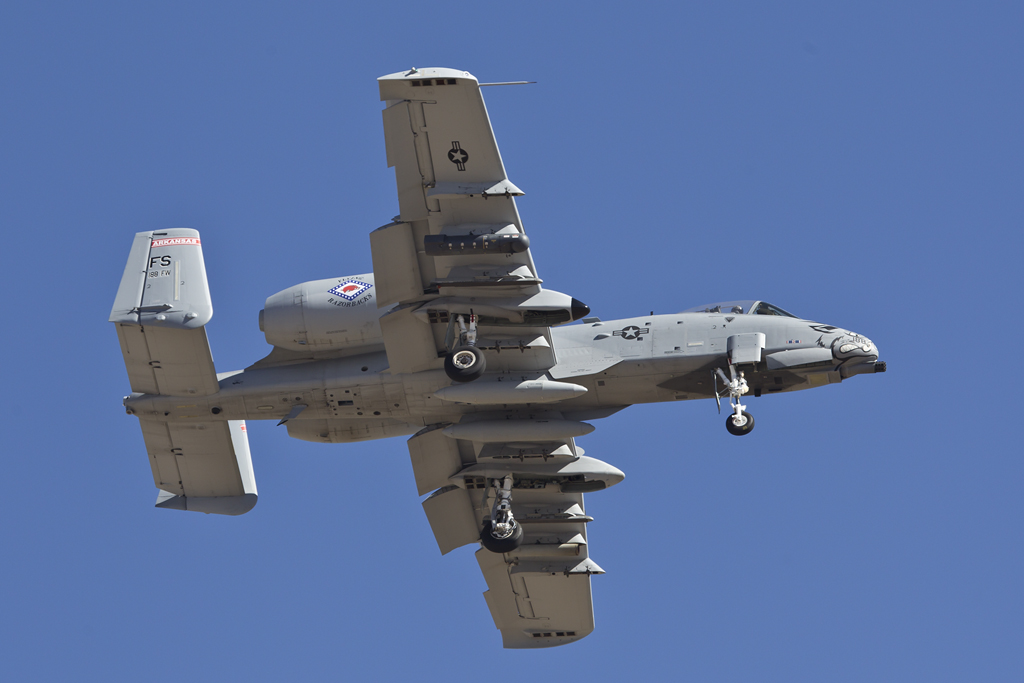
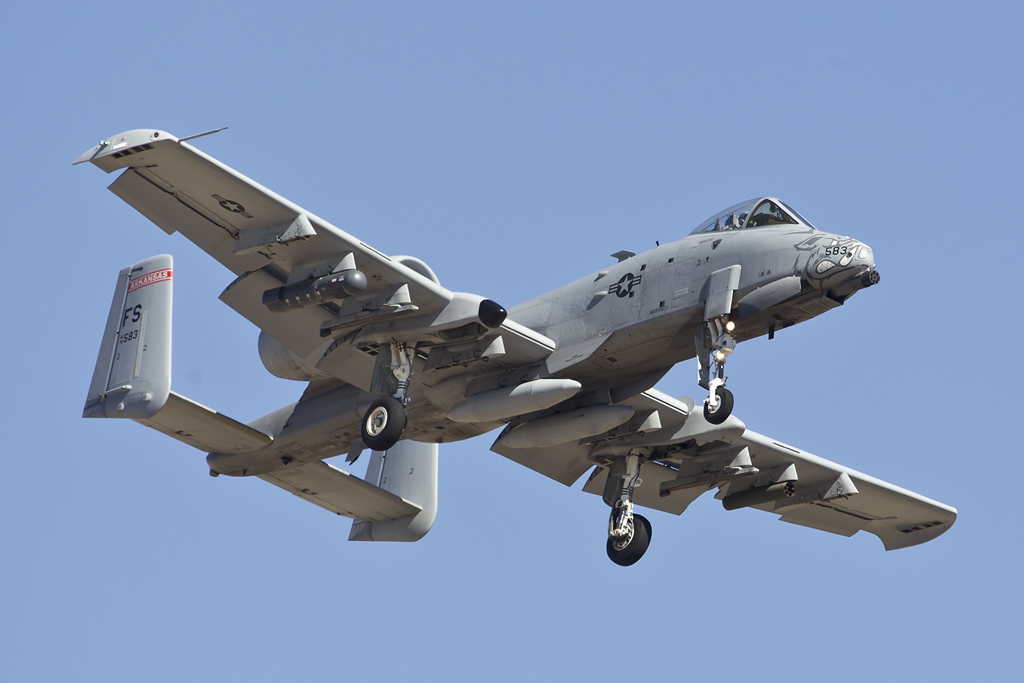
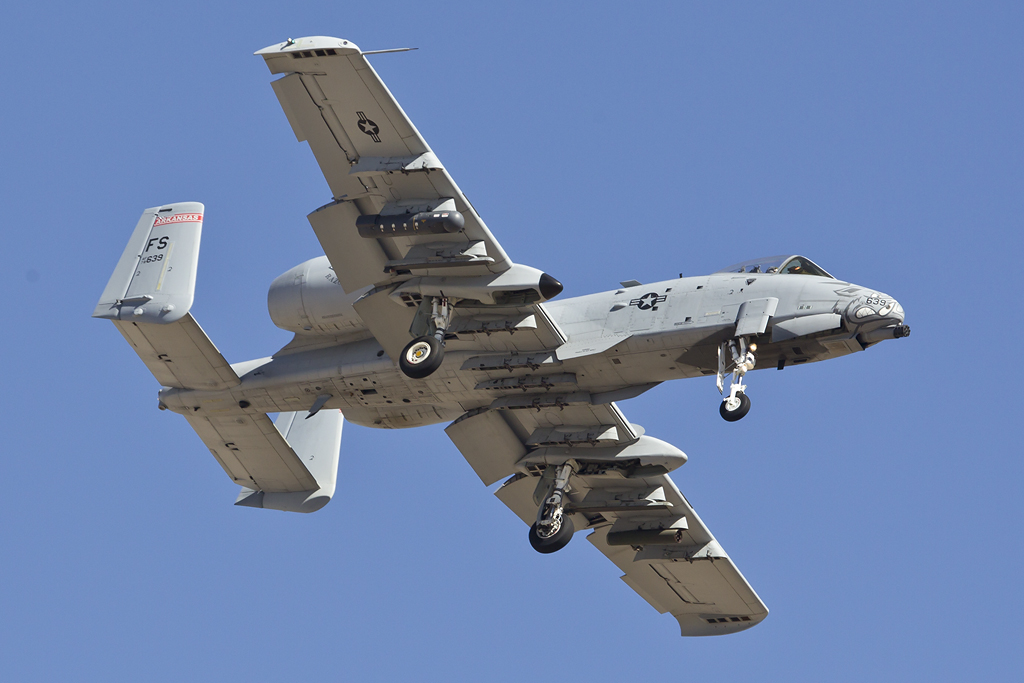
At Davis-Monthan AFB, Arizona, Warthog News contributor Ned Harris from the United States had the opportunity to take the following shots of A-10Cs from the 184th Fighter Squadron, 188th Fighter Wing (Arkansas ANG), Fort Smith, which participate in Operation Snowbird at D-M:

A-10C 80-0188, marked 188 FW as 188th Fighter Wing's Boss Bird or Wing King. (Photo by Ned Harris) Full size

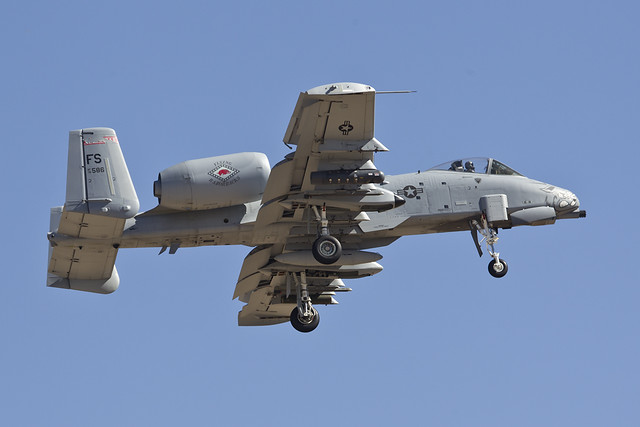
A-10C 78-0583. (Photo by Ned Harris) Full size

A-10C 78-0586. (Photo by Ned Harris) Full size

A-10C 78-0639. (Photo by Ned Harris) Full size

A-10C 80-0166. Photo by Ned Harris) Full size
A-10C 80-0188, marked 188 FW as 188th Fighter Wing's Boss Bird or Wing King. (Photo by Ned Harris) Full size
A-10C 78-0583. (Photo by Ned Harris) Full size
A-10C 78-0586. (Photo by Ned Harris) Full size
A-10C 78-0639. (Photo by Ned Harris) Full size
A-10C 80-0166. Photo by Ned Harris) Full size
355th Fighter Wing A-10Cs caught at D-M February 23, 2012
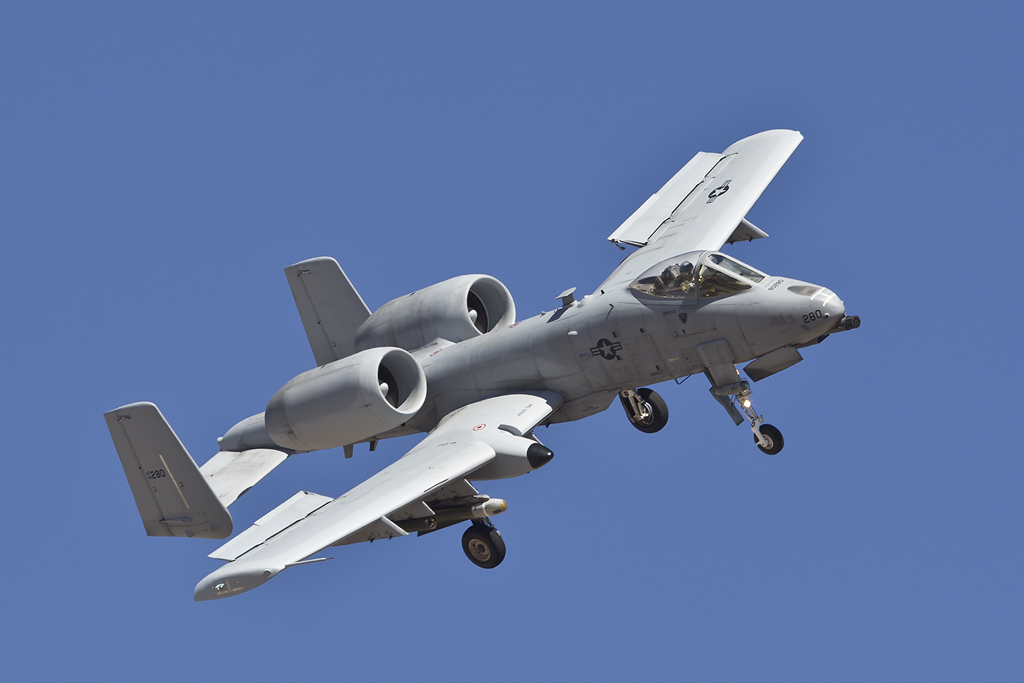
At Davis-Monthan AFB, Arizona, Warthog News contributor Ned Harris from the United States had the opportunity to take the following shots:

A-10C 80-0280, still without unit markings. (Photo by Ned Harris) Full size

A-10C 80-0280, still without unit markings. (Photo by Ned Harris) Full size

A-10C 80-0181, still without unit markings. (Photo by Ned Harris) Full size

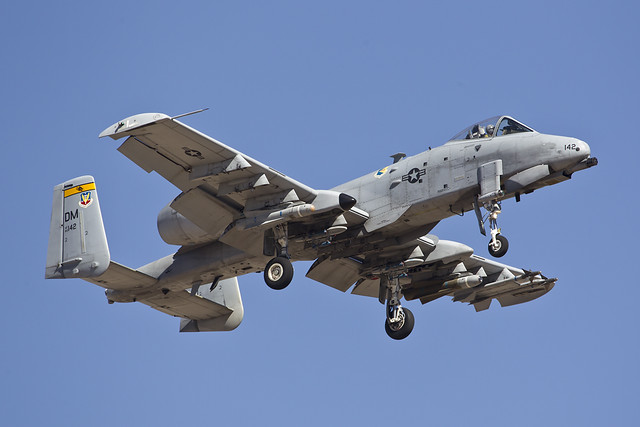
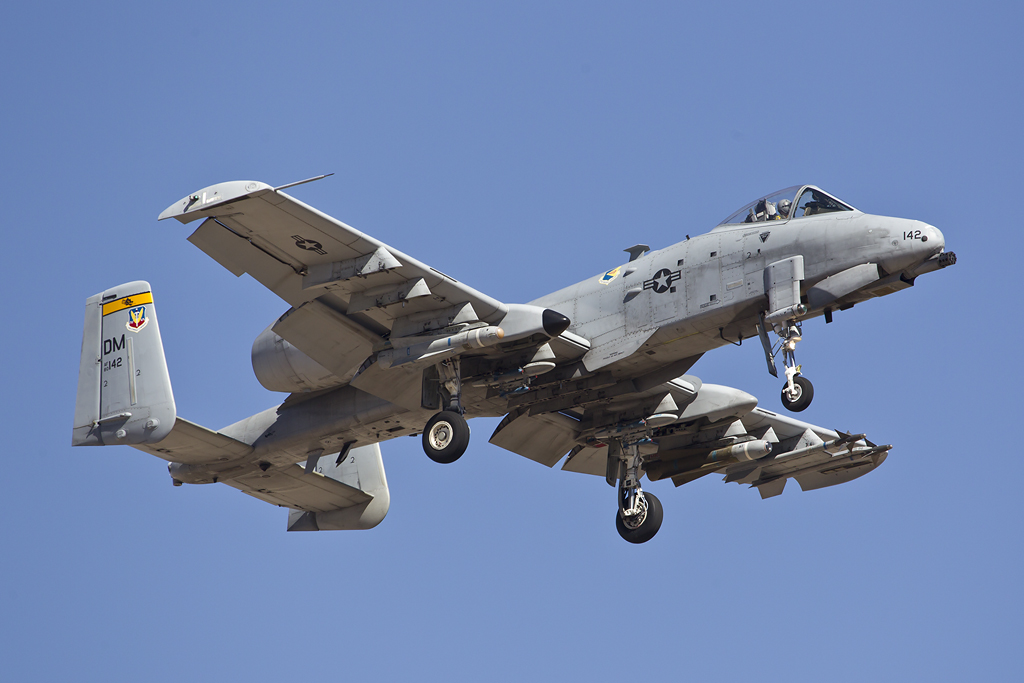
A-10C 80-0142 from the 357th Fighter Squadron. (Photo by Ned Harris) Full size

A-10C 81-0939 from the 357th Fighter Squadron. (Photo by Ned Harris) Full size

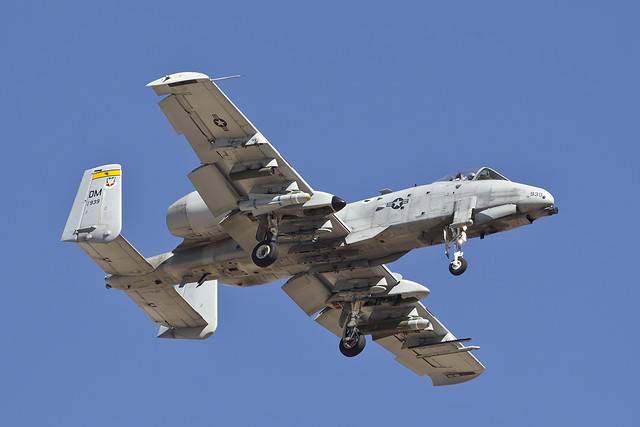
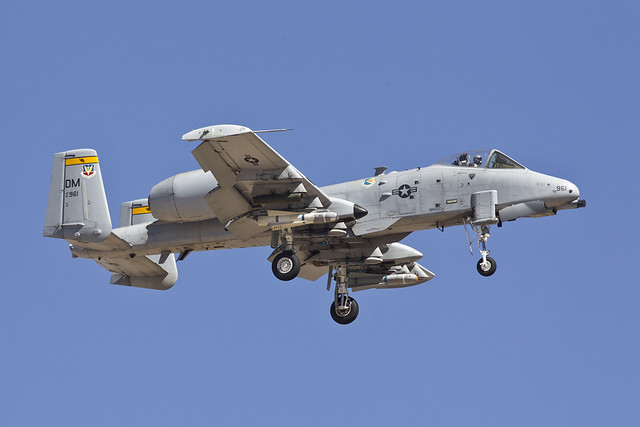
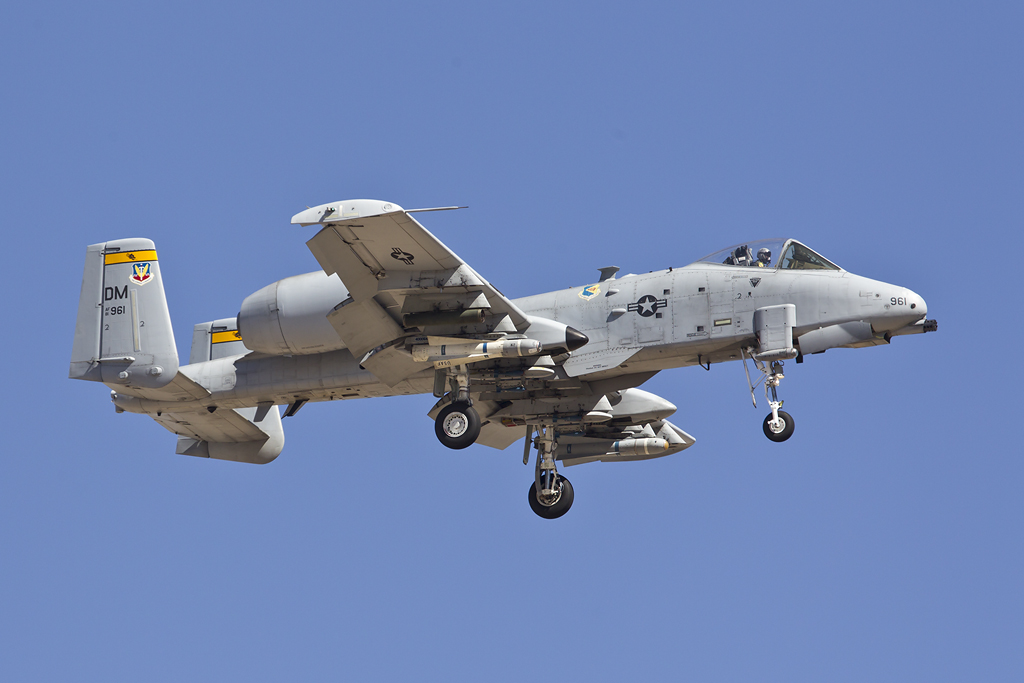
A-10C 81-0961 from the 357th Fighter Squadron. (Photo by Ned Harris) Full size
A-10C 80-0280, still without unit markings. (Photo by Ned Harris) Full size
A-10C 80-0181, still without unit markings. (Photo by Ned Harris) Full size
A-10C 80-0142 from the 357th Fighter Squadron. (Photo by Ned Harris) Full size
A-10C 81-0939 from the 357th Fighter Squadron. (Photo by Ned Harris) Full size
A-10C 81-0961 from the 357th Fighter Squadron. (Photo by Ned Harris) Full size
Tuesday, February 21, 2012
355th Equipment Maintenance Squadron fabrication
Released by 355th Fighter Wing Public Affairs

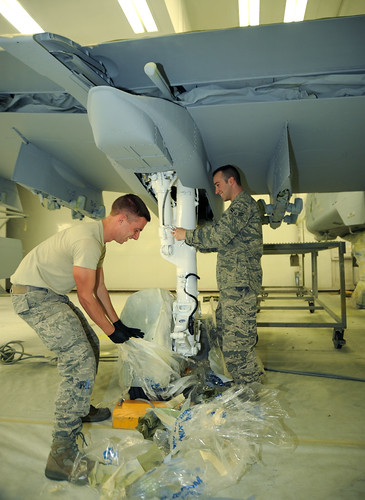
U.S. Air Force Airman 1st Class Andrew Lucas and Airman 1st Class Jonathan Hart, 355th Equipment Maintenance Squadron aircraft structural maintenance, remove tape, paper and sheets of plastic from around A-10 landing gear after painting the aircraft at Davis-Monthan Air Force Base, Ariz., Feb. 16. The whole process of painting one A-10 takes two weeks, one week to sand and one week to paint.
The fabrication shop at D-M consists of three separate areas which are aircraft metals technology, structural maintenance and the A-10 paint barn. (U.S. Air Force photo by Airman 1st Class Michael Washburn) Hi-res
Please note: For more related pictures please check the photo section of D-M's official website.
U.S. Air Force Airman 1st Class Andrew Lucas and Airman 1st Class Jonathan Hart, 355th Equipment Maintenance Squadron aircraft structural maintenance, remove tape, paper and sheets of plastic from around A-10 landing gear after painting the aircraft at Davis-Monthan Air Force Base, Ariz., Feb. 16. The whole process of painting one A-10 takes two weeks, one week to sand and one week to paint.
The fabrication shop at D-M consists of three separate areas which are aircraft metals technology, structural maintenance and the A-10 paint barn. (U.S. Air Force photo by Airman 1st Class Michael Washburn) Hi-res
Please note: For more related pictures please check the photo section of D-M's official website.
Saturday, February 11, 2012
Ensuring quality munitions
by Airman 1st Class Saphfire Cook
355th Fighter Wing Public Affairs
Hi-res
U.S. Air Force Staff Sgt. Brent Stockton, 355th Equipment Maintenance Squadron sorts rounds as they come out of the GFU-7 on Davis-Monthan Air Force Base, Ariz., Feb. 8, 2012. (U.S. Air Force photo by Airman 1st Class Christine Griffiths) Hi-res
2/10/2012 - DAVIS-MONTHAN AIR FORCE BASE, Ariz. -- When you step into the bay the prep work being done by the 355th Equipment Maintenance Squadron munitions section is reminiscent of the percussion-heavy show 'STOMP'. The clanging of aluminum resounds throughout the shop as Airmen remove canister lids and drag barrels into place. The crew is preparing to fire up the GFU-7, or what they call the "Dragon", and feed it belts of 30mm ammunition.
This particular shop in the 355th EMS munitions section is responsible for processing A-10 30mm ammo belts and ensuring that there are no empty rounds in the strip.
"The aircraft don't always expend the full can of 30mm rounds, "said Tech. Sgt. Sean Parker, 355th EMS production supervisor. "This leaves gaps in the belts and it's our job to replace these spaces with live ammunition."
The ammo processing shop works on a swing shift from 4 p.m. until midnight. They spend their eight-hour days moving canisters of unprocessed ammo through the GFU-07.
"Under optimal conditions, we average about one can every ten minutes," Parker said.
Doing the math, it comes out to about six cans an hour, or 48 cans a day.
"The cans of expended rounds are loaded onto the Dragon's rail system and fed into the machine," Park said. "There is a section in the machine that allows for spent rounds to fall through."
An unspent round still contains a projectile. When the rounds get to the chute, the projectile is what holds the unspent rounds in the machine. If there is no projectile, the rounds fall out of the machine and into a canister.
"We make sure that there is good ammo on the flight line," said Airman 1st Class Zachary Crabb, 355th EMS. "Providing quality munitions is vital to the mission."
Source
355th Fighter Wing Public Affairs
U.S. Air Force Staff Sgt. Brent Stockton, 355th Equipment Maintenance Squadron sorts rounds as they come out of the GFU-7 on Davis-Monthan Air Force Base, Ariz., Feb. 8, 2012. (U.S. Air Force photo by Airman 1st Class Christine Griffiths) Hi-res
2/10/2012 - DAVIS-MONTHAN AIR FORCE BASE, Ariz. -- When you step into the bay the prep work being done by the 355th Equipment Maintenance Squadron munitions section is reminiscent of the percussion-heavy show 'STOMP'. The clanging of aluminum resounds throughout the shop as Airmen remove canister lids and drag barrels into place. The crew is preparing to fire up the GFU-7, or what they call the "Dragon", and feed it belts of 30mm ammunition.
This particular shop in the 355th EMS munitions section is responsible for processing A-10 30mm ammo belts and ensuring that there are no empty rounds in the strip.
"The aircraft don't always expend the full can of 30mm rounds, "said Tech. Sgt. Sean Parker, 355th EMS production supervisor. "This leaves gaps in the belts and it's our job to replace these spaces with live ammunition."
The ammo processing shop works on a swing shift from 4 p.m. until midnight. They spend their eight-hour days moving canisters of unprocessed ammo through the GFU-07.
"Under optimal conditions, we average about one can every ten minutes," Parker said.
Doing the math, it comes out to about six cans an hour, or 48 cans a day.
"The cans of expended rounds are loaded onto the Dragon's rail system and fed into the machine," Park said. "There is a section in the machine that allows for spent rounds to fall through."
An unspent round still contains a projectile. When the rounds get to the chute, the projectile is what holds the unspent rounds in the machine. If there is no projectile, the rounds fall out of the machine and into a canister.
"We make sure that there is good ammo on the flight line," said Airman 1st Class Zachary Crabb, 355th EMS. "Providing quality munitions is vital to the mission."
Source
Monday, January 30, 2012
355th Operations Support Squadron Control Tower
Released by 355th Fighter Wing Public Affairs

An A-10 takes off from the flightline on Davis-Monthan Air Force Base, Ariz., Jan. 25. The control tower plays a vital role in ensuring safety of the pilots and the aircraft. (U.S. Air Force photo by Airman 1st Class Michael Washburn) Hi-res
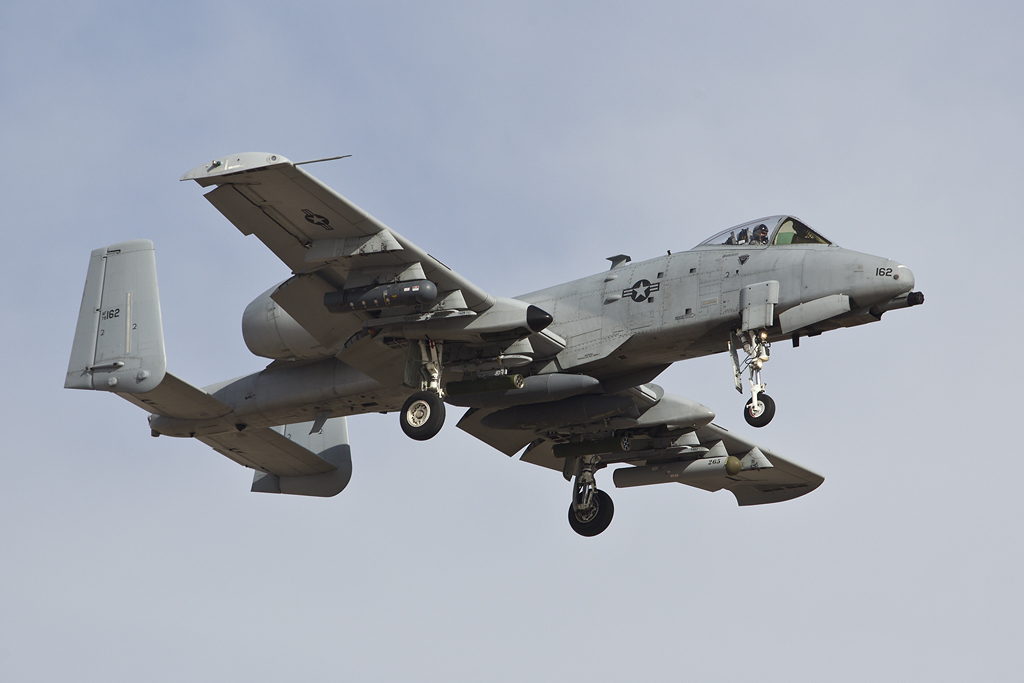
Note: Pictured is A-10C 162 from the 354th Fighter Squadron.
An A-10 takes off from the flightline on Davis-Monthan Air Force Base, Ariz., Jan. 25. The control tower plays a vital role in ensuring safety of the pilots and the aircraft. (U.S. Air Force photo by Airman 1st Class Michael Washburn) Hi-res
Note: Pictured is A-10C 162 from the 354th Fighter Squadron.
Monday, January 16, 2012
163th Fighter Squadron A-10Cs caught at D-M January 14, 2012
At Davis-Monthan AFB, Arizona, Warthog News contributor Ned Harris from the United States had the opportunity to take the following shots:

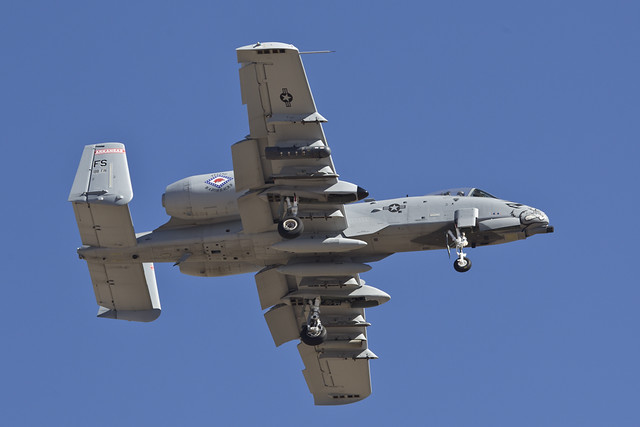
Three more A-10Cs from the 163rd Fighter Squadron "Blacksnakes", 122nd Fighter Wing (Indiana ANG), Fort Wayne IAP, arrive at D-M. (Photo by Ned Harris) Full size

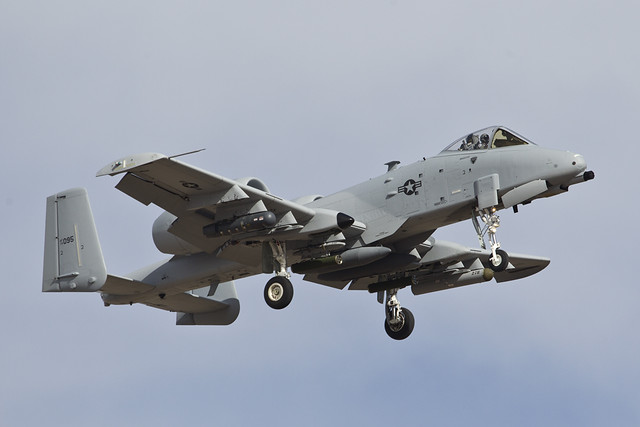
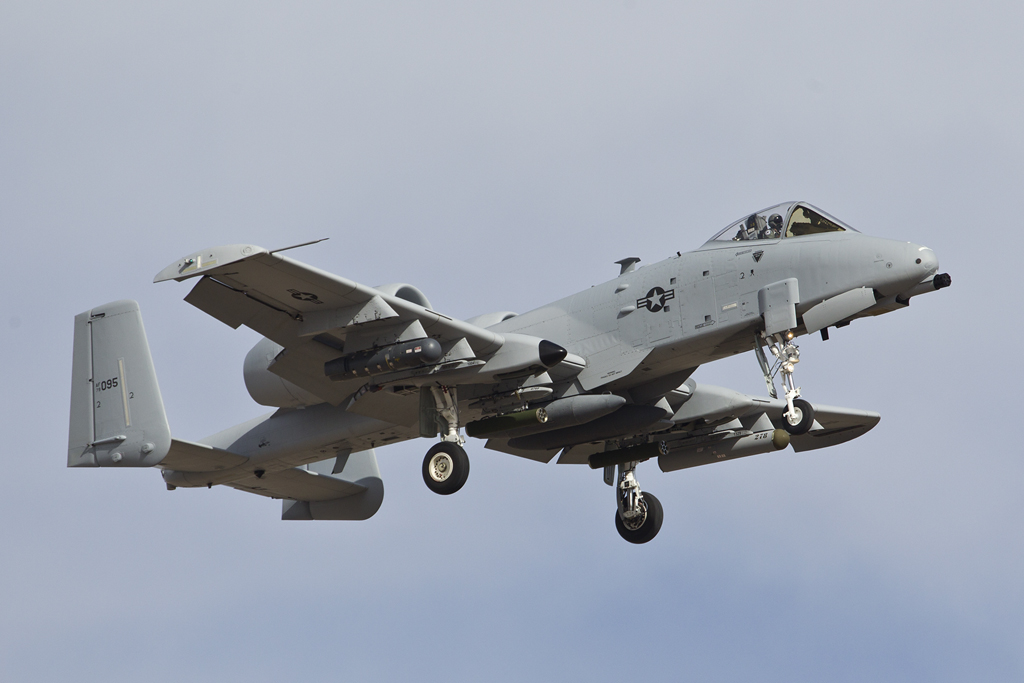
A-10C 79-0095 still only with tail number. (Photo by Ned Harris) Full size

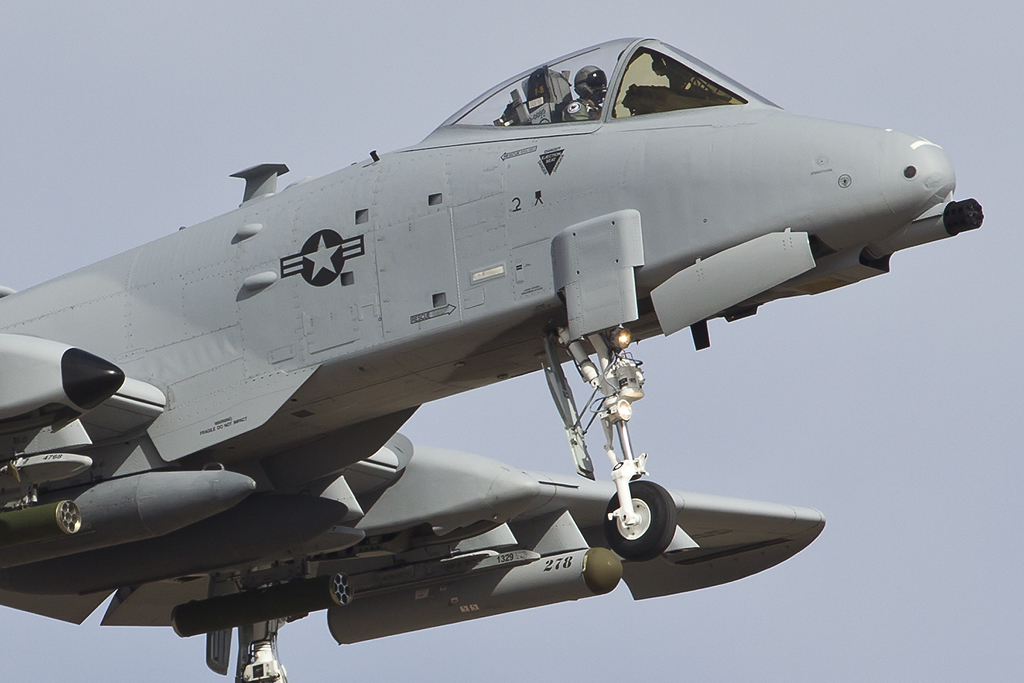
A closer look on A-10C 79-0095. (Photo by Ned Harris) Full size

A-10C 79-0162 still only with tail and bow number. (Photo by Ned Harris) Full size

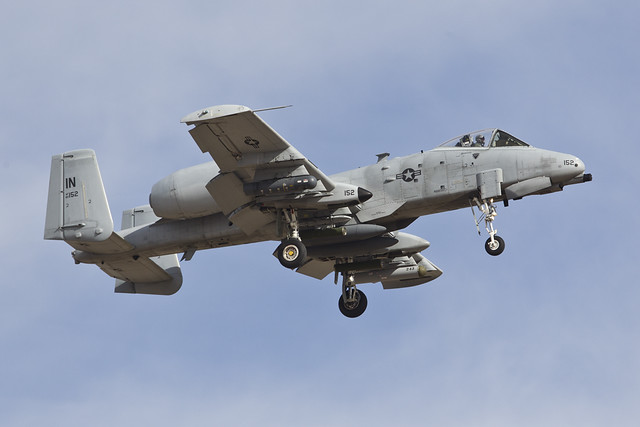
A-10C 80-0152 already with IN tail code, and the last three digits also painted on the right main gear well. (Photo by Ned Harris) Full size

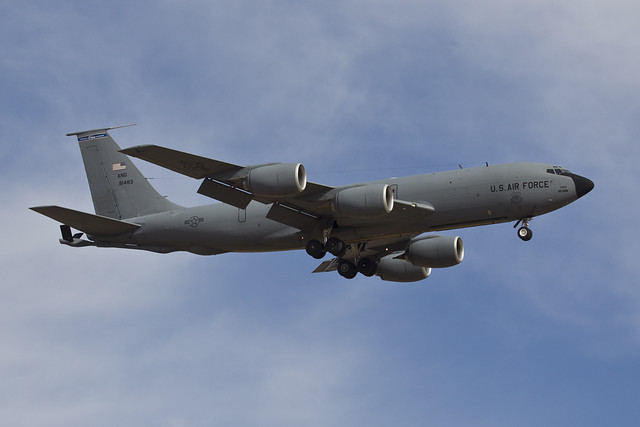
Ohio ANG KC-135 Stratotanker arriving just prior to "Blacksnakes" A-10Cs. Probably their supporting tanker. (Photo by Ned Harris) Full size
Full size
Loadout configuration:
Station 1: empty
Station 2: SUU-25 Flare Dispenser
Station 3: LAU-117 launch rail (for a single AGM-65 or CATM-65 Maverick)
Station 4: Triple Ejector Rack (TER) with a LAU-131 Rocket Pod on the bottom
Station 5: MXU-648 baggage pod
Station 6: empty
Station 7: MXU-648 baggage pod
Station 8: Triple Ejector Rack (TER) with a LAU-131 Rocket Pod on the bottom
Station 9: LAU-117 launch rail (for a single AGM-65 or CATM-65 Maverick)
Station 10: AN/AAQ-28 LITENING AT targeting pod
Station 11: empty
Note: mounting a LAU-131 Rocket Pod to a TER (designed for "dumb" and practice bombs) is unusual and a very rare view. Maybe they did that to ferry the pods to their TDY location. But as mentioned in Jake Melampy's book "The Modern Hog Guide - The A-10 Warthog Exposed", in the 1980's it was not uncommon to see them hanging from the bottom of a TER mounted on stations 4/8 and 5/7 (See page 114).
See also:
163th Fighter Squadron A-10Cs caught at D-M January 10, 2012
Note: According to a comment from Anonymous, they are on a training TDY as part of "Operation Snowbird". Logged so far by Ned's pictures are:
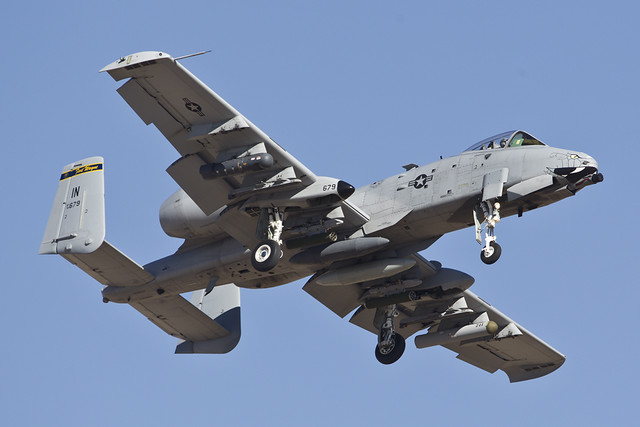
A-10C 78-0679 (10 January arrival)
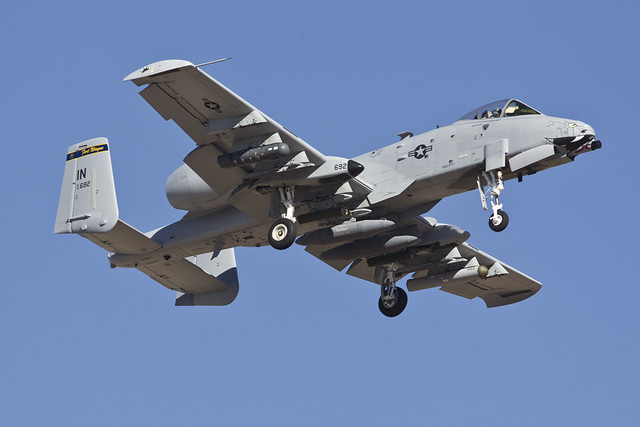
A-10C 78-0692 (10 January arrival)
A-10C 79-0095 (14 January arrival)
A-10C 79-0162 (14 January arrival)
A-10C 80-0152 (14 January arrival)
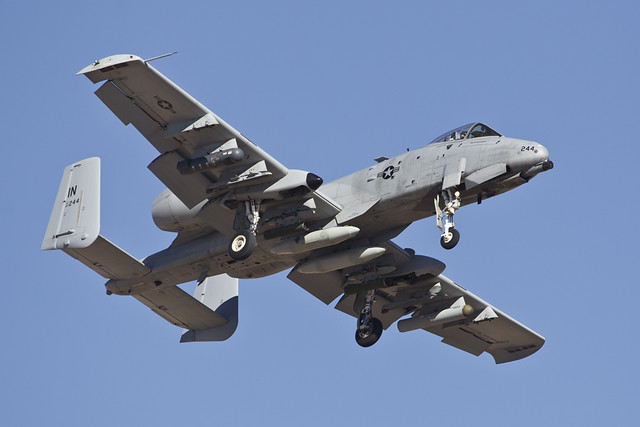
A-10C 80-0244 (10 January arrival)
Please note: Photo captions will be further updated soon.
Please also note: In a couple of days I will post an A-10C aircraft inventory update of the 163rd Fighter Squadron "Blacksnakes". I've already logged 15 aircraft. Anybody who can/will tell me the serial numbers of the remaining others? I would be very grateful for any support.
Three more A-10Cs from the 163rd Fighter Squadron "Blacksnakes", 122nd Fighter Wing (Indiana ANG), Fort Wayne IAP, arrive at D-M. (Photo by Ned Harris) Full size
A-10C 79-0095 still only with tail number. (Photo by Ned Harris) Full size
A closer look on A-10C 79-0095. (Photo by Ned Harris) Full size
A-10C 79-0162 still only with tail and bow number. (Photo by Ned Harris) Full size
A-10C 80-0152 already with IN tail code, and the last three digits also painted on the right main gear well. (Photo by Ned Harris) Full size
Ohio ANG KC-135 Stratotanker arriving just prior to "Blacksnakes" A-10Cs. Probably their supporting tanker. (Photo by Ned Harris) Full size
Full size
Loadout configuration:
Station 1: empty
Station 2: SUU-25 Flare Dispenser
Station 3: LAU-117 launch rail (for a single AGM-65 or CATM-65 Maverick)
Station 4: Triple Ejector Rack (TER) with a LAU-131 Rocket Pod on the bottom
Station 5: MXU-648 baggage pod
Station 6: empty
Station 7: MXU-648 baggage pod
Station 8: Triple Ejector Rack (TER) with a LAU-131 Rocket Pod on the bottom
Station 9: LAU-117 launch rail (for a single AGM-65 or CATM-65 Maverick)
Station 10: AN/AAQ-28 LITENING AT targeting pod
Station 11: empty
Note: mounting a LAU-131 Rocket Pod to a TER (designed for "dumb" and practice bombs) is unusual and a very rare view. Maybe they did that to ferry the pods to their TDY location. But as mentioned in Jake Melampy's book "The Modern Hog Guide - The A-10 Warthog Exposed", in the 1980's it was not uncommon to see them hanging from the bottom of a TER mounted on stations 4/8 and 5/7 (See page 114).
See also:
163th Fighter Squadron A-10Cs caught at D-M January 10, 2012
Note: According to a comment from Anonymous, they are on a training TDY as part of "Operation Snowbird". Logged so far by Ned's pictures are:
A-10C 78-0679 (10 January arrival)
A-10C 78-0692 (10 January arrival)
A-10C 79-0095 (14 January arrival)
A-10C 79-0162 (14 January arrival)
A-10C 80-0152 (14 January arrival)
A-10C 80-0244 (10 January arrival)
Please note: Photo captions will be further updated soon.
Please also note: In a couple of days I will post an A-10C aircraft inventory update of the 163rd Fighter Squadron "Blacksnakes". I've already logged 15 aircraft. Anybody who can/will tell me the serial numbers of the remaining others? I would be very grateful for any support.
Friday, January 13, 2012
Maintaining operational readiness
by Airman 1st Class Saphfire Cook
355th Fighter Wing Public Affairs
1/12/2012 - DAVIS-MONTHAN AIR FORCE BASE, Ariz. -- Aircraft not only fight wars, but they transport war fighters. This makes them an important factor to any deployment. During an operational readiness exercise the generation of aircraft is a major aspect. D-M held its first ORE of 2012 Jan 9-11 and the 355th Aircraft Maintenance Squadron played a pivotal role.
During an ORE, the 355th AMXS is broken up into cells. Each cell spends its days loading fuel tanks and munitions onto A-10C aircraft on the flightline.
"Our goal during an ORE is to generate 22 aircraft in 24 hours," said Master Sgt. Andrew White, 355th AMXS maintainer and the cell boss of Cell Six. Squadron members work 24-hour operations split into two 12-hour shifts to meet this deadline.
"These exercises are about practicing the steps required to deploy our A-10s to any overseas conflict," White said. "If a real-world deployment order dropped we would have to work around the clock to get the planes ready. So we try to play like we work."
During this 24-hour manning, the focus is kept on pumping out combat-ready aircraft.
"We have to strip the name from the aircraft for operational security reasons, check the in-flight refueling then load the guns," White said.
After the guns are locked and loaded, maintainers hang avionics pods, missile racks and a roughly 600-gallon external fuel tank that takes a minimum crew of three to lift.
A group of Airmen perform these tasks simultaneously, with it all culminating in a combat-ready aircraft.
"The planes cannot fly without all of its components, such as the engine, in working order," said Tech. Sgt. Omar Wright, 355th AMXS aerospace propulsion mechanic. "We maintain the parts so that the plane can fly. As long as the planes can fly, the mission gets done."
Airmen from the 355th Component Maintenance Squadron and 355th Equipment Maintenance Squadron collaborate with members of the 355th AMXS to ensure that all tasks were completed on time.
"It is a team effort from across the group and the wing to make a successful ORE happen," White said.
Source
355th Fighter Wing Public Affairs
1/12/2012 - DAVIS-MONTHAN AIR FORCE BASE, Ariz. -- Aircraft not only fight wars, but they transport war fighters. This makes them an important factor to any deployment. During an operational readiness exercise the generation of aircraft is a major aspect. D-M held its first ORE of 2012 Jan 9-11 and the 355th Aircraft Maintenance Squadron played a pivotal role.
During an ORE, the 355th AMXS is broken up into cells. Each cell spends its days loading fuel tanks and munitions onto A-10C aircraft on the flightline.
"Our goal during an ORE is to generate 22 aircraft in 24 hours," said Master Sgt. Andrew White, 355th AMXS maintainer and the cell boss of Cell Six. Squadron members work 24-hour operations split into two 12-hour shifts to meet this deadline.
"These exercises are about practicing the steps required to deploy our A-10s to any overseas conflict," White said. "If a real-world deployment order dropped we would have to work around the clock to get the planes ready. So we try to play like we work."
During this 24-hour manning, the focus is kept on pumping out combat-ready aircraft.
"We have to strip the name from the aircraft for operational security reasons, check the in-flight refueling then load the guns," White said.
After the guns are locked and loaded, maintainers hang avionics pods, missile racks and a roughly 600-gallon external fuel tank that takes a minimum crew of three to lift.
A group of Airmen perform these tasks simultaneously, with it all culminating in a combat-ready aircraft.
"The planes cannot fly without all of its components, such as the engine, in working order," said Tech. Sgt. Omar Wright, 355th AMXS aerospace propulsion mechanic. "We maintain the parts so that the plane can fly. As long as the planes can fly, the mission gets done."
Airmen from the 355th Component Maintenance Squadron and 355th Equipment Maintenance Squadron collaborate with members of the 355th AMXS to ensure that all tasks were completed on time.
"It is a team effort from across the group and the wing to make a successful ORE happen," White said.
Source
Wednesday, January 11, 2012
163th Fighter Squadron A-10Cs caught at D-M January 10, 2012
At Davis-Monthan AFB, Arizona, Warthog News contributor Ned Harris from the United States had the opportunity to take the following shots:

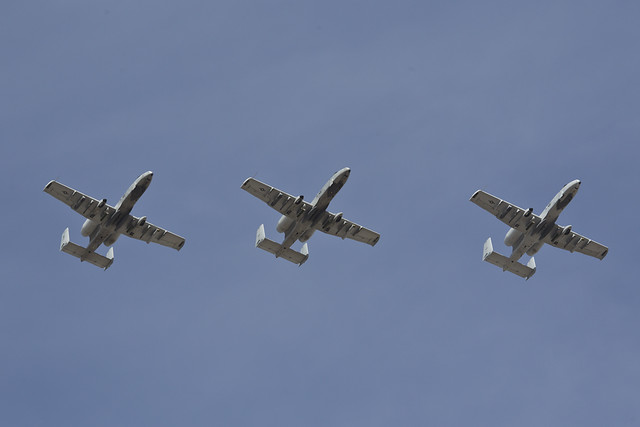
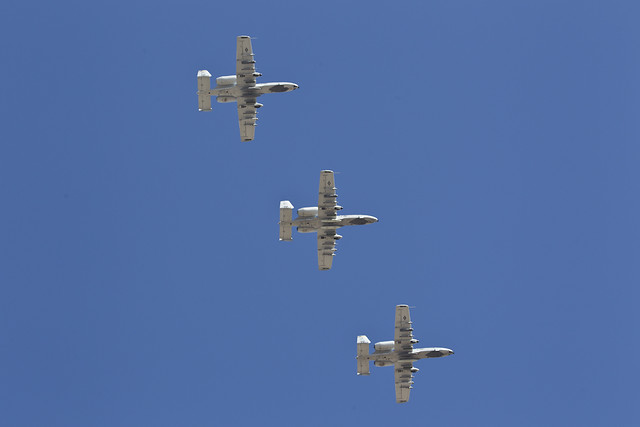
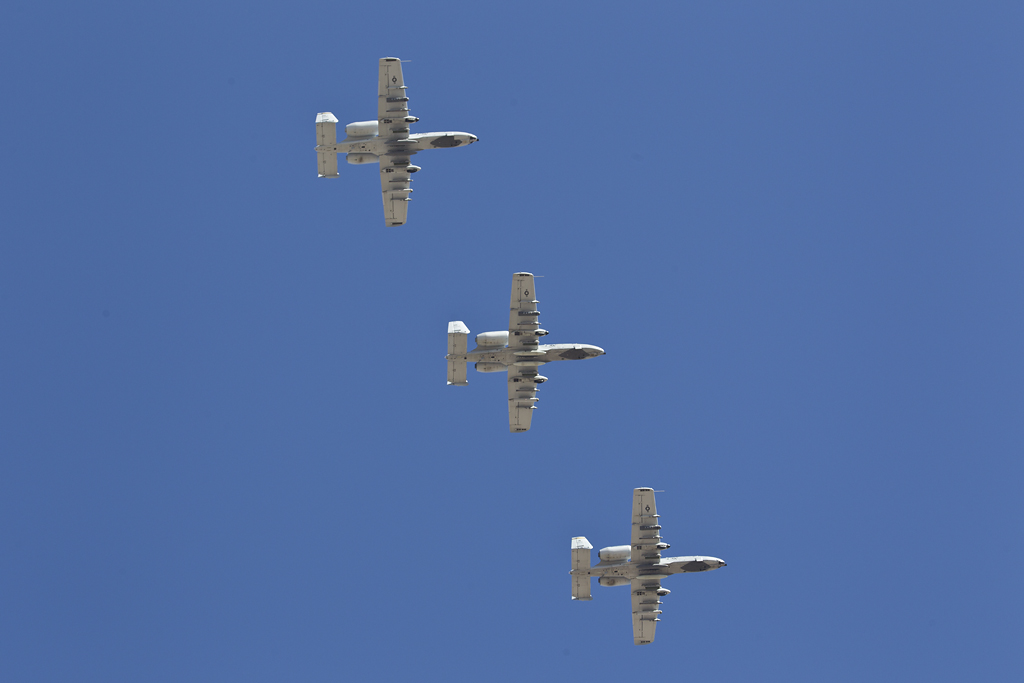
ICE 11 flight of three A-10Cs from the 163th FS "Blacksnakes" over Davis-Monthan AFB. (Photo by Ned Harris) Full size

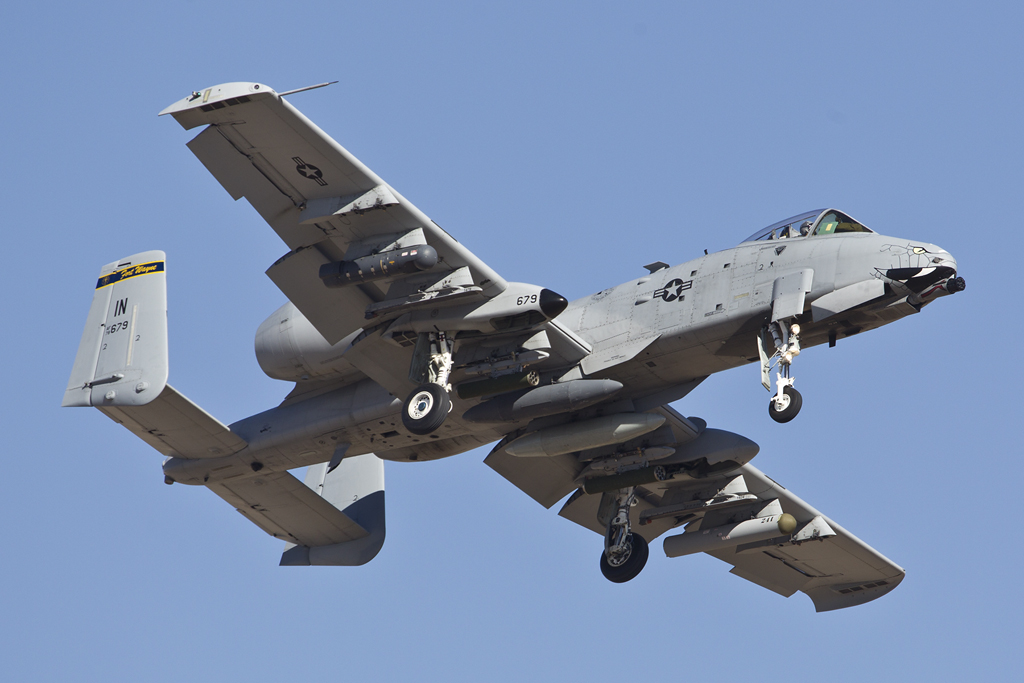
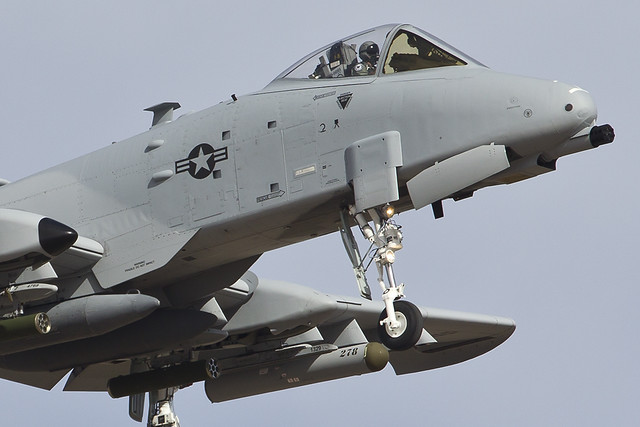
A-10C 78-0679. Note: Litening AT pod on Station 10, two MXU-648 Baggage pods, a rocket pod on station 4 and a possible rocket pod on Station 2.
(Photo by Ned Harris) Full size

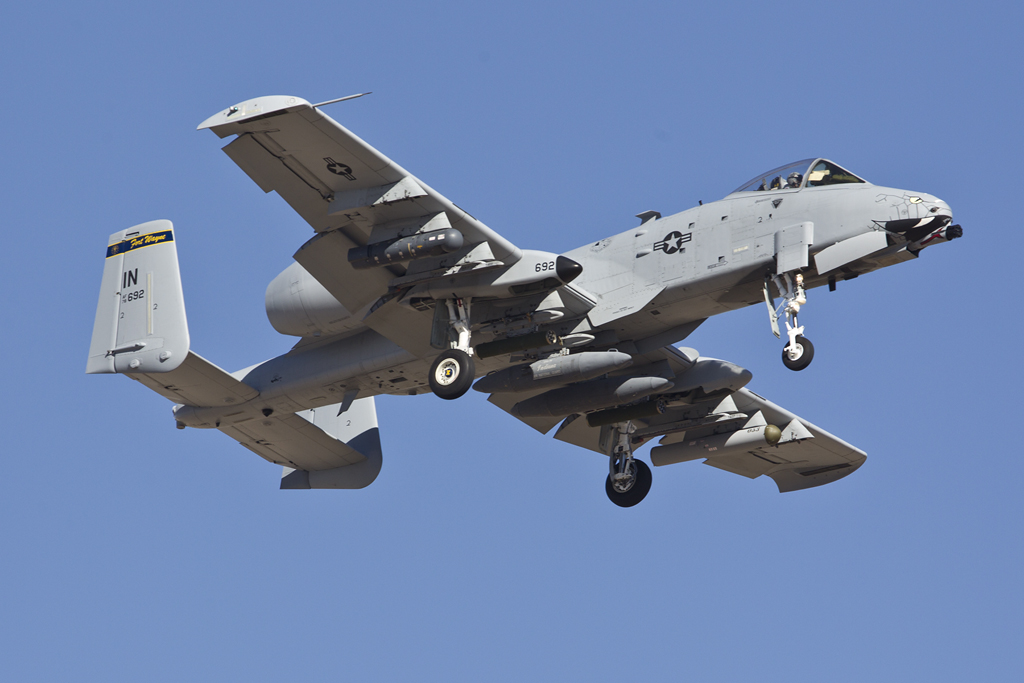
A-10C 78-0692. (Photo by Ned Harris) Full size

A-10C 80-0244. (Photo by Ned Harris) Full size
Please note: Loadout info will be updated soon.
Question: What did the "Blacksnakes" at D-M?
ICE 11 flight of three A-10Cs from the 163th FS "Blacksnakes" over Davis-Monthan AFB. (Photo by Ned Harris) Full size
A-10C 78-0679. Note: Litening AT pod on Station 10, two MXU-648 Baggage pods, a rocket pod on station 4 and a possible rocket pod on Station 2.
(Photo by Ned Harris) Full size
A-10C 78-0692. (Photo by Ned Harris) Full size
A-10C 80-0244. (Photo by Ned Harris) Full size
Please note: Loadout info will be updated soon.
Question: What did the "Blacksnakes" at D-M?
Subscribe to:
Posts (Atom)