Showing posts with label 354th Fighter Squadron. Show all posts

Monday, January 30, 2012

355th Operations Support Squadron Control Tower

Released by 355th Fighter Wing Public Affairs


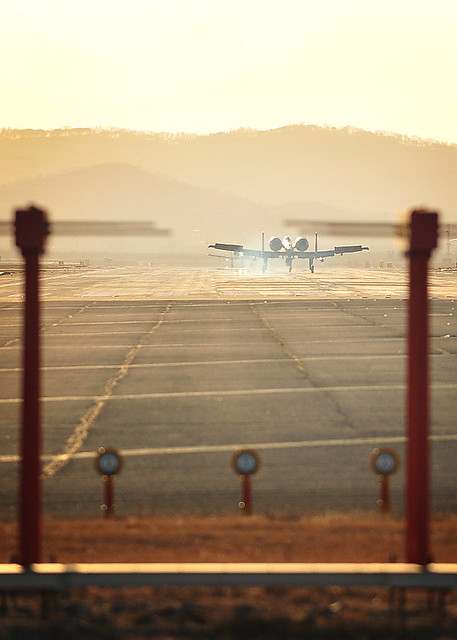
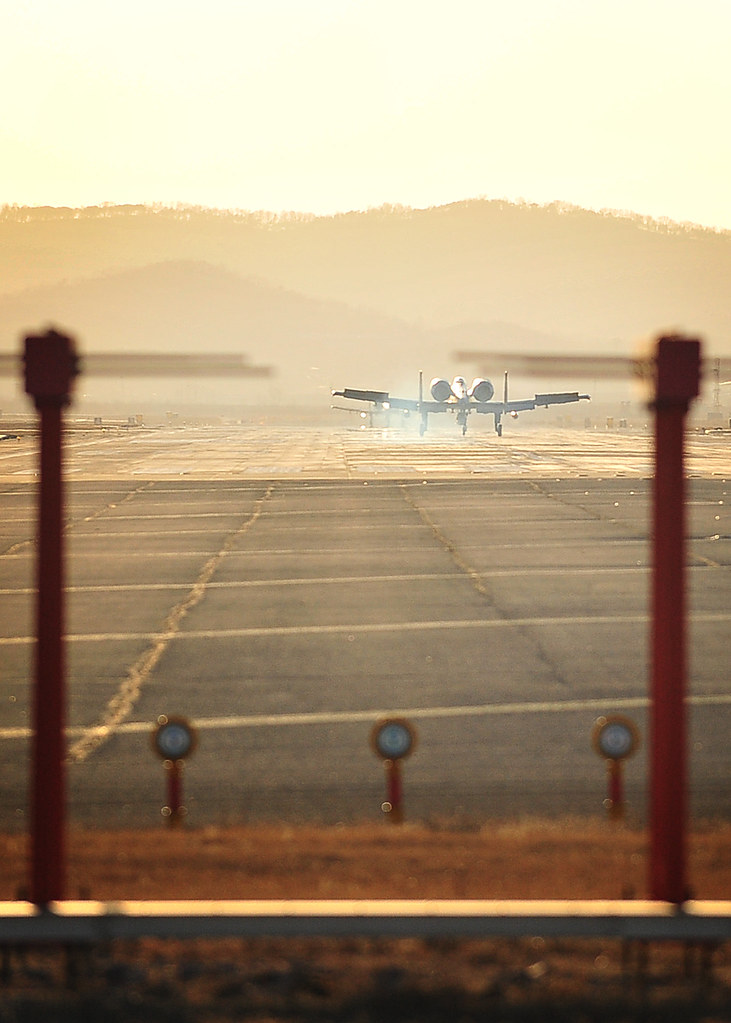
An A-10 takes off from the flightline on Davis-Monthan Air Force Base, Ariz., Jan. 25. The control tower plays a vital role in ensuring safety of the pilots and the aircraft. (U.S. Air Force photo by Airman 1st Class Michael Washburn) Hi-res

Note: Pictured is A-10C 162 from the 354th Fighter Squadron.

Saturday, December 17, 2011

354th Fighter Squadron Change of Command

Released by 355th Fighter Wing Public Affairs


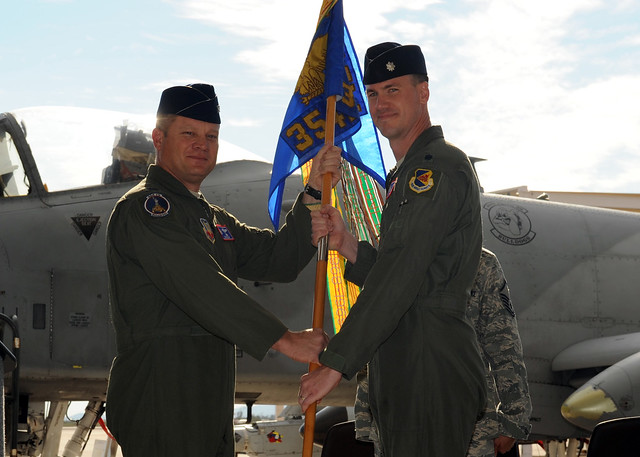
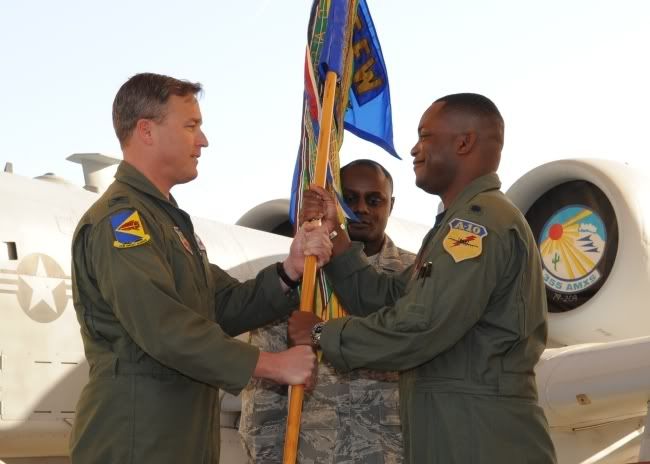
U.S. Air Force Lt. Col. Samuel Milam, 355th Operations Group commander, passes the guidon to Lt. Col. Daniel Luce [on the right] as he assumes command of the 354th Fighter Squadron on Davis-Monthan Air Force Base, Ariz. Dec. 16, 2011. Before assuming command of the 354th FS, Luce was the 355th Operations Support Squadron director of operations here on D-M. (U.S. Air Force photo by Airman 1st Class Timothy D. Moore) Hi-res

Note: The "Hog" with 354th FS "Bulldogs" insignia in the background should be A-10C 78-0706, formerly assigned to the 357th Fighter Squadron and marked as 357th FS boss bird. Anybody who can identify the cartoon art on the ALQ-131 ECM pod? It looks to me like a raven. It is usual to apply such art on ECM pods at D-M?

Wednesday, September 21, 2011

Bulldogs and MXG return from Osan


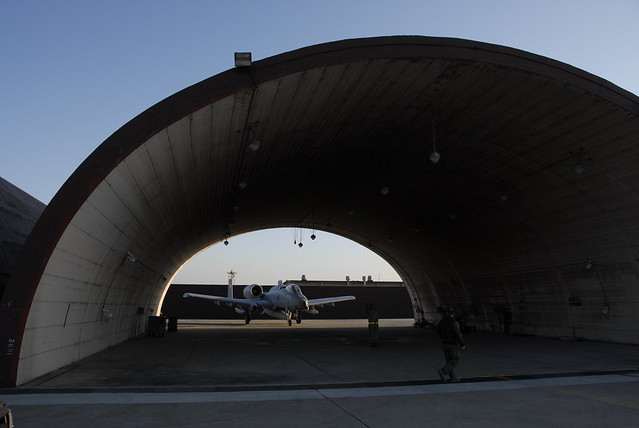
DAVIS-MONTHAN AIR FORCE BASE, Ariz. – Lt. Col. Clarence Johnson, 354th Fighter Squadron commander, navigates an A-10 into a sunshade after returning here from Osan Air Base, Republic of Korea Sept. 19. Members of the 354th FS, as well as squadron assets and members of the 355th Maintenance Group, recently returned from a 6-month deployment in Osan. (U.S. Air Force photo by Airman 1st Class Timothy D. Moore)

by Airman 1st Class Saphfire Cook
355th Fighter Wing Public Affairs

9/20/2011 - DAVIS-MONTHAN AIR FORCE BASE, Ariz. -- Airmen from the 354th Fighter Squadron and the 355th Maintenance Group returned here from a deployment Sept. 19.

Pilots, maintainers and other personnel were deployed to Osan Air Base, Republic of Korea for a six-month tour.

Six A-10s piloted by members of the 354th FS taxied onto the D-M flightline around 3 p.m.

"I'm just so excited for him to come home," said Nicole Yoakley, whose husband Capt. William Yoakley, 354th FS, was one of the returning pilots. "I'm especially excited for him to see Claire, our daughter, because she's grown so much since he's been gone."

As the pilots pulled into separate sunshades, the families were told which jet contained their loved-one.

"She's gotten so big, and she talks so well now," said Captain Yoakley of Claire Yoakley after he'd greeted his family.

Personnel and equipment from the 354th FS and 355th MXG arrived in a C-17 at approximately 6:45 p.m. and were bused to the hangar where their families waited.

"He's been gone for seven months," said Rhonda Zielinski of her husband Chief Master Sgt. Michael Zielinski, 354th Aircraft Maintenance Unit.

Also in the welcoming party was Chief Zielinski's grandson, Isaiah, who was born while he was deployed.

"This is the first time he's going to see Isaiah in person, so we can't wait for him to get off that bus," Mrs. Zielinski said.

Returnees piled off the bus and were warmly welcomed by family members, co-workers and commanders.

"The only pictures I've ever seen were from when he was first born," Chief Zielinski said. "He's grown so much already."

Before the families were released for the night, Col. Mark Murphy, 355th Maintenance Group commander, had a few words for the returnees.

"I just wanted to personally thank you all for your service to this great country," Colonel Murphy said. "Welcome home."

Lt. Col. Terry Koester, 355th Aircraft Maintenance Group commander, had a message for the spouses.

"Thank you to the spouses and families who came out for this homecoming," Colonel Koester said. "While your Airmen have been away working hard and fighting the good fight, you all have been here taking care of the home front."

The pilots, personnel and equipment from D-M were deployed to Osan to help with the defense of the Republic of Korea and to maintain stability in Northeast Asia.


DAVIS-MONTHAN AIR FORCE BASE, Ariz. – Capt. William Yoakley, 354th Fighter Squadron A-10 pilot, greets his family as he returns here from a deployment Sept. 19. Captain Yoakley just was on a six-month deployment at Osan Air Base, Republic of Korea. (U.S. Air Force photo by Airman 1st Class Timothy D. Moore) Hi-res

Source

Wednesday, August 24, 2011

D-M operational readiness exercise

Released by 355th Fighter Wing Public Affairs


DAVIS-MONTHAN AIR FORCE BASE, Ariz. – Lt. Col. Clarence Johnson, 354th Fighter Squadron commander, fastens the straps on his vest while Senior Airman Jeff Gronemyer, 355th Aircraft Maintenance Squadron crew chief, does a final inspection on the cockpit of an A-10 during the Phase 1 operational readiness exercise here Aug. 16. A Phase 1 ORE simulates Airmen preparing to deploy. (U.S. Air Force photo by Airman 1st Class Timothy D. Moore) Hi-res


DAVIS-MONTHAN AIR FORCE BASE, Ariz. – Senior Airman Jeff Gronemyer, 355th Aircraft Maintenance Squadron crew chief, wraps up a cord on the flight line during the Phase 1 operational readiness exercise here Aug. 16. Gronemyer began cleaning his work area as soon as the A-10 fighter jet he prepped left for takeoff. (U.S. Air Force photo by Airman 1st Class Timothy D. Moore) Hi-res

Saturday, May 21, 2011

355th Fighter Wing A-10s caught at D-M March 4, 2011 (Part Two)

At Davis-Monthan AFB, Arizona, Warthog News contributor James O'Rear from the United States had the opportunity to take the following pictures, uploaded on his Flickr photostream May 20:


A-10C 80-0211 from the 354th Fighter Squadron "Bulldogs" on final approach. Photo by James O'Rear) Full size


A-10C 79-0167 from the 354th Fighter Squadron "Bulldogs" (still without fin-flash) on final approach. (Photo by James O'Rear) Full size


A-10C 79-0178 from the 354th Fighter Squadron "Bulldogs" on final approach. (Photo by James O'Rear) Full size

Note: All three aircraft are carrying an external fuel tank and two MXU-648 baggage pods. That means it was a ferry flight.

See also: 355th Fighter Wing A-10s caught at D-M March 4, 2011 (Photos by Warthog News contributor Ned Harris from the United States)

Friday, March 11, 2011

More A-10s at Osan!

Posted 5 hours ago on D-M's Facebook website (Source):

Recently the 354 FS, known as the Bulldogs, deployed to Osan Air Base in Korea. Check out the link attached to hear what Lt. Col. Johnson, 354FS commander, had to say about this deployment.

PACAF Pixels
March 10, 2011
By 51st Fighter Wing Public Affairs at Osan Air Base at 11:20 PM


Full size

(Lt. Col. Clarence Johnson is from Greenville, Miss. He is the 354th Expeditionary Fighter Squadron commander, Osan Air base, Republic of Korea.)

Lt. Col. Johnson provided these comments March 9 shortly after his arrival to Osan. Twelve A-10C aircraft from the 355th Fighter Wing, Davis-Monthan Air Force Base, Arizona, have arrived at Osan as part of a scheduled deployment. The unit, called the 354th Expeditionary Fighter Squadron here, will replace the 100th Expeditionary Fighter Squadron at Kunsan that is returning to the 187th Fighter Wing, Alabama.


What goals do you have for your squadron while at Osan?
We hope to achieve the same thing that everyone here as part of the Korea team hopes to achieve, which is to provide for the defense of the Republic of Korea. We do that by flying close air support missions, combat search and rescue missions, and airborne forward air control missions. So that is our number one objective, to have the aircraft available and ready to do the mission. We also have a goal of being a part of the 51st Fighter Wing team. We’ll do that through participating in exercises, community-type events, and any other opportunity that comes along.

Is this your first time in Korea?
I was here in 2001-2002, almost a decade ago. I had a great time here then…the people are very friendly and the food is great. I got out and about then, and I intend to do the same this time around.

How was the flight over?
The flight over was long! We flew about 11 and ½ hours from Tucson to Hickam, about seven hours from Hickam to Wake Island, and about ten hours to get here. So it was a lengthy trip.

Is your unit motivated to be here taking on this mission?
Absolutely! We rolled after initially planning to go to Kandahar. After the initial shock of that whole transition, everyone is excited to be here and participate in and contribute to the 51st Fighter Wing.

Source

Thursday, March 10, 2011

Deployed unit provides vital support mission to South Korea


An A-10C aircraft arrives March 9 to Osan Air Base, Republic of Korea. The U.S. Air Force is deploying 12 A-10C aircraft from Davis-Monthan to Osan for approximately six months as part of a scheduled deployment. The unit, called the 354th Expeditionary Fighter Squadron, will replace the 100th Expeditionary Fighter Squadron at Kunsan that is returning to the 187th Fighter Wing, Alabama. (U.S. Air Force photo by Senior Master Sgt. Paul Holcomb) Hi-res

51st Fighter Wing Public Affairs

3/9/2011 - OSAN AIR BASE, Republic of Korea -- The U.S. Air Force is deploying 12 A-10C aircraft from Davis-Monthan to Osan for approximately six months as part of a scheduled deployment. The unit, called the 354th Expeditionary Fighter Squadron, will replace the 100th Expeditionary Fighter Squadron at Kunsan that is returning to the 187th Fighter Wing, Alabama.


An A-10C aircraft touches down March 9 at Osan Air Base, Republic of Korea. The U.S. Air Force is deploying 12 A-10C aircraft from Davis-Monthan to Osan for approximately six months as part of a scheduled deployment. The unit, called the 354th Expeditionary Fighter Squadron, will replace the 100th Expeditionary Fighter Squadron at Kunsan that is returning to the 187th Fighter Wing, Alabama. (U.S. Air Force photo by Staff Sgt. Daylena Gonzalez) Full size


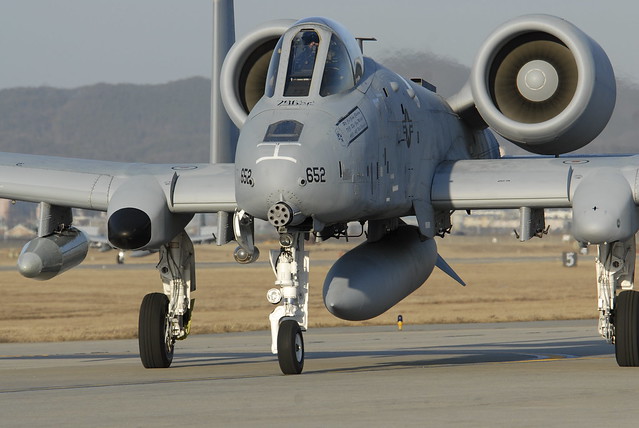
An A-10C aircraft from Davis-Monthan Air Force Base, Arizona, arrives March 9 to Osan Air Base, Republic of Korea. The U.S. Air Force is deploying 12 A-10C aircraft from Davis-Monthan to Osan for approximately six months as part of a scheduled deployment. The unit, called the 354th Expeditionary Fighter Squadron, will replace the 100th Expeditionary Fighter Squadron at Kunsan that is returning to the 187th Fighter Wing, Alabama. (U.S. Air Force photo by Senior Master Sgt. Paul Holcomb) Full size

Note: Pictured is A-10C 78-0652 from the 354th Fighter Squadron, marked 355FW/CC) as the 355th Fighter Wing's boss bird.


Crew chiefs receive the first A-10C aircraft from Davis-Monthan Air Force Base, Arizona, to land at Osan Air Base, Republic of Korea, March 9. The U.S. Air Force is deploying 12 A-10C aircraft from Davis-Monthan to Osan for approximately six months as part of a scheduled deployment. (U.S. Air Force photo by Senior Master Sgt. Paul Holcomb) Full size

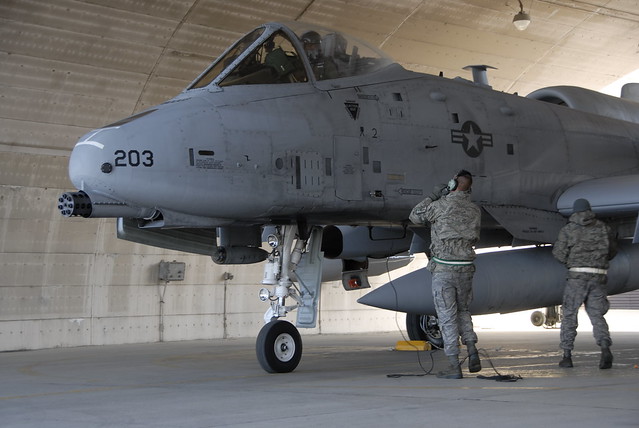
Note: Pictured is A-10C 80-0203, still without unit markings.


An A-10C aircraft arrives March 9 to Osan Air Base, Republic of Korea. The U.S. Air Force is deploying 12 A-10C aircraft from Davis-Monthan to Osan for approximately six months as part of a scheduled deployment. The unit, called the 354th Expeditionary Fighter Squadron, will replace the 100th Expeditionary Fighter Squadron at Kunsan that is returning to the 187th Fighter Wing, Alabama. (U.S. Air Force photo by Senior Master Sgt. Paul Holcomb) Full size

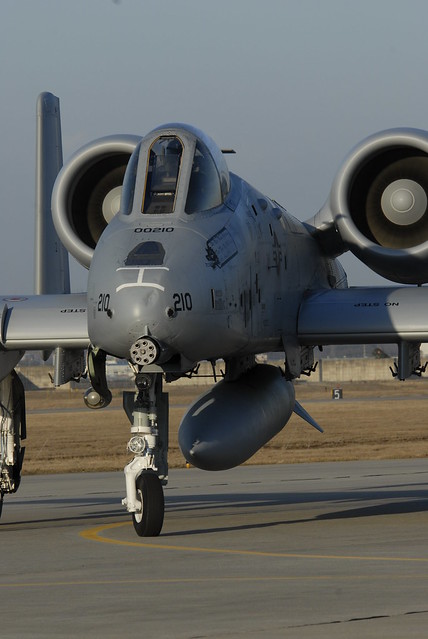
Note: Pictured is A-10C 80-0210 from the 357th Fighter Squadron.

Source

Please note: More pictures will be uploaded soon.


Original video transcript:

IT’S HERE. THE A10C THUNDERBOLT 2! WHILE OSAN AIR BASE HAS MANY A10’S OF THEIR OWN, THESE A10’S ARE SPECIAL. THEY’RE PART OF THE 354TH EXPEDITIONARY FIGHTER SQUADRON, HERE TO SUPPORT COMBAT CAPABILITIES IN THE REPUBLIC OF KOREA.

SB LT COL CLARENCE JOHNSON: WE ARE HERE IN SUPPORT OF THE THEATER SECURITY PROGRAM. AND WE WILL BOLSTER THE 51ST FIGHTER WING WITH TWELVE A10’S THAT ARE COMING FROM DAVIS MOTHAM AIR FOCE BASE.

IN ADDITION TO THE A10C’S, THE ARRIVAL OF THE 354TH BRINGS THE PILOTS AND MAINTAINERS THAT GO WITH THEM, A TOTAL OF ALMOST 350 NEW AIRMEN. AND ALL OF THEM READY TO GET INTO THE ACTION.

SB LT COL CLARENCE JOHNSON: WE’RE ALL EXCITED TO BE HERE AND WE’RE ALL EXCITED TO BE A PART OF THE 51ST FIGHTING TEAM AND WE’LL GET OUT AND ABOUT AND MAKE SURE THAT HAPPENS.

DURING THEIR SIX MONTH DEPLOYMENT, THE 354TH WILL PARTICIPATE IN AERIAL MISSIONS AND CLOSE AIR SUPPORT SIDE BY SIDE WITH THE 51ST FIGHTER WING. REPORTING FROM OSAN AIR BASE, I’M AIRMAN FIRST CLASS DAREK BACZEWSKI.

Note: The 354th EFS is commanded by Lt. Col. Clarence Johnson, identified as Tiny BULLDOG 1 by his helmet's inscription.

Wednesday, March 9, 2011

Tuesday, March 8, 2011

D-M Airmen deploy to Osan Air Base, Korea

Release Number: 020311

3/7/2011 - DAVIS-MONTHAN AIR FORCE BASE, Ariz. -- Airmen from the 354th Fighter Squadron and 355th Maintenance Group departed D-M March 3 and 7 to deploy to Osan Air Base, Republic of Korea, with a contingent of A-10C Thunderbolt II aircraft.

About 350 Airmen and 12 A-10s from D-M will form the 354th Expeditionary Fighter Squadron in the ROK, replacing the 134th Expeditionary Fighter Squadron. The 354th EFS will work alongside the ROK Air Force for approximately six months as part of a regularly scheduled deployment.

The 354th FS "Bulldogs" and the 355th MXG operate and maintain the A-10C, an attack aircraft primarily used to provide close air support to ground forces. The A-10 mission also includes combat search and rescue, and forward air control for other combat aircraft.

"The Airmen of 354th Fighter Squadron and 355th MXG continually train to be ready for deployment," said Col. John Cherrey, 355th Fighter Wing commander. "I have no doubt that they will do an outstanding job working alongside our ROK partners to ensure peace and stability in the region."

The 354th FS's last deployment was in 2009 to Kandahar Air Base, Afghanistan.

Source

Saturday, February 5, 2011

D-M Airman receives 2009 Shine Award

by Airman 1st Class Michael Washburn
355th Fighter Wing Public Affairs

2/4/2011 - DAVIS-MONTHAN AIR FORCE BASE, Ariz. -- Capt. Ethan Sabin, a fighter pilot from the 354th Fighter Squadron, received the 2009 Lt. Col. Anthony Shine Fighter Pilot Award in ceremony in the 355th Fighter Wing Headquarters building here Feb. 1.

The Shine Award is given annually to a pilot who is exceptional at flying and also heavily involved with the community.

In 1972, Colonel Shine, an A-7 pilot, disappeared above the border of North Vietnam and Laos, and was missing in action for 24 years. In 1996, the remains of the colonel were found and the Shine family was able to have a proper military funeral at Arlington National Cemetery.

"Thirty years ago, my mother established the Shine award to bring attention to the POW/MIA issue and to honor my father's excellence in flying and his commitment to community service," said Colleen Shine, daughter of Colonel Shine.

Captain Sabin was recognized because of the devotion to working with Habitat for Humanity and his organization of massive blanket and clothing drives, both in the United States and in Afghanistan.

Col. John Cherrey, 355th FW commander, presented the prestigious award to Captain Sabin.

"This truly is a prestigious award and I'm very humbled and grateful to receive it," Captain Sabin said. "I think the honor that goes along with this award is shared amongst fighter pilots and great Americans Air Force-wide, and I'm proud to be a part of this fabled history."

The award ceremony was certainly very special as two previous Shine Award winners were in attendance to meet and congratulate Captain Sabin, a first in the history of the award.

Robin Stoddard, a distributed mission operation Site manager, garnered the award in 1985. "I received the award 25 years ago, and it's great to see the Air Force carry on this legacy of heroes both in the air and on the ground" Mr. Stoddard said. "Captain Sabin is very well-deserving."

Retired Brig. Gen. Guy Walsh of the Maryland Air National Guard received the award in 1991. "It's a tremendous opportunity to present the award to Captain Sabin. I was able to see first-hand what he does as an Airman and not only as a pilot but also in what he did working for the Afghan kids and for the different community efforts while in Kandahar," General Walsh said. "It has been a great honor."

Ms. Shine continues to raise awareness of those who are POWs or MIA. "There are still 1,702 Americans unaccounted for from Vietnam," she said. "Not just statistics, but husbands, fathers, brothers and sons who are missed and loved and remembered. There are now over 600 U.S. personnel both military and civilian, working full time to account for America's POW/MIAs not only from Vietnam, but also World War II and Korea."

For more information, visit the National League of American POW/MIA website at www.powmialeague.org. The organization's Combined Federal Campaign number is 10218.


DAVIS-MONTHAN AIR FORCE BASE, Ariz. - Col. John Cherrey, 355th Fighter Wing commander, presents Capt. Ethan Sabin, a fighter pilot from the 354th Fighter Squadron, the 2009 Anthony Shine Award at the 355th FW headquarters building here Feb. 1. The Shine Award is given annually to a pilot who is exceptional at flying and also heavily involved with the community. (U.S. Air Force photo by Airman 1st Class Jerilyn Quintanilla) Hi-res


DAVIS-MONTHAN AIR FORCE BASE, Ariz. - Capt. Ethan Sabin, a fighter pilot from the 354th Fighter Squadron, stands in front of an A-7 fighter jet with retired Brig. Gen. Guy Walsh of the Maryland Air National Guard, and Robin Stoddard, a Distributed Mission Operation Site Manager, here Feb. 1. General Walsh and Mr. Stoddard are previous recipients of the prestigious award. (U.S. Air Force photo by Airman 1st Class Jerilyn Quintanilla) Hi-res


DAVIS-MONTHAN AIR FORCE BASE, Ariz. - Capt. Ethan Sabin, a fighter pilot from the 354th Fighter Squadron, holds an honorary knife with retired Brig. Gen. Guy Walsh of the Maryland Air National Guard, Robin Stoddard, a Distributed Mission Operation Site Manager, and Colleen Shine, daughter of Col. Shine, here Feb. 1. The knife is presented alongside of the Shine Award to pay homage to Colonel Shine, who was an avid collector. (U.S. Air Force photo by Airman 1st Class Jerilyn Quintanilla) Hi-res

Please note: This A-10 is preserved as a Gate Guard. Crew inscription: Plt Capt Patrick "Oly" Olson, DCC TSgt Jacob Smith, ADCC SrA Amon Cook

Source


Background info about Capt. Ethan Sabin:

Capt. Ethan E. Sabin is an U.S. Air Force Weapons School Class 10-A graduate of 2010. He was part of the 66th WPS (A-10) at Nellis AFB, Nevada.

Background info about Lt. Col. Anthony C. Shine:
Anthony Cameron Shine, Lieutenant Colonel, United States Air Force
D-M pilot named 2006 Shine Award winner

Saturday, May 8, 2010

Female A-10 pilot mentors young ladies at Girls, Inc. event

Released today or yesterday by 355th Fighter Wing Public Affairs:


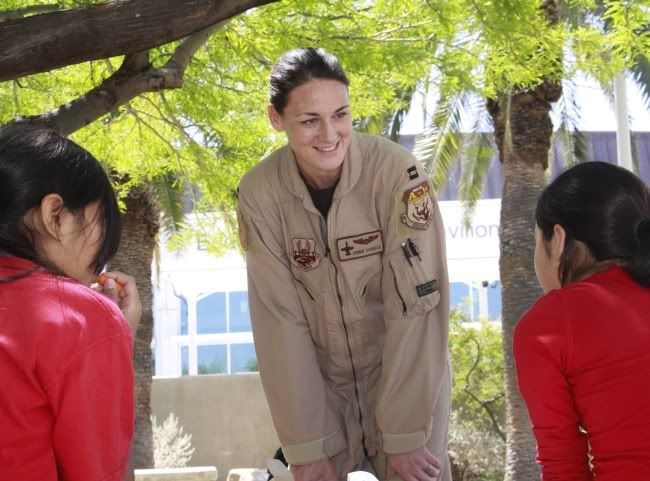
Capt. Jennifer Schoeck, 354th Fighter Squadron assistant director of operations, addresses students from Lawrence Intermediate School as part of the Girls, Incorporated "Girls and Women in Sport" event April 25, 2010. The event was designed to encourage girls to develop a healthy lifestyle through lifelong involvement in sports and exercise. Captain Schoeck was invited to speak because of her experience playing Division I soccer at the U.S. Air Force Academy and her success in a traditionally male-dominated field. (Photo by Bethany Conway) Hi-res


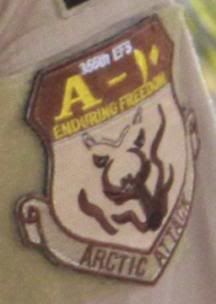
Note: On the left arm of her flight suite, Capt. Jennifer Schoeck is wearing a patch with the inscription 355th EFS - A-10 - Enduring Freedom - ARCTIC ATTACK

Wednesday, February 24, 2010

Lt. Col. Clarence A. Johnson Jr. assumed command of the 354th Fighter Squadron

Released today by 355th Fighter Wing Public Affairs:


Lt. Col. Clarence A. Johnson Jr. (right) receives the 354th Fighter Squadron's guidon from Col. Edward A. Kostelnik Jr., the 355th Operations Group commander, during a change-of-command ceremony on the flight line here February 19, 2010. Colonel Johnson assumed command of the squadron from Lt. Col. Michael Millen, who commanded the squadron for slightly more than two years. Colonel Johnson is a senior pilot with more than 2,000 hours in the A-10. (U.S. Air Force photo by Airman Jerilyn Quintanilla) Hi-res

Note: On his left engine, the A-10 in the background wears an air intake cover with the inscriptions 79-0209 (serial number) and 355 AMXS for 355th Aircraft Maintenance Squadron.

Sunday, July 19, 2009

The 355th Fighter Wing makes deployment history

by Doug Herndon
355th Fighter Wing History Office

7/17/2009 - DAVIS-MONTHAN AIR FORCE BASE, Ariz. -- Airmen from the 355th Fighter Wing made Air Force history last week by deploying the first A-10C aircraft and maintenance support elements to Afghanistan. The bulk of the deployment occurred Saturday with more than 100 personnel, primarily from the 355th Maintenance group departing on a chartered flight.

"They are motivated and ready to deploy," said Master Sgt. Jose Silva, first sergeant for the 355th Aircraft Maintenance Squadron.

The Airmen are expected to be gone for six months and return around the beginning of the new year.

Wing personnel are no strangers to Operation Enduring Freedom. Since the beginning of OEF in 2001, the wing's 354th FS "Bulldogs," maintenance and support personnel have deployed four times to Bagram Airfield. The current deployment comes at a time when the President has ordered an increase in the number of military forces in the region.

Along with the deployment notification, the 355th Maintenance Group was also tasked with two major projects: a precision engagement software upgrade, known as Suite 5, and attaching the Sniper Advanced Targeting Pods to the jets.

The Suite 5 upgrade, which required uploading the software on the jet's computer system, had to be tested before pilots could train on the new system. The new software, which enhances the display in the cockpit with a much clearer and sharper image, was loaded and made completely functional in less than 60 days.

Another combat milestone will be reached during this deployment as the Bulldogs become the first A-10C unit to utilize the Sniper Advanced Targeting Pod in combat. The Sniper ATP allows pilots to locate, identify and track targets on the battlefield. Once the pods were received through the 355th Logistic Readiness Squadron, maintainers, with the aid of Lockheed Martin representatives, prepared the pods for the installation process. After the final checks, the Bulldogs spent several months flying both day and night missions to train on the newly installed equipment.

"Our maintenance personnel worked twelve- to fourteen-hour days, to include weekends. They really burned the midnight oil to ensure these projects were completed," said Mr. Bruce Black, 355th MXG deputy commander.

Source

D-M Airmen deploy in support of Operation Enduring Freedom

by 1st Lt. Mary Pekas
355th Fighter Wing Public Affairs

7/17/2009 - DAVIS-MONTHAN AIR FORCE BASE, Ariz. -- Nearly 300 Airmen and a number of A-10 Thunderbolt II aircraft from the 355th Fighter Wing here deployed to Afghanistan last week to support Operation Enduring Freedom.

The wing deployed pilots, maintainers and support personnel primarily from the 354th Fighter Squadron and the 355th Maintenance Group for a tour that will last approximately six months.

The 354th FS "Bulldogs" and the 355th MXG operate and maintain the A-10, an attack aircraft primarily used to provide close air support to ground forces. The A-10 mission also includes combat search and rescue, and forward air control for other combat aircraft.

"The 355th Fighter Wing is ready for combat," said Col. Robert Singleton, 355th Fighter Wing vice commander. "We are sending America's best warriors into harm's way, confident in their ability to successfully execute their mission."

The wing's last A-10 deployment was in 2007 at Bagram Air Field, Afghanistan, where its pilots flew more than 10,000 hours. Between deployments, the team of pilots and maintenance personnel take advantage of the unique, strategic training opportunities here in our desert landscape.

"The pilots of the 354th Fighter Squadron, under the leadership of Lt. Col. Michael Millen, have honed their skills on the incredible training ranges in southern Arizona. Our highly skilled maintainers have learned to generate combat capability during high operations tempos and temperature extremes," said the colonel. "The terrain, the weather, the airspace - few places offer such ideal training grounds."

While preparation is important to combat success, the colonel added that the Davis-Monthan and Tucson communities enable the mission in other ways.

"What brings our Airmen the most comfort is knowing their families are welcomed and cared for in this community," said Colonel Singleton. "With that assurance, our warriors can focus on bringing the fight to the enemy, and protecting our joint and coalition partners on the ground."

Source

Thursday, July 9, 2009

Hundreds from D-M will fight Taliban

A-10 pilots, support crews off to Afghanistan this week

By Carol Ann Alaimo
Arizona Daily Star
Tucson, Arizona | Published: 07.08.2009

Hundreds of Tucson airmen are headed to Afghanistan to help shore up the U.S. military's renewed focus on the region.

About 300 pilots, aircraft mechanics and support personnel from Davis-Monthan Air Force Base are due to leave by week's end for a six-month tour overseas.

A squadron of D-M's A-10 Thunderbolt II attack jets will lead the way, departing first. The jets will be followed a day or two later by remaining personnel from D-M's 354th "Bulldogs" Fighter Squadron and the 355th Maintenance Group.

The units, both part of the base's 355th Fighter Wing, operate and maintain the A-10. The aircraft's main role is providing close air support to ground troops, and it has been widely used in both Iraq and Afghanistan.

"The 355th Fighter Wing is ready for combat. We are sending America's best warriors into harm's way, confident in their ability to successfully execute their mission," said a statement from Col. Robert Singleton, the wing's vice commander.

While the airmen are away, they can take comfort "knowing their families are welcomed and cared for in this community," Singleton said.

The units last deployed in 2007 to Bagram Air Base in Afghanistan.

During that tour, D-M personnel flew nearly 1,400 combat missions, mostly providing airborne backup to ground troops driving the Taliban from southern Afghanistan.

Since then, the Taliban have reclaimed some ground, a trend cited by Navy Adm. Mike Mullen, chairman of the Joint Chiefs of Staff, in his recent announcement that America's military focus was shifting from Iraq to Afghanistan.

"I am gravely concerned about the progress they have made in the south and inside Pakistan," Mullen said of the Taliban in a statement in May on the Pentagon's Web site.

Singleton said D-M's pilots are well-prepared for war because they've been practicing under prime conditions in Southern Arizona.

"The terrain, the weather, the airspace — few places offer such ideal training grounds," he said.

Source

Saturday, February 28, 2009

354th FS hones CAS skills, capabilities at Green Flag East

by Staff Sgt. Jake Richmond
355th Fighter Wing Public Affairs


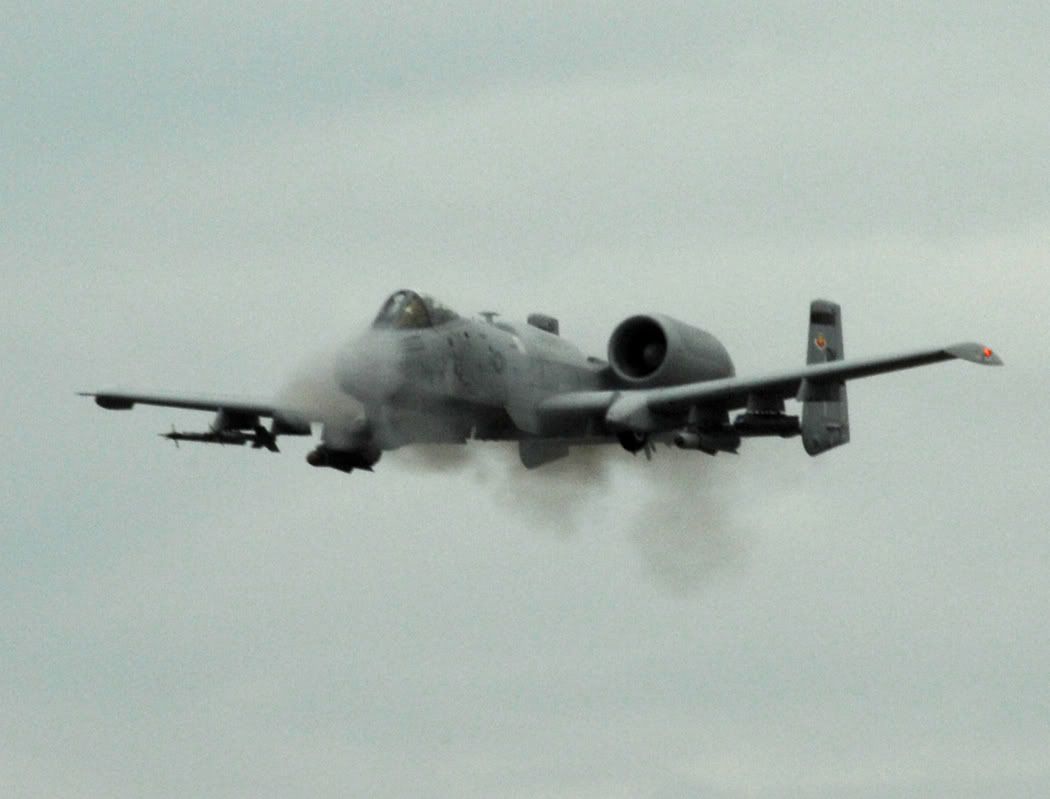
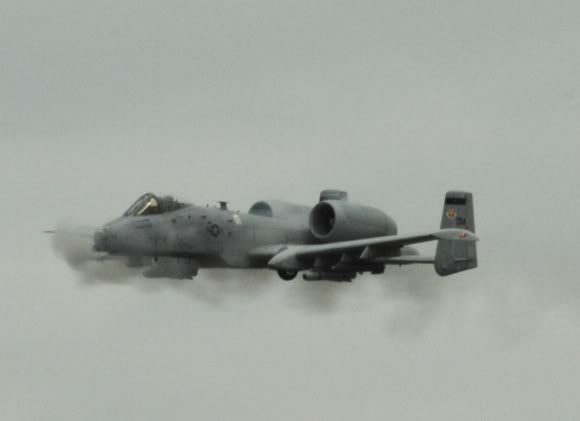
An A-10C from the 354th Fighter Squadron fires 30mm rounds from its GAU-8 cannon during moving-target strafe training at Green Flag East, a close-air support exercise in Louisiana. (U.S. Air Force photo by Staff Sgt. Jake Richmond) Hi-res

2/27/2009 - DAVIS-MONTHAN AIR FORCE BASE, Ariz. -- Members of the 354th Fighter Squadron returned today from their two-week participation in Green Flag East, a permanent-party exercise contingent at Barksdale AFB, La. The ongoing exercise is specifically designed to train flying units that perform air-to-ground combat.

The 354th FS attended GFE in preparation for their upcoming Air Expeditionary Force window.

"The training at Green Flag East relates directly to the missions CAS aircraft perform in Iraq and Afghanistan today," said Lt. Col. Michael Millen, 354th FS commander. "Green Flag is considered a must-do before an AEF spin-up, and it's been excellent training for the Bulldogs."

The purpose of the exercise is to train pilots together with Joint Terminal Attack Controllers and Army ground forces at the Joint Readiness Training Center at Fort Polk, La. And, thanks to unique agreements with three local governments and the existence of a one-of-a-kind simulated village, units can conduct that training in four separate urban environments.

Maj. Brendan O'Brien, the director of operations for Barksdale's 548th Combat Training Squadron, said pilots and ground troops use real people and vehicles in the cities of Oakdale, Leesville and Deridder, La., to mimic the process of accurately locating and tracking enemy and friendly forces - in an area with active roads and occupied buildings - all the way up to the moment when the target would be engaged with weapons.

The fourth location, aptly named "CAS Town," is located on military-owned land within restricted air space. There, contracted employees act like good guys and bad guys, and JTACs are tasked with identifying them correctly. Then, pilots have to avoid the simulated friendlies and other collateral damage, while the "enemies" are visibly firing simulated weapons at the aircraft. The village is also complete with strategically placed pyrotechnics, which ignite as soon as the imaginary munitions hit their target.

Even though no bombs are dropped and no bullets are fired, Colonel Millen said it still provides an immensely important and distinctive training arena for a difficult part of the CAS mission.

"Our focus here is almost entirely on urban CAS, and it's not easy," he said. "Cities are busy places, and trying to find and track the bad guys among thousands of non-combatants is difficult."

And it's not just the environment that presents the challenge. The GFE exercise planners, like Major O'Brien, constantly work to develop demanding training scenarios that reflect what warfighters are seeing downrange.

"Every time a unit comes in (to Green Flag), we pick the brains of the guys who recently came back from a deployment," Major O'Brien said. "Those guys have seen it up close and personal, and they help keep our training fresh and relevant."

Another part of the deployment training is getting pilots, JTACs and ground forces working comfortably in unison with new digital equipment being used in real combat zones - specifically, the new Tactical Air Control Party, Close Air Support System.

"This was the first time we've had a full unit of A-10Cs with digital capability working with JTACs and ground forces using TACP CASS," Colonel Millen said. "It's really perfect training to help our pilots get familiar with the kinds of combat situations they'll see on their deployments and help develop the tactics they'll be using."

Without TACP CASS, a pilot responding to a troops-in-contact, or TIC, would have to wait until he was in radio range of a JTAC to get much of the information necessary to conduct CAS. Using TACP CASS, JTACs can now digitally send crucial details to the cockpit before the pilot arrives at the engagement.

"A pilot can be en route to a TIC and have very good situational awareness on friendly and enemy positions and ground commanders' intent," said Capt. Andy Pitts, a former F-16 pilot who's now the operations officer in charge for GFE. "Before, pilots didn't really know the situation until they arrived."

Staff Sgt. Tyler Woodson, a JTAC assigned to the Georgia Air National Guard's 165th Air Support Operations Squadron, was also participating in GFE. He said "it's nice to give pilots a good picture of what's going on without having to say much -- and that has noticeable benefits in the fight."

"The technology really makes it easier," Sergeant Woodson said. "From the time the aircraft checks in with us to the time munitions hit the ground is a lot faster than before."

He said he and his fellow JTACs were making the most of their time to learn new and better ways to work with the air component of the CAS process, especially since they all have the same goal.

"There's nothing like the opportunity to go out and give guys on the ground the help they need," he added. "To know in your heart and mind that good guys are going home because you did your job right...that's why we do this."

Source


An A-10C from the 354th Fighter Squadron fires 30mm rounds from its GAU-8 cannon during moving-target strafe training at Green Flag East. (U.S. Air Force photo by Staff Sgt. Jake Richmond) Hi-res


An A-10C from the 354th Fighter Squadron approaches a target and prepares to fire 30mm rounds from its GAU-8 cannon during training at Green Flag East. (U.S. Air Force photo by Staff Sgt. Jake Richmond) Hi-res


Two Joint Terminal Attack Controllers coordinate a close-air support attack as an A-10C from the 354th Fighter Squadron, dropping flares, approaches to perform moving-target strafe training during Green Flag East, an exercise in Louisiana for flying units that perform air-to-ground combat. (U.S. Air Force photo by Staff Sgt. Jake Richmond) Hi-res


Rounds from an A-10's 30mm GAU-8 cannon impact the ground during moving-target strafe training, a part of the Air Force's Green Flag East exercise in Louisiana. Davis-Monthan's 354th Fighter Squadron participated in GFE for two weeks to enhance their close-air support tactics and capabilities. (U.S. Air Force photo by Staff Sgt. Jake Richmond) Hi-res
Wednesday, February 25, 2009

Exercise offers A-10 crews chance to hone warfighting skills

by Casey E. Bain
U.S. Joint Forces Command

2/24/2009 - BARKSDALE AIR FORCE BASE, La. (AFNS) -- Airmen are improving their warfighting skills as they train to conduct close-air-support missions for ground forces in preparation for deployments to Iraq and Afghanistan during Exercise Green Flag East here.

The exercise is in partnership with the Joint Readiness Training Center at Fort Polk, La., and with support from U.S. Joint Forces Command's Joint Fires Integration and Interoperability Team.

A-10 Thunderbolt II aircrews from the 354th Fighter Squadron from Davis-Monthan Air Force Base, Ariz., are currently participating in the training.

"Green Flag East provides us with the environment that best replicates what we'll experience once deployed," said Maj. James Krischke, an A-10 pilot and 354th FS assistant director of operations. "I don't think people realize how carefully organized and orchestrated our military operations have become. Our goal is to minimize collateral damage and eliminate fratricide in combat. The Green Flag team provides our squadron with the opportunity to improve those skills we need to reach our goal before we deploy and fight."

Joint Fires Integration and Interoperability Team members helped Green Flag East staff members enhance joint close-air-support training for aircrews, joint terminal attack controllers, and joint fires observers for the past two years.

"Green Flag has done a remarkable job of providing a world-class CAS environment for the aircrews, JTACs, and JFOs that train here," said Navy Lt. Cmdr. Chris Olson, JFIIT lead at GFE. "Our job is to help integrate those assets and bridge the gaps between the services, both in terms of technology and tactics, techniques, and procedures, so they can improve their combat effectiveness while reducing the potential of fratricide and collateral damage on an ever-evolving battlefield."

Green Flag East staff members work with Joint Readiness Training Center officials to integrate joint assets for a realistic and rigorous training environment that replicates many of the same conditions found in Iraq and Afghanistan.

"The joint training between Green Flag and JRTC is excellent," said Army Staff Sgt. Jeffrey Roten, a Joint Readiness Training Center training mentor and ground liaison officer for Green Flag East. "Anytime you get the chance to work with the Air Force it makes you a better warfighter for the Army. I will take the lessons that I learn from this exercise and apply them back at JRTC to help improve CAS integration for our Army fires supporters that are preparing to deploy downrange."

Green Flag East provides many opportunities for aircrews to train with resources and assets that they don't have readily available at their home station.

"There is so much that we want our aircrews to experience before they leave Green Flag," said Maj. Brendan O'Brien, director of operations for Green Flag East. "Their experience will include working with JTACs and JFOs in a realistic and dynamic air-to-ground environment; flying with and using advanced targeting pods and practicing with new technologies. We want our fighter pilots to be exposed to intense combat scenarios with realistic tactical problems to solve so they will leave here confident in the knowledge they've learned and ready for the challenges that lie ahead."

According to Green Flag East leaders, the opportunity for aircrews, JTACs, and Army JFOs to improve the coordination, synchronization, and execution of close-air-support in this near-real-world environment will help the joint team accomplish its mission and put bombs on target more effectively in the heat of battle.

"We take pride in providing the best possible predeployment combat training for our fighter crews, intelligence, maintenance, and logistics team to ensure they are prepared for the asymmetric fight they will face in theater," Major O'Brien said. "Green Flag East strives to be a premier training venue that replicates that fight and we do it as a joint team. Working with organizations like JRTC, JFIIT, and others allows us to provide the quality training that our fighter pilots and entire warfighting team needs and deserves."

Joint Readiness Training Center training mentors also realize the importance of working with aircrews at Green Flag East to improve air-ground integration between fighter pilots, JTACs, JFOs and brigade combat teams.

"CAS is such a combat multiplier for our maneuver forces," Sergeant Roten said. "We've got to learn how to fully take advantage of its capabilities before we actually need it on the battlefield - this exercise will really help us to improve that mission-essential air-ground integration that's vital to our team's success."

The benefits of this enhanced joint training are evident to many of the leaders and fighter pilots who train here.

"This is the only exercise that intentionally seeks to replicate the operational flow of Operation Iraqi Freedom and Operation Enduring Freedom," Major Krischke said. "We get the opportunity to work with many of the same assets that we will see in theater in just a few short months. It's a fundamental building-block approach to training aircrews that can't be found anywhere else."

Source


An A-10 Thunderbolt II pilot prepares for a close-air-support mission with the assistance of a ground crewmember during Green Flag East 09-04 on February 23rd, 2009, at Barksdale AFB. According to the number on the ejection seat, the aircraft must be 80-0238. (U.S. Air Force photo by Casey Bain) Hi-res

Note: The associated picture is new on the web. But the news article itself is an edited and shortened version of the original article USJFCOM joint fires team preps A-10 aircrews for combat, already posted on this blog.

Monday, February 23, 2009

USJFCOM joint fires team preps A-10 aircrews for combat

U.S. Joint Forces Command's Joint Fires Integration and Interoperability Team is working closely with the Army's Joint Readiness Training Center at the Air Force's Green Flag East to prepare A-10 Thunderbolt pilots for deployment.

By Casey E. Bain
JFIIT, USJFCOM

(BARKSDALE AIR FORCE BASE, LA. - Feb. 23, 2009) - The Air Force's Green Flag East (GFE), in partnership with the Joint Readiness Training Center (JRTC) at Ft. Polk, La., and with support from U.S. Joint Forces Command's (USJFCOM) Joint Fires Integration and Interoperability Team (JFIIT), is improving warfighting skills of fighter pilots conducting close air support (CAS) missions for ground forces as those pilots prepare for deployments to Iraq and Afghanistan.

The 354th Fighter Squadron, an A-10C Thunderbolt unit from Davis-Monthan Air Force Base, Az., currently participating in the ongoing GFE 09-04 training rotation, is honing its CAS skills here.

"Green Flag East provides us with the environment that best replicates what we'll experience once deployed," said Air Force Maj. James Krischke, A-10 fighter pilot and assistant director of operations, 354th Fighter Squadron. "I don't think people realize how carefully organized and orchestrated our military operations have become. Our goal is to minimize collateral damage and eliminate fratricide in combat. The Green Flag team provides our squadron with the opportunity to improve those skills we need to reach our goal before we deploy and fight."

JFIIT has helped GFE enhance joint CAS training for aircrews, joint terminal attack controllers (JTACs), and joint fires observers (JFOs) for the past two years.

"Green Flag has done a remarkable job of providing a world-class CAS environment for the aircrews, JTACs, and JFOs that train here," said Navy Lt. Cmdr. Chris Olson, JFIIT lead at GFE. "Our job is to help integrate those assets and bridge the gaps between the services, both in terms of technology and tactics, techniques, and procedures (TTP), so they can improve their combat effectiveness while reducing the potential of fratricide and collateral damage on an ever-evolving battlefield."

GFE works with JRTC to integrate joint assets for a realistic and rigorous training environment that replicates many of the same conditions found in Iraq and Afghanistan.

"The joint training between Green Flag and JRTC is excellent," said Army Staff Sgt. Jeffrey Roten, JRTC training mentor and ground liaison officer for GFE. "Anytime you get the chance to work with the Air Force it makes you a better warfighter for the Army. I will take the lessons that I learn from this exercise and apply them back at JRTC to help improve CAS integration for our Army fires supporters that are preparing to deploy downrange."

GFE provides many opportunities for aircrews to train with resources and assets not available at their home station.

"There is so much that we want our aircrews to experience before they leave Green Flag," said Air Force Maj. Brendan O'Brien, director of operations, GFE. "Their experience will include working with JTACs and JFOs in a realistic and dynamic air-to-ground environment; flying with and using advanced targeting pods; practicing with new technologies and TTP, like digitally aided CAS; working counter-improvised explosive device scenarios at JRTC, and much more."

"We want our fighter pilots to be exposed to intense combat scenarios with realistic tactical problems to solve so they will leave here confident in the knowledge they've learned and ready for the challenges that lie ahead," added O'Brien.

According to GFE leaders, the opportunity for aircrews, JTACs, and Army JFOs to improve the coordination, synchronization, and execution of CAS in this near-real-world environment will help the joint team accomplish its mission and put bombs on target more effectively in the heat of battle.

"We take pride in providing the best possible pre-deployment combat training for our fighter crews, intelligence, maintenance, and logistics team to ensure they are prepared for the asymmetric fight they will face in theater," said O'Brien. "Green Flag East strives to be a premier training venue that replicates that fight and we do it as a joint team. Working with organizations like JRTC, JFIIT, and others allows us to provide the quality training that our fighter pilots and entire warfighting team needs and deserves."

JRTC training mentors also realize the importance of working with aircrews at GFE to improve air-ground integration between fighter pilots, JTACs, JFOs, and brigade combat teams.

"CAS is such a combat multiplier for our maneuver forces," added Roten. "We've got to learn how to fully take advantage of its capabilities before we actually need it on the battlefield - this exercise will really help us to improve that mission-essential air-ground integration that's vital to our team's success."

The benefits of this enhanced joint training are evident to many of the leaders and fighter pilots who train here.

"This is the only exercise that intentionally seeks to replicate the operational flow of Operation Iraqi Freedom and Operation Enduring Freedom," said Krischke. "We get the opportunity to work with many of the same assets that we will see in theater in just a few short months - it's a fundamental building-block approach to training aircrews that can't be found anywhere else."

Source