Thursday, July 7, 2011

Local A-10 pilots seek to set record

From Staff Reports
The Shreveport Times
July 7, 2011

A foursome of A-10 pilots with the local 917th Fighter Group hope to set a record for combined flight hours later this month.

On July 15, the four Barksdale-based Air Force Reserve pilots will carve their names into aviation history by surpassing a total of 20,000 combined cockpit hours in their A-10 Thunderbolt II fighter jets.

The four, all lieutenant colonels, are James Macaulay, David Deaton, Marc Olson and Brady Glick. After the four-ship flight, Macaulay will be promoted to the rank of full colonel in a ceremony presided over by Col. Eric S. Overturf, commander of the group's parent 442nd Fighter Wing, out of Whiteman Air Force Base, Mo.

Overturf has been at Barksdale several times in recent months to take part in milestones in the unit's history. In early January, he was at the base to take part in the deactivation of the 917th Wing and standup of the 307th Bomb Wing in its place. Last month, he was at the base to preside over the installation of Col. John Breazeale as the new group's first commander.

The flight will mark a second record-setting sortie for the foursome. They set the previous record of 17,742 combined hours in the A-10 during a four-ship flight in 2008.

In all, the four have completed more than 10,000 sorties. Macaulay also will take the lead in A-10 flying hours with more than 5,200.


Lt. Col. James Macaulay, of the 917th Fighter Group, is among a foursome of A-10 pilots who hope to set a record for combined flight hours. / USAFR

Source

See also:
Macaulay marks 5,000
One for the history books

Wednesday, July 6, 2011

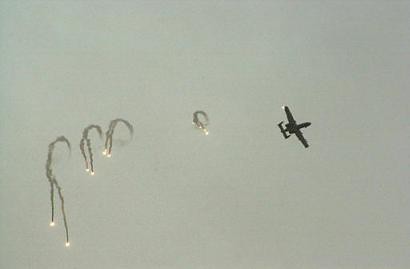
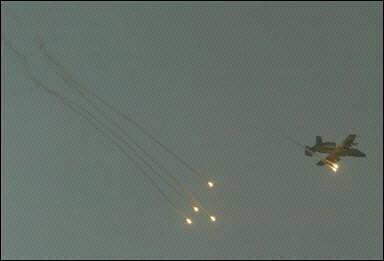
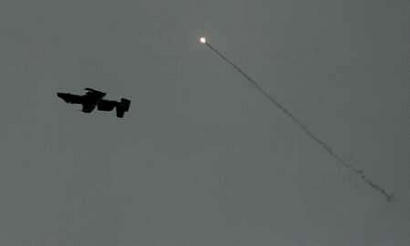
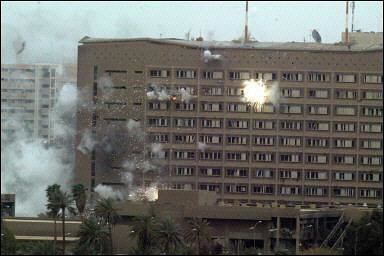
From the archives: A-10 urban CAS over Baghdad in 2003

By Joachim Jacob

For first time ever, during the initial phase of Operation Iraqi Freedom A-10s flew urban close air support missions. Here's some related stuff, already published on the web:


With their 30mm GAU-8/A Avenger cannon an A-10 is engaging the Iraqi Ministry of Planning at Baghdad. Never seen before that an A-10 hit a city building.

Related video:


Anyone who can/will provide me some more related stuff? I would be very grateful for any support.

Tuesday, July 5, 2011

74th Expeditionary Fighter Squadron featured in Combat Aircraft Magazine, August 2011 issue

Updated July 6, 2011

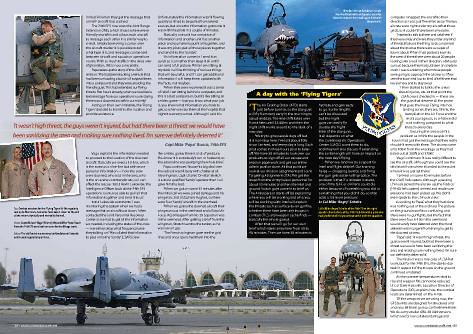
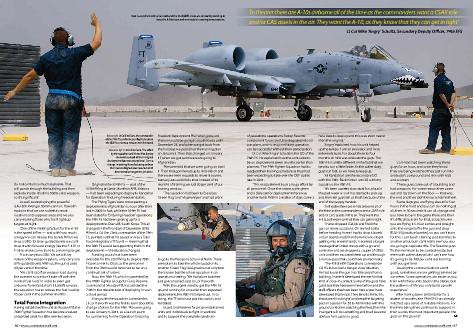
Today, from aviation photographer Neil Dunridge (United Kingdom) I got the following e-mail: Hi Joachim, In this month's Combat Aircraft magazine is an article on the 74th Fighter Squadron's deployment to Kandahar. I was there two days after the French Air Force Mirage 2000 crashed and includes details about the 74th FS response.


Related Magazine preview

FLYING TIGERS
When a French AF Mirage 2000D crashed in the Afghan desert in May, it was the A-10s of the 'Flying Tigers' that were among the first to respond. The squadron rolled into action in what rapidly developed from a close air support (CAS) mission to a combat search and rescue (CSAR) mission. Neil Dunridge visited the 74th Fighter Squadron on deployment for Operation 'Enduring Freedom'.


Update July 6, 2011:

Please enjoy this article preview, exclusively provided by Neil:


Comment from me: Neil, you did a great job again to document the modern "Hog" at war!

Please visit Neil's website

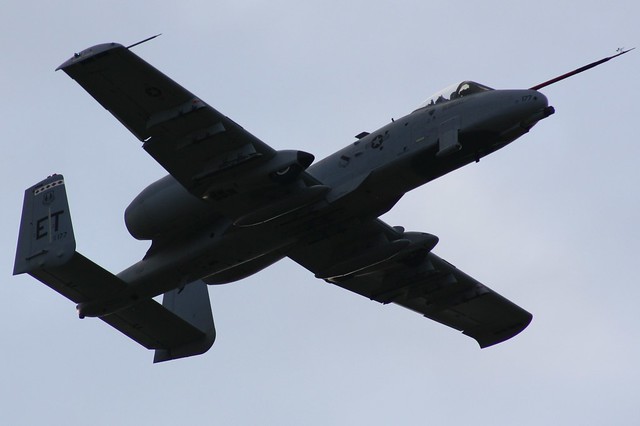
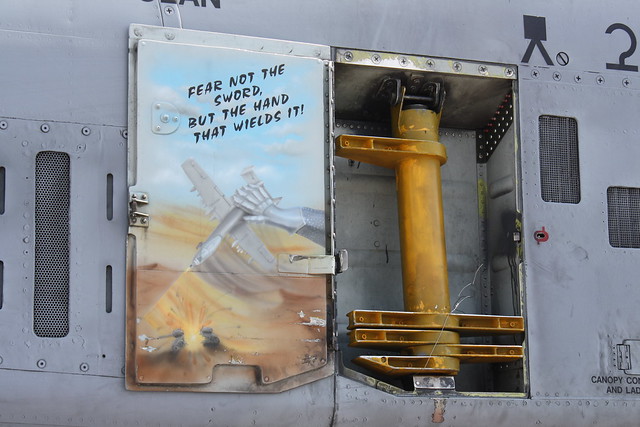
A-10C 79-0177 from the 40th Flight Test Squadron caught at Wright-Patterson June 24, 2011

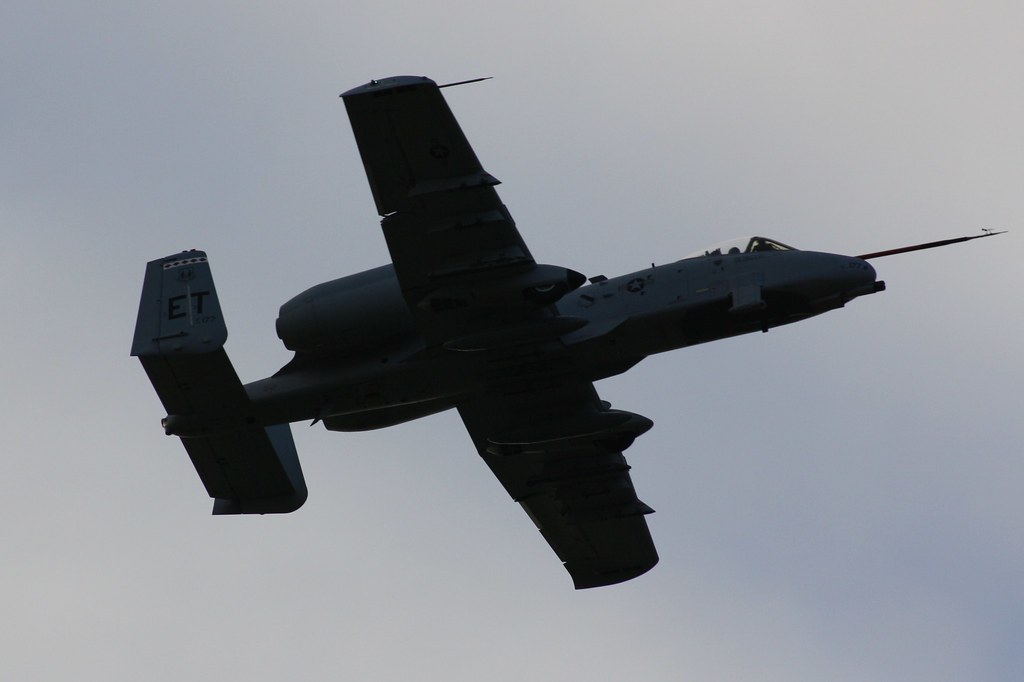
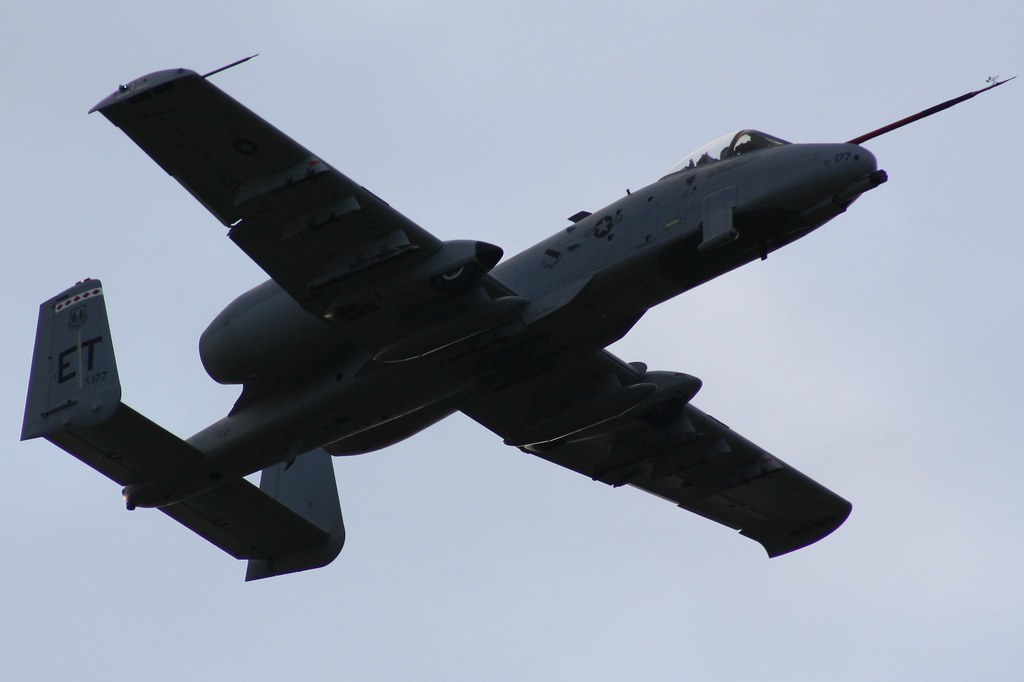
At Wright-Patterson AFB, Ohio, Warthog News contributor Jared Soergel had the opportunity to take the following shots. As he told me, A-10C 79-0177 made an appearance as "SADLY 1" on June 24 for the AFMC Freedom's Call Tattoo at Wright-Patterson AFB. The aircraft departed the following afternoon to Eglin AFB, Florida.


Full size


Full size


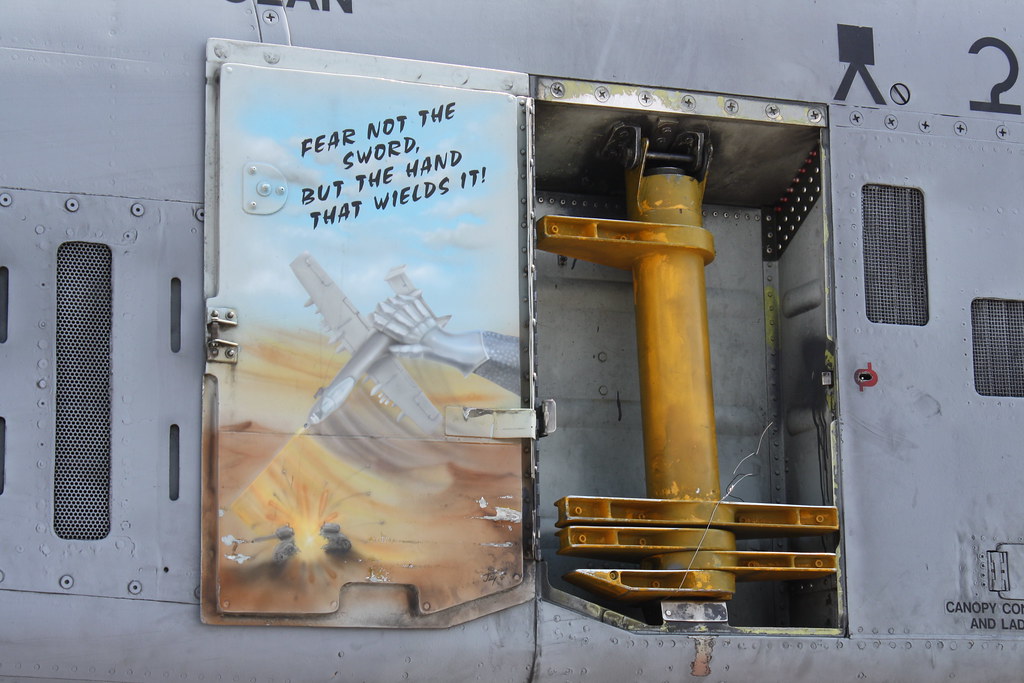
Ladder door art: An iron hand and the inscription FEAR NOT THE SWORD, BUT THE HAND THAT WIELDS IT! Full size

Summer treat for STARBASE

Released by 307th Bomb Wing Public Affairs


7/5/2011 - A group of 5th graders from Oil City Elementary, Oil City, La., pose for a group picture with Staff Sgt. Ted Daigle, after a briefing about the A-10 Thunderbolt II jet aircraft at Barksdale Air Force Base, La., June 23, 2011. The students are attending a summer class at STARBASE Louisiana, on Barksdale, one of 60 national STARBASE sites. It is sponsored by the 307th BW of the Air Force Reserve Command. The STARBASE program presents an exciting 25-hour hands on/minds on aviation and aerospace curriculum to area 5th grade students and their teachers. The DoD program is committed to addressing the critical needs in STEM education - Science, Technology, Engineering and Mathematics - STARBASE Louisiana introduces its students to exciting STEM education topics, inspiring these young minds to further explore these topics in future course work. Sergeant Daigle is a photojournalist assigned to the 307th Bomb Wing Public Affairs Office at Barksdale. (U.S. Air Force photo by Betty Stephens) Hi-res

Note: Pictured is a preserved A-10 with the following crew inscriptions: PLT. MAJ. JAMIE STRAUGHN, CC. MSGT. BO HUGHES, ACC. MSGT. ALEX KLEEMAN

Source

Monday, July 4, 2011

From the archives: Warthog down in Iraq April 8, 2003

Today, some of my friends, contributors and other personal contacts from the United States celebrate their Independence Day, commonly known as the Fourth of July. May be the right time to post some more important A-10 OIF stuff from my archives:

Thunderbolt Over Baghdad, 'Pilot-Dude' Down in the Countryside

By Jim Garamone
American Forces Press Service

WASHINGTON, July 16, 2003 – Air Force Maj. Jim Ewald had just finished a close-air support mission over Baghdad when his A-10 Thunderbolt II was hit by an Iraqi surface-to-air missile April 8. It physically moved the plane "like the hand of God," Ewald said during a Pentagon interview July 16.

Ewald is a pilot with the 110th Fighter Wing out of Battle Creek, Mich.

The surface-to-air missile came up from the southwest, and Ewald said he never saw it. But he had no doubt a missile had hit him. "I could see a reddish glow on my cockpit instruments from the fire behind me," he said. His second thought was that he had not been wounded.

It was then that the airplane departed from controlled flight. "That's just the way we say I was trying to fly the airplane one way, but the airplane was off doing its own thing," the Michigan Air Guardsman said.

Ewald was soon able to regain control. "I was very fortunate to be flying this mission in an A-10, because had I not, I would have bailed out right there," he said. "My next thought was 'I don't want to bail out right over Baghdad or I'm going to be in it deep.'"

He and his wingman headed out of Baghdad and sought American lines. "It was physically hard (to fly the plane), Ewald said. "I was manipulating everything with all the muscles in my body. I had flight control problems, I had engine problems, I had fuel-flow problems, I had hydraulic problems not to mention that I had an airplane that was disintegrating. I looked back once and I could see little parts falling off the engine and I thought, 'I really don't know what that is, but I think I need it.'"

As he continued south, he lost one of the engines completely and he ejected. "The ejection seat was packed by one of my new best friends out of Boise, Idaho, and it worked perfectly," Ewald said.

After he hit the ground, he mistook the 30 mm rounds cooking off in the airplane for incoming Iraqi fire. He ran to hide in a dried canal behind some reeds. He heard engine noise, and hoped that the vehicle was American. "I knew the 3rd Infantry Division had been in the area, but I didn't know if it was still there," Ewald said.

There was Fedayeen Saddam paramilitary still running around, he said, and he couldn't see very well. "I heard one yell in English, but I thought maybe this guy went to language school," Ewald said. "Then I heard another voice yell in English, 'Hey, pilot dude. Come out. We're Americans.'"

There was no mistaking the accent, he said. "He sounded like your typical 19-year-old American," the pilot-dude said. "I thought that's something you don't learn in language school."

The soldiers were from the Army's 54th Engineer Battalion, and they had seen Ewald eject. They arrived some 10 to 15 minutes after he hit the ground, he said.

Ewald went back to the 110th and was back into the cockpit in 48 hours.

Source

Note: Some more related info will be uploaded soon.

Anyone who can/will give me some more related deployment info?


As of current, Lt. Col. James Ewald, is the 51st Fighter Wing director of staff, Osan AB, Republic of Korea.

Saturday, July 2, 2011

A-10 artwork by Kenn Berry


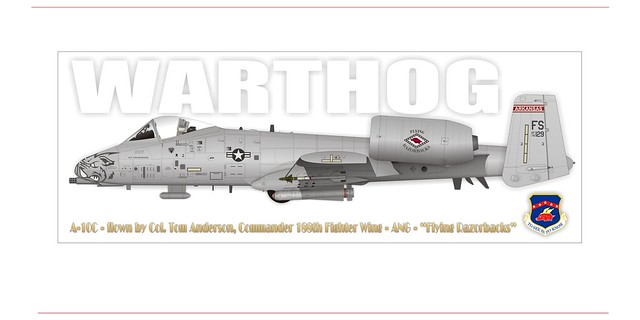
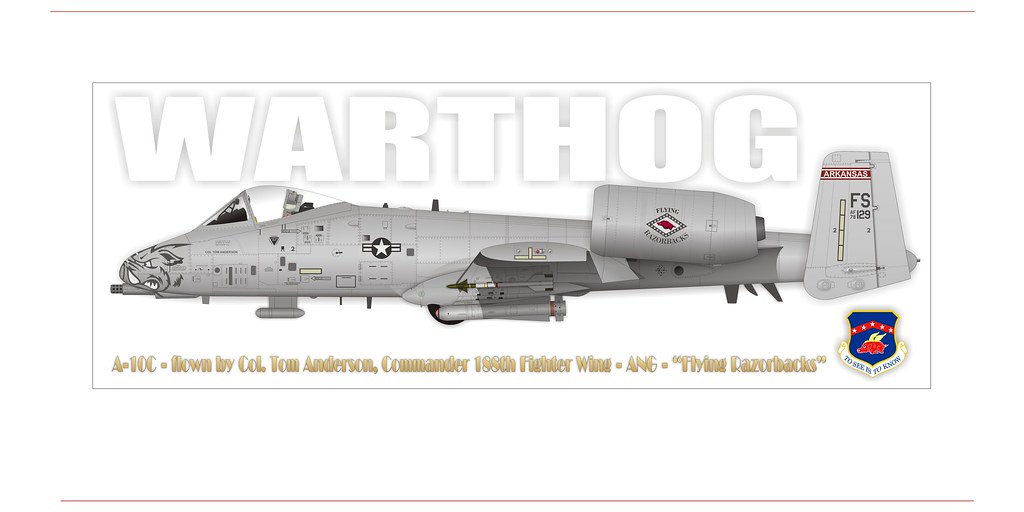
Drawing of A-10C 78-0129 from the 184th Fighter Squadron, 188th Fighter Wing, Arkansas Air National Guard, Fort Smith, created by artist Kenn Berry from the United States. Full size

By Joachim Jacob
Warthog News Editor
Berlin, Germany

I'm now also in contact with artist Kenn Berry from the United States. About his "Hog" drawing, Kenn told me:

Fairchild-Republic A-10C "Thunderbolt II" – Art Print

This limited edition art print represents the A-10C "Thunderbolt II", flown by Colonel Thomas "Tom" Anderson, commanding the 188th Fighter Wing, Ebbington Air National Guard Base, Arkansas. The 188th is known as the Flying Razorbacks.

The Thunderbolt II, termed affectionately by her crews, the "Wart Hog", was introduced by Fairchild-Republic in March of 1977 for the United States Air Force. It is a single engine close air support jet aircraft, used primarily in a ground attack role. The official name of the A-10, Thunderbolt II, harkens back to it venerable ancestor the Republic P-47 of World War II fame.

The original was drawn, by Kenn Berry, who's 35 year career in the art world has included writing, teaching, advertising photography, architectural model building and fine art digital illustration.

This is not a poster. Posters are printed hundreds, or even thousands, at a time, on high speed offset presses, on lightweight paper and can never match the high fidelity or level of detail that Giclees offer.

With the Giclee process, the image is printed slowly, one at a time, in virtually continuous tone, capturing all the classic beauty of this famous aircraft.

Each Giclee is printed by the artist, then numbered, titled and dated. The edition is limited to 500, and once that number is reached, the print will never be offered again.

This is the 29th in a series of Classic World Aircraft.

Edition size is 500.

Print size is 22 by 11 inches.

This is not an auction - it is a fixed price item, so when you decide to purchase, you can do so at any time.

Please check my feedback, of which I am very proud, and take a look at the other Giclees I am offering.

Note: Giclees (digital art prints) exhibit the finest printing techniques available.

Please visit Kenn's website.

Friday, July 1, 2011

EHT graduate takes Air Force squadron command

By Jordan Wompierski
Shore News Today
Thursday, 30 June 2011 09:16

AFGHANISTAN – United States Air Force Lt. Col. Eric Grace was appointed squadron commander of the 451st Expeditionary Operations Support Squadron during a ceremony at Kandahar Airfield in Afghanistan on Monday, June 20.

Grace is a combat veteran with more than 2,500 hours flying the A-10 Thunderbolt II jet aircraft. A 1990 graduate of Egg Harbor Township High School, he attended the U.S. Air Force Academy of Colorado Springs and received his commission in 1994.

As commander, Grace will be leading support operations at Kandahar Airfield and flying combat close air support (CAS) missions for U.S. airmen, soldiers, Marines, and NATO's International Security Assistance Force (ISAF) currently engaged in Operation Enduring Freedom in Afghanistan.

Grace said he is proud to be assuming a combat command within the 451st Air Expeditionary Wing, where the mission is to provide combat forces and humanitarian operations 24/7 to restore a secure and stable Afghanistan.

"Despite an intense operations tempo, we continue to excel as we take the fight to the enemy and build trust and security for the people of Afghanistan," he said.

Grace is the son of Egg Harbor Township resident Regina Stasuk and her husband, Steve, who expressed pride in their son.

"Any parent would be proud," Regina Stasuk said. "He's doing a wonderful thing for our country and he's going to make a great commander."

Source

Flying Tigers snarl for 70 years


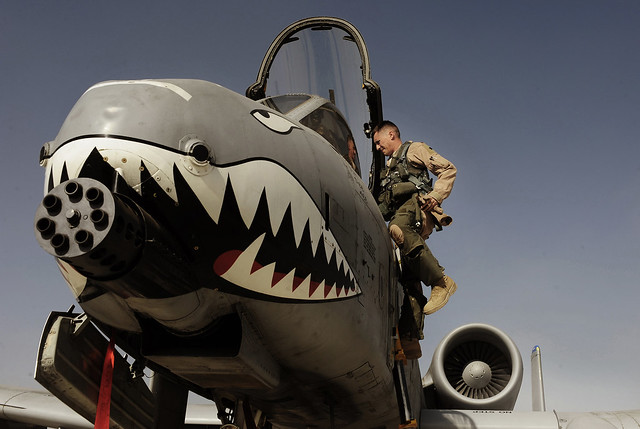
Maj. Loren Coulter exits an A-10C Thunderbolt II, Jan. 11, 2011, at Kandahar Airfield, Afghanistan.The tiger teeth painted on the aircraft is distinctive nose art only authorized to the Flying Tigers, a unit celebrating its 70th anniversary on July 4, 2011. (U.S. Air Force photo by Senior Airman Willard E. Grande II) Hi-res

by Tech Sgt. Emily F. Alley
451st AEW Public Affairs

7/1/2011 - KANDAHAR AIRFIELD, Afghanistan -- The 74th Expeditionary Fighter Squadron, which dates its history to a group of contracted prior-military pilots who flew against Japan in World War II, is scheduled to celebrate its 70th anniversary this July 4.

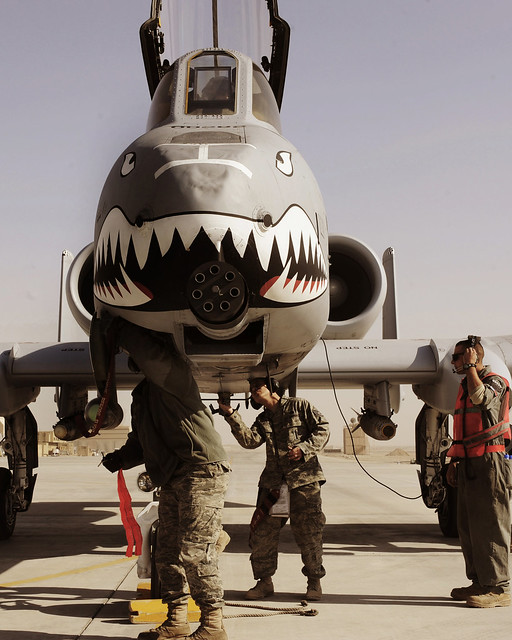
At Kandahar Airfield, current members reflected on how the work of previous crews helped to make the squadron innovative and iconic. It is the only group in the Air Force authorized to paint tiger shark teeth on the nose of each of its aircraft.

"You feel like you're walking into combat history," said Capt. Richard Olson, who has been a Flying Tiger pilot for about a year. "There are famous names, guys who shot down MiGs. This is their stuff, their history."

The hallway outside the offices of the 74th EFS at KAF is lined with photos and hand-written lists of crews and call signs. The squadron dates back to 1941, making it older than the Air Force itself. Even though the hallways of KAF only dates back to the few years the squadron has been flying out of Afghanistan, it's a historic list.

Olson was impressed to be working directly with Flying Tiger pilots such as 451 Air Expeditionary Wing commander Brig. Gen Paul T. Johnson, who was awarded the Air Force Cross for helping to save a crew of Airmen who had been shot down in 1991. Gen. Johnson also completed a landmark 3,000 flight hours during his final flight last month.

For many of the pilots, however, they remember the people they've worked with more than the missions.

"Most of them, their stories aren't about combat," said Olson, as he recalled a recent Flying Tiger reunion, which was attended by the few living members of the original World War II squadron.

They vividly retold the story of a donkey that wondered onto the runway and was almost hit by one of their aircraft, he said.

"It was a funny story about the guys, the people they worked with and they remembered it for 70 years," said Olson.

Those relationships, the camaraderie built between generations of pilots, fostered communication that allowed for innovation and helped make the A-10 an adaptable aircraft.

"They're big on passing lessons learned. They passed down everything they learned," said Maj. Craig Morash, a current Flying Tiger pilot. "We're trained and we spend time to understand the picture, the stress the people on the ground are under. Our mission is to get between the guy shooting and our guys on the ground."

Soldiers have visited 74 EFS meetings in the past to express their gratitude and tell stories of how the squadron helped them during attacks.

"The Army defaults every airplane to an A-10," said Staff Sgt. Angel Montes, a Joint Terminal Attack Controller who calls in air support for Soldiers, who have specifically requested the aircraft when they've needed air support.

The JTAC Airmen were impressed by the A-10s, who have an intuitive understanding how best to support ground patrols. They fly low, for example, and aptly select the weapon that fits each unique mission, said Airman 1st Class Justin Jackson, also a JTAC.

"It's over as soon as an A-10 shows up. Your day is made," said Montes. "They live up to their nose art. They're aggressive and they push to benefit the guys on the ground."


Crew chiefs install pins on an A-10C Thunderbolt II, Jan. 11, 2011, at Kandahar Airfield, Afghanistan. The tiger teeth painted on the aircraft is distinctive nose art only authorized to the Flying Tigers, a unit celebrating its 70th anniversary on July 4, 2011. (U.S. Air Force photo by Senior Airman Willard E. Grande II) Hi-res


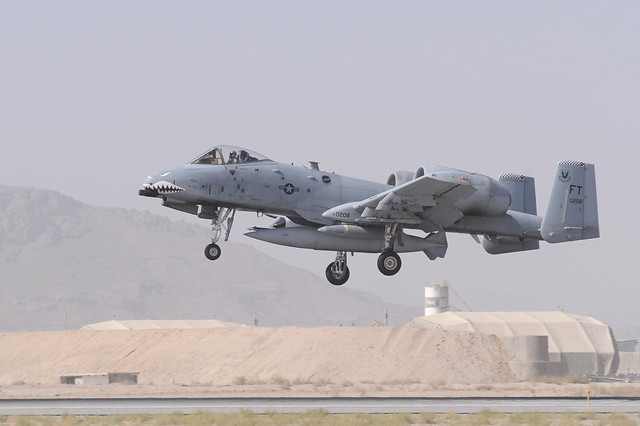
An A-10C Thunderbolt II pilot lands at Kandahar Airfield, Afghanistan Sept. 27, 2010. Throughout 2010, all the flying units under the 451st Air Expeditionary Wing collectively flew nearly 37,000 sorties, supporting more than 1,000 troops in contact on the ground, and saving close to 2,000 people on rescue missions in support of Operation Enduring Freedom. The 75th Expeditionary Fighter Squadron is deployed from Moody Air Force Base, Ga. (U.S. Air Force photo by Tech. Sgt. Chad Chisholm) Hi-res

Source

Selfridge Pilots Recall Sept. 11

by TSgt. Dan Heaton
127th Wing Public Affairs

6/30/2011 - SELFRIDGE AIR NATIONAL GUARD BASE, Mich. -- "Are you OK?"

"It's bad."

Two simple messages, delivered to pilots wearing different uniforms, perhaps 1,000 miles apart. That they were delivered on the morning of Sept. 11, 2001, seared them into the memories of the men who received them.

Lt. Col. Rolf Mammen and Lt. Col. Doug Champagne, both pilots at Selfridge Air National Guard Base, heard those messages on that chaotic morning when America came under attack. Both men were flying that day - Champagne in an F-16 Falcon in Michigan, and Mammen in an United Airlines airliner, over the Atlantic Ocean on a trip from London to New York City's JFK Airport. The two shared their memories of that day during a June 21 luncheon meeting of the Selfridge Base Community Council, a civic organization that promotes partnership between the base and the community.

Like many pilots who serve in the Air National Guard, Mammen works for a commercial airline as his full-time job, while serving part-time in the Guard. He continues to work for United and is now the deputy commander of the 127th Maintenance Group at Selfridge, which is charged with maintaining the base's fleet of A-10 Thunderbolt II aircraft. Champagne works full-time at Selfridge and is the commander of the 107th Fighter Squadron, which flies those A-10s.

While in Canadian airspace, headed for New York on what had been a routine flight that morning, Mammen was the first officer on a United flight when the crew received an odd message over a text communication system from United's flight control center. It simply read: "Are you OK?"

"We had no idea what that could mean," Mammen recalled at the luncheon. "Hijacking and crashing an airplane into a tower in New York was the last thing on our mind."

Mammen would spent most of the rest of that flight armed with a fire axe, guarding the cockpit door as his two fellow pilots responded to orders to land the aircraft.

"If anyone came through that door, I was going to start swinging," he said.

About that same time, Champagne and another pilot from Selfridge were just finishing up dropping some inert practice bombs on a target range near Grayling in northern Michigan. They had also fired all 100 live rounds of gun ammunition they had been carrying in strafing runs at the range.

As they were returning to Selfridge, the two starting pick up some odd radio traffic from Air Traffic Control, but, being in military aircraft, were not hearing all of the civilian ATC traffic. As they were passing Saginaw on the way back to base, the operations group commander at Selfridge came on the radio. He asked pointedly several times about their exact weapons status - had they fired all of their ammo at the target range?

Champagne said he began getting worried that something had gone wrong during his practice strafing runs. Had a round hit the ground in an odd way and skipped out of the impact area and hit something or someone? Had there been a maintenance crew in the range when he had been shooting?

Eventually instructed to land at Selfridge, they were told to immediately taxi to an area on the base designated for live ammunition re-arming of aircraft. A fellow pilot came out in a truck to meet them.

"I can't read lips at all, but I will never forget the words I saw him mouth to me, 'It's bad,'" Champagne said. He was still thinking something had gone wrong at the target range.

Only after Champagne and his wingman were on the ground did they learn how truly bad it was - about how two commercial airliners had hit the World Trade Center in New York, causing the eventual collapse of those towers; about how another had slammed into the Pentagon; about how another had crashed in Pennsylvania after the crew and passengers discovered what was happening and rushed the cockpit; about how some 3,000 Americans had been killed and that the country was now at war.

Back on the ground at Selfridge, Champagne learned that higher commanders had briefly considered ordering him to fly straight south to use his unarmed fighter jet as a shield to protect Chicago from a possible attack. Later that day, Champagne and another pilot would take to the skies again, to fly the first combat-loaded patrol over Detroit.

Within hours of the attack, hundreds of Citizen-Airmen had reported for duty at Selfridge and the 127th Wing began standing 24-hour alert duty to provide aerial cover for much of the Great Lakes region.

While Mammen was enduring the stress of flying on Sept. 11, his family was suffering as well. As his wife watched the events of the morning unfold on television, she knew that her husband - a United pilot - was due to land at New York that morning. And she had watched a hijacked United aircraft crash into one of the Trade Center towers. It would be hours before she learned that her husband was safe - diverted to a landing in Halifax, Canada with some 4 dozen other airliners. His daughter, who was nearing her 11th birthday at the time, learned at school that "planes were crashing in New York" - and knew her dad flew into New York.

"For me, 9-11 was personal, very personal," Mammen said. "People I knew, people I had flown with before, had been on those planes that had been hijacked and crashed. My daughter lost part of her childhood that day.

"Those hijackers came into my office that morning, killed some of my friends and then used my office to kill about 3,000 Americans. You bet that is personal."

Since Sept. 11, 2001, hundreds, perhaps even a couple thousand, of Citizen-Airmen in the 127th Wing at Selfridge have been recalled to duty either locally or been deployed overseas to respond to the Global War on Terror. This year alone, more than 200 members of the Wing have been deployed to locations in more than a dozen countries.

"This is a long war," Champagne said. "And it is not over."


Lt. Col. Doug Champagne, commander of the 107th Fighter Squadron, Selfridge Air National Guard Base, Mich., recalls his experiences on Sept. 11, 2001, during a June 21, 2011, meeting of the Selfridge Base Community Council. Champagne was airborne in an F-16 Falcon, returning from a morning target practice mission, when the terror attacks occured. At far right is Lt, Col. Rolf Mammen, also a pilot with the Michigan Air National Guard, wore his United Airlines pilot uniform to the meeting and recalled his experiences that day flying in a United airliner, bound for New York. (U.S. Air Force photo by Rachel Barton) Hi-res


Michigan Air National Guard Lt, Col. Rolf Mammen wears his United Airlines pilot uniform as he recalls the events of Sept. 11, 2001, during a meeting of the Selfridge Base Community Council near Selfridge Air National Guard Base, June 21, 2001. Mammen, who is also a pilot with the 127th Wing, was flying in a United airliner, bound for New York, on the morning of Sept. 11. (U.S. Air Force photo by Rachel Barton) Hi-res

Source