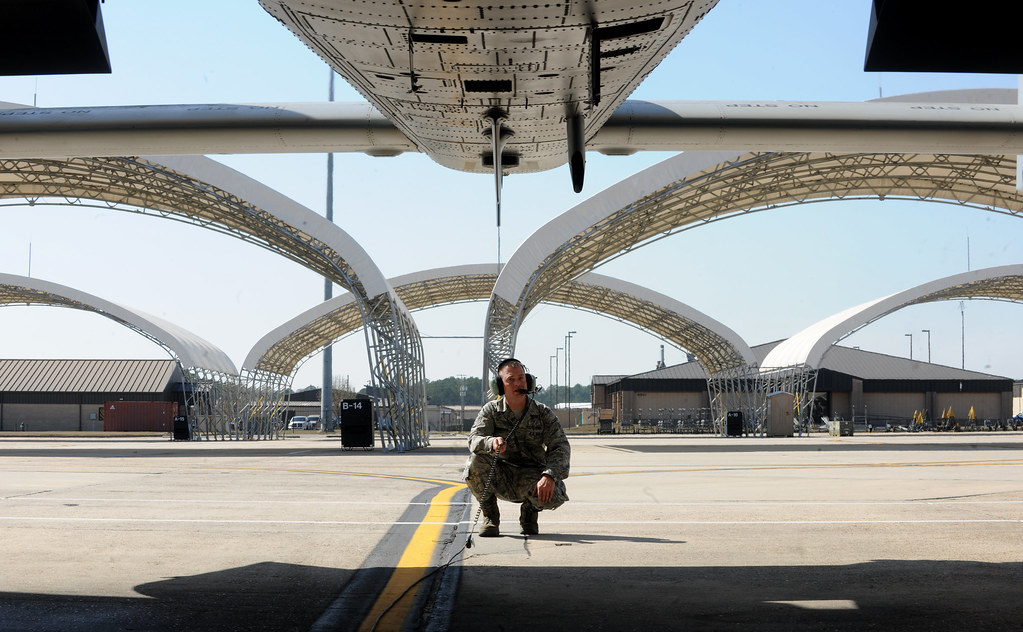
by Staff Sgt. Danielle Wolf
442nd Fighter Wing Public Affairs
8/27/2011 - MOODY AIR FORCE BASE, Ga. -- The 476th Fighter Group, a geographically separated unit of the 442nd Fighter Wing, Whiteman AFB, Mo., is a classic Reserve associate unit that works with the 23rd Wing here.
The group works side-by-side in a total force mission with active-duty Airmen to maintain and operate 52 A-10 Thunderbolt II aircraft assigned to the 23rd Wing.
The group, which began in 2008 under the command of Col. Gregory Eckfeld, now the 442nd FW's vice commander, has deployed four times - three of which were before it was at its full operational capability.
"The mentality between the active duty and the Reserve here is no different," said Master Sgt. Scott Lopez, 476th Aircraft Maintenance Squadron. "We both want to get the same mission accomplished. There's no competition between us and active duty - they understand we're here to help."
The relationship has developed so well, in fact, that the active-duty leadership has integrated the Reserve into daily activities, said Lt. Col. Doug Batson, 476th Maintenance Squadron commander.
"The active duty invites us to things like changes of command, and we meet once a week for coffee with the (23rd Aircraft Maintenance Squadron commander) to discuss each other's issues and exchange dialogue," he said.
When the 23rd Wing requests assistance from the 476th FG, the group was happy to help, Batson said.
"We asked what we could do to help them, and they said they needed Alaskan shelters, so we requested them and got approved," Batson said. "They had a need, and we were able to meet it. The key to the Reserve forging a relationship with the active duty is communication, partnership and showing them the Reserve can be relied on."
One thing Batson said, for which the Reserve can be relied on, is training.
"Our average reservist here has 17 years of military experience," said Senior Master Sgt. Jamie Cornelia, Aircraft Maintenance Squadron superintendent. "We're seeing more and more young, active-duty Airmen who are going to our (traditional reservists) and (air reserve technicians) for training. It's a great recruiting tool and it shows what great experience comes from the Air Force Reserve."
Working with active duty holds many benefits for traditional reservists as well, Lopez added.
"It's a fast pace around here," he said. "The pace mimics the benefits of deploying without having to deploy as much. It's nonstop work, which gives all of us great training too."
Within just a few short years though, the 476th FG reservists had volunteered to deploy alongside their active-duty counterparts.
"When we first started deploying with active duty, they were hesitant to work with us, but now they're asking us for volunteers," said Master Sgt. Brian Shipman, 476th Aircraft Maintenance Squadron crew chief.
The challenges of working together have subsided for many maintainers - but not all of them. For the full-time ARTs, Lopez said, it can be confusing for active duty to understand how they are civilians working during the week, but still wearing the Air Force uniform.
"For many of the active-duty Airmen, they might work 12 to 14-hour days," Lopez said, "but we go home after an eight or nine-hour day (if overtime or credit time isn't available.) At first, our TRs were confused because they didn't know who was active duty and who was Reserve."
Over time, Lopez said, the reservists learn who is who regardless of uniforms.
Despite the challenges, Cornelia said three components have contributed to the success of the 476th FG and TFI: personality, open-mindedness and leadership's ambition.
"A lot of people were used to the old way of doing things, but you have to come in with an open mind regardless of your experience," he said.
Source
Note the given info that 52 A-10 Thunderbolt II aircraft are currently assigned to the 23rd Fighter Group, 23rd Wing, Moody AFB, Georgia!
Showing posts with label 476th Fighter Group. Show all posts
Showing posts with label 476th Fighter Group. Show all posts
Sunday, August 28, 2011


Thursday, August 25, 2011
Final step in ORI prep
by Col. Eric Overturf
442nd Fighter Wing Commander

Col. Eric S. Overturf is the commander of the 442nd Fighter Wing, an A-10 Thunderbolt II Air Force Reserve unit at Whiteman Air Force Base, Mo. (U.S. Air Force photo / Courtesy photo)
8/23/2011 - WHITEMAN AIR FORCE BASE, Mo. -- It's hard to believe that summer is almost over, but it must be true because my daughter is starting high school this month. It's been a busy summer for the 442nd Fighter Wing, and our outstanding Citizen Airmen are doing great things around the globe.
The 442nd Civil Engineer Squadron is finishing up combat skills training at Fort Bliss, Texas, and will soon be on their way to Afghanistan for a joint expeditionary tasking deployment to help set up and maintain the infrastructure of coalition bases.
Pilots, maintainers and support personnel from the 917th Fighter Group at Barksdale AFB, La., recently returned from their annual tour in Alaska where they honed their skills on the Pacific Alaska Range Complex.
The 924th FG, Davis-Monthan AFB, Ariz., amped up their hiring to grow by 30 percent this summer and started construction on their new headquarters building at the beginning of August.
The 476th FG reached 100 percent manning for the first time and is setting the standard for total force integration support of the A-10 Thunderbolt II mission and air expeditionary force deployments at Moody AFB, Ga.
All of these events mean that you are doing a great job supporting our 2011 mission priorities to support AEF deployments and successfully incorporate geographically separated units by helping our fighter groups grow and excel.
Here at Whiteman, we're in the home stretch to win our operational readiness inspection. In July, we had a great operational readiness exercise, and we're down to fine tuning a few last items before the inspector general team arrives, Aug. 26. Many of us have observed recent inspections at other wings so we know our procedures are up to speed - now we just need to demonstrate them to the IG team. We'll have ORI Right Start briefings, Aug. 25, so all of us at Whiteman can huddle up and review our game plan one last time before the IG team arrives. Here are some of the key things to think about and take care of before then:
1. If you are scheduled to process and deploy during the ORI, be ready. Our wing mission is to Train and Deploy Ready Reservists, and the "ready" part means having your mobility bag packed properly and your deployment folder up to speed with all the required training done. Listen to your unit deployment manager and ask if you have any questions about what you need. We can't afford to make mistakes on the little things that we have complete control over.
2. When inspectors provide "injects" to the scenario, they are evaluating a specific capability, and I need to know about it so I can communicate the proper response to the entire wing. If you get an inject card, take the appropriate immediate action and then ensure the event gets sent up the chain of command. For example, if an inspector tells you your computer has a virus, follow the procedures on the red/green/yellow network incident card that should be next to your computer, and then tell your supervisor or call the command post at X-3564.
3. Pay attention to the crisis action team directives (CATDs) so you have the latest updates on critical exercise information. Be ready to answer inspector questions on things like the FPCON. If you don't know the answer, check with your unit deployment control center (UDCC) or ask your supervisor.
4. Safety is paramount. Things like technical-order compliance, personal protective equipment and flight line driving can make or break us, so take care of yourself and your wingmen.
5. Finally, remember to project a positive attitude at all times. We are all happy to be on the verge of putting three straight years of inspections behind us, so let that upbeat energy shine through! Positive attitudes are infectious and will raise the spirits of your co-workers as well as the grades from inspectors if they need a tie breaker.
We are ready for this inspection. Our A-10s are the best in fleet. The dedicated Citizen Airmen of the 442nd Fighter Wing are the best I've ever worked with. We have a solid game plan and an all-star team to execute it. Be proud to show it. When an IG team inspector approaches you during the inspection, stand up, smile and greet them with the confidence and pride that comes with being part of a championship team, and the humility that comes from knowing it's not over until the report is signed.
I know we're going to do great during the ORI. Thank you for all you do. It's an honor to be your commander.
Source
442nd Fighter Wing Commander

Col. Eric S. Overturf is the commander of the 442nd Fighter Wing, an A-10 Thunderbolt II Air Force Reserve unit at Whiteman Air Force Base, Mo. (U.S. Air Force photo / Courtesy photo)
8/23/2011 - WHITEMAN AIR FORCE BASE, Mo. -- It's hard to believe that summer is almost over, but it must be true because my daughter is starting high school this month. It's been a busy summer for the 442nd Fighter Wing, and our outstanding Citizen Airmen are doing great things around the globe.
The 442nd Civil Engineer Squadron is finishing up combat skills training at Fort Bliss, Texas, and will soon be on their way to Afghanistan for a joint expeditionary tasking deployment to help set up and maintain the infrastructure of coalition bases.
Pilots, maintainers and support personnel from the 917th Fighter Group at Barksdale AFB, La., recently returned from their annual tour in Alaska where they honed their skills on the Pacific Alaska Range Complex.
The 924th FG, Davis-Monthan AFB, Ariz., amped up their hiring to grow by 30 percent this summer and started construction on their new headquarters building at the beginning of August.
The 476th FG reached 100 percent manning for the first time and is setting the standard for total force integration support of the A-10 Thunderbolt II mission and air expeditionary force deployments at Moody AFB, Ga.
All of these events mean that you are doing a great job supporting our 2011 mission priorities to support AEF deployments and successfully incorporate geographically separated units by helping our fighter groups grow and excel.
Here at Whiteman, we're in the home stretch to win our operational readiness inspection. In July, we had a great operational readiness exercise, and we're down to fine tuning a few last items before the inspector general team arrives, Aug. 26. Many of us have observed recent inspections at other wings so we know our procedures are up to speed - now we just need to demonstrate them to the IG team. We'll have ORI Right Start briefings, Aug. 25, so all of us at Whiteman can huddle up and review our game plan one last time before the IG team arrives. Here are some of the key things to think about and take care of before then:
1. If you are scheduled to process and deploy during the ORI, be ready. Our wing mission is to Train and Deploy Ready Reservists, and the "ready" part means having your mobility bag packed properly and your deployment folder up to speed with all the required training done. Listen to your unit deployment manager and ask if you have any questions about what you need. We can't afford to make mistakes on the little things that we have complete control over.
2. When inspectors provide "injects" to the scenario, they are evaluating a specific capability, and I need to know about it so I can communicate the proper response to the entire wing. If you get an inject card, take the appropriate immediate action and then ensure the event gets sent up the chain of command. For example, if an inspector tells you your computer has a virus, follow the procedures on the red/green/yellow network incident card that should be next to your computer, and then tell your supervisor or call the command post at X-3564.
3. Pay attention to the crisis action team directives (CATDs) so you have the latest updates on critical exercise information. Be ready to answer inspector questions on things like the FPCON. If you don't know the answer, check with your unit deployment control center (UDCC) or ask your supervisor.
4. Safety is paramount. Things like technical-order compliance, personal protective equipment and flight line driving can make or break us, so take care of yourself and your wingmen.
5. Finally, remember to project a positive attitude at all times. We are all happy to be on the verge of putting three straight years of inspections behind us, so let that upbeat energy shine through! Positive attitudes are infectious and will raise the spirits of your co-workers as well as the grades from inspectors if they need a tie breaker.
We are ready for this inspection. Our A-10s are the best in fleet. The dedicated Citizen Airmen of the 442nd Fighter Wing are the best I've ever worked with. We have a solid game plan and an all-star team to execute it. Be proud to show it. When an IG team inspector approaches you during the inspection, stand up, smile and greet them with the confidence and pride that comes with being part of a championship team, and the humility that comes from knowing it's not over until the report is signed.
I know we're going to do great during the ORI. Thank you for all you do. It's an honor to be your commander.
Source
Tuesday, July 12, 2011
Q&A with the boss: GSUs, what's the point?
by Col. Eric S. Overturf, 442nd Fighter Wing commander
Released by 442nd Fighter Wing Public Affairs
7/11/2011 - WHITEMAN AIR FORCE BASE, Mo. -- Why do we have GSUs and what purpose do they serve?
Air Force Reserve Command wanted to put all A-10 combat power in one wing so we could more efficiently train and deploy pilots, maintainers and combat support. The 442nd Fighter Wing already had the wing structure they were looking for, so we became the host wing.
How will our jobs be affected?
The addition of GSUs will be transparent to most people here at Whiteman. Locally, we won't lose any jobs, but there will be some benefits. You will have the opportunity for upward advancement in other parts of the wing, the opportunity to support deployments and TDYs and we will now have backfill when we are short in any area of the wing (to include the GSUs.) We also now have the networking with other experienced A-10 pilots and maintainers that we can share information and get answers about things from others within our own wing.
Will we lose any aircraft as a result of the GSUs?
No. We will continue to retain 24 aircraft. We will however, assist the 917th FG at Barksdale, which provides two A-10s to the Air National Guard Air Force Reserve Test Center (AATC) in Tucson, Ariz. Instead of the 917th FG providing both aircraft, we will provide one aircraft and accompanying maintenance personnel to go to Tucson TDY on a voluntary basis.
What is the reporting structure?
The GSUs are organized as fighter groups so they have a group commander who reports directly to me, just like our operations, maintenance and mission support groups here. I will spend a lot of time on the phone with them and we will do teleconferencing at least once a month. Also I plan to visit each GSU quarterly.
What additional tasks will the 442nd have?
The only ones who should be affected by this are the wing staff and personnel functions. For example, our judge advocate will be responsible for all legal issues at not just here, but also at the GSUs now. We will be doing the funding and hiring actions at the GSUs as well. The wing hasn't yet been given any additional manpower to support this, so I've requested the Site Action Task Force from AFRC to evaluate our requirements in hopes of getting additional positions to assist our Force Support Squadron and wing staff with the extra work.
How will this affect deployments?
There won't be more deployments necessarily, but there will be more opportunities to deploy. We will be able to share in what the GSUs are doing. The intent of putting all the A-10 combat power together is to allow the wing to support AEF deployments, which I have already volunteered us to do this upcoming year.
When you say 442nd FW, how will we differentiate who you're talking about now?
When I say "we, it means the entire fighter wing, including the GSUs. Otherwise, I'll make sure to say Whiteman, Barksdale, Moody or Davis-Monthan personnel.
How can I find out if the GSUs are hiring?
As with any reserve position, you can look on Reserve Management Vacancy System, which you can get on through www.afpc.afrc.af.mil. For full-time positions, you can check www.usajobs.com. Also, we are going to begin directly notifying you of available positions at the GSUs through Whiteman e-mail.
What are some of the problems we're having?
The biggest problems we are having are getting the manning documents straightened out. For example, Barksdale was part of a bomb wing and now they're part of a fighter wing. We have to work on getting documents realigned under the right wing. Also, we are establishing the roles and responsibilities of each person within the wing both at Whiteman and at the GSUs. Two of the GSUs are total force integration units, who work side-by-side with active duty units as well as with the tenant-host units. The civilian hiring process can also be complicated. Even when a position needs to be filled and we've found the right person for it, it can take a long time to complete the hiring process.
Why should I care about these GSUs?
This makes you part of the largest fighter wing in AFRC. That comes with benefits of additional opportunities for mobility, potential opportunities for full-time employment for those who are interested in moving to one of the GSU locations, chance to travel and the chance to share in additional TDYs and deployments. You can also join in the pride of knowing that you're part of the only reserve unit that provides A-10 combat power support.

The 442nd Fighter Wing is responsible for the host wing at Whiteman Air Force Base, Mo. as well as three geographically separated units: the 476th Fighter Group, Moody AFB, Ga.; the 917th Fighter Group, Barksdale AFB, La.; and the 924th Fighter Group, Davis-Monthan AFB, Ariz. Col. Eric Overturf is the wing commander for the 442nd FW. Full size
Source
Released by 442nd Fighter Wing Public Affairs
7/11/2011 - WHITEMAN AIR FORCE BASE, Mo. -- Why do we have GSUs and what purpose do they serve?
Air Force Reserve Command wanted to put all A-10 combat power in one wing so we could more efficiently train and deploy pilots, maintainers and combat support. The 442nd Fighter Wing already had the wing structure they were looking for, so we became the host wing.
How will our jobs be affected?
The addition of GSUs will be transparent to most people here at Whiteman. Locally, we won't lose any jobs, but there will be some benefits. You will have the opportunity for upward advancement in other parts of the wing, the opportunity to support deployments and TDYs and we will now have backfill when we are short in any area of the wing (to include the GSUs.) We also now have the networking with other experienced A-10 pilots and maintainers that we can share information and get answers about things from others within our own wing.
Will we lose any aircraft as a result of the GSUs?
No. We will continue to retain 24 aircraft. We will however, assist the 917th FG at Barksdale, which provides two A-10s to the Air National Guard Air Force Reserve Test Center (AATC) in Tucson, Ariz. Instead of the 917th FG providing both aircraft, we will provide one aircraft and accompanying maintenance personnel to go to Tucson TDY on a voluntary basis.
What is the reporting structure?
The GSUs are organized as fighter groups so they have a group commander who reports directly to me, just like our operations, maintenance and mission support groups here. I will spend a lot of time on the phone with them and we will do teleconferencing at least once a month. Also I plan to visit each GSU quarterly.
What additional tasks will the 442nd have?
The only ones who should be affected by this are the wing staff and personnel functions. For example, our judge advocate will be responsible for all legal issues at not just here, but also at the GSUs now. We will be doing the funding and hiring actions at the GSUs as well. The wing hasn't yet been given any additional manpower to support this, so I've requested the Site Action Task Force from AFRC to evaluate our requirements in hopes of getting additional positions to assist our Force Support Squadron and wing staff with the extra work.
How will this affect deployments?
There won't be more deployments necessarily, but there will be more opportunities to deploy. We will be able to share in what the GSUs are doing. The intent of putting all the A-10 combat power together is to allow the wing to support AEF deployments, which I have already volunteered us to do this upcoming year.
When you say 442nd FW, how will we differentiate who you're talking about now?
When I say "we, it means the entire fighter wing, including the GSUs. Otherwise, I'll make sure to say Whiteman, Barksdale, Moody or Davis-Monthan personnel.
How can I find out if the GSUs are hiring?
As with any reserve position, you can look on Reserve Management Vacancy System, which you can get on through www.afpc.afrc.af.mil. For full-time positions, you can check www.usajobs.com. Also, we are going to begin directly notifying you of available positions at the GSUs through Whiteman e-mail.
What are some of the problems we're having?
The biggest problems we are having are getting the manning documents straightened out. For example, Barksdale was part of a bomb wing and now they're part of a fighter wing. We have to work on getting documents realigned under the right wing. Also, we are establishing the roles and responsibilities of each person within the wing both at Whiteman and at the GSUs. Two of the GSUs are total force integration units, who work side-by-side with active duty units as well as with the tenant-host units. The civilian hiring process can also be complicated. Even when a position needs to be filled and we've found the right person for it, it can take a long time to complete the hiring process.
Why should I care about these GSUs?
This makes you part of the largest fighter wing in AFRC. That comes with benefits of additional opportunities for mobility, potential opportunities for full-time employment for those who are interested in moving to one of the GSU locations, chance to travel and the chance to share in additional TDYs and deployments. You can also join in the pride of knowing that you're part of the only reserve unit that provides A-10 combat power support.

The 442nd Fighter Wing is responsible for the host wing at Whiteman Air Force Base, Mo. as well as three geographically separated units: the 476th Fighter Group, Moody AFB, Ga.; the 917th Fighter Group, Barksdale AFB, La.; and the 924th Fighter Group, Davis-Monthan AFB, Ariz. Col. Eric Overturf is the wing commander for the 442nd FW. Full size
Source
Monday, May 9, 2011
New commander takes charge of 476th Fighter Group
by Airman 1st Class Jarrod Grammel
23rd Wing Public Affairs
5/9/2011 - MOODY AIR FORCE BASE, Ga. -- Col. Gregory Eckfeld passed the guidon to Col. Christian Funk during a change of command ceremony for the 476th Fighter Group May 7. The passing of the flag symbolizes responsibility being passed from the outgoing commander to the incoming commander.
"Colonel Funk is a warrior," said Colonel Eckfeld. "He has a great resume of combat experience and has worked with special operations. He is a pillar of rock solid integrity."
Before arriving here, Colonel Funk was the deputy commander and director of staff for Joint Special Operations Command, Aviation Tactics Evaluation Group, at Fort Bragg, N.C.
Col. Gary Henderson, 23rd Wing commander, and Colonel Eric Overturf, 442nd Fighter Wing commander, attended the ceremony. Distinguished guests from Moody and the local area also attended.
"The 476th Fighter Group is running smoothly," said Colonel Funk. "I want to carry on the impact Colonel Eckfeld has had."
Colonel Eckfeld has helped the 476th foster a unique relationship with the 23rd WG. The two units share facilities and equipment in what is known as total force integration.
"The 476th FG is the model for total force integration," said Colonel Overturf. "They work seamlessly with their active duty counterparts to complete the Air Force mission.
"The Reserve Airmen bring experience, while active-duty Airmen bring full time force," he added. "They work together to share the mission and increase combat capability. The relationship between the 476th FG, 23rd WG and the community is the best I have ever seen."
The outgoing commander, Colonel Eckfeld, has been with the 476th Fighter Group since its beginning.
"It's a sad day," said Colonel Eckfeld. "Leaving is bittersweet. The 476th has grown from five to 240 Airmen. My focus was building it up, and Colonel Funk will take the 476th FG from initial to operational capacity.
"You cannot do the mission without the people," he added. "It has been an honor to serve with them."
The 476th FG was activated in 2009 and has shown that total force integration can work. With a new commander, the 476th hopes to continue setting the example.

MOODY AIR FORCE BASE, Ga. -- Col. Eric Overturf, 442nd Fighter Wing commander, hands the guidon to the new 476th Fighter Group commander, Col. Christian Funk, during a change of command ceremony May. 7. Colonel Funk was previously the Aviation Tactics Evaluation Group deputy commander and director of staff at Fort Bragg, N.C. (U.S. Air Force photo by Airman 1st Class Douglas Ellis) Hi-res
Source
23rd Wing Public Affairs
5/9/2011 - MOODY AIR FORCE BASE, Ga. -- Col. Gregory Eckfeld passed the guidon to Col. Christian Funk during a change of command ceremony for the 476th Fighter Group May 7. The passing of the flag symbolizes responsibility being passed from the outgoing commander to the incoming commander.
"Colonel Funk is a warrior," said Colonel Eckfeld. "He has a great resume of combat experience and has worked with special operations. He is a pillar of rock solid integrity."
Before arriving here, Colonel Funk was the deputy commander and director of staff for Joint Special Operations Command, Aviation Tactics Evaluation Group, at Fort Bragg, N.C.
Col. Gary Henderson, 23rd Wing commander, and Colonel Eric Overturf, 442nd Fighter Wing commander, attended the ceremony. Distinguished guests from Moody and the local area also attended.
"The 476th Fighter Group is running smoothly," said Colonel Funk. "I want to carry on the impact Colonel Eckfeld has had."
Colonel Eckfeld has helped the 476th foster a unique relationship with the 23rd WG. The two units share facilities and equipment in what is known as total force integration.
"The 476th FG is the model for total force integration," said Colonel Overturf. "They work seamlessly with their active duty counterparts to complete the Air Force mission.
"The Reserve Airmen bring experience, while active-duty Airmen bring full time force," he added. "They work together to share the mission and increase combat capability. The relationship between the 476th FG, 23rd WG and the community is the best I have ever seen."
The outgoing commander, Colonel Eckfeld, has been with the 476th Fighter Group since its beginning.
"It's a sad day," said Colonel Eckfeld. "Leaving is bittersweet. The 476th has grown from five to 240 Airmen. My focus was building it up, and Colonel Funk will take the 476th FG from initial to operational capacity.
"You cannot do the mission without the people," he added. "It has been an honor to serve with them."
The 476th FG was activated in 2009 and has shown that total force integration can work. With a new commander, the 476th hopes to continue setting the example.

MOODY AIR FORCE BASE, Ga. -- Col. Eric Overturf, 442nd Fighter Wing commander, hands the guidon to the new 476th Fighter Group commander, Col. Christian Funk, during a change of command ceremony May. 7. Colonel Funk was previously the Aviation Tactics Evaluation Group deputy commander and director of staff at Fort Bragg, N.C. (U.S. Air Force photo by Airman 1st Class Douglas Ellis) Hi-res
Source
Saturday, February 26, 2011
Total force integration: Moody sets the example

MOODY AIR FORCE BASE, Ga.-- Senior Airman Michael Mindziak, 476th Aircraft Maintenance Squadron crew chief, checks the tail of an A-10C Thunderbolt II aircraft before takeoff Feb. 23. Airman Mindziak is currently an air reserve technician and works as a crew chief for the maintenance squadron. (U.S. Air Force photo by Airman 1st Class Benjamin Wiseman) Hi-res
by Airman 1st Class Brigitte N. Brantley-Sisk
23rd Wing Public Affairs
2/25/2011 - MOODY AIR FORCE BASE, Ga. -- About 80 Reservists at Moody are now doing more than being "Citizen Airmen" as they work alongside active-duty members from the 23rd Wing on a daily basis.
The 476th Fighter Group was activated in 2009 as Moody's first step in total force integration and now has about 240 members, a number which is growing monthly.
"Moody has become a sort of success story for how TFI works," said Col. Gregory Eckfeld, 476th FG commander. "We were sent here to support the 23rd WG's mission and through a mutual relationship, we're accomplishing that. We've got a lot of experience to share with the active-duty members."
The way they are able to share their experience is different from the way active duty members usually accomplish this. Pilots and maintainers are fully-integrated with the 23rd Fighter Group.
"On the AD side, when a maintainer reaches the rank of technical sergeant, they are pulled off the flightline to do more administrative duties," said Chief Master Sgt. Stacy Walker, 476th Aircraft Maintenance Squadron superintendent. "We're different because we still have master sergeants and higher out there working on the planes. Because of this, we are able to train the younger Airmen who are out there."
Although things are running well now, it's not always a smooth process.
"It's a real eye-opener for active-duty members to see how we operate," said Chief Walker. "What makes it challenging is that we spend time educating them on our processes and requirements, and then two years later they move and we have to do it again. It's a learning process."
What may be surprising to most people is that even though the full-timers wear their uniform during the week, they are in a civilian status.
"People get confused about this pretty often," said Staff Sgt. Tamara Strange, 476th Aerospace Medicine Flight. "But the leadership and other people at the 23rd Medical Group have been patient and understanding.
"Although we operate separately and won't become integrated, we still interact with them," she added. "They're very cooperative when we take over their entire building on the weekends."
The three full-time members 476th AMDF do administrative duties on weekdays, but on weekend drill days, provide medical support for the other Reservists. Their medical staff grows to more than 30 people during the weekend.
Although they are fully manned for the medicine flight, the 476th FG is still looking for Reservists who will fill other positions, including maintenance.
"We expect to be fully mission capable and manned by later this year," said Colonel Eckfeld. "The way we man our positions is different. While the Air Force Personnel Center usually provides active-duty offices with the manning needed, Reserve units have to actively recruit members to come to their base."
According to the colonel, the benefits of being a Reservist are a personal preference.
"Some people love coming back to the town they grew up in," he said. "They get the double benefit of serving their country while being near family and having a second career."

MOODY AIR FORCE BASE, Ga.-- Capt. Adam Ratican, 76th Fighter Squadron A-10C Thunderbolt II pilot, conducts a preflight check before takeoff Feb. 23. There are several air reserve technicians working along-side active duty Airmen stationed at Moody. (U.S. Air Force photo by Airman 1st Class Benjamin Wiseman) Hi-res
Source
Please note: Capt. Adam Ratican was a 47th Fighter Squadron A-10C instructor pilot with the 917th Wing (AFRC), Barksdale AFB, Louisiana, until his last flight with the 47th FS on Oct. 19, 2010. See: Ratican completes final flight with 47th FS
Tuesday, September 21, 2010
476th Fighter Group prepares for first deployment
by Senior Airman Danielle Wolf
442nd Fighter Wing Public Affairs
9/20/2010 - WHITEMAN AIR FORCE BASE, Mo. -- Twenty-five reservists from the wing's geographically-separated 476th Fighter Group at Moody Air Force Base, Ga., are scheduled to deploy in September along with their active-duty counterparts.
The Airmen, pilots and maintainers, will deploy to Afghanistan as part of Operation Enduring Freedom to provide close air support for U.S. and International Security Assistance Force troops on the ground.
"We've been effective in working with the active-duty squadron's commander to integrate into the line numbers our folks are filling," said Col. Gregory Eckfeld, 476th FG commander.
The 476th FG stood up as an associate unit Feb. 1, 2009. Since then, the group has worked side-by-side with active-duty Airmen from the 23rd Wing.
"(This deployment) will make our relationship with the active duty that much stronger," Colonel Eckfeld said. "It's clear that there are differences, but when we deploy together, we're wearing the same uniform and supporting the same mission.
Along with the desire for total force integration, Colonel Eckfeld said the deploying members will also bring a variety of experience to the unit's first large-scale combat deployment.
"All of our pilots are currently A-10C-model instructor pilots," he said. "A lot of our pilots will be supervisors and lead missions during the deployment. They are all field-grade officers with thousands of hours of experience."
Maj. Dennis Ott, 76th Fighter Squadron A-10 Thunderbolt II pilot, will be part of the deployment package.
"We have a great working relationship with the active duty," he said. "And, we should have a pretty good setup. Other units, who have gone before us, should have worked out many of the kinks, allowing us to be more mission-effective."
Senior Master Sgt. Ron Clark is an air reserve technician with the 476th Maintenance Squadron and will be deploying with the group.
Sergeant Clark, who deployed with the 442nd Maintenance Group to Bagram Airfield, Afghanistan in 2008, will deploy with the 476th FG as the specialist flight chief.
"(The 476th) has grown tremendously over the past year and a half, and the relationship with our active-duty counterparts has been pretty smooth," he said. "We have also shown that we can be put into leadership positions and be as effective as the active-duty Airmen."
Preparation
Members of the 476th FG spent several unit training assemblies preparing for the deployment, Colonel Eckfeld said.
"Our Airmen worked side-by-side with unit deployment managers and training managers to prepare for this," he said. "Our traditional reservists did focus-training in August to ensure a lot of the air expeditionary force training was met, including small-arms and chemical-warfare training. Active duty supported that training on the August drill and helped us finish up any loose ends."
In addition to the active-duty counterpart at Moody AFB, Colonel Eckfeld said the group's parent unit, the 442nd FW, provided vast support. He said Senior Master Sgt. Rodney Kennedy and Tech. Sgt. Shannon Kennedy, 442nd Logistics Readiness Squadron, have traveled to the separated unit to assist with deployment readiness and orders, as well as Senior Master Sgt. Shevaun McRoberts, also from the 442nd LRS, who assisted with clothing requirements for the deployment.
"(Chief Master Sgt. Allan Sturges, 442nd FW command chief) came down here on the August drill to give us insight on some areas of deployment we hadn't thought of," Colonel Eckfeld said. "He gave us some good ideas to help our deployers' families."
Chief Master Sgt. Tim Storms, formerly the 442nd Maintenance Squadron's first sergeant, is now part of the 476th FG as a traditional reservist. Colonel Eckfeld said the chief has been instrumental in ensuring the group had the funding to "go to war."
Manning
Of approximately 240 Airmen in the 476th FG, Colonel Eckfeld said more than 10 percent of the group volunteered for the deployment.
"We had additional volunteers, but were only able to fill the slots based on the active duty's requests," he said. "We have a good cadre to support these folks as well.
"We couldn't have prepared for this deployment without support from the 442nd FW and the 23rd Wing here at Moody," the colonel said. "A lot of people from the 476th will be picking up the load while the deployers are gone. My hat is off to the folks who have taken on additional manning - this is really a team effort."
Source
442nd Fighter Wing Public Affairs
9/20/2010 - WHITEMAN AIR FORCE BASE, Mo. -- Twenty-five reservists from the wing's geographically-separated 476th Fighter Group at Moody Air Force Base, Ga., are scheduled to deploy in September along with their active-duty counterparts.
The Airmen, pilots and maintainers, will deploy to Afghanistan as part of Operation Enduring Freedom to provide close air support for U.S. and International Security Assistance Force troops on the ground.
"We've been effective in working with the active-duty squadron's commander to integrate into the line numbers our folks are filling," said Col. Gregory Eckfeld, 476th FG commander.
The 476th FG stood up as an associate unit Feb. 1, 2009. Since then, the group has worked side-by-side with active-duty Airmen from the 23rd Wing.
"(This deployment) will make our relationship with the active duty that much stronger," Colonel Eckfeld said. "It's clear that there are differences, but when we deploy together, we're wearing the same uniform and supporting the same mission.
Along with the desire for total force integration, Colonel Eckfeld said the deploying members will also bring a variety of experience to the unit's first large-scale combat deployment.
"All of our pilots are currently A-10C-model instructor pilots," he said. "A lot of our pilots will be supervisors and lead missions during the deployment. They are all field-grade officers with thousands of hours of experience."
Maj. Dennis Ott, 76th Fighter Squadron A-10 Thunderbolt II pilot, will be part of the deployment package.
"We have a great working relationship with the active duty," he said. "And, we should have a pretty good setup. Other units, who have gone before us, should have worked out many of the kinks, allowing us to be more mission-effective."
Senior Master Sgt. Ron Clark is an air reserve technician with the 476th Maintenance Squadron and will be deploying with the group.
Sergeant Clark, who deployed with the 442nd Maintenance Group to Bagram Airfield, Afghanistan in 2008, will deploy with the 476th FG as the specialist flight chief.
"(The 476th) has grown tremendously over the past year and a half, and the relationship with our active-duty counterparts has been pretty smooth," he said. "We have also shown that we can be put into leadership positions and be as effective as the active-duty Airmen."
Preparation
Members of the 476th FG spent several unit training assemblies preparing for the deployment, Colonel Eckfeld said.
"Our Airmen worked side-by-side with unit deployment managers and training managers to prepare for this," he said. "Our traditional reservists did focus-training in August to ensure a lot of the air expeditionary force training was met, including small-arms and chemical-warfare training. Active duty supported that training on the August drill and helped us finish up any loose ends."
In addition to the active-duty counterpart at Moody AFB, Colonel Eckfeld said the group's parent unit, the 442nd FW, provided vast support. He said Senior Master Sgt. Rodney Kennedy and Tech. Sgt. Shannon Kennedy, 442nd Logistics Readiness Squadron, have traveled to the separated unit to assist with deployment readiness and orders, as well as Senior Master Sgt. Shevaun McRoberts, also from the 442nd LRS, who assisted with clothing requirements for the deployment.
"(Chief Master Sgt. Allan Sturges, 442nd FW command chief) came down here on the August drill to give us insight on some areas of deployment we hadn't thought of," Colonel Eckfeld said. "He gave us some good ideas to help our deployers' families."
Chief Master Sgt. Tim Storms, formerly the 442nd Maintenance Squadron's first sergeant, is now part of the 476th FG as a traditional reservist. Colonel Eckfeld said the chief has been instrumental in ensuring the group had the funding to "go to war."
Manning
Of approximately 240 Airmen in the 476th FG, Colonel Eckfeld said more than 10 percent of the group volunteered for the deployment.
"We had additional volunteers, but were only able to fill the slots based on the active duty's requests," he said. "We have a good cadre to support these folks as well.
"We couldn't have prepared for this deployment without support from the 442nd FW and the 23rd Wing here at Moody," the colonel said. "A lot of people from the 476th will be picking up the load while the deployers are gone. My hat is off to the folks who have taken on additional manning - this is really a team effort."
Source
Friday, September 3, 2010
476th FG supports host wing during upcoming deployment
by Senior Airman Spencer Gallien
23rd Wing Public Affairs
9/2/2010 - MOODY AIR FORCE BASE, Ga. -- The 476th Fighter Group will support the 23rd Wing by sending more than 20 Airmen to fill critical roles within the 75th Fighter Squadron during an upcoming deployment.
The Reserve group, whose parent unit is the 442nd Fighter Wing located at Whiteman Air Force Base, Mo., was stood up at Moody in 2008 as part of the total force initiative to seamlessly integrate the unit within the 23rd Fighter Group and its respective squadrons.
"The 74th and 75th Fighter Squadrons have welcomed us in to their units as their own," said Col. Gregory Eckfeld, 476th FG commander. "Our members work directly in those squadrons and operate with them as part of their unit, which is the whole concept behind TFI."
This deployment marks a new chapter in the reserve group's integration and re-cements an already solid partnership with the 23rd WG.
"After we stood the group up here, we began integrating with the 23rd FG," said Colonel Eckfeld. "The first deployment we supported here, we sent six Airmen downrange, a very small number. This deployment, we were able to support the fighter squadrons on a much larger scale, sending five pilots, 18 maintainers and one member from the 442nd FW."
"This deployment marks a huge step in our progression to becoming fully integrated with the 23rd FG," he added.
Although the Reserve group is supporting the 75th FS on the largest scale they have since their inception, the group is not expected to be fully operational until 2012.
"Our ultimate goal is to support the 23rd Wing motto; attack - rescue - protect," Colonel Eckfeld said. "We are embracing that motto, and I couldn't be happier with the progress the group has made."
For many of the deploying reservists, they have spent numerous years on active duty and have extensive deployment knowledge.
"This is my first deployment as a reservist, however, my 10th deployment as an Airman," said Tech. Sgt. Michael Reeves, 476th Maintenance Squadron aircrew egress and systems journeyman. "I've deployed in support of the first Gulf War, I've been to Bosnia and I've been to Turkey - all on active duty.
"I've worked with the A-10C Thunderbolt II since 1992 at various bases, and I know a lot of reservists that have tons of experience," he added.
Each reservist, who will be deploying with the group, volunteered for their spot in the 75th FS's upcoming deployment.
"As an active-duty Airmen I was on the road constantly," said Sergeant Reeves. "I know what kind of toll it takes on your family, and being able to give one of my active duty counterparts the chance to stay home with their family is worth volunteering."
For other Airmen, the opportunity to volunteer was a chance to broaden their career-knowledge.
"I've deployed as an active-duty Airmen before, but never in my career field," said Senior Airman Trammel Geiger, 476th MXS crew chief. "This gives me the opportunity to deploy in my career field and gain more experience."
Although this deployment marks a large step in the progression of the group, Colonel Eckfeld stressed the importance of continuing to build upon their solid foundation.
"We have made great progress, but not all the pieces and parts are in place yet," he said. "Our logistics and supply, non commissioned officers and pilots are working hard to continue to build our group toward becoming fully operational."
Although the group came to Moody in 2008, the history of total force integration began in 1973, when a total force policy was designed to help guide decisions about how people available to the Department of Defense, whether active duty, Reserve, retired, federal civilian, Service auxiliaries or contractors, are structured to protect the nation's interests.
Today, as part of the TFI initiative, the 476th FG operates with the 23rd FG while their squadrons work alongside the 74th and 75th FS, and the 23rd Maintenance Group.

MOODY AIR FORCE BASE, Ga. -- Members from the 23rd Fighter Group and 476th Fighter Group process through a deployment line here August 24, 2010. The 476th FG, a Reserve unit that is functionally integrated with the 23rd Wing, will be joining the 75th Fighter Squadron during an upcoming deployment. (U.S. Air Force photo by Airman 1st Class Benjamin Wiseman) Hi-res
Source
Note: Sounds like the 75th Expeditionary Fighter Squadron will replace the 81st Expeditionary Fighter Squadron at Kandahar Airfield, Afghanistan, in support of Operation Enduring Freedom (OEF).
23rd Wing Public Affairs
9/2/2010 - MOODY AIR FORCE BASE, Ga. -- The 476th Fighter Group will support the 23rd Wing by sending more than 20 Airmen to fill critical roles within the 75th Fighter Squadron during an upcoming deployment.
The Reserve group, whose parent unit is the 442nd Fighter Wing located at Whiteman Air Force Base, Mo., was stood up at Moody in 2008 as part of the total force initiative to seamlessly integrate the unit within the 23rd Fighter Group and its respective squadrons.
"The 74th and 75th Fighter Squadrons have welcomed us in to their units as their own," said Col. Gregory Eckfeld, 476th FG commander. "Our members work directly in those squadrons and operate with them as part of their unit, which is the whole concept behind TFI."
This deployment marks a new chapter in the reserve group's integration and re-cements an already solid partnership with the 23rd WG.
"After we stood the group up here, we began integrating with the 23rd FG," said Colonel Eckfeld. "The first deployment we supported here, we sent six Airmen downrange, a very small number. This deployment, we were able to support the fighter squadrons on a much larger scale, sending five pilots, 18 maintainers and one member from the 442nd FW."
"This deployment marks a huge step in our progression to becoming fully integrated with the 23rd FG," he added.
Although the Reserve group is supporting the 75th FS on the largest scale they have since their inception, the group is not expected to be fully operational until 2012.
"Our ultimate goal is to support the 23rd Wing motto; attack - rescue - protect," Colonel Eckfeld said. "We are embracing that motto, and I couldn't be happier with the progress the group has made."
For many of the deploying reservists, they have spent numerous years on active duty and have extensive deployment knowledge.
"This is my first deployment as a reservist, however, my 10th deployment as an Airman," said Tech. Sgt. Michael Reeves, 476th Maintenance Squadron aircrew egress and systems journeyman. "I've deployed in support of the first Gulf War, I've been to Bosnia and I've been to Turkey - all on active duty.
"I've worked with the A-10C Thunderbolt II since 1992 at various bases, and I know a lot of reservists that have tons of experience," he added.
Each reservist, who will be deploying with the group, volunteered for their spot in the 75th FS's upcoming deployment.
"As an active-duty Airmen I was on the road constantly," said Sergeant Reeves. "I know what kind of toll it takes on your family, and being able to give one of my active duty counterparts the chance to stay home with their family is worth volunteering."
For other Airmen, the opportunity to volunteer was a chance to broaden their career-knowledge.
"I've deployed as an active-duty Airmen before, but never in my career field," said Senior Airman Trammel Geiger, 476th MXS crew chief. "This gives me the opportunity to deploy in my career field and gain more experience."
Although this deployment marks a large step in the progression of the group, Colonel Eckfeld stressed the importance of continuing to build upon their solid foundation.
"We have made great progress, but not all the pieces and parts are in place yet," he said. "Our logistics and supply, non commissioned officers and pilots are working hard to continue to build our group toward becoming fully operational."
Although the group came to Moody in 2008, the history of total force integration began in 1973, when a total force policy was designed to help guide decisions about how people available to the Department of Defense, whether active duty, Reserve, retired, federal civilian, Service auxiliaries or contractors, are structured to protect the nation's interests.
Today, as part of the TFI initiative, the 476th FG operates with the 23rd FG while their squadrons work alongside the 74th and 75th FS, and the 23rd Maintenance Group.

MOODY AIR FORCE BASE, Ga. -- Members from the 23rd Fighter Group and 476th Fighter Group process through a deployment line here August 24, 2010. The 476th FG, a Reserve unit that is functionally integrated with the 23rd Wing, will be joining the 75th Fighter Squadron during an upcoming deployment. (U.S. Air Force photo by Airman 1st Class Benjamin Wiseman) Hi-res
Source
Note: Sounds like the 75th Expeditionary Fighter Squadron will replace the 81st Expeditionary Fighter Squadron at Kandahar Airfield, Afghanistan, in support of Operation Enduring Freedom (OEF).
Wednesday, October 21, 2009
A-10s launch to join Red Flag
Released by 23rd Wing Public Affairs October 19, 2009:

Staff Sgt. Todd Mesman, 75th Aircraft Maintenance Unit A-10C Thunderbolt II crew chief, prepares A-10C 79-0207 from the 75th Fighter Squadron (see checker tail markings) for launch to Red Flag here October 17, 2009. The Red Flag exercise is conducted on the 15,000-square-mile Nevada Test and Training Range, north of Las Vegas, and will last approximately three weeks. (U.S. Air Force photo by Staff Sgt. Elizabeth Rissmiller) Hi-res

An Airman from the 75th Aircraft Maintenance Unit preps an A-10C Thunderbolt II for a launch to Red Flag at Nellis Air Force Base, Nev., here October 17, 2009. The exercise is conducted on the 15,000-square-mile Nevada Test and Training Range, north of Las Vegas. (U.S. Air Force photo by Staff Sgt. Elizabeth Rissmiller) Hi-res
Note: Both aircraft at left and at right in the background are carrying Sniper XR targeting pod on station 10.

An A-10C Thunderbolt II takes off for Red Flag at Nellis Air Force Base, Nev., here October 17, 2009. Red Flag is a realistic combat training exercise involving the air forces of the United States and its allies. (U.S. Air Force photo by Staff Sgt. Elizabeth Rissmiller) Hi-res

Maj. John Lesho, 76th Fighter Squadron A-10C pilot, displays an American flag in the cockpit of A-10 79-0139 he will fly to Red Flag at Nellis Air Force Base, Nev., here October 17, 2009. On his left arm, Maj. John Lesho wears the 476th Fighter Group patch. The 476th FG is an AFRC unit associated to Moody AFB. (U.S. Air Force photo by Staff Sgt. Elizabeth Rissmiller) Hi-res

Prior to a launch to Red Flag at Nellis Air Force Base, Nev., Senior Airman Brian Moran, 75th Aircraft Maintenance Unit A-10C Thunderbolt II assistant dedicated crew chief, communicates with Maj. John Lesho, 76th Fighter Squadron A-10C pilot, here October 17, 2009. (U.S. Air Force photo by Staff Sgt. Elizabeth Rissmiller) Hi res

Senior Airman Brian Moran, 75th Aircraft Maintenance Unit A-10C Thunderbolt II assistant dedicated crew chief, prepares an A-10 for launch to Red Flag at Nellis Air Force Base, Nev., here October 17, 2009. The 23rd Fighter Group participates in Red Flag, a multinational exercise, to practice aerial combat scenarios in a realistic environment. (U.S. Air Force photo by Staff Sgt. Elizabeth Rissmiller) Hi-res
Source
Related info:
Red Flag exercise kicks off Monday
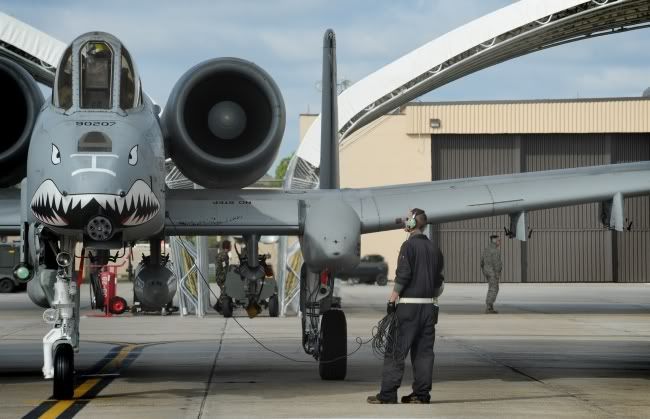
Staff Sgt. Todd Mesman, 75th Aircraft Maintenance Unit A-10C Thunderbolt II crew chief, prepares A-10C 79-0207 from the 75th Fighter Squadron (see checker tail markings) for launch to Red Flag here October 17, 2009. The Red Flag exercise is conducted on the 15,000-square-mile Nevada Test and Training Range, north of Las Vegas, and will last approximately three weeks. (U.S. Air Force photo by Staff Sgt. Elizabeth Rissmiller) Hi-res
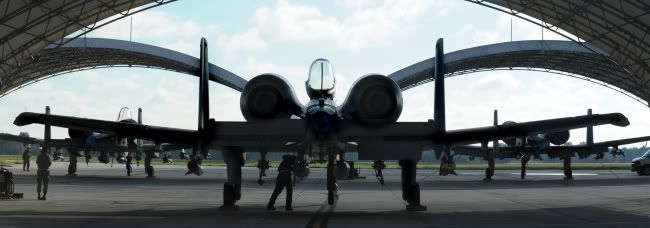
An Airman from the 75th Aircraft Maintenance Unit preps an A-10C Thunderbolt II for a launch to Red Flag at Nellis Air Force Base, Nev., here October 17, 2009. The exercise is conducted on the 15,000-square-mile Nevada Test and Training Range, north of Las Vegas. (U.S. Air Force photo by Staff Sgt. Elizabeth Rissmiller) Hi-res
Note: Both aircraft at left and at right in the background are carrying Sniper XR targeting pod on station 10.
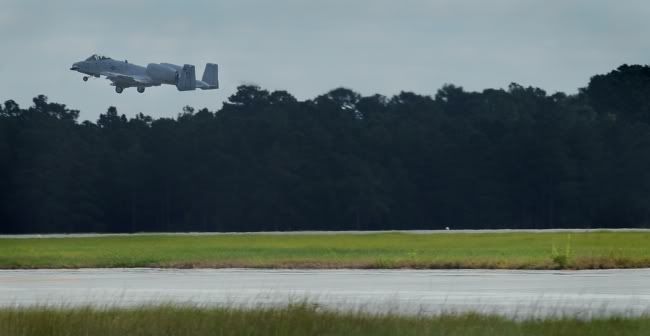
An A-10C Thunderbolt II takes off for Red Flag at Nellis Air Force Base, Nev., here October 17, 2009. Red Flag is a realistic combat training exercise involving the air forces of the United States and its allies. (U.S. Air Force photo by Staff Sgt. Elizabeth Rissmiller) Hi-res

Maj. John Lesho, 76th Fighter Squadron A-10C pilot, displays an American flag in the cockpit of A-10 79-0139 he will fly to Red Flag at Nellis Air Force Base, Nev., here October 17, 2009. On his left arm, Maj. John Lesho wears the 476th Fighter Group patch. The 476th FG is an AFRC unit associated to Moody AFB. (U.S. Air Force photo by Staff Sgt. Elizabeth Rissmiller) Hi-res

Prior to a launch to Red Flag at Nellis Air Force Base, Nev., Senior Airman Brian Moran, 75th Aircraft Maintenance Unit A-10C Thunderbolt II assistant dedicated crew chief, communicates with Maj. John Lesho, 76th Fighter Squadron A-10C pilot, here October 17, 2009. (U.S. Air Force photo by Staff Sgt. Elizabeth Rissmiller) Hi res

Senior Airman Brian Moran, 75th Aircraft Maintenance Unit A-10C Thunderbolt II assistant dedicated crew chief, prepares an A-10 for launch to Red Flag at Nellis Air Force Base, Nev., here October 17, 2009. The 23rd Fighter Group participates in Red Flag, a multinational exercise, to practice aerial combat scenarios in a realistic environment. (U.S. Air Force photo by Staff Sgt. Elizabeth Rissmiller) Hi-res
Source
Related info:
Red Flag exercise kicks off Monday
Friday, July 17, 2009
476th Fighter Group brings total-force integration to Flying Tigers
by Bo Joyner
Air Force Reserve Command Public Affairs
7/16/2009 - MOODY AIR FORCE BASE, Ga. -- Thanks to Total Force Integration, Air Force Reservists are now helping put the bite into the shark teeth-sporting A-10s of the 23rd Fighter Group at Moody Air Force Base, Ga. The 23rd FG is the home of the world-famous Flying Tigers, and the group's A-10C Thunderbolt IIs are the only Air Force aircraft authorized to feature the unique nose art.
Now, for the first time in the nearly 70-year history of the 23rd FG, Air Force Reserve pilots, maintainers and medical specialists are working alongside their active-duty Flying Tiger counterparts on a daily basis. Air Force Reserve Command's 476th FG recently stood up as a classic associate unit linked to the 23rd FG. The 476th FG is home to the 76th Fighter Squadron, 476th Maintenance Squadron and 476th Aerospace Medicine Flight.
While the 476th has officially existed since February, the group conducted a formal activation ceremony July 11 at Moody presided over by Col. Mark Clemons, commander of the 442nd Fighter Wing, which serves as the group's higher headquarters. The 442nd, based at Whiteman Air Force Base, Mo., oversees the 476th FG's administrative and mission-support needs not provided by Moody's host, active-duty wing.
The group works under its own command structure but integrates its operations with the 23rd Wing's 74th and 75th Fighter Squadrons and 23rd Maintenance Group. The Reservists bring a broad range of experience and provide continuity that increases the 23rd FG's overall operational capability. TFI is the Air Force's overall plan to capitalize on the strengths of both the active duty and Reserve by integrating regular and Reserve forces in day-to-day operations.
At Moody, TFI is quickly taking hold.
"We've come a long way since last spring when about four of us started building the 476th Fighter Group here," said Col. Greg Eckfeld, the 476th commander.
The group currently has approximately 115 people -- traditional Reservists, air reserve technicians and civilians. Eventually, the 476th will grow to about 230 traditional Reservists and full-timers, including 20 in the 76th FS, 160 in the 476th MXS and 23 in the medical flight. The remaining people will serve on the group staff.
"We've been focused on hiring, and we will continue to focus on hiring until we're fully manned," Colonel Eckfeld said. "We're bringing in qualified individuals with a lot of experience who are adding to the synergy we have going with the Flying Tigers."
Once hired, new members of the 476th FG are wasting no time blending in with their active-duty counterparts at Moody.
"We're integrated with the 23rd in training and operations, on the flight line, in the maintenance shops, and with the AEF (aerospace expeditionary force) rotations the Flying Tigers are going through," the colonel said. "We've already deployed two pilots for a 60-day rotation and have a crew chief deployed right now and another pilot and two more crew chiefs lined up to go."
"We'll be sending even more people in the next AEF cycle," said Chief Master Sgt. Stacy Walker, 476th MXS aircraft maintenance unit superintendent. "As our squadron grows, we'll be able to deploy more of our Reservists."
In the meantime, the Reservists helping maintain the A-10Cs at Moody are sharing their years of knowledge and experience with the Flying Tigers' active-duty maintainers.
"There are a lot of young active-duty troops here, and they lean heavily on us," Chief Walker said. "And their leadership encourages it. Our maintainers average 20 to 25 years of experience, so we have a lot to bring to the fight."
"The Reservists definitely bring a lot of experience and expertise with them," said Tech. Sgt. Travis Stroyick, a maintainer with the active-duty 23rd MXG. "When I have a master sergeant out there who's been working on A-10s for 20 years, I'm definitely going to use him to share his knowledge with my younger troops."
"From a flying standpoint, as the active-duty pilots come and go, having Reserve pilots here will give us a base of continuity to work from," said Capt. Brian Hatch, a Reserve pilot with the 76th FS. "Right now, we're the new ones, so we are relying heavily on the active duty to get us spun up. But, eventually, we'll be the ones counted on to provide the experience and continuity. In addition, we'll volunteer for deployments to lighten the load on the active-duty pilots so they don't have to go again and again. It takes a little bit of the burden off of them."
The 476th FG has reached initial operational capability status, and Colonel Eckfeld believes the group will be fully operational in a couple of years. He said the plan is for the group to launch and recover its first A-10 autonomously August 1.
They almost pulled that feat off during a modified flying operation in March.
"We recently recovered two cross-country jets, one piloted by a Reservist and the other by an active-duty member, where we relied on the active duty in a very limited manner," Chief Walker said. "We pulled it off primarily on our own."
The group reached another milestone during its March unit training assembly when the medical squadron conducted its first personal health assessments.
"The 476th Aerospace Medicine Flight is an extremely important part of our operation here, and it is almost fully manned," Colonel Eckfeld said.
In addition to several medical technician positions, the 476th AMDF includes flight surgeons, nurses and a dentist who monitor the group's medical readiness.
The colonel said the cooperation between the active duty and the Reserve has been phenomenal.
"We've received a very warm reception from the 23rd Fighter Group," he said.
"They're converting from the A- to the C-model, they had a UCI (unit compliance inspection) last summer, they have an ORI (operational readiness inspection) coming up in September, and they have AEF deployments on-going. Yet, they still have taken the time to aggressively work our integration. We're excited about being here at Moody and proud to be partners with the world-famous Flying Tigers."
Source
Related info:
Tigers with new stripes -- AFRC activates new associate A-10 unit at Moody AFB
476th Fighter Group (AFRC) video clip released
Air Force Reserve Command Public Affairs
7/16/2009 - MOODY AIR FORCE BASE, Ga. -- Thanks to Total Force Integration, Air Force Reservists are now helping put the bite into the shark teeth-sporting A-10s of the 23rd Fighter Group at Moody Air Force Base, Ga. The 23rd FG is the home of the world-famous Flying Tigers, and the group's A-10C Thunderbolt IIs are the only Air Force aircraft authorized to feature the unique nose art.
Now, for the first time in the nearly 70-year history of the 23rd FG, Air Force Reserve pilots, maintainers and medical specialists are working alongside their active-duty Flying Tiger counterparts on a daily basis. Air Force Reserve Command's 476th FG recently stood up as a classic associate unit linked to the 23rd FG. The 476th FG is home to the 76th Fighter Squadron, 476th Maintenance Squadron and 476th Aerospace Medicine Flight.
While the 476th has officially existed since February, the group conducted a formal activation ceremony July 11 at Moody presided over by Col. Mark Clemons, commander of the 442nd Fighter Wing, which serves as the group's higher headquarters. The 442nd, based at Whiteman Air Force Base, Mo., oversees the 476th FG's administrative and mission-support needs not provided by Moody's host, active-duty wing.
The group works under its own command structure but integrates its operations with the 23rd Wing's 74th and 75th Fighter Squadrons and 23rd Maintenance Group. The Reservists bring a broad range of experience and provide continuity that increases the 23rd FG's overall operational capability. TFI is the Air Force's overall plan to capitalize on the strengths of both the active duty and Reserve by integrating regular and Reserve forces in day-to-day operations.
At Moody, TFI is quickly taking hold.
"We've come a long way since last spring when about four of us started building the 476th Fighter Group here," said Col. Greg Eckfeld, the 476th commander.
The group currently has approximately 115 people -- traditional Reservists, air reserve technicians and civilians. Eventually, the 476th will grow to about 230 traditional Reservists and full-timers, including 20 in the 76th FS, 160 in the 476th MXS and 23 in the medical flight. The remaining people will serve on the group staff.
"We've been focused on hiring, and we will continue to focus on hiring until we're fully manned," Colonel Eckfeld said. "We're bringing in qualified individuals with a lot of experience who are adding to the synergy we have going with the Flying Tigers."
Once hired, new members of the 476th FG are wasting no time blending in with their active-duty counterparts at Moody.
"We're integrated with the 23rd in training and operations, on the flight line, in the maintenance shops, and with the AEF (aerospace expeditionary force) rotations the Flying Tigers are going through," the colonel said. "We've already deployed two pilots for a 60-day rotation and have a crew chief deployed right now and another pilot and two more crew chiefs lined up to go."
"We'll be sending even more people in the next AEF cycle," said Chief Master Sgt. Stacy Walker, 476th MXS aircraft maintenance unit superintendent. "As our squadron grows, we'll be able to deploy more of our Reservists."
In the meantime, the Reservists helping maintain the A-10Cs at Moody are sharing their years of knowledge and experience with the Flying Tigers' active-duty maintainers.
"There are a lot of young active-duty troops here, and they lean heavily on us," Chief Walker said. "And their leadership encourages it. Our maintainers average 20 to 25 years of experience, so we have a lot to bring to the fight."
"The Reservists definitely bring a lot of experience and expertise with them," said Tech. Sgt. Travis Stroyick, a maintainer with the active-duty 23rd MXG. "When I have a master sergeant out there who's been working on A-10s for 20 years, I'm definitely going to use him to share his knowledge with my younger troops."
"From a flying standpoint, as the active-duty pilots come and go, having Reserve pilots here will give us a base of continuity to work from," said Capt. Brian Hatch, a Reserve pilot with the 76th FS. "Right now, we're the new ones, so we are relying heavily on the active duty to get us spun up. But, eventually, we'll be the ones counted on to provide the experience and continuity. In addition, we'll volunteer for deployments to lighten the load on the active-duty pilots so they don't have to go again and again. It takes a little bit of the burden off of them."
The 476th FG has reached initial operational capability status, and Colonel Eckfeld believes the group will be fully operational in a couple of years. He said the plan is for the group to launch and recover its first A-10 autonomously August 1.
They almost pulled that feat off during a modified flying operation in March.
"We recently recovered two cross-country jets, one piloted by a Reservist and the other by an active-duty member, where we relied on the active duty in a very limited manner," Chief Walker said. "We pulled it off primarily on our own."
The group reached another milestone during its March unit training assembly when the medical squadron conducted its first personal health assessments.
"The 476th Aerospace Medicine Flight is an extremely important part of our operation here, and it is almost fully manned," Colonel Eckfeld said.
In addition to several medical technician positions, the 476th AMDF includes flight surgeons, nurses and a dentist who monitor the group's medical readiness.
The colonel said the cooperation between the active duty and the Reserve has been phenomenal.
"We've received a very warm reception from the 23rd Fighter Group," he said.
"They're converting from the A- to the C-model, they had a UCI (unit compliance inspection) last summer, they have an ORI (operational readiness inspection) coming up in September, and they have AEF deployments on-going. Yet, they still have taken the time to aggressively work our integration. We're excited about being here at Moody and proud to be partners with the world-famous Flying Tigers."
Source
Related info:
Tigers with new stripes -- AFRC activates new associate A-10 unit at Moody AFB
476th Fighter Group (AFRC) video clip released
Sunday, July 12, 2009
Tigers with new stripes -- AFRC activates new associate A-10 unit at Moody AFB
by Master Sgt. Bill Huntington
442nd Fighter Wing Public Affairs

On A-10C 79-0141, Tech. Sgt. Scott Lopez, an A-10 Thunderbolt II crew chief with the 476th Maintenance Squadron, reveals the name of A-10 pilot, Lt. Col. Bill James, in a special unit-activation ceremony held at Moody AB, Georgia, July 11, 2009. Colonel James is the commander of the newly activated 76th Fighter Squadron, part of an Air Force Reserve Command A-10 associate unit here. The parent unit of the 476th MXS, the also newly-formed 476th Fighter Group, fly's the 23rd Wing's aircraft in a program that is a partnership with the Regular Air Force. (U.S. Air Force photo by Master Sgt. Bill Huntington) Hi-res
7/11/2009 - MOODY AIR FORCE BASE, Ga. -- The Air Force's historic Flying Tigers officially came to the Air Force Reserve Command as the 476th Fighter Group was activated in a ceremony here, July 11.
The stand up of the 476th FG -- with its subordinate units, the 76th Fighter Squadron, the 476th Maintenance Squadron and the 476th Aerospace Medicine Flight -- is also historic as it officially brings Total Force Integration to Moody AFB with 476th Citizen Airmen flying and maintaining the 23rd Wing's A-10C Thunderbolt II aircraft in the Air Force's first A-10 fighter- associate unit partnership.
During the ceremony Col. Greg Eckfeld, 476th FG commander, spoke of the great distance the group has come since its start in 2008 as a detachment of the 442nd Fighter Wing, which is based at Whiteman AFB, Mo.
"A little more than a year ago I arrived at Moody, excited, but wondering how I, and a group of four other initial personnel , were going to grow this organization and if we could integrate Citizen Airmen from the Air Force Reserve with our active-duty counterparts," Colonel Eckfeld said. "I can say without question, we have been successful."
According to the colonel, this has been accomplished while supporting real-world, combat operations with pilots and crew chiefs deploying for Operation Enduring Freedom in Afghanistan.
Colonel Eckfeld also thanked his people for all of their hard work in making it happen and emphasized his gratitude to Moody's host unit for their contributions in the effort to make TFI a reality.
"My future challenge and primary goals are, first, recruiting and then integrating traditional reservists and Air Reserve Technicians into the busy operations tempo of the 23rd Wing," Colonel Eckfeld said. "Our challenge is building integrated organizations that operate seamlessly with both active-duty personnel and reservists working side by side in this busy environment."
The event, presided over by Col. Mark Clemons, 442nd FW commander, followed the time-honored tradition of unfurling each unit's guidon flags, and introducing the new commanders. It included a special salute to the 476th FG and 76th FS commanders by their respective aircraft crew chiefs as commanders' names were revealed painted on the sides of two A-10s.
Underscoring the group's pioneering role in the Air Force, Colonel Clemons recounted the 76th Fighter Squadron's heritage from its start in China as the American Volunteer Group and subsequent organization as an official Army Air Forces squadron during World War II.
"Once again, the 76th is pioneering new ways of applying combat aerospace power," Colonel Clemons said of the 76th FS. "With its reincarnation as the 76th Fighter Squadron, this proud and storied unit will be the first-ever A-10 associate unit, flying a unique combat aircraft, which has been modified for the digital age - the A-10C."
Group members, standing in formation, rendered salutes to their new leaders as the ceremony progressed. Recognizing the significance of the event, some later expressed their pride, as well as a determination to become a TFI team player.
"We are here and we are ready to support the active-duty," said Master Sgt. Stacey Moore, 476th AMDF. "We are stepping forward in a new thing and we are going to make it work."

Col. Mark Clemons, 442nd Fighter Wing commander, and Col. Greg Eckfeld, 476th Fighter Group commander, reveal the newly-activated 476th FG's guidon flag in a special activation ceremony at Moody Air Force Base, Ga., July 11, 2009. The 476th FG, an Air Force Reserve Command A-10 Thunderbolt II unit will fly the 23rd Wing's -- Moody's host unit -- A-10s in a partnership with the Regular Air Force. The 442nd FW, based at Whiteman AFB, Mo., is the 476th FG's parent unit. (U.S. Air Force photo by Master Sgt. Bill Huntington) Hi-res

Col. Greg Eckfeld, 476th Fighter Group commander, addresses the newly-activated 476th FG. (U.S. Air Force photo by Master Sgt. Bill Huntington) Hi-res

Lt. Col. Stuart Moore, 76th Fighter Squadron director of operations, leads the assembled, newly-activated 476th Fighter Group in a salute to the Group's commander Col. Greg Eckfeld. (U.S. Air Force photo by Master Sgt. Bill Huntington) Hi-res
Source
Related info:
476th Fighter Group (AFRC) vido clip released
442nd Fighter Wing Public Affairs
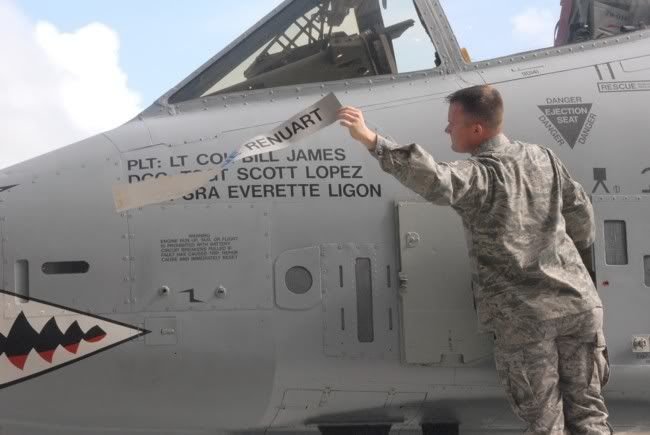
On A-10C 79-0141, Tech. Sgt. Scott Lopez, an A-10 Thunderbolt II crew chief with the 476th Maintenance Squadron, reveals the name of A-10 pilot, Lt. Col. Bill James, in a special unit-activation ceremony held at Moody AB, Georgia, July 11, 2009. Colonel James is the commander of the newly activated 76th Fighter Squadron, part of an Air Force Reserve Command A-10 associate unit here. The parent unit of the 476th MXS, the also newly-formed 476th Fighter Group, fly's the 23rd Wing's aircraft in a program that is a partnership with the Regular Air Force. (U.S. Air Force photo by Master Sgt. Bill Huntington) Hi-res
7/11/2009 - MOODY AIR FORCE BASE, Ga. -- The Air Force's historic Flying Tigers officially came to the Air Force Reserve Command as the 476th Fighter Group was activated in a ceremony here, July 11.
The stand up of the 476th FG -- with its subordinate units, the 76th Fighter Squadron, the 476th Maintenance Squadron and the 476th Aerospace Medicine Flight -- is also historic as it officially brings Total Force Integration to Moody AFB with 476th Citizen Airmen flying and maintaining the 23rd Wing's A-10C Thunderbolt II aircraft in the Air Force's first A-10 fighter- associate unit partnership.
During the ceremony Col. Greg Eckfeld, 476th FG commander, spoke of the great distance the group has come since its start in 2008 as a detachment of the 442nd Fighter Wing, which is based at Whiteman AFB, Mo.
"A little more than a year ago I arrived at Moody, excited, but wondering how I, and a group of four other initial personnel , were going to grow this organization and if we could integrate Citizen Airmen from the Air Force Reserve with our active-duty counterparts," Colonel Eckfeld said. "I can say without question, we have been successful."
According to the colonel, this has been accomplished while supporting real-world, combat operations with pilots and crew chiefs deploying for Operation Enduring Freedom in Afghanistan.
Colonel Eckfeld also thanked his people for all of their hard work in making it happen and emphasized his gratitude to Moody's host unit for their contributions in the effort to make TFI a reality.
"My future challenge and primary goals are, first, recruiting and then integrating traditional reservists and Air Reserve Technicians into the busy operations tempo of the 23rd Wing," Colonel Eckfeld said. "Our challenge is building integrated organizations that operate seamlessly with both active-duty personnel and reservists working side by side in this busy environment."
The event, presided over by Col. Mark Clemons, 442nd FW commander, followed the time-honored tradition of unfurling each unit's guidon flags, and introducing the new commanders. It included a special salute to the 476th FG and 76th FS commanders by their respective aircraft crew chiefs as commanders' names were revealed painted on the sides of two A-10s.
Underscoring the group's pioneering role in the Air Force, Colonel Clemons recounted the 76th Fighter Squadron's heritage from its start in China as the American Volunteer Group and subsequent organization as an official Army Air Forces squadron during World War II.
"Once again, the 76th is pioneering new ways of applying combat aerospace power," Colonel Clemons said of the 76th FS. "With its reincarnation as the 76th Fighter Squadron, this proud and storied unit will be the first-ever A-10 associate unit, flying a unique combat aircraft, which has been modified for the digital age - the A-10C."
Group members, standing in formation, rendered salutes to their new leaders as the ceremony progressed. Recognizing the significance of the event, some later expressed their pride, as well as a determination to become a TFI team player.
"We are here and we are ready to support the active-duty," said Master Sgt. Stacey Moore, 476th AMDF. "We are stepping forward in a new thing and we are going to make it work."

Col. Mark Clemons, 442nd Fighter Wing commander, and Col. Greg Eckfeld, 476th Fighter Group commander, reveal the newly-activated 476th FG's guidon flag in a special activation ceremony at Moody Air Force Base, Ga., July 11, 2009. The 476th FG, an Air Force Reserve Command A-10 Thunderbolt II unit will fly the 23rd Wing's -- Moody's host unit -- A-10s in a partnership with the Regular Air Force. The 442nd FW, based at Whiteman AFB, Mo., is the 476th FG's parent unit. (U.S. Air Force photo by Master Sgt. Bill Huntington) Hi-res

Col. Greg Eckfeld, 476th Fighter Group commander, addresses the newly-activated 476th FG. (U.S. Air Force photo by Master Sgt. Bill Huntington) Hi-res

Lt. Col. Stuart Moore, 76th Fighter Squadron director of operations, leads the assembled, newly-activated 476th Fighter Group in a salute to the Group's commander Col. Greg Eckfeld. (U.S. Air Force photo by Master Sgt. Bill Huntington) Hi-res
Source
Related info:
476th Fighter Group (AFRC) vido clip released
Saturday, June 27, 2009
476th Fighter Group (AFRC) video clip released

This video clip was released on 442nd Fighter Wing's public website.
Interviewed are Capt. Brian Hatch, A-10 pilot, and Col. Greg Eckfeld, 476th Fighter Group commander.
Related info:
Reservists build associate fighter group at Moody
by Master Sgt. Bill Huntington
442nd Fighter Wing Public Affairs
9/5/2008 - MOODY AIR FORCE BASE, Ga. -- The Air Force Reserve Command has come to the Flying Tigers at Moody Air Force Base, Ga., in the form of Total Force Integration and, if the stand up of AFRC's 476th Fighter Group is successful as planned, the effort will likely be apparent to no one except perhaps the reservists themselves.
A goal of TFI is to blend active-duty with members of the air reserve component to the point that Guard, Reserve and active-duty members would be indistinguishable from one another in all aspects of their operations. Other TFI efforts in the Air Force Reserve are currently underway at Nellis AFB, Nev., Elmendorf AFB, Alaska, and Holloman AFB, N.M.
Started in June 2007, as Detachment 1, 442nd Fighter Wing, as part of an ongoing Air Force-wide initiative to more efficiently carry out its mission, the Group will work under its own command structure but will integrate its operations with the 23rd Wing's 74th and 75th Fighter Squadrons and 23rd Maintenance Group.
The unit will include the 76th Fighter Squadron, the 476th Maintenance Squadron and the 476th Aerospace Medicine Flight.
The 76th FS will have 20 members assigned, there will be 160 in the 476th MXS, the 476th AMDF is slated to have 23 medical personnel with the rest will be assigned to the Group staff. When all is said and done, more than 230 will be assigned to the Group.
Col. Greg Ekfeld, currently commanding the detachment, will be the Group's commander, 1st Lt. Alicia Warren, is the executive officer and Susan Sutter, is the Group's secretary.
Beside its several medical technician positions, the 476th AMDF will include flight surgeons, nurses and a dentist who will monitor the Group's medical readiness.
Most traditional maintenance disciplines, such as crew chiefs, loaders and munitions, will be assigned to the 476th MXS and will be commanded by Lt. Col. Pat Webb. Colonel Webb's "maintainers" include Capt. Melissa Tims, maintenance officer, Chief Master Sgt. Robin Chase, the MXS superintendent, Senior Airmen Tracey Robson and Jamie Losee, crew chiefs who are fully integrated into the 75th Fighter Squadron, Senior Airman Dunnuia Martin, a loader and Senior Airman Brandon Abel, munitions.
The flying operation currently has three pilots, Lt. Col. Mickey Moore, the director of operations, Capt. LaRue Russell, the director of training, and Capt. Brian Hatch who has been a mission planning cell chief with the 303rd FS at Whiteman AFB. The pilots are being fully integrated into the base's flying operations and will fly missions on the 23rd Wing's A-10Cs with the active-duty pilots as well as other Reserve pilots.
In June, Captain Russell became the first Reserve fighter pilot to fly an integrated sortie at Moody. Airman Robson was the crew chief for the mission. For the Captain, it was it was a great experience.
"It was very enjoyable to fly the C-model A-10 again," Captain Russell said. "The biggest challenges were remembering the things I learned about flying the A-10C and knocking the rust off."
Colonel Moore, an A-10 pilot with more than 3,700 flying hours, said flying the C-model A-10 is like the A-model but it has its own challenges.
"Flying the airplane is the same," Colonel Moore said. "The difficulty is how to employ the weapons and how to use the new 'toys' smartly. We have the situational awareness and the air sense. Now all of those things that accompany your flying abilities will marry up and we will be very good instructor pilots."
The focus of the reservists has been building up their unit and being able to fly again has been an important milestone in the process.
The unit will continue to train and build experience in the A-10C, said Colonel Eckfeld.
"We want to build a cadre of experience, both pilot and maintenance professionals," he said. "Our pilots are expected to continuously train and instruct Moody pilots."
Moody is proving to be a great operating location for the Group. The nearby range, so close that the sounds of the A-10's gun firing can be heard on base, will give the pilots an excellent opportunity to keep their skills sharp. The 23rd Wing's other flying mission with the 347th Rescue Group with its HC-130 Hercules and HH-60G Pave Hawk helicopter, will enable the A-10 pilots to practice combat search and rescue exercises regularly.
The emphasis for the unit to this point has been to build up their maintenance capabilities. According to Colonel Moore as more maintainers come on board and are able to turn more aircraft with their active-duty counterparts, the unit becomes better situated to accept a greater number of pilots.
"I'd rather see them get healthy with maintenance and have them turn a lot of airplanes," Colonel Moore said. "Then we can start bringing in more pilots."
The maintenance reservists work side-by-side with their counterparts and, according to Master Sgt. James Perdue, their 23rd Aircraft Maintenance Squadron active-duty supervisor, each reservist is, "another one of the troops" on the ramp.
"For the most part, I treat them just like my guys from active-duty," Sergeant Perdue said of Airmen Robson and Losee. "Their training records are set up the same, they go to the same appointments and they are part of the same training process."
Sergeant Perdue understands the level of experience reservists can bring. When reservists passed through the F-16 maintenance course he had taught at Sheppard AFB, Texas, he felt that their presence was positive and beneficial.
"I learned from those guys," he said. "There were times when I had technical sergeants in my class who had been working the same airframe for 20 years. Airmen Robson and Losee are motivated and they (also) bring a lot of experience to the table."
"Sergeant Perdue is great," Airman Losee said. "He really takes care of us and you can't ask for too much more than that."
Airman Robson, with ten years of active-duty behind her as an F-16 crew chief, is glad for the opportunity to be working on the line again. She said one concern she had was a perception if the "older" reservists could hack it.
"Some of these guys think anything beyond 30 is old," Airman Robson joked. "But I think both (Airman Lossee) and I have proven that we can handle the job."
She's quick to add that they've developed a good working relationship with the active-duty Airmen in the process.
"If we have questions," she said, "the guys here are pretty good about answering them and they've been asking us some questions too."
Conversely their active-duty counterparts on the flight line feel the reservists are a good addition.
"They fit in fine," said Airman 1st Class Dave Whiting, a 23rd AMXS crew chief. "They handle everything here the same as everyone else does and I think their being here will really benefit both sides."
"I'll take as many reservists as we can get," Sergeant Perdue added. "Especially if they are of the same caliber as the two we have."
The reservists' experiences integrating with the active-duty is helping to iron out any transition wrinkles that yet-to-be-assigned reservists might face. When an issue of how the reservists would be handled in the maintenance tracking system came up everyone worked to solve it.
"We tracked that down," Sergeant Perdue said. "Now that we have that process, we'll apply those same techniques to the next reservists."
Despite an unforeseen delay caused by an environmental impact study, TFI is a venture that's working slowly but surely at Moody and as the group grows and matures, it is proving to be just what was hoped for.
"It's different than being in a unit-equipped (organization) but different doesn't make it bad," Colonel Webb said. "It's one air Force, one team, one fight and this really is the best way to secure a viable future for the Air Force Reserve. I recommend that people embrace it."
(Airman 1st Class Frances Locquiao, 23rd Wing Public Affairs, contributed to this article.)

Lt. Col. Mickey Moore, a pilot with the 442nd Fighter Wing, Detachment 1, prepares to climb into the cockpit an A-10 Thunderbolt II for a training mission at Moody AFB, Georgia. Colonel Moore is one of several Air Force reservists at Moody laying the groundwork for an Air Force Reserve Command A-10 associate fighter group that will be teamed up with Moody's active-duty 23rd FG. The 23rd FG's parent organization, the 23rd Wing, traces its Air Force roots to the legendary Flying Tigers of World War II. Detachment 1 will become the 476th FG and it will share that lineage. The detachment is a geographically separated unit of the 442nd FW, an AFRC A-10 wing at Whiteman AFB, Missouri. (U.S. Air Force photo by Master Sgt. Bill Huntington)
Hi-res
Source
Subscribe to:
Posts (Atom)


 Posts
Posts