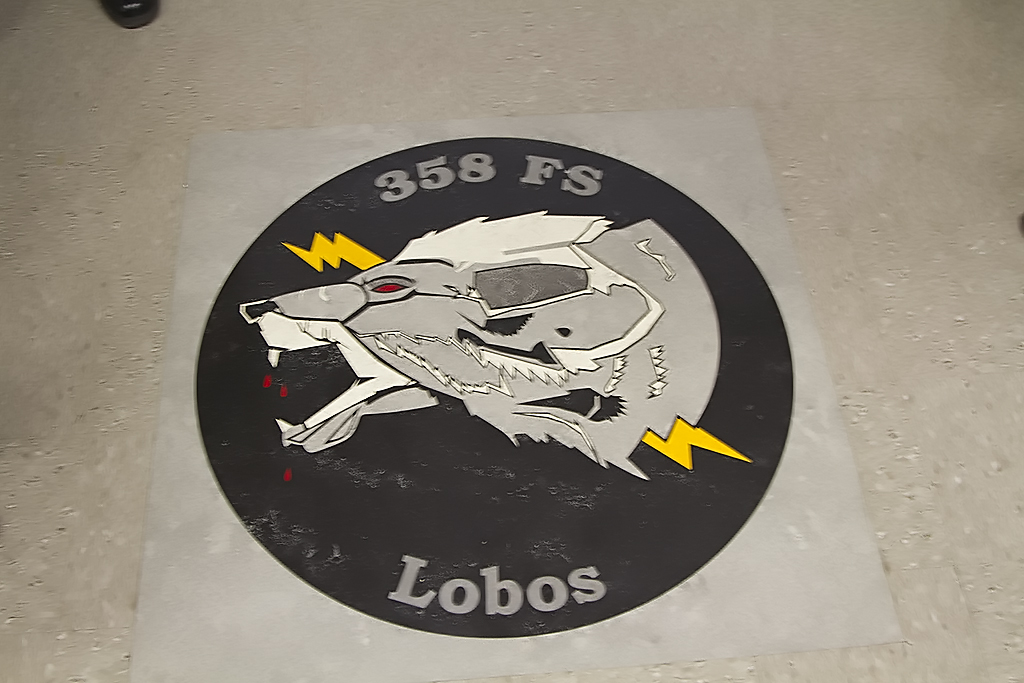
Showing posts with label 358th Fighter Squadron. Show all posts

Saturday, April 14, 2012

358th FS reestablishes 'First Friday' with Easter extravaganza

by Airman 1st Class Michael Washburn
355th Fighter Wing Public Affairs


U.S. Air Force 1st Lt. Jared Graham, 355th Training Squadron A-10 pilot, holds up his son, William, as he picks an egg out of a tree at the 358th Fighter Squadron Easter egg hunt on Davis-Monthan Air Force Base, Ariz., April 6. (U.S. Air Force photo by Airman 1st Class Michael Washburn) Hi-res

4/11/2012 - DAVIS-MONTHAN AIR FORCE BASE, Ariz. -- The 358th Fighter Squadron held an Easter egg hunt for their military members' children here April 6.

The Easter egg hunt helped the Airmen meet each other's family. About nine children participated in the hunt, all of them looking for more than 60 eggs.

"I recently took command and really wanted to get the 'first Friday' reestablished," said Col. Jennifer Short, 358th FS commander. "The first Friday of every month, we try and get the spouses and the families of our Airmen in our Heritage room and participate in an event. It just made sense to do an Easter egg hunt for the kids this month."

As the children waited for everyone to arrive before searching for the eggs, they started their sugar-high-filled Friday by decorating and devouring cookies. When it came to the decorating the cookies with sugary toppings, the "less is more" saying didn't hold true. The cookies looked like they weighed about a pound from all the layers of frosting and sprinkles smeared on them.

When everyone arrived, the hunt was about to commence. When the front doors of the Heritage room swung open, an onslaught of eager kids poured out to attack the outdoor area of the 358th FS in search of the treat-filled plastic eggs.

With the looting at an end and each child with a number of eggs in their possession, the parents and their children took the party back inside, where they mingled, laughed and enjoyed each other's company for the rest of the evening.

Hosting events like these are a way for the 358th FS to meet the families of the Airmen they work with. They can strip away the coworker moniker and start calling each other friends.

"I think having these events where everyone can mingle together and meet each other's family makes us different than other jobs," Short said. "I think with other companies, you go home on a Friday and spend time with your family and forget about work. We really know and take care of each other. We have people who deploy and you need that support back home when the Airman is deployed to keep that family together. I think that's why we're so good at what we do, because we take care of not just the Airman, but also their family."

Source

From Warthog News: Good luck for your career as 358th FS commander, Col. Jennifer Short!

Wednesday, August 31, 2011

Local boy is Pilot for a Day

by Airman 1st Class Saphfire Cook
355th Fighter Wing Public Affairs

8/30/2011 - DAVIS-MONTHAN AIR FORCE BASE, Ariz. -- A local boy and his family toured the base with the Pilot for a Day program here August 26.

Fifteen year-old Brandon Valles, his mother Dellma Valles, father Ernie Valles, and twin brothers Alex and Ricky Valles were escorted by Capt. Jason Pruitt, 358th Fighter Squadron pilot, during their tour.

"This program gives the base the opportunity to show a truly special kid a great time," Captain Pruitt said. "I really enjoyed being a part of it."

The goal of the Pilot for a Day program is to benefit children in the local community who have catastrophic illnesses.

The first stop on the tour was the 358th FS where Brandon received his very own, custom-made flight suit. He was presented a special lithograph, took the oath of office and had his wings pinned on his suit by Lt. Col. Andrew Kapuscak, 355th Training Squadron commander.

"I think it's great that everyone took time out their day to host this program," Mrs. Valles said.

From there the tour took Brandon and his family to various locations including aircraft static displays, the new fire station and the A-10 simulator. Brandon ate lunch with Col. John Cherrey, 355th Fighter Wing commander, and ended his tour with a visit to the military working dogs kennel.

"When I go to the hospital for my next treatment, I'm going to wear my flight suit," Brandon said. "The nurses said they wanted to see it, so I'll go show it off."

Brandon was diagnosed with stage four rhabdomyosarcoma, a cancerous tumor of the
muscles that are attached to the bones.

D-M hosted its first Pilot for a Day program participant in August 2000. For more information about the Pilot for a Day program, visit www.dm.af.mil/library/pilotfortheday.asp.


DAVIS-MONTHAN AIR FORCE BASE, Ariz. – Capt. Jason Pruitt, 358th Fighter Squadron, fits his helmet on Brandon Valles here Aug. 26. (U.S. Air Force photo by Airman 1st Class Christine Halan)

Source

Wednesday, August 10, 2011

AFA visit to the 358th Fighter Squadron at Davis-Monthan

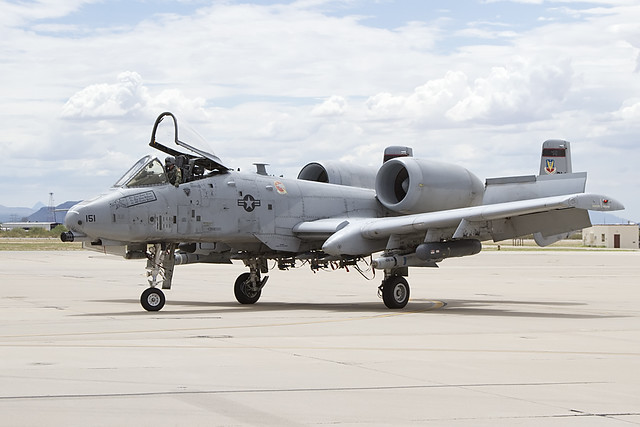
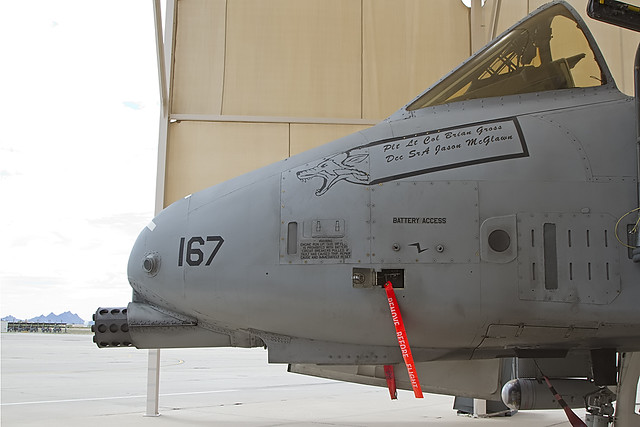
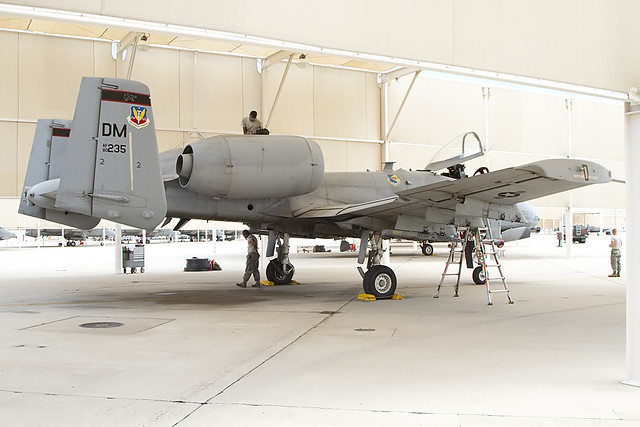
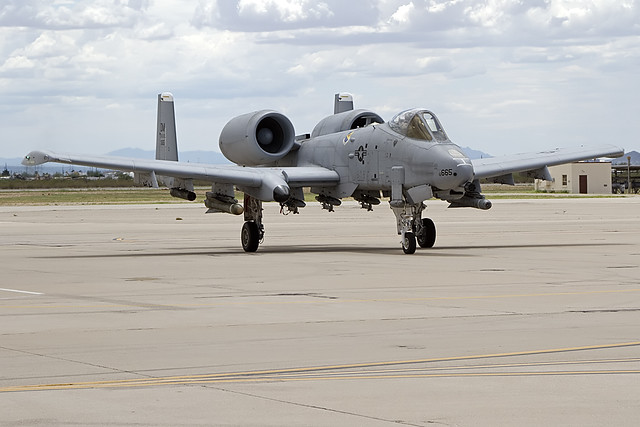
During an Air Force Association (AFA) visit to the 358th Fighter Squadron "Lobos", 355th Fighter Wing, at Davis-Monthan AFB, Arizona, Warthog News contributor Ned Harris from the United States had the opportunity to take the following shots, posted on his Flickr photostream on July 31, 2011:


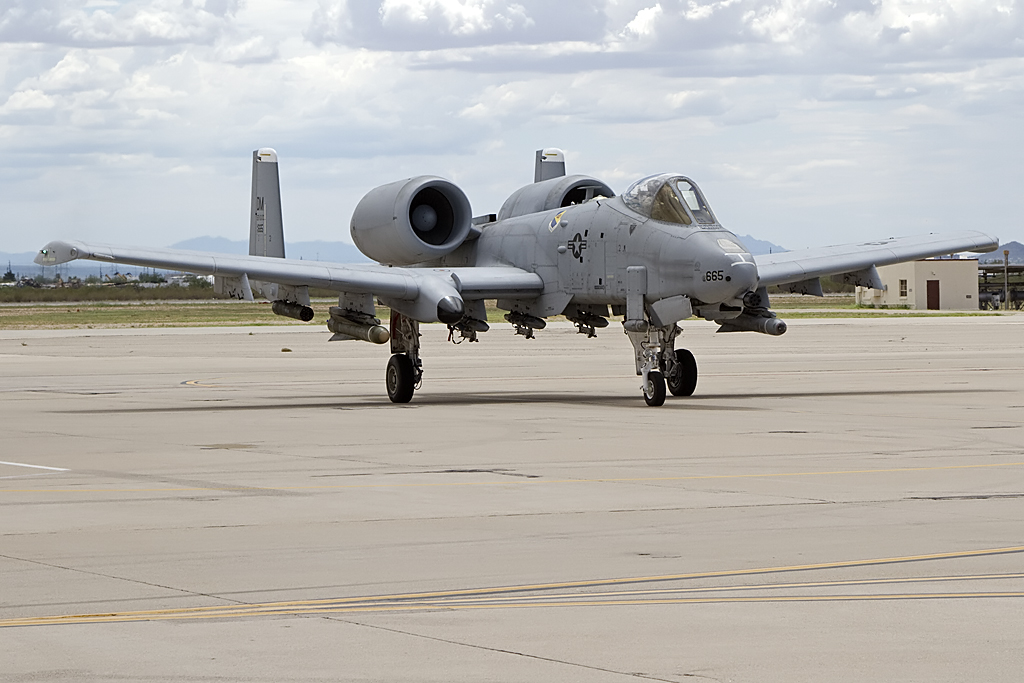
A-10C 80-0151 from the 358th Fighter Squadron returning to base. (Photo by Ned Harris) Full size


A-10C 81-0950 from the 357th Fighter Squadron "Dragons" returning to base. (Photo by Ned Harris) Full size


A-10C 80-0167 from the 358th Fighter Squadron. (Photo by Ned Harris) Full size


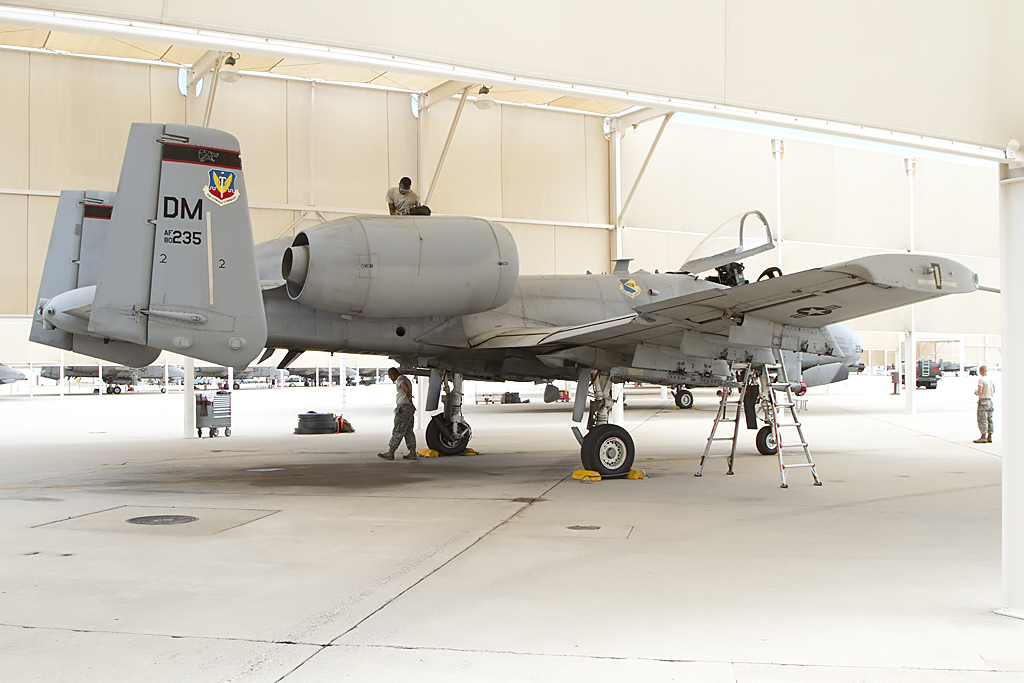
A-10C 80-0235 from the 358th Fighter Squadron undergoing maintenance. (Photo by Ned Harris) Full size


A-10C 82-0665 returning to base. (Photo by Ned Harris) Full size


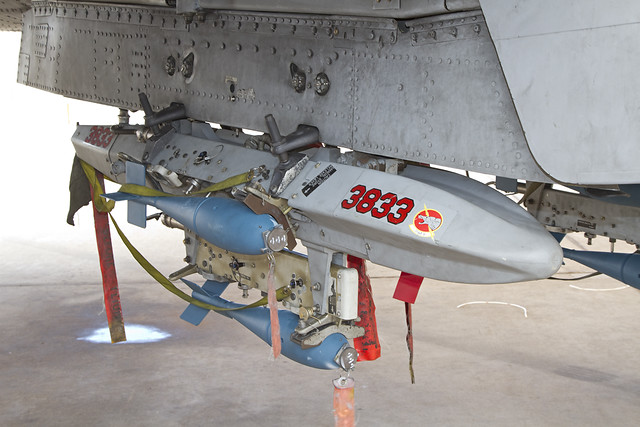
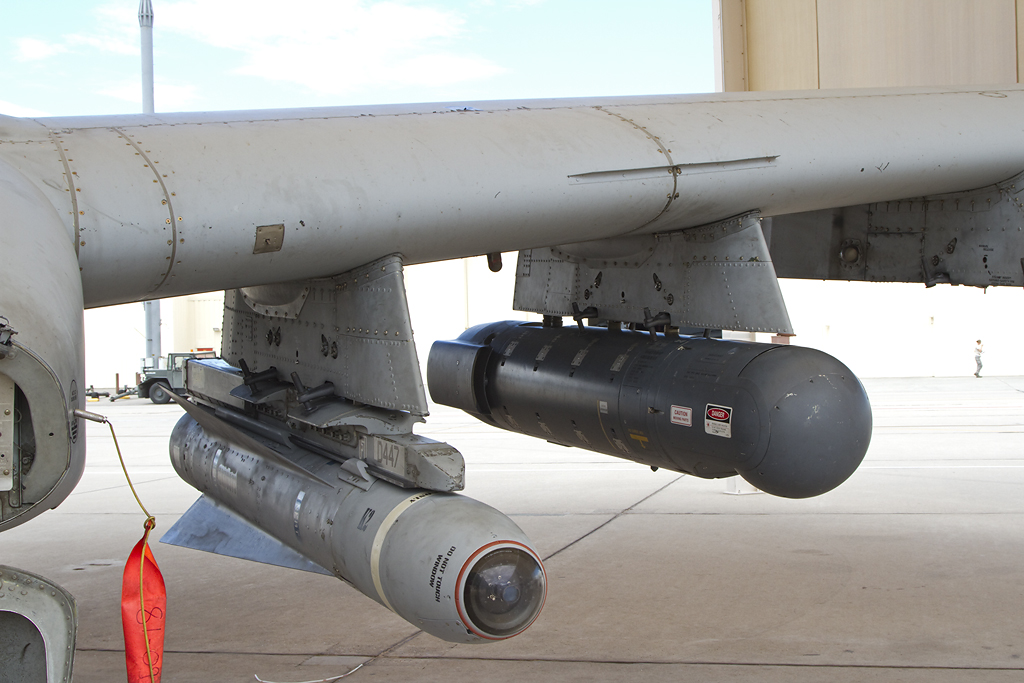
LITENING AT targeting pod on station 2, CATM-65 Maverick on station 3. (Photo by Ned Harris) Full size


BDU-33 practice bombs. (Photo by Ned Harris) Full size


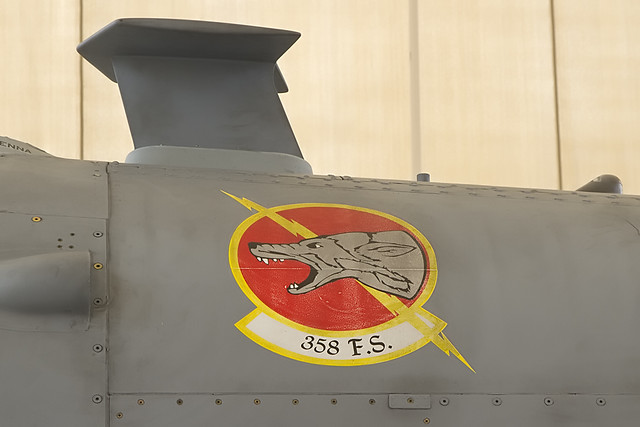
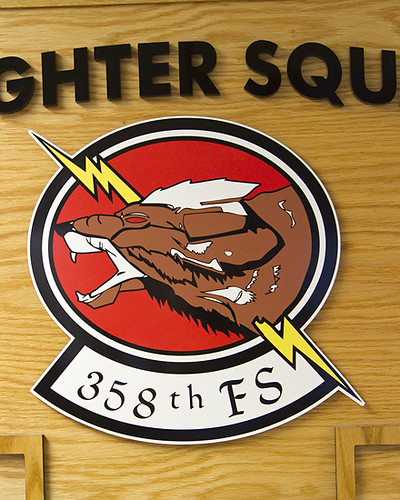
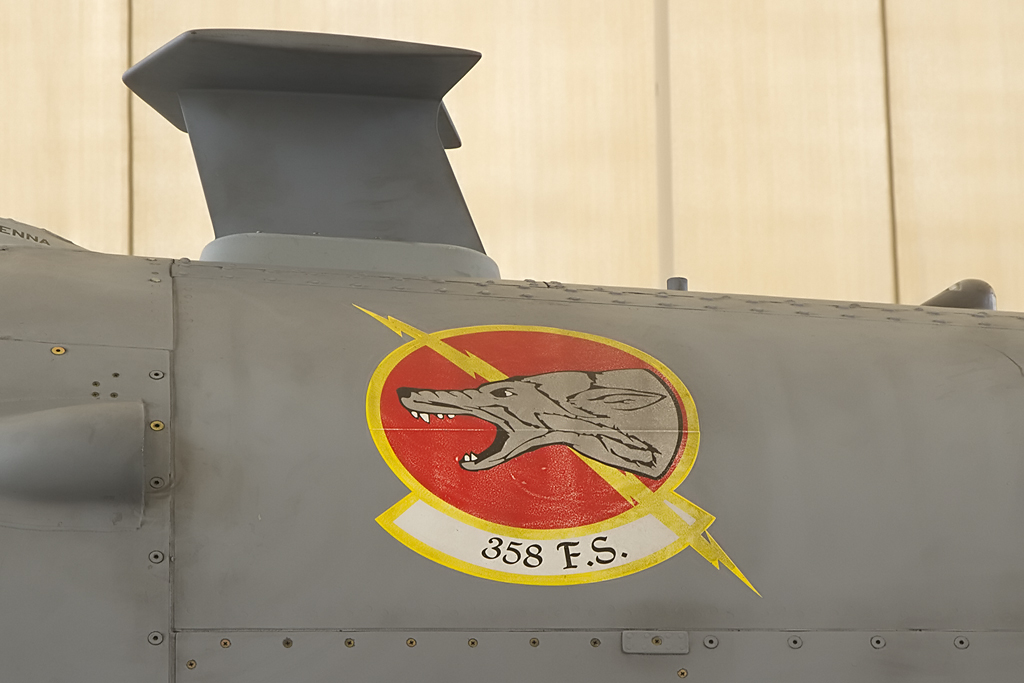
358th Fighter Squadron insignia. (Photo by Ned Harris) Full size


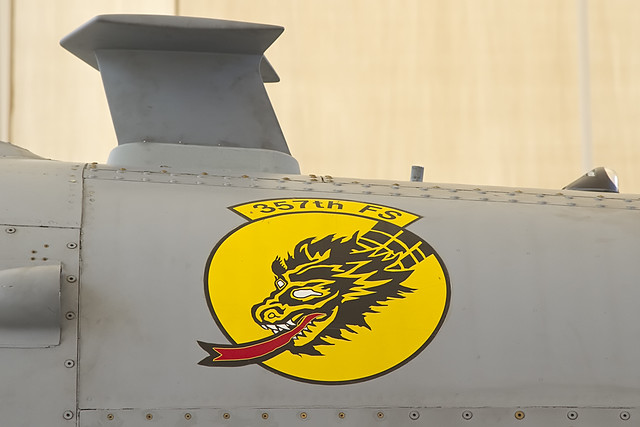
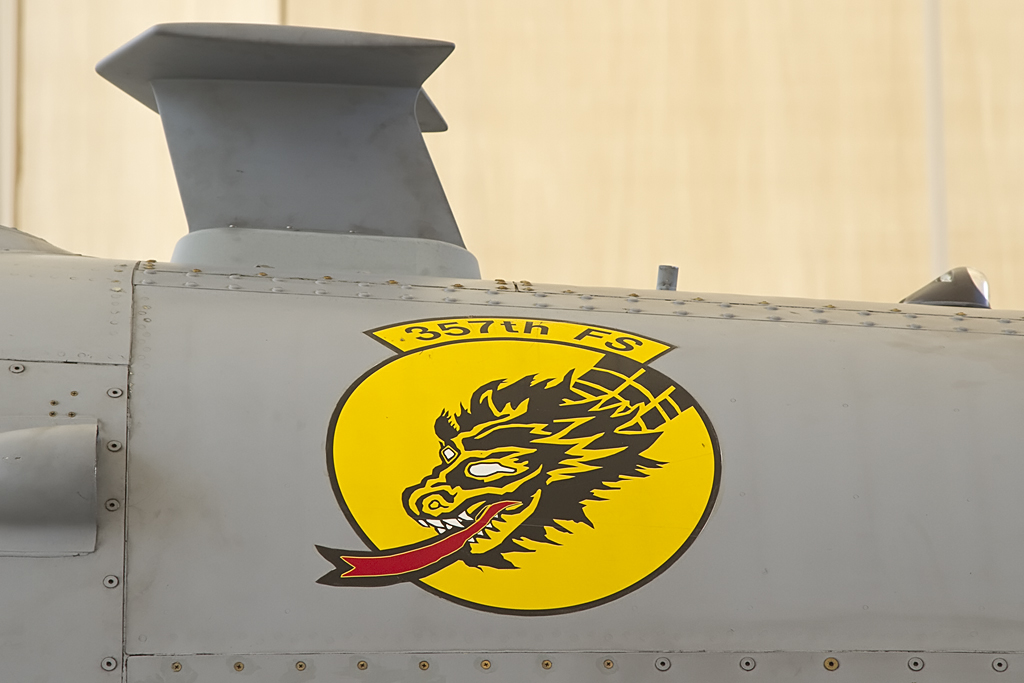
357th Fighter Squadron insignia. (Photo by Ned Harris) Full size


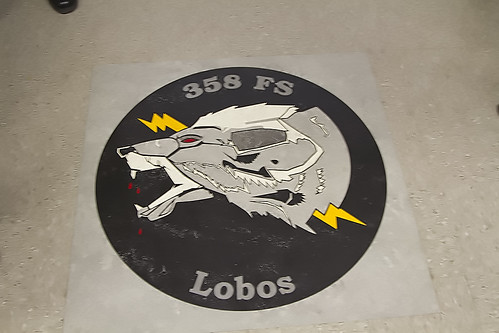
358th Fighter Squadron insignia on the floor. (Photo by Ned Harris) Full size


358th Fighter Squadron insignia. (Photo by Ned Harris)


358th Fighter Squadron insignia. (Photo by Ned Harris) Full size


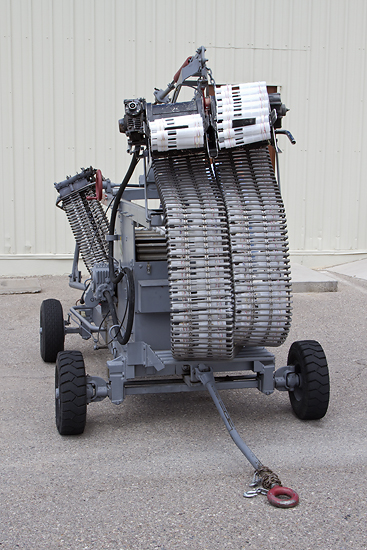
Dragon ammo loader. (Photo by Ned Harris)


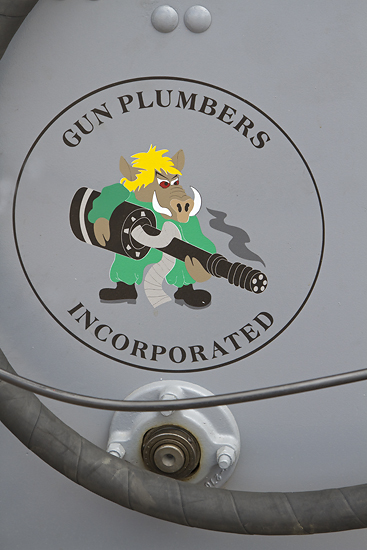
Gun Plumbers logo on the side of an ammo loader. (Photo by Ned Harris)

Thursday, August 12, 2010

Behind the Scenes: The Making of an A-10C Pilot "The Final Exam"

by Capt. Stacie N. Shafran
355th Fighter Wing Public Affairs

8/11/2010 - DAVIS-MONTHAN AIR FORCE BASE, Ariz. -- (Editor's note: Curious about what it takes to become an A-10 pilot? Follow along as this series showcases 1st Lt. Daniel Griffin's journey to becoming a fully qualified A-10C attack pilot.)

It was just final exam time for 1st Lt. Dan "Pabst" Griffin and his 11 classmates, who are days away from graduating the 358th Fighter Squadron's six-month long A-10C Pilot Initial Qualification Course.

The final exam is a capstone exercise known as a TAC-32. It encompassed everything the students needed to do to execute a combat mission and was taught through six classes.

The final product is an oral presentation, or go-to-war plan, that incorporates the skills and knowledge the students have gained over the past six months from flying, studying and learning from the seasoned pros in the squadron.

The class was split in half and each six-man team was led by an IP, or instructor pilot.

It was Capt. David "Teflon" Marshall, one of the squadron IPs, who was responsible for preparing Lieutenant Griffin, Capt. Aaron "Scribbles" Bigler, Capt. Patrick "ARG" Chapman, Capt. Josh "Bouché" Stallard, 1st Lt. Jason "Nuke" Attinger and 1st Lt. James "Gotta" Schmidt for their presentation Aug. 9.

Captain Marshall was assisted by Capt. Joel "Won" Bier, a recent Air Force Weapon's School graduate and the squadron's chief of weapons and tactics, and Senior Airman Erin McDonald, from the 355th Fighter Wing's intelligence shop.

Having watched a few of these while being stationed here, this always appears to be a nerve-wracking experience for the students.

Lieutenant Griffin and his crew confirmed this for me.

Between preparing to fly and flying three times the week leading up to the TAC-32, what little spare time they had left was devoted to research, studying and preparing for the presentation. While most of us were probably enjoying last weekend, these guys were hard at work inside the squadron's classified vault.

At the start of it all, they were presented with the rules of engagement for a fictitious conflict. Captain Bier created the scenario and helped the students meet specific lesson objectives. Airman McDonald provided intelligence updates about the conflict and country briefs about the imaginary area of operation.

As I mentioned a moment ago, I've seen a few TAC-32s. Several years ago, during my assignment at the 51st Fighter Wing at Osan Air Base, South Korea, I also watched our F-16 pilots go through something similar - a process called verification, which culminated their mission qualification training and certified they were ready to go to war at a moment's notice.

Each time I've attended one of these sessions, I've learned more about our Air Force mission, our pilots, our capabilities - and what it takes to be the best of the best.

I've also noticed that this is certainly not a time to display any sort of a lack of confidence - or to forget anything they've ever been taught.

During their TAC-32 presentation, Lieutenant Griffin and his team briefed their go-to-war plan in front of a board of senior wing officers.

In this case, the board was made up of Col. Edward A. "K-9" Kostelnik Jr., the 355th Operations Group Commander, Lt. Col. Scott "Soup" Campbell, the squadron's commander, Lt. Col. Derek "Lid" Emmons, the squadron's director of operations, and Capt. Matthew "Hars" Vedder, the 355th Fighter Wing's weapons officer.

The room was also filled with the rest of the squadron - peers, instructor pilots, people who have been flying the A-10 for longer than some of the students have been alive.

At the end of the presentation, the board of officers had free reign to question the students about their plan.

Pabst. Scribbles. ARG. Bouché. Nuke. Gotta ... each one of them displayed tremendous pride, confidence and team work as they tackled the slew of questions.

Of course nobody wanted to be "that guy" - the one who didn't know the answer in front of his peers and the wing's leadership. Again, these pilots are the best of the best and well, we are the best Air Force in the world ... so we'd expect nothing less from them. No pressure, right guys?

For everyone else in the room watching this unfold, it's not just a spectator sport. It's an opportunity learn from the students, who are presenting the most current information about the A-10C's upgraded avionics and weapons delivery capabilities.

At the end of the TAC-32, Colonel Kostelnik took a moment to congratulate the students and offer some guidance.

"You're all on the cutting edge ... as you get ready to head out into the Combat Air Force. In the first 15 years of my career, we didn't see much new in the A-10 ... now we're seeing something new every six months," he said.

With that, he said the studying doesn't end here and told all 12 students to get to their next assignments, hit the books, and keep learning so they can get the J-O-B done ... and so they are never the one to drop the ball.

Not only did the colonel speak from the heart, but his extensive resume speaks for itself. He's logged 2,723 hours in the A-10, with 207 hours accumulated in combat.

Colonel Kostelnik and Colonel Campbell, by the way, are also credited with killing between 200 and 300 al-Qaida and Taliban fighters during Operation Anaconda in eastern Afghanistan in March 2002. They did this in a single mission.

For Lieutenant Griffin and his classmates, being surrounded by so many experienced A-10 pilots and hearing their war stories only makes them eager to leave the nest.

They are all focused on what's coming next - joining their operational units, becoming wingmen, and preparing to go to war.

As Colonel Kostelnik hinted, the Combat Air Force is ready for them to showcase their newly acquired skills and knowledge about the A-10C. As they finish their last few training sorties this week and celebrate with friends and family during graduation late next week, they're one step closer to all of this.

Most of us will only see the jets fly overhead, taxi down the runway or take off. This series, through stories, photographs and videos, offers a behind-the-scenes perspective into Lieutenant Griffin's life as he becomes one of the Air Force's next A-10C pilots. The series can be found on www.dm.af.mil.

Source

Thursday, August 5, 2010

Behind the Scenes: The Making of an A-10C Pilot "Night Operations"

by Capt. Stacie N. Shafran
355th Fighter Wing Public Affairs

8/4/2010 - DAVIS-MONTHAN AIR FORCE BASE, Ariz. -- (Editor's note: Curious about what it takes to become an A-10 pilot? Follow along as this series showcases 1st Lt. Daniel Griffin's journey to becoming a fully qualified A-10C attack pilot.)

Since I started writing this series a few months ago about 1st Lt. Dan "Pabst" Griffin, one of 12 students nearing completion in the 358th Fighter Squadron's A-10C Pilot Initial Qualification Course, I've not only heard my fair share of pilot stories, I've seen a number of them "told" with hands that have magically turned into airplanes.

Usually I listen, smile ... nod when appropriate. Secretly though, I've longed for a tale or two of my own to compete with one of theirs.

Well, I finally have one ... and it's sure to make you smile.

So there we were (this is how all the good stories start) - me, Airman First Class Kristiana McDonough, a broadcaster, and Airman First Class Jerilyn Quintanilla, a photographer, in the rear, so-to-speak, of a KC-135 from the Pennsylvania Air National Guard's 171st Air Refueling Wing, flying 11,000 feet above Southern Arizona around 9 p.m. on July 22.

We were far from the glow of Tucson's city lights and there was only slight illumination from the moon. It was definitely dark outside.

The three of us were crowded near the boom operator, Master Sgt. Casey O'Connor, peering out of a tiny window, as we waited for Lieutenant Griffin and his instructor pilot, Capt. Keith "Farva" Bonser, to check into the airspace. As I listened intently on the radio, I finally heard them approach from a mile out. I passed this news to my troops, who readied their cameras.

If you've been following the series, you know I wrote in depth about the lieutenant's first daytime air refueling in late April. Excited to watch him accomplish this aviation feat, I didn't dare interrupt his concentration by talking to him on the radio. After we all landed, later on, he asked why I didn't say hi. Ah! I missed my moment.

Now that I had the chance to watch him accomplish his second nighttime air refueling, I vowed I'd say something to him on the radio. Still, I was nervous about interrupting his concentration. I mean, days earlier, he mentioned to me that refueling at night was probably going to be the hardest thing he'd have to do in the jet. The last thing I wanted to do was cause a crisis.

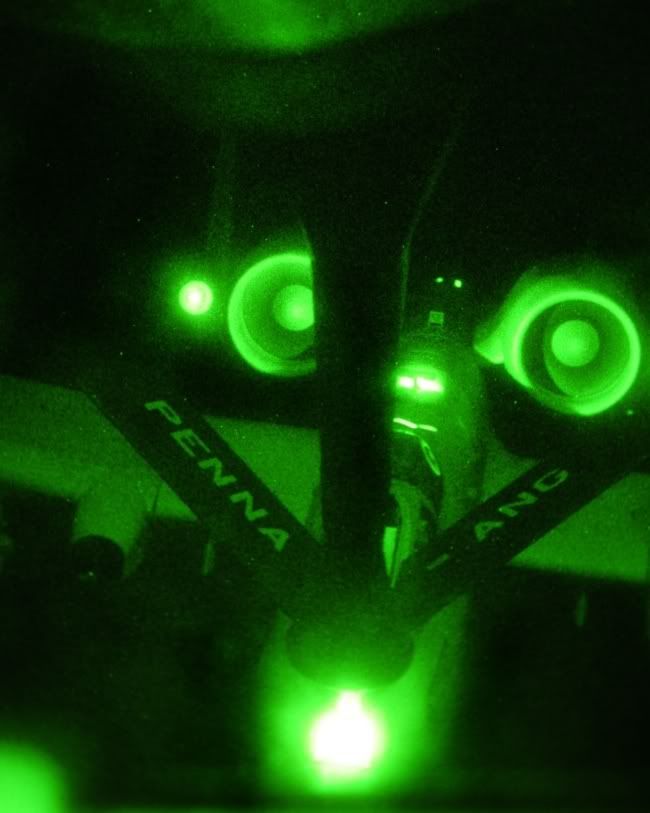
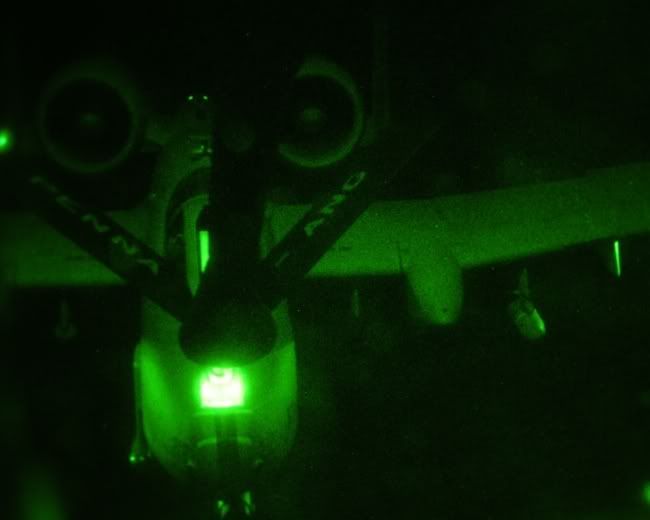
As we scanned for signs of the approaching gray-skinned A-10Cs in the vast darkness, the only light we saw was the faint glow at the end of the boom. Then suddenly, and very stealthy, a jet appeared below us. (To truly appreciate how cool this looked, you'll have to check out Airman Quintanilla's photographs and Airman McDonough's broadcast story.)

The boom light was pretty much the only light Lieutenant Griffin could see too and it was all he had for a guide. To make all of this a bit more challenging, he was required to remove the night vision goggles that he'd been using for the duration of the sortie.

With instant success, he connected to the boom. As soon as he did, he was able to briefly talk to Sergeant O'Connor, who was ready to offload 1,000 pounds of fuel. Not wanting to miss my chance to talk to him -- loudly and confidently -- and maybe a little too excited, I yelled into the radio's mouthpiece "Hi Daaaannnn."

And it was in that moment, the four of us watched as Lieutenant Griffin "fell off the boom," or disconnected too soon.

I was, to say the least, stunned by what I'd just done.

Sergeant O'Connor, with a laugh, told me over the radio that I must have startled the lieutenant.

None of us were really quite sure what had happened. The connection with the radio wasn't all that strong, even between Lieutenant Griffin and Sergeant O'Connor. I surely wasn't about to get back on and ask him.

All of this aside, Lieutenant Griffin demonstrated the same precision and skill that he had exhibited during his daytime refueling by connecting again and successfully uploading fuel.

Just as this was a new experience for the lieutenant, it was a new experience for my troops, who tested out their night vision capabilities for the first time. Not only did my young Airmen learn more about their talents and capabilities, but because of this series, they have been able to see and do things most people don't get to experience. Despite the darkness, I could see their faces fill with awe as we watched what makes us the best Air Force in the world.

Not only was I proud of Lieutenant Griffin, but I was so proud of my public affairs team, especially Airman McDonough and Airman Quintanilla for their professionalism, can-do attitudes, and their excitement -- as well as their dedication in telling our Air Force story. Without their expertise and creativity, especially during this mission, we wouldn't be able to bring this series to life for our audience.

My Airmen and I were also witness that night to some incredible Total Force Integration, as exhibited by the mix of Guard and active-duty pilots, crew and aircraft. A force multiplier, Total Force Integration brings the best from the active-duty and Guard components together and capitalizes on each other's strengths. In this case, having a super experienced Guard boomer definitely helped the students in their quest to look like total naturals at night refueling. The experienced pilots often say that having a good boomer is worth its weight in gold, especially on a night as dark as this one was.

So I know you're curious. What really happened to cause Lieutenant Griffin to fall off the boom?

With a big smile and a few laughs, he mentioned to us a few hours later at the squadron that his radio volume wasn't turned up as loud as it needed to be, preventing him from hearing and talking to us. As he focused on reaching behind his seat for the volume control, he let off slightly on the power, causing the jet to lower slightly below the boom.

Hopefully this is a rookie mistake the lieutenant won't make again.

As we watched the other students complete their first night refuelings, some other mistakes were made, but thankfully nobody returned to base with anything more than some hurt pride and a few lessons learned ... instead of part of the boom stuck in the receptacle.

Most of us will only see the jets fly overhead, taxi down the runway or take off. This series, through stories, photographs and videos, will go behind-the-scenes into Lieutenant Griffin's life as he becomes one of the Air Force's next A-10C pilots. The photos and video from this mission, along with the rest of the series, can be found on www.dm.af.mil.

Source

Note: This news article is related to some pictures, already uploaded in my post Behind the Scenes: The Making of an A-10C Pilot (Photos of night aerial refueling mission). By the way: Unfortunately, the releases of news articles, photos and videos by 355th Fighter Wing Public Affairs in their series "Behind the Scenes: The Making of an A-10C Pilot" were just a little bit chaotic. Please let me remember all of that, and then I will make a post with links to the entire related online stuff.

Tuesday, August 3, 2010

Behind the Scenes: The Making of an A-10C Pilot (Photos of night aerial refueling mission)

Released yesterday by 355th Fighter Wing Public Affairs:


1st Lt. Dan Griffin, a pilot assigned to the 358th Fighter Squadron, readies his A-10C beneath the boom of a KC-135 to receive 2,000 pounds of fuel during a night aerial refueling mission in Southern Arizona July 22, 2010. Lieutenant Griffin is a student in the A-10C Pilot Initial Qualification course and was one of six pilots from his squadron to refuel at night during this mission. Upon completion of the course in August he will become a fully qualified A-10C attack pilot. (U.S. Air Force photos by Airman 1st Class Jerilyn Quintanilla) Hi-res


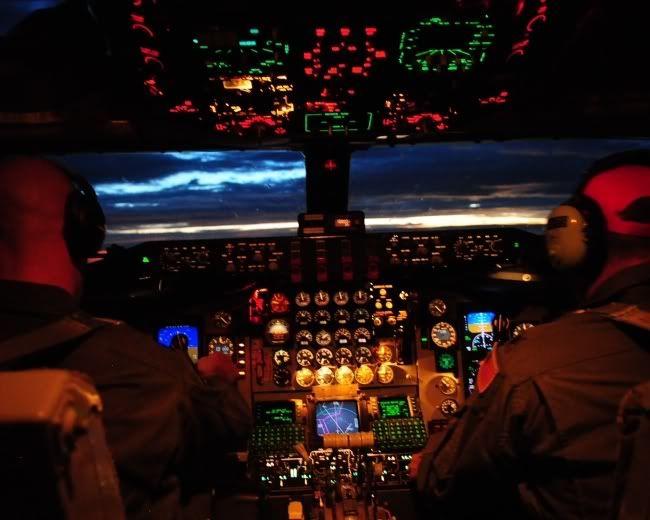
Capt. Jim Moretti (left) and Lt. Col. Chuck Tubbs, pilots from the 171st Air Refueling Wing based out of Pittsburgh International Airport, Pennsylvania, fly the KC-135 Stratotanker during an aerial refueling mission in Southern Arizona July 22, 2010, to support pilots from the 355th Fighter Wing. The crew and KC-135 supported refueling missions throughout the week so students enrolled in the A-10C Pilot Initial Qualification Course could accomplish their night refueling training. (U.S. Air Force photo by Airman Jerilyn Quintanilla) Hi-res


Airman 1st Class Kristiana McDonough, a broadcaster from the 355th Fighter Wing Public Affairs office, reviews the video footage she filmed of 1st Lt. Dan Griffin's second night refueling sortie over Southern Arizona July 22, 2010. Airman McDonough flew aboard the KC-135 Stratotanker, which was from the 171st Air Refueling Wing based out of Pittsburgh International Airport, Pennsylvania, in support of a series called "Behind the Scenes: The Making of an A-10C Pilot." (U.S. Air Force photo by Airman 1st Class Jerilyn Quintanilla) Hi-res

Note: Looks to me like 355th Fighter Wing Public Affairs will release a related video in the next couple of days.

Saturday, July 10, 2010

Behind the Scenes: The Making of an A-10C Pilot (Night flying photos)

Released by 355th Fighter Wing Public Affairs:


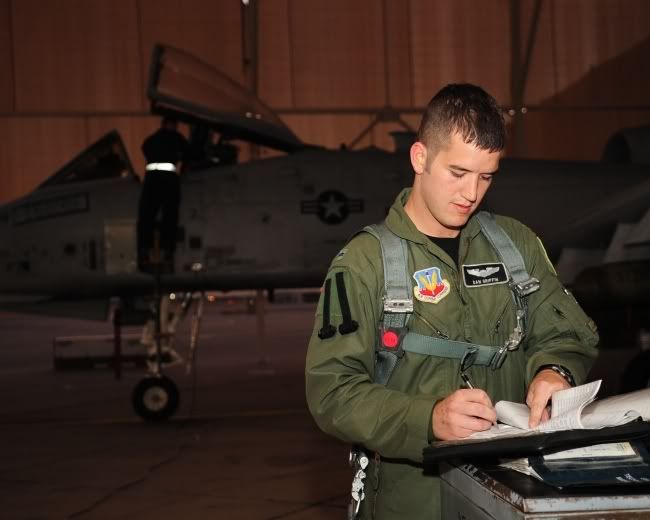
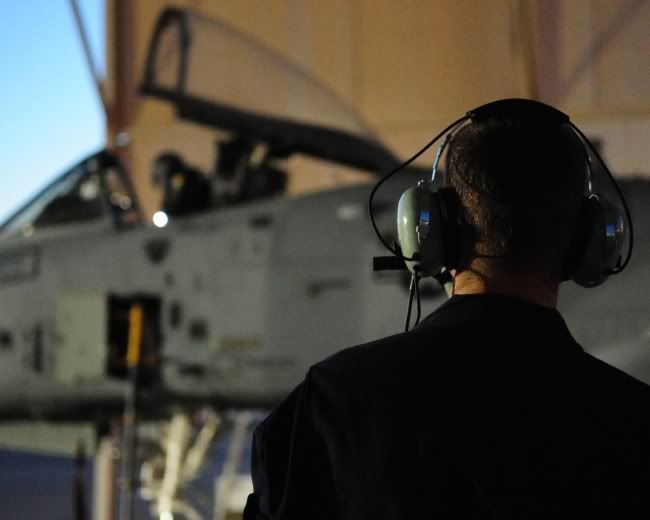
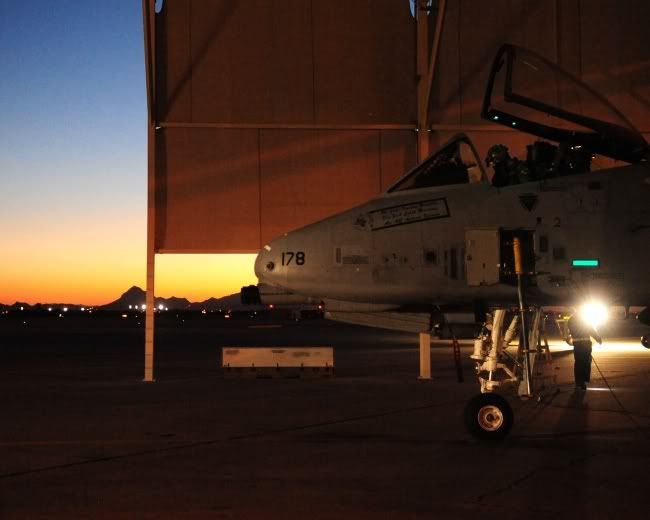
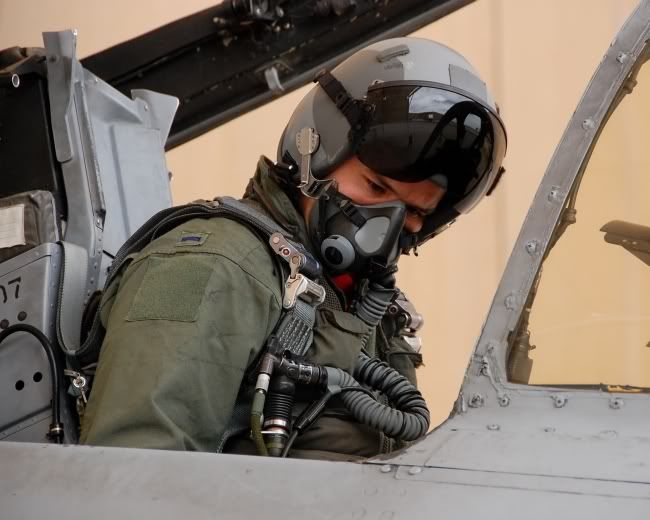
Prior to his flight June 23, 2010, 1st Lt. Dan Griffin, a pilot from the 358th Fighter Squadron, reviews maintenance records for his A-10C aircraft. This was the lieutenant's second of eight night flying missions as part of the A-10C Pilot Initial Qualification course curriculum. Upon completion of this course he will be a fully qualified A-10C pilot. (U.S. Air Force photo by Airman 1st Class Jerilyn Quintanilla) Hi-res


An A-10C Thunderbolt II taxis down the runway prior to taking off for a night flying mission here June 23, 2010. As part of the A-10C Pilot Initial Qualification course curriculum all pilots must learn to execute night flying missions through six hours of academic classes, five hours in the A-10 FMT, also known as a simulator, and eight flights. (U.S. Air Force photo by Airman 1st Class Jerilyn Quintanilla) Hi-res


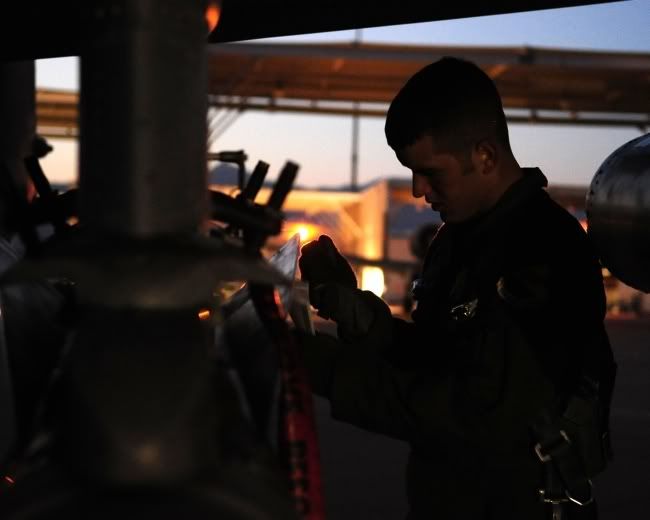
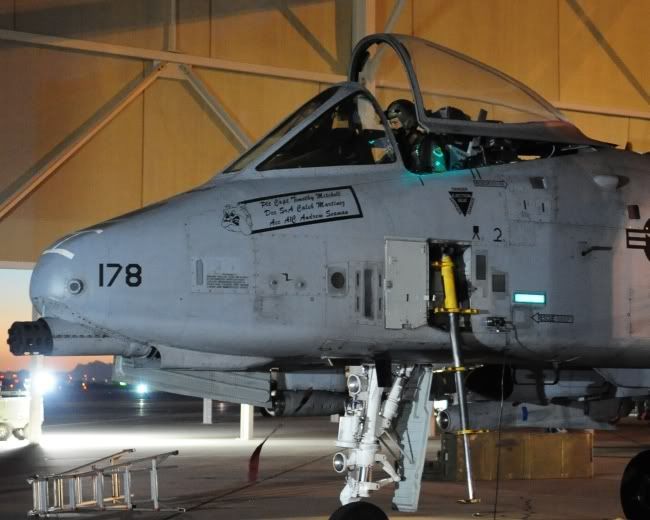
Prior to his flight June 23, 2010, 1st Lt. Dan Griffin, a pilot from the 358th Fighter Squadron, inspects his A-10C aircraft. This was the lieutenant's second of eight night flying missions as part of the A-10C Pilot Initial Qualification course curriculum. Upon completion of this course he will be a fully qualified A-10C pilot. To learn more about his journey through the course, check out "Behind the Scenes: The Making of an A-10C Pilot" at www.dm.af.mil. (U.S. Air Force photo by Airman 1st Class Jerilyn Quintanilla) Hi-res


Airman 1st Class Jeff Gronemyer, an A-10C crew chief from the 355th Aircraft Maintenance Squadron, stands by as 1st Lt. Dan Griffin performs his final operations check prior to departing for a mission June 23, 2010. This was the second of eight night flights for Lieutenant Griffin, who is currently a student in the A-10C Pilot Initial Qualification course. As part of the A-10C Pilot Initial Qualification course curriculum, he needed to learn how to execute night flying missions. He accomplished this through six hours of academic classes, five hours in the A-10 FMT, also known as a simulator, and eight flights. (U.S. Air Force photo by Airman 1st Class Jerilyn Quintanilla) Hi-res


1st Lt. Dan Griffin, a pilot from the 358th Fighter Squadron, performs his final operations checks on his A-10C aircraft prior to departing for a night flying mission June 23, 2010. Lieutenant Griffin is a student in the A-10C Pilot Initial Qualification course and upon completion of this course he will be a fully qualified A-10C pilot. (U.S. Air Force photo by Airman 1st Class Jerilyn Quintanilla) Hi-res


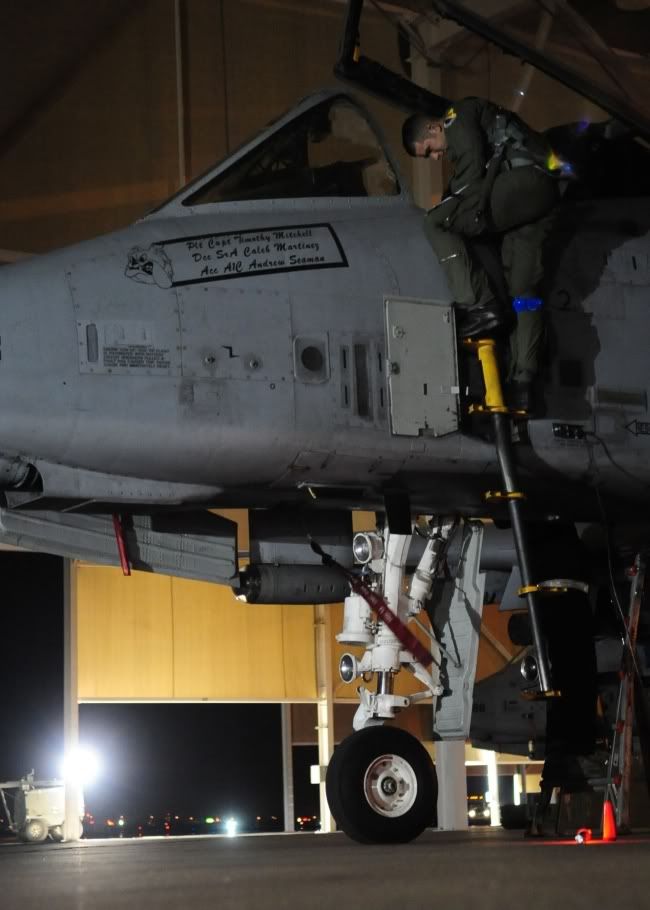
The canopy of an A-10C Thunderbolt II lowers as 1st Lt. Dan Griffin prepares to depart the flight line for his second of eight night flying missions here June 23, 2010. Lieutenant Griffin is a student in the A-10C Pilot Initial Qualification course and as part of his training requirements he must learn to execute night flying missions using night vision goggles. He accomplished this training through six hours of academic classes, five hours in the A-10 FMT, also known as a simulator, and eight flights. (U.S. Air Force photo by Airman 1st Class Jerilyn Quintanilla) Hi-res


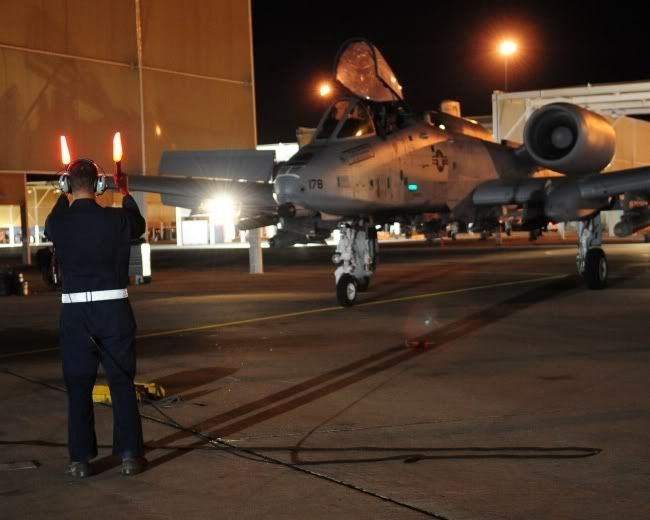
Airman 1st Class Jeff Gronemyer, an A-10C crew chief from the 355th Aircraft Maintenance Squadron, directs 1st Lt. Dan Griffin to his parking spot following his second night flight June 23, 2010. Lieutenant Griffin is a student in the A-10C Pilot Initial Qualification course. To learn more about his journey through the course, check out "Behind the Scenes: The Making of an A-10C Pilot" at www.dm.af.mil. (U.S. Air Force photo by Airman 1st Class Jerilyn Quintanilla) Hi-res


1st Lt. Dan Griffin, a pilot from the 358th Fighter Squadron, climbs out of the cockpit of his A-10C Thunderbolt II after a night flying mission June 23, 2010. This was the lieutenant's second night flight. During the mission he practiced dropping bombs on targets with the aid of night vision goggles. Lieutenant Griffin is a student in the A-10C Pilot Initial Qualification course and upon completion of this course he will be a fully qualified A-10C pilot. (U.S. Air Force photo by Airman 1st Class Jerilyn Quintanilla) Hi-res


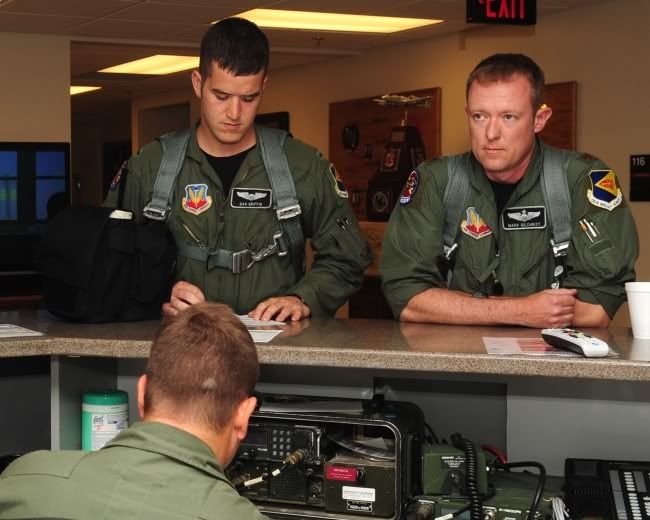
Lt. Col. Derek Emmons, 358th Fighter Squadron director of operations, briefs 1st Lt. Dan Griffin and the lieutenant's instructor pilot, Maj. Mark Gilchrist, prior to stepping out to the flight line for a night flying mission here June 24, 2010. This was the lieutenant's third of eight night flights. As part of the A-10C Pilot Initial Qualification course curriculum, he must learn to execute night flying missions using night vision goggles. He accomplished this through six hours of academic classes, five hours in the A-10 FMT, also known as a simulator, and eight flights. (U.S. Air Force photo by Airman 1st Class Jerilyn Quintanilla) Hi-res

Note: The aircraft should be A-10C 79-0178 (instead of 80-0178). Crew inscription: Plt Capt Timothy Mitchell, Dcc SrA Caleb Martinez, Acc A1C Andrew Seaman. No ladder door art.

Thursday, July 1, 2010

Behind the Scenes: The Making of an A-10C Pilot "Mission Prep"

by Capt. Stacie N. Shafran
355th Fighter Wing Public Affairs

6/30/2010 - DAVIS-MONTHAN AIR FORCE BASE, Ariz. -- (Editor's note: Curious about what it takes to become an A-10 pilot? Follow along as this series showcases 1st Lt. Daniel Griffin's journey to becoming a fully qualified A-10C attack pilot.)

It was a little after 8 p.m. on June 8 when I finally left the 358th Fighter Squadron.

That afternoon I'd been shadowing 1st Lt. Dan "Pabst" Griffin, a student in the squadron's A-10C Pilot Initial Qualification Course, as he prepared for his sortie, or flight, called "SAT-5." This was the fifth of 15 sorties in the course's surface attack tactical phase.

Over the past few months, as I've immersed myself in the squadron's mission, I've gained a behind-the-scenes perspective about the 12 students endeavoring to become fully trained A-10C pilots. To say the least, the course is full of a lot of demands and requirements.

What most of us will see of their training is the jets soaring overhead.

I have a feeling, though, that most of us don't realize the amount of background work that goes into a typical two-hour sortie.

Behind the scenes I've learned that there really is more - a lot more - to flying the A-10C than zipping into the life support gear, stepping to the jet, taxiing down the runway and flying off into the horizon.

Everything the pilots do leading up to the flight, such as attending academic sessions, and while flying is designed to make them more mission ready, more capable of going to war and most importantly, better prepared to assist their wingman in case of an emergency.

Before flying, each pilot will spend at least four to six hours preparing to fly by attending briefings, to include a mass briefing where they receive intelligence and weather updates, and mission planning, where they discuss training objectives and review targets.

During this afternoon, I had the opportunity to attend Lieutenant Griffin's nearly hour-long pre-flight brief with his IP, or instructor pilot, for the flight, Capt. Keith "Farva" Bonser. The two met in a small room, bare except for a table and chairs, a large "old fashioned" white board, dry erase markers, and a very cool, "SMART board" -- an interactive, electronic whiteboard the pilots use to enhance instruction and learning.

The meeting began with the pilots synchronizing their watches. With the time hack complete, they moved quickly through the standard pre-flight briefing checklist. The IP controlled the pace of the briefing. He balanced the amount of time he explained something with questions for his student.

Without hesitation, Lieutenant Griffin was expected to recount the mission objective, flight overview, emergency procedures, describe what to do during various environmental conditions (with emphasis placed on the physiological concerns brought on by the intense Arizona heat), maneuvers they'd perform in the air, as well as ground, take off and landing procedures. During each brief, the IPs will also question the students about various real world foreign threats.

The brief was intense. Both pilots were extremely focused on what they were about to go do.

The Air Force prides itself on safety -- it's our number one priority. Whether on the ground or in the air, ensuring the safety of our people and equipment, as well as the public's safety, is critical.

The mission for the SAT-5 sortie: introduce Lieutenant Griffin to a heavyweight combat load. This means his A-10C was configured with four BDU-50 "High Drag" bombs, two training AGM-65 Maverick missiles, a pod of white phosphorus "Willie Pete" rockets and 575 rounds loaded into his GAU-8/A 30 mm cannon.

He also needed to demonstrate proficiency in low altitude tactics, weapons delivery, flying as a two-ship (two jets) to the tactics range, and close air support. He'd also accomplish another course first, dropping the four 500 pound practice bombs, known as BDU 50s, at the range. These training ordnances are representative in size and weight of an explosive filled bomb and simulate the 500 pound MK 82 general purpose bomb.

Following the brief, the pilots suited up in all of their gear and stepped to their jets.

Once at his jet, Lieutenant Griffin met his crew chief, Airman First Class John Guzman, returned his salute and inspected the aircraft before climbing into the cockpit to begin a pre-flight checklist.

The relationship between a pilot and crew chief is special and is initiated during the first salute presented to the pilot as they accept their jet. A goodwill gesture, I've seen pilots from the 358th also bring a cold bottle of water out to their jets for their crew chiefs. With temperatures well over 100 degrees on the flight line, it's the little things like this that go a long way.

Once everything was in order, a process that took approximately a half hour, Lieutenant Griffin was ready to taxi from his parking spot to the runway and take off.

A little more than two hours later, the lieutenant and his IP returned to base, having flown west to a tactical range at the Barry M. Goldwater Range.
After parking their jets, they returned to the squadron to debrief the mission.

As we headed to one of briefing rooms, I could tell Lieutenant Griffin was in a post-flight good mood and I was curious to know how the flight went. For the next hour, I listened and learned.

A debrief can take anywhere from 30 minutes to several hours to complete. Most pilots will agree this is the most vital part of the entire sortie because this is where they learn from what they just executed.

During this time they'll review the tapes from their cockpits that record the sortie, listen to what each other talked about on the radios, discuss execution actions and plan for what they can do better the next time they fly.

Toward the end, Captain Bonser brought the focus back to the real-world importance of this training.

"Providing close air support is about remaining masked, hidden from the enemy and having minimal exposure time," he explained.

The captain, who has more than 400 combat hours from sorties flown in Afghanistan, also talked to the lieutenant about TICs, or troops in contact, and the importance of knowing how to employ the aircraft and its weapons in such a way the enemy is defeated and the friendly forces are protected.

Following his debrief, I asked Lieutenant Griffin how he felt about this flight and what he had learned.

"This was a big flight to me," he explained. "It was pretty much our last low altitude attack flight. We'll have one more refresher just before graduation in late August."

He was also excited about having had the chance to incorporate the different attacks and geometry that he's been learning into this mission.

And what was it like to release 2,000 pounds of BDU 50s from the jet?

"The coolest thing about that was feeling them leave the jet. It was like a car dropping off of the jet," he said. "More importantly, my IP showed me how imperative it is to get the bombs on target the first pass -- not only for our guys on the ground, but for our survival too. We don't want to pass through, make a mistake and not drop the intended bombs ... this will anger the bad guys and then we'll be flying around low, slow, heavy and out of energy. It makes us a really easy target and has done nothing for our guys on the ground."

As I left the squadron that night, I reflected on the afternoon's countless acronyms, the time hacks, the numerous checklists, by-the-book following of procedures and amount of dedication our A-10C pilots devote to becoming the best attack pilots in the world.

Although it was late, and he'd already been at the squadron since 7 a.m., Lieutenant Griffin still had to close the squadron down for the night, head home, eat a late dinner and prepare for the next day and upcoming flights.

Failure, and performing at anything less than max potential, is never an option, especially since our pilots are representing the hard work of every Airman on this base. What I took away from this afternoon was seeing the importance the pilots place on fulfilling the mission and proudly representing the men and women of the 355th Fighter Wing. I witnessed this first hand, right down to the final salute executed by the crew chief before sending Lieutenant Griffin onto the sortie.

Most of us will only see the jets fly overhead, taxi down the runway, or take off. This series, through stories, photographs and videos, will go behind-the-scenes into Lieutenant Griffin's life as he becomes one of the Air Force's next warriors; an A-10C attack pilot. The photos from Lieutenant Griffin's pre-flight inspection, along with the rest of the series, can be found on www.dm.af.mil.

Source

Please note: Related pictures will be uploaded soon.

Wednesday, June 23, 2010

A-10C pilot, family headed to Argentina through Olmsted Scholar program

by Capt. Stacie N. Shafran
355th Fighter Wing Public Affairs

6/21/2010 - DAVIS-MONTHAN AIR FORCE BASE, Ariz. -- Maj. Sean "Olé" Baerman, an A-10C pilot assigned to the 358th Fighter Squadron here, his wife Mandy and their 3-year-old-son, Teague, will soon call Buenos Aires, Argentina home.

In March, the major was one of 17 military officers selected by the George and Carol Olmsted Foundation to be student in Olmsted Scholar Class of 2011.

The Olmsted Scholar Program provides an opportunity for officers to study in a foreign language at an international university abroad. This program provides officers with an in-depth understanding of foreign languages and cultures so they will be knowledgeable and sensitive to the viewpoints and concerns of people around the world as they progress with their Air Force careers. The program involves cultural immersion, as well as studying at the university in the native language.

The family will move to Buenos Aires later this month, create their home in an apartment on the economy and will spend the next eight months learning Spanish and immersing themselves in the culture and customs of Argentina and its neighbors.

Next April, after gaining fluency in the language, the major will begin his two-year academic endeavor to earn a Masters of International Relations at the University of Belgrano. During time off from school, the family will travel around South America, further immersing itself in the culture.

After graduating from the U.S. Air Force Academy in 1999, Major Baerman went on to become an A-10 pilot. Following his various pilot training courses, his operational assignments brought him and his family to Spangdahlem Air Base, Germany, and Osan Air Base, Republic of Korea. He's been stationed at Davis-Monthan for three years as an A-10C instructor and flight examiner.

"I've been flying A-10s my entire career--it will be interesting to see what it's like to not fly for almost three years," he said. "The Olmsted program provides one of the best opportunities for career broadening and every aspect of the program is appealing to me and my family."

The major said he's most looking forward to the challenge of learning a new language, the opportunity to live and travel in South America, and the chance to do something vastly different than what his peers normally do.

"The day I found out I had been chosen to be part of the program, and that we were going to Buenos Aires, I bought several books and started studying Spanish with the Rosetta Stone language software," said Major Baerman. "I've been studying for about an hour and a half each day. I also listen to a podcast called 'Coffee Break Español' to and from work."

In addition, he's been juggling a few books at once, to include travel guides, history books and novels about the region.
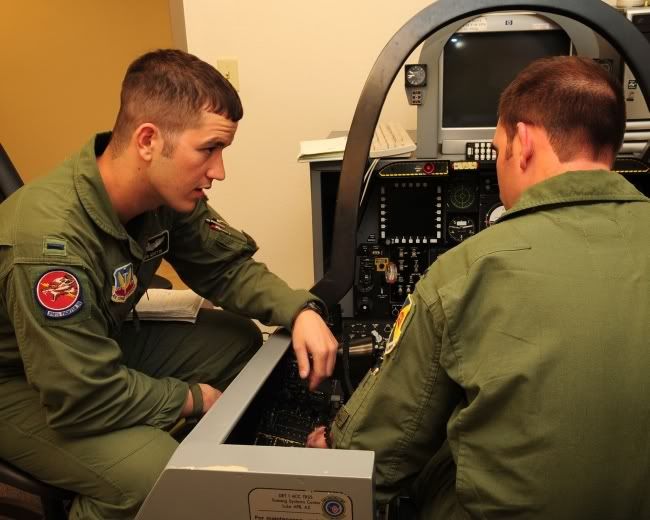
As part of his application process, Major Baerman took the Defense Language Aptitude Battery (DLAB) exam. Although no actual fluency of a specific language is required, the major studied French in high school and in college. He also did some self-study last year in order to get a Defense Language Proficiency Test (DLPT) score on file to have a stronger application package. Applicants must also submit their undergraduate transcripts, GRE scores, officer performance reports, obtain letters of recommendation and write an essay to the foundation explaining their interest in the program. Of the 137 AF applicants this year, the AF board forwarded 12 officers, and seven were ultimately selected by the Olmsted Foundation.
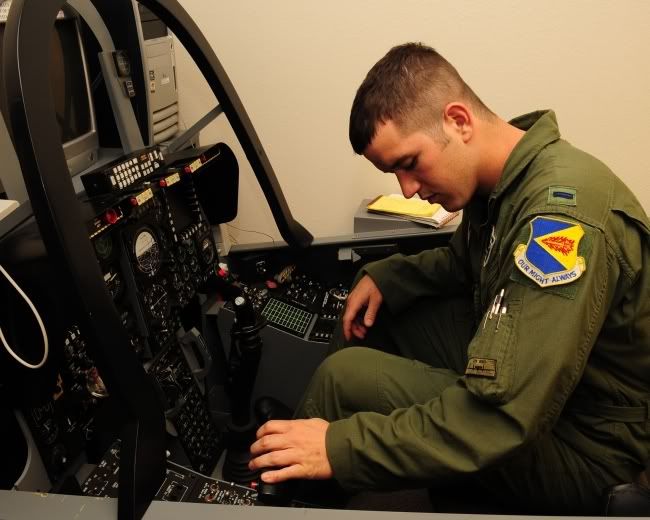
Major Baerman is also following in his father's, footsteps. Col. (Ret.) Paul Baerman was an Army Olmsted Scholar in Geneva, Switzerland before the major was born. With this, they are making history. This is the first time since the program was created in 1957 that a parent and then a child have participated.
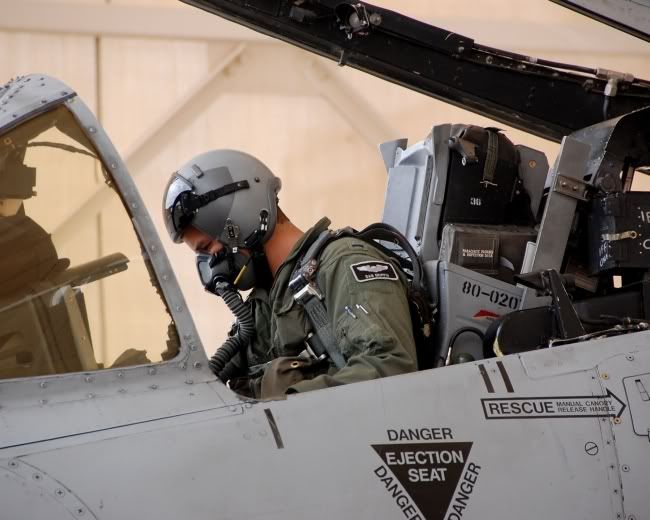
"In addition to my father serving as a role model, General Olmsted himself was an amazing individual, both in the military and as a civilian," explained the major. "The principles he and his foundation espouse are extremely admirable. It is an honor to be part of this program."

More information about the program is available at the George and Carol Olmsted Foundation website at www.olmstedfoundation.org.


Maj. Sean Baerman holds his three-year-old son Teague, as he shows him the cockpit of an A-10 Thunderbolt II on the flight line here June 8, 2010. The major was one of 17 military officers selected by the George and Carol Olmsted Foundation to be a student in Olmsted Scholar Class of 2011. Major Baerman and his family will spend the next few years living in Buenos Aires as he completes a Masters of International Relations at the University of Belgrano. (U.S. Air Force photo by Airman 1st Class Jerilyn Quintanilla) Hi-res

Source

Friday, June 11, 2010

Behind the Scenes: The Making of an A-10C Pilot (more pictures)

Today, 355th Fighter Wing Public Affairs released the following four additional shots as part of a series of news articles, photos and videos - all titled "Behind the Scenes: The Making of an A-10C Pilot" and focused on 1st Lt. Dan Griffin, a pilot from the 358th Fighter Squadron:


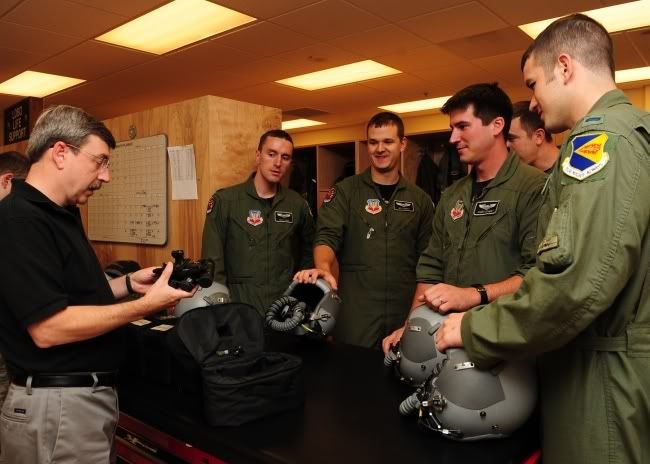
From left: Capt. Sean Jones, 1st Lt. James Schmidt, Capt. Mike Dumas and 1st Lt. Dan Griffin, all pilots from the 358th Fighter Squadron, practice attaching night vision goggles to their helmets here June 9, 2010. As part of the A-10C Pilot Initial Qualification course curriculum, the pilots must learn to execute night flying missions using night vision goggles. They'll accomplish this over the next few weeks through six hours of academic classes, five hours in the A-10 full mission trainer, also known as a simulator, and eight flights. (U.S. Air Force photo by Airman 1st Class Jerilyn Quintanilla) Hi-res


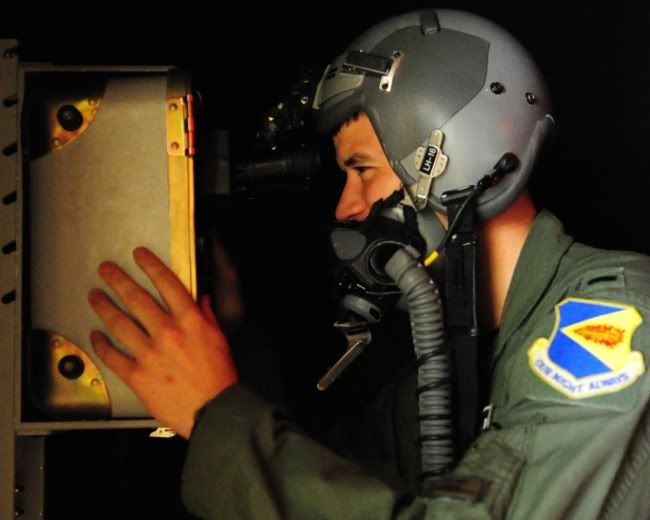
1st Lt. Dan Griffin, a pilot from the 358th Fighter Squadron, tests the focus of his night vision goggles using the Hoffman 20/20 tester here June 9, 2010. The device enables the user to focus their goggles on infinity prior to a night flight. Lieutenant Griffin is a student in the A-10C Pilot Initial Qualification course and upon completion of this course he will be a fully qualified A-10C pilot. To learn more about his journey through the course, check out "Behind the Scenes: The Making of an A-10C Pilot" at www.dm.af.mil. (U.S. Air Force photo by Airman 1st Class Jerilyn Quintanilla) Hi-res


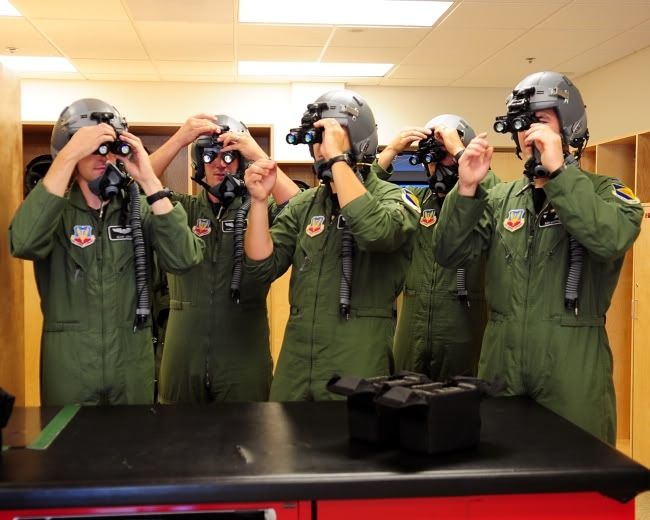
From left: Capt. Sean Jones, 1st Lt. James Schmidt, Capt. Mike Dumas, Capt. Patrick Chapman and 1st Lt. Dan Griffin, all pilots from the 358th Fighter Squadron, adjust the alignment of their night vision goggles here June 9, 2010. As part of the A-10C Pilot Initial Qualification course curriculum, the pilots must learn to execute night flying missions using night vision goggles. They'll accomplish this over the next few weeks through six hours of academic classes, five hours in the A-10 full mission trainer, also known as a simulator, and eight flights. (U.S. Air Force photo by Airman 1st Class Jerilyn Quintanilla) Hi-res


Bob Dionne, an A-10 instructor and former A-10 pilot, explains the different features of the new AN/AVS-10(v) night vision goggles at the 358th Fighter Squadron here June 9, 2010. As part of the A-10C Pilot Initial Qualification course curriculum, the pilots must learn to execute night flying missions using night vision goggles. They'll accomplish this over the next few weeks through six hours of academic classes, five hours in the A-10 full mission trainer, also known as a simulator, and eight flights. (U.S. Air Force photo by Airman 1st Class Jerilyn Quintanilla) Hi-res

Some days ago, 355th Fighter Wing Public Affairs already released the following two additional shots:


1st Lts. Dan Griffin and Joshua Stallard, both pilots from the 358th Fighter Squadron, practice tactical check-ins inside an A-10 Cockpit Familiarization Trainer here May 24, 2010. The lieutenants are both students in the A-10C Pilot Initial Qualification course and upon completion of the course they will be fully qualified A-10C pilots. (U.S. Air Force photo by Airman Jerilyn Quintanilla) Hi-res


1st Lt. Dan Griffin, a pilot from the 358th Fighter Squadron, practices tactical check-ins inside an A-10 Cockpit Familiarization Trainer here May 24, 2010. Lieutenant Griffin is a student in the A-10C Pilot Initial Qualification course and upon completion of this course he will be a fully qualified A-10C pilot. To learn more about his journey through the course, check out "Behind the Scenes: The Making of an A-10C Pilot" at www.dm.af.mil. (U.S. Air Force photo by Airman Jerilyn Quintanilla) Hi-res

See also:
Behind the Scenes: The Making of an A-10C Pilot "Rite of Passage"
Behind the Scenes: The Making of an A-10C Pilot "First Refueling"
Video: 1st Lt. Daniel Griffin fires the A-10 Gatling gun
Behind the Scenes: The Making of an A-10C Pilot
Video: The Making of an A-10C Pilot (1st Edition)
Behind the Scenes: The Making of an A-10C Pilot

Friday, May 28, 2010

Behind the Scenes: The Making of an A-10C Pilot "Rite of Passage"

by Capt. Stacie N. Shafran
355th Fighter Wing Public Affairs

5/27/2010 - DAVIS-MONTHAN AIR FORCE BASE, Ariz. -- (Editor's note: Curious about what it takes to become an A-10 pilot? Follow along as this series showcases 1st Lt. Daniel Griffin's journey to becoming a fully qualified A-10C attack pilot.)

"Everyone says you remember the first time you shoot the gun - how it smells, how it feels and how it sounds," said 1st Lt. Dan Griffin, as he prepared for this rite-of-passage sortie May 3.

The lieutenant, a student in the 358th Fighter Squadron's A-10C Pilot Initial Qualification Course, was finally flying an A-10C with real, live rounds loaded into his GAU-8/A 30mm cannon.

During his pre-flight inspection, Lieutenant Griffin examined the aircraft, noticing the 12 BDU 33s, or practice bombs, which were placed under the wings for the first time.

Once it was time to depart, Senior Airman Jan Wampler, the 355th Aircraft Maintenance Squadron crew chief assisting Lieutenant Griffin, saluted the pilot. In a few hours, Lieutenant Griffin would return back to the parking spot with his jet stripped of its bombs and carrying fewer bullets.

Lieutenant Griffin and his instructor pilot, Maj. Cameron Curry, flew north to Range 2 at the Barry M. Goldwater Range. Major Curry's role was to make sure Lieutenant Griffin hit all of the parameters and correct him if he did something wrong.

While at the range, Lieutenant Griffin fulfilled the requirements for his first basic surface attack mission and practiced low-altitude tactical navigation. In other words, he approached the target, aimed the gun's site, and fired.

The lieutenant practiced all of this in a simulator the week before, reviewing procedures for rolling in on the range's targets and practicing what to say on the radio.

All of the training helped him have a successful mission.

During his first strafing pass he fired 80 rounds and on his second pass, he fired 20 rounds, hitting the target with all of the rounds.

"The experience was amazing," said Lieutenant Griffin. "I could feel the whole plane shake and see the smoke and the rounds hit downrange. I even felt the gun rotate to cool the barrels down."

The A-10 is configured so the pilot sits on top of the gun. It is placed slightly off center in the nose of the plane, with the front landing gear positioned to the right of the center line, so that the actively firing cannon barrel is directly on the aircraft's center line. The gun is capable of firing 3,900 rounds per minute to defeat a wide variety of targets including tanks.

Lieutenant Griffin also performed air-to-ground tactics by releasing the BDU 33s, marking the first time he was allowed to release something from an aircraft.

"I was excited to see the bombs hit the targets, see their smoke and receive real-time feedback," he said.

The achievement of firing the gun for the first time formally welcomed Lieutenant Griffin into the A-10 community and instantly earned him a bit more respect among his peers.

After Lieutenant Griffin returned to base and parked the jet, 358th Fighter Squadron Commander Lt. Col. Scott Campbell passed by -- he had also just returned from a sortie, and he became the first to offer congratulations.

Next, Major Curry came by and placed an A-10 patch on Lieutenant Griffin's left sleeve.

It was proof he was now truly one of them.

Most of us will only see the jets fly overhead, taxi down the runway, or take off. This series, through stories, photographs and videos, will go behind-the-scenes into Lieutenant Griffin's life as he becomes one of the Air Force's next warriors; an A-10C attack pilot. The photos and video from Lieutenant Griffin's trip to the range, along with the rest of the series, can be found on www.dm.af.mil.

Source

Wednesday, May 5, 2010

Behind the Scenes: The Making of an A-10C Pilot


1st Lt. Dan Griffin, a pilot from the 358th Fighter Squadron, performs his first check ride in an A-10C Thunderbolt II here April 16, 2010. Lieutenant Griffin is a student in the A-10C Pilot Initial Qualification course, upon completion of this course he will be a fully qualified A-10C pilot. (U.S. Air Force photo by Capt. Stacie N. Shafran) Hi-res

by Capt. Stacie N. Shafran
355th Fighter Wing Public Affairs

5/4/2010 - DAVIS-MONTHAN AIR FORCE BASE, Ariz. -- (Editor's note: Curious about what it takes to become an A-10C pilot? Follow along as this series showcases 1st Lt. Daniel Griffin's journey to becoming a fully qualified A-10C attack pilot.)

In a room full of seasoned pilots, all with tales to tell, it was a pilot identified as number "10," a rookie, whose charismatic and unpretentious personality caught my attention.

We were at the 358th Fighter Squadron following Lt. Col. Scott "Soup" Campbell's change of command ceremony March 26. During the celebration, the squadron's heritage room was abuzz with conversation and camaraderie.

For a brief moment during the festivities, the new commander silenced the crowd to recognize "new guy 10" and the 11 other pilots currently enrolled in the squadron's A-10C Pilot Initial Qualification course.

It turned out, two days prior each of the pilots flew the single-seat A-10C for the very first time.

When the cheers and toasts subsided, I met "10," also known as 1st Lt. Daniel Griffin, and asked him about that first flight.

"It was amazing and the most exciting thing I'd ever done," beamed the 27-year-old Rochester, N.Y. native. "It was something I've been thinking about doing my whole life. I loved it."

While flying, Lieutenant Griffin recalled being so focused on accomplishing the tasks required by the syllabus that he had to remind himself to look around outside the canopy. He described those moments of seeing the aircraft for the first time in the air, surrounding him, as surreal.

During our brief conversation, it was Lieutenant Griffin's enthusiasm and passion for flying that inspired me to want to share his journey toward becoming a fully qualified A-10C attack pilot.

Over the past month, through our interviews, I've listened as he's talked about becoming more familiar and confident with flying the jet -- it is apparent his basic skills are becoming more natural.

He wrapped up his initial training phase April 16 with his first graded instrument check ride.

"This was the test that certified I could fly the A-10," he explained.

This check ride is required by the Air Force to ensure its pilots can fly in various weather conditions. It is also the culmination of a year spent at pilot training, where the lieutenant learned the basics of flying, and his first seven flights here learning the specifics of piloting the mighty A-10C.

Until graduation in August, there will be more first-time memories and milestones, to include air-to-air refueling, firing the 30 mm GAU-8/A seven-barrel Gatling gun, and night flying. In a few weeks, the pilots will also earn call signs, or nicknames, and stop being referred to by the numbers they were assigned based on their rank, one through 12, when the course began in February.

The next few months will be demanding, but Lieutenant Griffin and his classmates will ultimately accomplish the same training each A-10 pilot has undergone since the jet was first delivered to Davis-Monthan in October 1975.

To be successful in the program, they will spend nearly 12 hours a day during the week studying (plus more on the weekends), attending academic sessions, training in a simulator and learning all they can from their instructor pilots and the squadron's experienced flyers. They will also be regularly tested, through exams and check rides.

For the lieutenant, this course is his last step in the training pipeline. He arrived at Davis-Monthan in February following completion of the Euro-NATO Joint Jet Pilot Training Program at Sheppard Air Force Base, Texas, in March 2009, and a fighter fundamentals course in early January.

"The ENJJPT program was awesome because of the training we received and the international friends I made," said Lieutenant Griffin.

A 2004 graduate of Purdue University, Ind., Lieutenant Griffin majored in aviation technology. Following graduation he pursued his goal of becoming an Air Force officer and military pilot by entering the Air National Guard. He applied to several guard units to become a pilot, but was only selected as an alternate. Simultaneously, he was hired to fly as a commercial airline pilot.

In 2006, the 111th Fighter Wing, 103rd Fighter Squadron, at the Willow Grove Joint Reserve Base Naval Air Station in Pa., selected him as a pilot candidate, launching him into the pilot training pipeline.

Following his training here, he'll ultimately be assigned to the Maryland Air National Guard's 175th Wing, 104th Fighter Squadron. The 2005 Base Realignment and Closure Commission opted to close the 103rd Fighter Squadron.

"I'm excited to finally be here and I'm looking forward to learning as much as I can from all of the instructors and coming away from here a solid wingman. I'm also looking forward to serving my country and employing the A-10C tactically," said Lieutenant Griffin.

Most of us will only see the jets fly overhead, taxi down the runway, or take off. This series, through stories, photographs and videos, will go behind-the-scenes into Lieutenant Griffin's life as he becomes one of the Air Force's next warriors; an A-10C attack pilot. The series, and all of its contents, can be found on www.dm.af.mil.


1st Lt. Dan Griffin, a pilot from the 358th Fighter Squadron, performs his first check ride in an A-10C Thunderbolt II here April 16, 2010. Lieutenant Griffin is a student in the A-10C Pilot Initial Qualification course, upon completion of this course he will be a fully qualified A-10C pilot. (U.S. Air Force photo by Capt. Stacie N. Shafran) Hi-res


1st Lt. Dan Griffin is a student in the A-10C Pilot Initial Qualification course, upon completion of this course he will be a fully qualified A-10C pilot. (U.S. Air Force photo by Airman Jerilyn Quintanilla) Hi-res

Source

A-10C Student Pilots Reach Course Milestone: Airborne Refueling

by Capt. Stacie N. Shafran
355th Fighter Wing Public Affairs

5/4/2010 - DAVIS-MONTHAN AIR FORCE BASE, Ariz. -- Nearly 18,000 feet above Southern Arizona's desert landscape, students in the A-10C Pilot Initial Qualification course here completed their first air-to-air refueling mission during the week of April 26.

Twelve pilots from the 358th Fighter Squadron and 13 from the 357th Fighter Squadron are enrolled in the six-and-a-half month course.

Upon graduation in August, they will be fully trained A-10C pilots skilled in instrument flying, basic fighter maneuvers, basic surface attack tactics, and close air support.

In order to attain proficiency in the various A-10C missions, the 355th Fighter Wing maintains a fleet of almost 90 A-10s that make up three A-10C squadrons. The 357th and 358th are both formal training units (FTU), while the 354th Fighter Squadron is one of only five active-duty operational squadrons -- ready to deploy at a moment's notice.

One of the tasks required for graduation is air-to-air refueling.

For 1st Lt. Daniel Griffin, a student assigned to the 358th Fighter Squadron, refueling for the first time was one of the things he looked forward to during the program. Prior to the flight, he practiced in a simulator, studied pictures showing what refueling should look like, and learned all he could from the experienced pilots in his squadron, to include his assigned instructor pilot, Capt. Jason Bartels.

"Prior to my first refueling flight I was very nervous, but we prepared a lot. The thing I was most nervous about was not being able to connect with the tanker and having trouble flying smoothly up to the connection from the astern position," said Lieutenant Griffin, who flew the A-10C for the first time March 24.

To complete the air-to-air refueling mission, the students, along with their instructor pilots, launched from Davis-Monthan's runway and flew to the Tombstone Military Operating Area in Southern Arizona where they linked up with a KC-135 Stratotanker. The tanker and its crew were from the Kansas Air National Guard's 117th Air Refueling Squadron based out of Forbes Field, Kan.

Refueling is essential to the A-10's wartime mission. It is a force enabler, which allows the "mighty Hog" to stay aloft in an over-watch position almost indefinitely, protecting U.S. and Coalition service members.

Upon graduation, the pilots will be ready to support the wartime mission, which can require multiple refuelings over the course of an eight-hour mission.

To demonstrate proficiency, students needed to successfully hook-up and take on fuel from the boom for approximately two minutes. They repeated this process twice, receiving a total of 2,000 pounds of gas.

While airborne, the A-10s connected to the KC-135 via a boom and receptacle system. This system uses a rigid, telescoping tube that an in-flight refueling specialist, also known as the boom operator, inserts into a receptacle on the topside of the A-10's nose.

If all of this sounds challenging, it is.

"It would be equivalent to you driving down the road, next to another car, both windows rolled down. The person in the passing lane is staring at that (other) car without looking down the highway and maintaining his lane -- and then passing objects between the two cars while you're traveling down the road at 70 mph," said Capt. Jason Bartels, 358th Fighter Squadron instructor pilot and Lieutenant Griffin's assigned IP.

While approaching the boom, the students used visual references to position their aircraft and they also received guidance from both the boom operator and instructor pilot via radio.

"When I was under the boom it was really exciting. I talked myself through the process and at the same time my instructor was talking me through it," said Lieutenant Griffin, who refueled on April 27. "When I finally connected it was a lot easier than I thought it would be because once the boom connects it kind of holds on to the A-10 a little bit. You can gauge where you are, not only by the boom operator telling you some directions to go, but there are colors on the boom that tell you how far you are out and on the belly of the tanker there are some indicator lights."

Capt. Jeanie Moughan, wife of Capt. Pete Moughan, a student assigned to the 358th Fighter Squadron, flew aboard the tanker April 27 to learn more about the refueling mission. She also had the unique opportunity to not only watch her husband fly, but also refuel for his first time.

"I was excited and proud of him," she said. "All I have been able to see prior to this mission was him taxi on the runway and takeoff - so it was really cool to see him in the air and hear him on the radio."

She said her husband spent the night before practicing for the mission by "chair flying" in their kitchen. While listening to him on the radio, she could hear his breathing intensify as he flew up to the boom.

"I could see and hear that he was nervous," she said with a smile. "They're all perfectionists and want to get it right."

Between now and graduation the students will fire the A-10's 30 mm GAU-8/A seven-barrel Gatling gun, air-to-air refuel at night, and work with joint terminal attack controllers during a simulated combat situation.

To learn more about Lieutenant Griffin's journey to becoming a fully qualified A-10C attack pilot follow along with the series called "Behind the Scenes: The Making of an A-10C Pilot" on www.dm.af.mil.


Capt. Jeanie Moughan, wife of Capt. Pete Moughan, a student assigned to the 358th Fighter Squadron, watches as her husband refuels for the first time during an aerial refueling mission in the Tombstone Military Operating Area in Southern Arizona April 27, 2010. Six pilots from the 358th Fighter Squadron completed their first aerial refueling mission as part of their A-10C Pilot Initial Qualification course to become fully qualified A-10C attack pilots. (U.S. Air Force photo/Airman Jerilyn Quintanilla) Hi-res

Source

Please note: Other related pictures were already released by 355th Fighter Wing Public Affairs on April 29 and 30, 2010. See: A-10C Aerial Refueling training

Tuesday, March 30, 2010

358th Fighter Squadron Change of Command ceremony

Released yesterday by 355th Fighter Wing Public Affairs:


Lt. Col. Scott Campbell (right) renders his first salute as commander of the 358th Fighter Squadron to Col. Edward A. Kostelnik Jr., 355th Operations Group commander, during a change-of-command ceremony here March 26, 2010. Colonel Campbell was preceded by Lt. Col. Thomas Zupancich. (U.S. Air Force photo by Airman Jerilyn Quintanilla) Hi-res

Thursday, October 8, 2009

Last Pilots Graduate A-10A Course

by Capt. Stacie N. Shafran
Chief, 355th Fighter Wing Public Affairs

10/7/2009 - DAVIS-MONTHAN AIR FORCE BASE, Ariz. -- Nine Air Force pilots marked the end of a 32-year era Oct. 2 as they were the last to ever graduate the A-10A initial qualification course. From now on, students will be taught how to fly the A-10C, which has upgraded avionics and weapons delivery capabilities.

While the A-10A has undergone upgrades throughout its life with improvements to its navigational system, bombing computers, and digital countermeasures, the A-10C is the first upgrade extensive enough to generate a new model letter. These upgrades, along with the refurbishing of the A-10's wings, will contribute to sustaining the A-10 through 2028.

Over the past six months the pilots were assigned to the 358th Fighter Squadron, also known as the Lobos, where instructor pilots taught them the basics about flying the aircraft. This graduation culminates 215 hours of academic instruction, 52 hours of simulator training, 41 sorties and 87 hours of flight time. This was their last step in the training pipeline, following undergraduate pilot training and a fighter fundamentals course.

The 25th Fighter Squadron at Osan Air Base in the Republic of Korea is currently the last A-10 unit to fly A-models. As a result, 358th Fighter Squadron instructor pilots have focused on training students strictly for assignments in South Korea. The 358th Fighter Squadron is the only training unit still flying A-models, and the only training squadron sending graduates to South Korea. Most likely, over the next two years, there will be no more A-models to fly.

"Graduating 09-CBD was a milestone for the A-10, and also a challenge in its own right. Due to the time it takes to convert an A-10 to a C, it was not possible to keep a lot of A-models on the flight line until today," explained Lt. Col. Thomas Zupancich, 358th Fighter Squadron commander. "Several weeks ago we began integrating A-models and C-models in the same flights. This meant qualified Lobo instructors were flying C-models while their students flew A-models. The challenge of instructing across platforms cannot be understated, and I'm extremely proud of the job my instructors did. Our pilots are well trained and are ready to fight the fight for America."

With training complete, each pilot is now bound for their first operational assignment and some may even see combat within a matter of months. The pilots will also cycle back here for the conversion course from Osan AB or prior to their next assignments.

"When I think about what my class and I have learned in just six short months, it's a remarkable testament to the quality of the training we've received here," said 1st Lt. Edward Brady, a 2006 U.S. Air Force Academy graduate and this course's distinguished graduate. The lieutenant is looking forward to living overseas, serving as a combat aviator, and traveling throughout Asia during his next assignment.

The graduates of Class 09-CBD and their assignments are:

Capt. Aaron Duffin - 25th Fighter Squadron, Osan Air Base, Republic of Korea
Capt Jason "Ramstein" Fuhrer- 25th Fighter Squadron, Osan Air Base, Republic of Korea
Capt Jay "Slow pitch" Labrum- 190th Fighter Squadron, Idaho Air National Guard
1Lt Edward "Log-jam" Brady - 25th Fighter Squadron, Osan Air Base, Republic of Korea
1Lt James "Starlifter" Darlson - 25th Fighter Squadron, Osan Air Base, Republic of Korea
1Lt Josh "Chuck" Jones- 25th Fighter Squadron, Osan Air Base, Republic of Korea
1Lt Michael "Carney" Krestyn - 25th Fighter Squadron, Osan Air Base, Republic of Korea
1Lt Russell "Kintukee" Overton - 107th Fighter Squadron, Michigan Air National Guard
1Lt Johnny "NEWT" Reyes - 190th Fighter Squadron, Idaho Air National Guard


Lt. Col. Thomas Zupancich, 358th Fighter Squadron commander, presents 1st Lt. Joshua Jones, 358th Fighter Squadron, with the academic award during the A-10A course graduation here October 2, 2009. Lieutenant Jones was one of nine pilots to graduate the last A-10A class, which has been taught here for 32 years. The course is a six-month class that provides the pilots with 215 hours of academics, 52 hours in the simulator, 41 sorties, and 87 hours of flying time. With training complete, each pilot is now bound for their first operational assignment and some may even see combat within a matter of months. The pilots will also eventually cycle back here for the conversion course. (U.S. Air Force Photo by Senior Airman Jacqueline Romero) Hi-res


Lt. Col. Thomas Zupancich, 358th Fighter Squadron commander, presents 1st Lt. Edward Brady, 358th Fighter Squadron, with the distinguished graduate award during the A-10A course graduation here October 2, 2009. Lieutenant Brady was one of nine pilots to graduate the last A-10A class. After 32 years of qualifying pilots for the A-10A, students will now learn how to fly the A-10C, which has upgraded avionics and weapons delivery capabilities. The course is a six-month class that provides the pilots with 215 hours of academics, 52 hours in the simulator, 41 sorties, and 87 hours of flying time. Lieutenant Brady was also the class "Top Gun." Five of Lieutenant Brady's classmates will be assigned to the 25th Fighter Squadron, Osan Air Base, Republic of Korea, which is the last unit still flying the A-10A. All of the pilots will eventually return to Davis-Monthan for the conversion training course. (U.S. Air Force Photo by Senior Airman Jacqueline Romero) Hi-res

Source

Thursday, May 21, 2009

D-M pilot instructor aids film's authenticity

By Phil Villarreal

Arizona Daily Star
Tucson, Arizona | Published: 05.21.2009

If the fighter plane action in "Terminator Salvation" looks accurate, much of the credit will go to a Tucsonan.

Capt. Jenny Schroeck, an A-10 Thunderbolt II pilot instructor with the 358th Fighter Squadron at Davis-Monthan Air Force Base, served as a consultant when the film was shot last summer at Kirtland Air Force Base in New Mexico.

The film, which opens today, stars Christian Bale as John Connor, who leads the human resistance as it battles machines in 2018. Moon Bloodgood co-stars as a fighter pilot for the resistance who falls for Connor's sidekick, Marcus Wright (Sam Worthington), a cyborg who believes he's human.

Schroeck, 30, trained Bloodgood to behave like a real fighter pilot, and also sat down with computer animators, suggesting tweaks to make the flight action more believable.

"A lot of it was talking with Moon, getting her perspective on different scenes she was involved in, looking at the script with her and making sure some of the verbiage was realistic. We talked through the design of the gear they were using, which was somewhat realistic based on their interpretation of what they wanted to come across."
Schroeck, who wasn't paid to help with the film because her work was considered part of her normal military activities, certainly knows what it's like to fight in combat. She flew 158 combat hours while deployed in Afghanistan from January to May 2006.

A self-described Air Force brat who was born in Germany and moved around throughout her childhood, Schroeck said she won't get to see the movie this weekend because she'll out of town, but hopes to see it when she gets back.

How did you get involved with the film?

"It was actually by chance. A friend of mine who's in public affairs, (Capt.) Stacie Shafran, received information that the studio wanted help with the movie. Because we knew each other from previous assignments she thought I could give the female perspective of an A-10 pilot and help them out."

Did you have to take time away from the Air Force?

"It was embedded within my own work schedule. The Air Force supported me as much as possible."

How did Bloodgood do with the training?

"She did an outstanding job, from my perspective. She tried to embody the female fighter pilot personality. ... She took that and applied it to her role. She had a really good sense of how she wanted to formulate herself into the role and did a really good job with that."

What was your favorite part of being on set?

"The coolest thing was to see how actors and actresses worked together and had big camaraderie. The Hollywood organization is similar to a military organization, with everybody assigned to multiple tasks."

Were you able to take Bloodgood with you in flight?

"No. An A-10 is a single-seat aircraft so you can't take passengers. I did get to sit in a flight simulator with her and take her out to show her how I maneuver inside the aircraft and how I would have faced certain situations. I talked her through the scenes."

Do you think you'll advise on other movies?

"It was a fantastic opportunity for me. I enjoyed it. It was an amazing thing to be a part of a huge production that was interested in what we do. ... I don't know if this is a career change. I think I'll stick to flying."

What do you think of the "Terminator" movies?

"They're great movies, sure. 'Terminator 4' will exceed the expectations of many people. It's well put together. (Director) McG and everyone involved did an outstanding job from my perspective, with my limited Hollywood knowledge."
How did you consult on the special effects?

"The big thing was just how an aircraft actually functions in flight. We sat in front of a computer-simulated model they put together and I'd say 'Yes, the aircraft does perform this way.'

What movie has the most realistic fighter pilot action?

"That's a hard question because a lot of them are kind of hokey. Everyone has to say 'Top Gun' is at the top of the list."

You must have been 8 when that movie came out. Did "Top Gun" influence your career choice?

"It was not influential on my career, but it's definitely something we can always rely on as a good joke for the way fighter pilots are seen and portrayed."

Source

Related info:
Kirtland provides Airmen, location for 'Terminator Salvation'

Extended trailer with A-10 sequences:

Monday, April 6, 2009

Kirtland provides Airmen, location for 'Terminator Salvation'


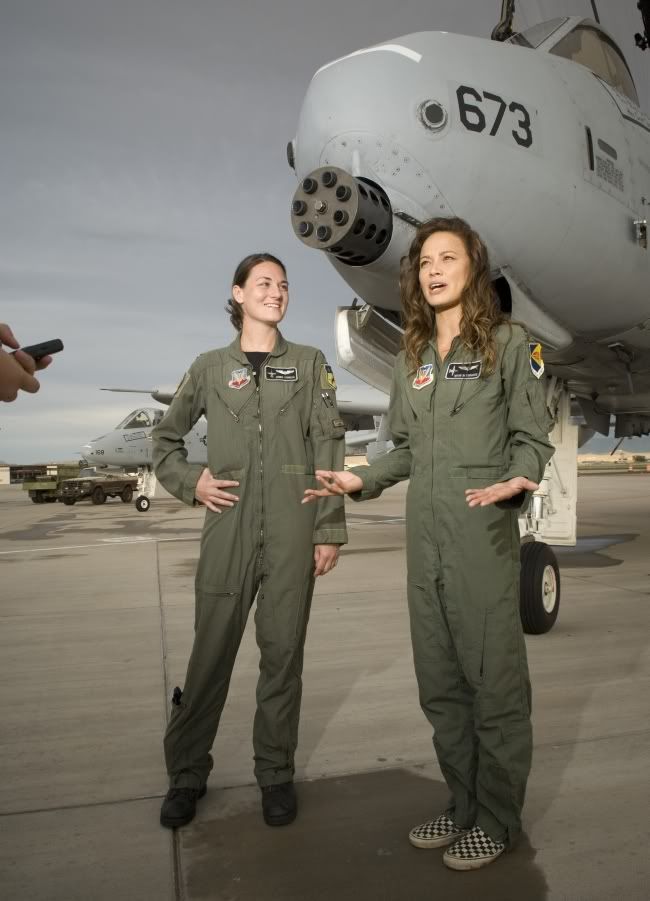
Capt. Jennie Schoeck (left) and actress Moon Bloodgood meet in front of A-10 78-0673 for an interview with the news media during the production of "Terminator Salvation" at Kirtland AFB, New Mexico. Captain Schoeck is assigned to the 358th Fighter Squadron at Davis-Monthan AFB, Arizona, and was the A-10 advisor for the production. Moon Bloodgood portrays a lead resistance pilot in the movie. (U.S. Air Force photo by Lance Cheung) Hi-res

by Staff Sgt. Matthew Bates
Defense Media Activity-San Antonio

4/6/2009 - KIRTLAND AIR FORCE BASE, N.M. (AFNS) -- Airmen here recently supported a different kind of war, one against futuristic machines out for world domination.

The Airmen performed as extras on the set of "Terminator Salvation," which filmed several scenes in a hangar on the base's flightline. The movie is the latest in the popular man-versus-machine franchise and stars Christian Bale and is directed by McG.

"It's really cool," said Airman 1st Class Andrew Saunders, a member of the 377th Logistics Readiness Squadron, who plays a "resistance" soldier. "The set, the vehicles, the stars ... it's a lot of fun."

And, as Airman Saunders found out, making movies is a lot of work, too.

"It's amazing," he said. "It takes so much to prepare for a 30-second clip ... hours and hours of work for just one scene."

Still, the Airmen didn't only sign on to support the "resistance." Some were brought on as advisors to the stars, teaching them how to act and think like military people.

One of these Airmen was Capt. Jenny Schroeck, an A-10 Thunderbolt II pilot instructor with the 358th Fighter Squadron at Davis-Monthan AFB, Ariz., Captain Schroek worked alongside the movie's lead actress, Moon Bloodgood, who plays an A-10 pilot in the movie.

"I just showed her how to act and talk when inside the cockpit," Captain Schroeck said. "And she shadowed me around for a while and just observed what I did and how I did it."

It was "training" Ms. Bloodgood was happy to get.

"Of course it helps," she said. "As an actor, anytime you can observe someone performing the roles you're about to play, it's a tremendous benefit. It makes it look like you know what you're doing and adds a touch of credibility and realism to the movie."

But it wasn't only the stars who benefited from the base's support. Those involved in the movie's production also found working with the Air Force a positive experience.

"The eye-opening thing for me was just how mutually beneficial the relationship between the Air Force and the production staff was," said James Middleton, an associate producer with the movie. "The base has been very supportive, flexible and done what they could to meet our needs."

"Terminator Salvation" is the latest in a number of recent films to highlight Air Force people and equipment. Others include "Transformers," "Eagle Eye" and "Iron Man."


Capt. Jennie Schoeck shows the cockpit of an A-10 Thunderbolt II to actress Moon Bloodgood. (U.S. Air Force photo by Lance Cheung) Hi-res

Source (Video included)

Tuesday, March 3, 2009

Local Tucson teen becomes February pilot for a day

by Airman 1st Class Jamie L. Coggan
355th Fighter Wing Public Affairs

3/2/2009 - DAVIS-MONTHAN AIR FORCE BASE, Ariz. -- Cassy Eubanks, an 18-year-old Tucsonan battling bone cancer, toured the base Feb. 20 as this month's participant in the Pilot for a Day Program.

The purpose of the program is to give local children with serious illnesses a day completely devoted them and their interest in aviation.

Cassy brought along her mother, Marcia, father, Shawn, and sisters, Brianna and Lauren. Her day started off meeting her host pilot, Capt. Jennifer "Tuzzi" Schoeck, an A-10 pilot with the 358th Fighter Squadron, along with Senior Airman Cobie McClain, 358th FS aviation resource manager.

Captain Schoeck took Cassy back to her squadron, where Cassy put on her new flight suit, complete with a personalized name tag and squadron patches. There, Cassy and her family checked out life support gear and looked through night-vision goggles.

After finishing up at the 358th, Captain Schoeck took Cassy and her family to the D-M Fire Protection Flight to meet the Airmen and see the fire trucks.

At the next stop, Cassy got to sit in the cockpit of a real A-10 jet on static display.

From there, the group visited the 79th Rescue Squadron's hangar, where Cassy and her family checked out an HC-130 rescue aircraft. Cassy got to tour the inside of the plane before heading to the 55th RQS, where she toured an HH-60 Pave Hawk helicopter.

During lunch Cassy said she really enjoyed being able to tour the aircraft. "I have been on commercial airplanes," she said, "but nothing like this real military aircraft. It's just amazing."

The group then headed to the 355th Operations Support Squadron. Cassy got to experience the A-10 flight simulator, a system that replicates flying an aircraft over a virtual map as realistically as possible. After her mock flight, their visit ended with a brief tour of the control tower. Then, Cassy and her family headed home.

"It was a fantastic and very emotional experience being able to make her day special," said Captain Schoeck. "She was really into aircraft maintenance, so to for her to be able to see three (different aircraft) was just amazing for her and for her family."

Source


Staff Sgt. Joshua Adams (right) of the 355th Aircraft Maintenance Squadron, shows Pilot For a Day Cassy Eubanks (second from right) along with her family A-10 78-0706 during their visit to Davis-Monthan AFB on February 21th, 2009. The Pilot For A Day program is designed to help children with disabilities or serious illnesses enjoy a day focused on them and their interest in aviation. (U.S. Air Force photo by Senior Airman Noah R. Johnson) Hi-res


Pilot For a Day Cassy Eubanks, 18 years old, flies an A-10 flight simulator during her visit to Davis-Monthan AFB on February 21th, 2009. The Pilot For A Day program is designed to help children with disabilities or serious illnesses enjoy a day focused on them and their interest in aviation. (U.S. Air Force photo by Senior Airman Noah R. Johnson) Hi-res