By Joachim Jacob, Warthog News Editor
On November 12, 2011, photo journalist Neil Dunridge from the U.K. and a friend of mine had the opportunity to take the following exclusive shot (already published on Airliners.net):
A-10C 81-0985 from the 81st Fighter Squadron, 52nd Fighter Wing (USAFE), photographed near Kandahar, Afghanistan. However its was flown by a 451st AEW officer during the 107th Fighter Squadron / 124th Wing Operation Enduring Freedom deployment. (Photo by Neil Dunridge) Full size
Please note: This post will be updated soon.
Tuesday, May 8, 2012
Monday, May 7, 2012
"Total Force" A-10C team jets caught at Lajes returning from Afghanistan
By Joachim Jacob, Warthog News Editor
At Lajes Field, Azores, Warthog News contributor Paulo Santos from Portugal had the opportunity to take the following shots (already published on Airliners.net). Pictured are two of the Continental United States (CONUS)-based A-10Cs which were part of a recently combat-deployed "Total Force" A-10C team (18 jets), also including aircraft from the 81st Fighter Squadron, 52nd Fighter Wing (USAFE), which returned home separately.
A-10C 80-0265 from the 107th Fighter Squadron, 127th Wing (Michigan ANG), arrives on April 13, 2012. What an amazing light on a beautiful afternoon! And these airplanes deserve it since it's probably the last time that these A-10 will be seen at Lajes! "Red Devils" squadron will be deactivated and these ones are going back to the USA! This was the last of 6 A-10's that landed that day at Lajes, to join another 6 that landed the day before! (Photo by Paulo Santos) Full size
A-10C 79-0145 from the 47th Fighter Squadron, 917th Fighter Group (AFRC). One of four A-10s that departed that morning from Lajes on runway 15, waking up the whole city of Praia da Vitória! (Photo by Paulo Santos) Full size
Please note: This post will be updated soon.
Saturday, May 5, 2012
Phase inspection keeps jets in the air
Released by 52nd Fighter Wing Public Affairs
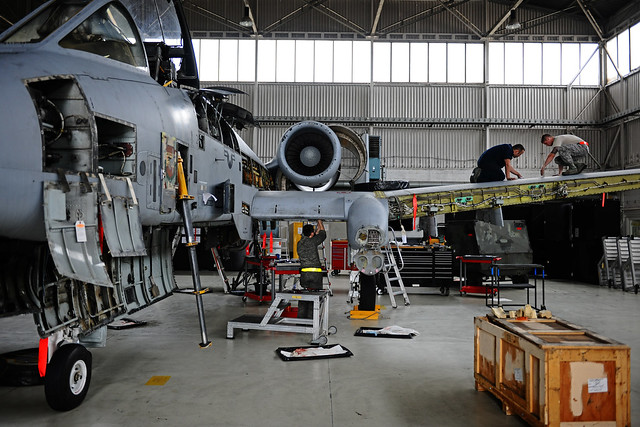
5/4/2012 - SPANGDAHLEM AIR BASE, Germany – Airman from the 52nd Equipment Maintenance Squadron Maintenance Flight conduct a phase inspection on an A-10 Thunderbolt II in Hangar 2 here May 4. The phase inspections are separated into two categories. During a phase 1 inspection, the 52nd EMS Maintenance Flight members examine each A-10 after every 500 flying hours, and phase 2 inspections are performed ever 1,000 flying hours. These inspections allow the Airmen to check for deficiencies and perform preventative maintenance to ensure the aircraft is safe and operational for flight. (U.S. Air Force photo by Airman 1st Class Matthew B. Fredericks) Hi-res
Source (including 5 photos)
Friday, May 4, 2012
Training Matters at Grayling Air Gunnery Range
by TSgt. Dan Heaton
127th Wing Public Affairs
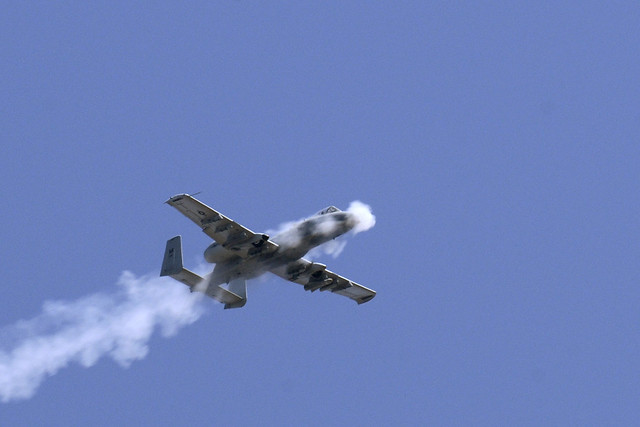
An A-10 Thunderbolt II from the 107th Fighter Squadron, Michigan Air National Guard, fires its primary weapon, the 30- millimeter GAU-8 Gatling Gun, during a training mission at the Grayling Aerial Gunnery Range, near Grayling, Mich., April 24, 2012. The Grayling range provides a wide variety of training scenarios for both aircraft and various ground personnel. More than 1,700 air missions are flown every year at the range. (U.S. Air Force photo by TSgt. David Kujawa) Hi-res
5/2/2012 - GRAYLING AIR GUNNERY RANGE, Mich. -- To the casual visitor, perhaps, the aerial gunnery range near Grayling, Mich., is primarily focused on helping military fighter pilots with their target practice.
Senior Master Sgt. Alan VanPate sees it a little differently.
"When the 107th Fighter Squadron went over to Afghanistan, all of their pilots came home safe. Even more importantly, they did not have a single instance of their ordnance coming too close to our guys on the ground," said VanPate, the senior enlisted Airman at the range. "Instead, they engaged with the enemy and helped Soldiers and Marines on the ground to come home safe. That's what we train for in Grayling."
Operated by the Michigan Air National Guard, the Grayling Aerial Gunnery Range provides realistic and relevant training opportunities for a variety of U.S. military aircraft, as well as Joint Terminal Attack Controllers and related ground personnel. In a typical year, the range will be the site of some 1,700 or so air missions and will be used as a training location by 300 or more ground personnel.
"The focus is on providing training as close as we can get it to what our personnel are going to experience when they deploy," said Lt. Col. Timothy Brock, a Michigan Air National Guard pilot who serves as the range operations officer. "One of the reasons we have expanded the training opportunities here for JTACs and other ground personnel is because working with those ground-based controller is what our pilots do in places like Afghanistan."
In a valley along the edge of the massive Camp Grayling military reservation, the Grayling range features a small village setting; a variety of different types of vehicles made from sheet metal and plywood; a variety of bunkers, and other shelters and, in the middle of it all, a couple of large white buildings with red crosses painted on the top - you're not supposed to hit those.
Aircraft carrying practice bombs, rockets and guns can come at the targets from just about any direction and any angle. They are in constant contact with range controllers in one of two nearby towers and very possibly with any JTAC personnel - Air Force enlisted members who embed with infantry and related ground units to help coordinate air power support who may be training in the area. Depending on the type of aircraft and the training needs of the various participants, the aircraft will make several "attacks" on various designated targets. The ordnance carried by the aircraft are all "practice" versions of the real thing - the ballistics of the ordnance is the same but instead of a full load of explosives, they are equipped with roughly the equivalent of a shotgun shell's worth of explosives in a smaller, lighter bomb, just enough to make some smoke on impact to help all involved better track exactly where the munitions hit.
Many of the aircraft that visit the range are more or less "local" to the Midwest, such as A-10 Thunderbolt II's from the 107th Fighter Squadron at Selfridge Air National Guard Base, Mich., and Toledo-based F-16 Fighting Falcons from the Ohio Air National Guard's 180th Fighter Squadron. The range also provides training to active duty Air Force B-52 Stratofortresses, Navy and Marine Corps F-18 Super Hornets, various Army attack helicopters and other aircraft.
Brock said the range began seeking out JTAC and other ground troops to train at the base several years ago, because of the 200 aircraft or more per month that visit the range in the summer.
"Now, we've begun to see situations where we have JTAC units that send their people here for training and then the aircraft come here, because they want to work with the ground forces," he said. "It is a training multiplier."
In situations like that, the visiting aircraft may utilize the air field at the Alpena Combat Readiness Training Center as a staging site for several days. The Alpena CRTC is about 50 miles from the air gunnery range and is the higher headquarters for the range.
VanPate and another Airmen assigned to the range are both JTAC instructor qualified and the facility also includes a virtual training center useful for more junior JTAC personnel.
In addition to U.S. personnel, the Grayling range is also utilized as a training site for several allied nations for their JTAC-equivalent personnel. In addition to JTACs and related personnel, Air Force civil engineer units are typically utilized to build many of the target structures on the base, saving money in construction costs and providing training to those units at the same time. All together, about 300 JTACs and more than 1,300 other ground personnel train at the range in a typical year.
"This is really a value-added proposition for Michigan, for the Guard and for the local communities," Brock said. "We are bringing in a variety of units here, enhancing the training environment for our Michigan Guardsmen and being a contributing part of the local economy."
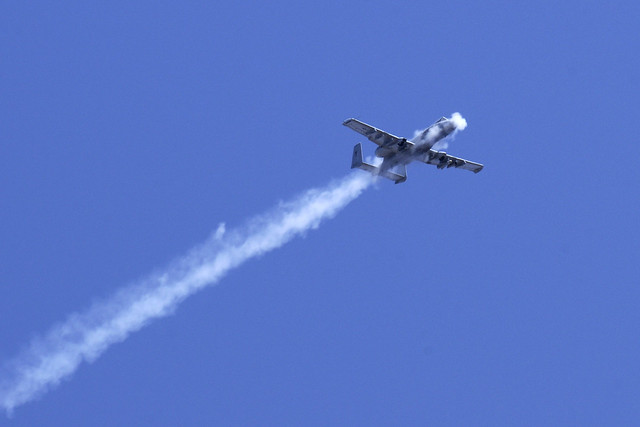
An A-10 Thunderbolt II from the 107th Fighter Squadron, Michigan Air National Guard, fires its primary weapon, the 30- millimeter GAU-8 Gatling Gun, during a training mission at the Grayling Aerial Gunnery Range, near Grayling, Mich., April 24, 2012. The Grayling range provides a wide variety of training scenarios for both aircraft and various ground personnel. More than 1,700 air missions are flown every year at the range. (U.S. Air Force photo by TSgt. David Kujawa) Hi-res
An A-10 Thunderbolt II from the 107th Fighter Squadron turns after dropping ordnance at the Grayling Aerial Gunnery Range, near Grayling, Mich., April 24, 2012. The Grayling range provides a wide variety of training scenarios for both aircraft and various ground personnel. More than 1,700 air missions are flown every year at the range. (U.S. Air Force photo by TSgt. Dan Heaton) Hi-res
An A-10 Thunderbolt II from the 107th Fighter Squadron flies over the Grayling Aerial Gunnery Range, near Grayling, Mich., April 24, 2012. The Grayling range provides a wide variety of training scenarios for both aircraft and various ground personnel. More than 1,700 air missions are flown every year at the range. (U.S. Air Force photo by TSgt. David Kujawa) Hi-res
This "village" at the Grayling Aerial Gunnery Range, near Grayling, Mich., is actually one of the targets that can be used for training during attack missions of military aircraft. Using precision munitions, Air Force aircraft can target specific buildings within the compound. The goal is to provide pilots and ground controllers the most realistic and relevant training possible before a deployment. (U.S. Air Force photo by TSgt. David Kujawa) Hi-res
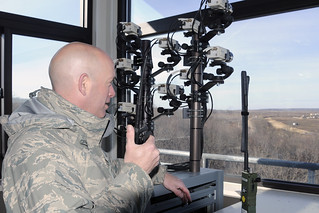
Senior Master Sgt. Alan VanPate communicates with an aircraft while in a control tower at the Grayling Aerial Gunnery Range, near Grayling, Mich., April 24, 2012. VanPate is a joint terminal attack controller and helps to provide training to visiting JTAC personnel to the Grayling range. JTACs are Air Force enlisted members who embed with infantry or other U.S. Army or Marine Corps ground forces to provide coordination of air power support with the Soldiers or Marines on the ground. (U.S. Air Force photo by TSgt. David Kujawa) Hi-res
Source
U.S. Air Force Test Pilot's first time flying an A-10
Released by 355th Fighter Wing Public Affairs
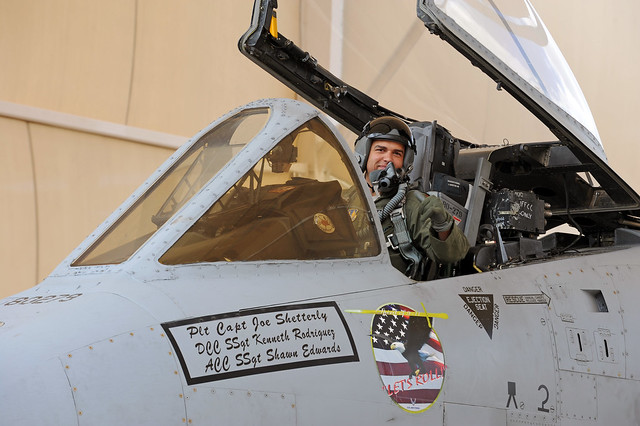
U.S. Air Force Maj. Jesus Cosme, U.S. Air Force test pilot school student, parks an A-10 at Davis-Monthan Air Force Base, Ariz., April 26, 2012. This was the first time Major Cosme has flown in an A-10. (U.S. Air Force photo by Airman 1st Class Camilla Griffin) Hi-res
Note: Pictured is A-10C 80-0279, still wearing the "LET'S ROLL" logo, related to Nine Eleven and Operation Enduring Freedom. Crew inscriptions: Plt Capt Joe Shetterly, DCC SSgt Kenneth Rodriguez, ACC SSgt Shawn Edwards
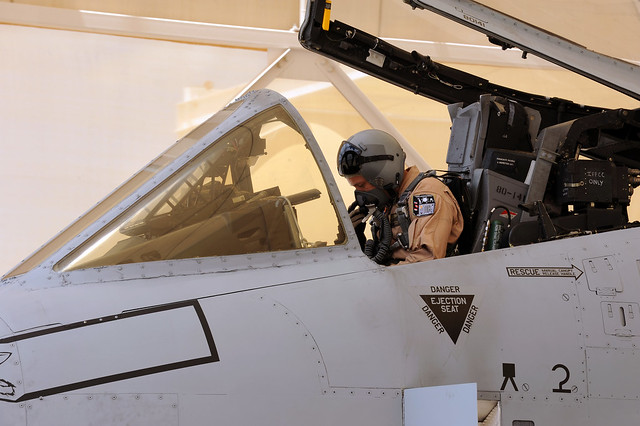
U.S. Marine Corps Capt. Douglas Rosenstock, U.S. Air Force test pilot school student, parks an A-10 at Davis-Monthan Air Force Base, Ariz., April 26, 2012. This was the first time Captain Douglas has flown in an A-10. (U.S. Air Force photo by Airman 1st Class Camilla Griffin) Hi-res
Note: Pictured is A-10C 80-0141 without any crew inscriptions.
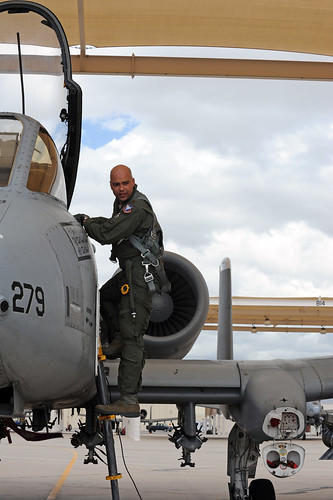
U.S. Air Force Maj. Jesus Cosme, U.S. Air Force test pilot school student, climbs down from an A-10 at Davis-Monthan Air Force Base, Ariz., April 26, 2012. This was the first time Major Cosme has flown in an A-10. (U.S. Air Force photo by Airman 1st Class Camilla Griffin) Hi-res
Note: White fin band
The 917th Fighter Group says goodbye to Senior Master Sgt. Maffett
Released by 307th Bomb Wing Public Affairs
4/30/2012 - U.S. Air Force Lt. Col. Travis Caughlin, 917th Fighter Group deputy commander for maintenance, presents the Certificate of Retirement to Senior Master Sgt. Margaret Maffett, 917th Aircraft Maintenance Squadron first sergeant, during a retirement ceremony, Barksdale Air Force Base, La., April 27, 2012. Maffett is retiring from the Air Force Reserve after more than 30 years of service. (U.S. Air Force photo by Master Sgt. Greg Steele) Hi-res
4/30/2012 - Students from the Phoenix Magnet Elementary School attend the retirement ceremony for one of their teachers, U.S. Air Force Senior Master Sgt. Margaret Maffett, Barksdale Air Force Base, La., April 27, 2012. Maffett is the 917th Aircraft Maintenance Squadron first sergeant and is retiring from the Air Force Reserve after more than 30 years of service. (U.S. Air Force photo by Master Sgt. Greg Steele) Hi-res
4/30/2012 - Students, parents and faculty from the Phoenix Magnet Elementary School, attend the retirement ceremony for U.S. Air Force Senior Master Sgt. Margaret Maffett, 917th Aircraft Maintenance Squadron first sergeant, Barksdale Air Force Base, La., April 27, 2012. Maffett, a teacher at Phoenix Magnet, is retiring from the Air Force Reserve after more than 30 years of service. (U.S. Air Force photo by Master Sgt. Greg Steele) Hi-res
Note: Pictured is A-10C 79-0145 from the 47th Fighter Squadron.
4/30/2012 - Students, parents and faculty from the Phoenix Magnet Elementary School from Alexandria, La., get a tour of a 917th Fighter Group A-10 Thunderbolt II following the retirement ceremony for Senior Master Sgt. Margaret Maffett, Barksdale Air Force Base, La., April 27, 2012. Maffett is a teacher at Phoenix Magnet, and the students sent care packages and letters to members of the 917th Fighter Group during their recent deployment to Afghanistan. (U.S. Air Force photo by Master Sgt. Greg Steele) Hi-res
Note: Pictured is A-10C 79-0147 from the 47th Fighter Squadron.
4/30/2012 - U.S. Air Force Maj. Jason Cobb, 47th Fighter Squadron pilot, shows Phoenix Magnet Elementary School students the cockpit of an A-10 Thunderbolt II during a tour at Barksdale Air Force Base, La., April 27, 2012. Students, parents and faculty members were treated to the tour following the retirement ceremony for one of their teachers, Senior Master Sgt. Margaret Maffett, 917th Aircraft Maintenance Squadron first sergeant, who retired from the Air Force Reserve after more than 30 years of service. (U.S. Air Force photo by Master Sgt. Greg Steele) Hi-res
Source
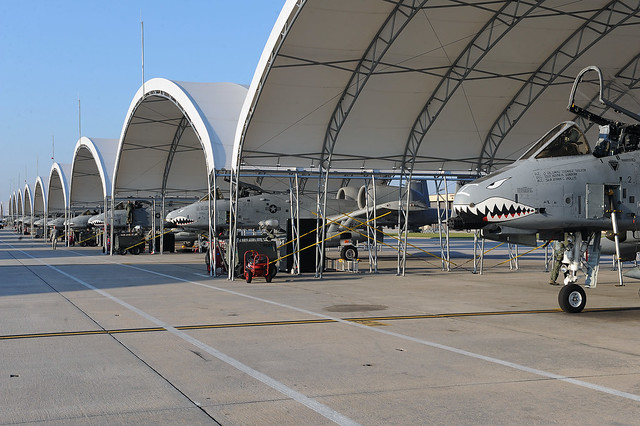
4/30/2012 - U.S. Air Force Lt. Col. Travis Caughlin, 917th Fighter Group deputy commander for maintenance, presents the Certificate of Retirement to Senior Master Sgt. Margaret Maffett, 917th Aircraft Maintenance Squadron first sergeant, during a retirement ceremony, Barksdale Air Force Base, La., April 27, 2012. Maffett is retiring from the Air Force Reserve after more than 30 years of service. (U.S. Air Force photo by Master Sgt. Greg Steele) Hi-res
4/30/2012 - Students from the Phoenix Magnet Elementary School attend the retirement ceremony for one of their teachers, U.S. Air Force Senior Master Sgt. Margaret Maffett, Barksdale Air Force Base, La., April 27, 2012. Maffett is the 917th Aircraft Maintenance Squadron first sergeant and is retiring from the Air Force Reserve after more than 30 years of service. (U.S. Air Force photo by Master Sgt. Greg Steele) Hi-res
4/30/2012 - Students, parents and faculty from the Phoenix Magnet Elementary School, attend the retirement ceremony for U.S. Air Force Senior Master Sgt. Margaret Maffett, 917th Aircraft Maintenance Squadron first sergeant, Barksdale Air Force Base, La., April 27, 2012. Maffett, a teacher at Phoenix Magnet, is retiring from the Air Force Reserve after more than 30 years of service. (U.S. Air Force photo by Master Sgt. Greg Steele) Hi-res
Note: Pictured is A-10C 79-0145 from the 47th Fighter Squadron.
4/30/2012 - Students, parents and faculty from the Phoenix Magnet Elementary School from Alexandria, La., get a tour of a 917th Fighter Group A-10 Thunderbolt II following the retirement ceremony for Senior Master Sgt. Margaret Maffett, Barksdale Air Force Base, La., April 27, 2012. Maffett is a teacher at Phoenix Magnet, and the students sent care packages and letters to members of the 917th Fighter Group during their recent deployment to Afghanistan. (U.S. Air Force photo by Master Sgt. Greg Steele) Hi-res
Note: Pictured is A-10C 79-0147 from the 47th Fighter Squadron.
4/30/2012 - U.S. Air Force Maj. Jason Cobb, 47th Fighter Squadron pilot, shows Phoenix Magnet Elementary School students the cockpit of an A-10 Thunderbolt II during a tour at Barksdale Air Force Base, La., April 27, 2012. Students, parents and faculty members were treated to the tour following the retirement ceremony for one of their teachers, Senior Master Sgt. Margaret Maffett, 917th Aircraft Maintenance Squadron first sergeant, who retired from the Air Force Reserve after more than 30 years of service. (U.S. Air Force photo by Master Sgt. Greg Steele) Hi-res
Source
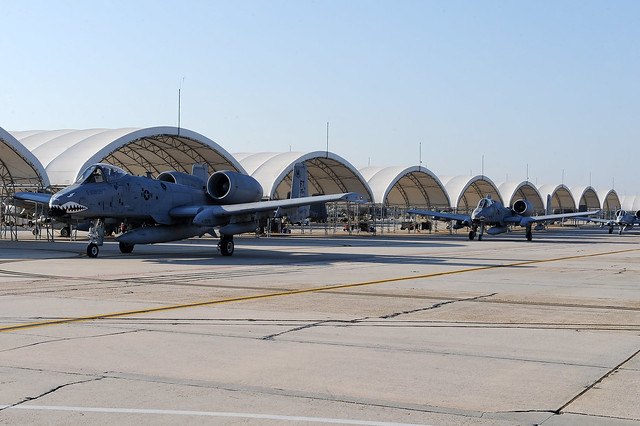
Phase Inspection
Released by 442nd Fighter Wing Public Affairs
Maintenance technicians work on phase inspection for an A-10 Thunderbolt II that returned from Aghanistan April 17, 2012. The inspection is completed every 500 hours of flight time. The 442nd Fighter Wing is an A-10 Thunderbolt II Air Force Reserve unit at Whiteman Air Force Base, Mo. (U.S. Air Force photo by Staff Sgt. Danielle Johnston) Hi-res
Note: Pictured is A-10C 79-0119 from the 303rd Fighter Squadron.
Thursday, May 3, 2012
Confined-space exercise
Released by 442nd Fighter Wing Public Affairs
Emergency personnel assist a "victim" during a confined-space exercise April 20, 2012 conducted by the 442nd Maintenance Squadron. The exercise, mandated by the Occupational Safety and Health Administration, Air Force Instruction and Air Force Occupational Safety and Health, simulated a technician falling unconscious in an A-10 Thunderbolt II fuel tank. Technicians simulated harnessing and lifting the injured Airmen from the fuselage, performing self aid and buddy care, and assisting emergency personnel. The 442nd MXS is part of the 442nd Fighter Wing, an A-10 Thunderbolt II Air Force Reserve unit at Whiteman Air Force Base, Mo. (U.S. Air Force photo by Staff Sgt. Danielle Johnston) Hi-res
Note: Pictured is A-10C 79-0121 from the 303rd Fighter Squadron. Crew inscription: PILOT: LT COL MARK ERNEWEIN, CREW CHIEF: SSGT DON JOHNSTON, ASST. CREW CHIEF: SRA KENNETH VAUGHAN
Wednesday, May 2, 2012
Moody 'Tiger Shark' A-10s add bite to Osan air power
by Tech. Sgt. Eric Petosky
51st Fighter Wing Public Affairs
The 75th Expeditionary Fighter Squadron from Moody Air Force base, Ga., landed nine A-10C Thunderbolt II aircraft at Osan Air Base, Republic of Korea, April 30, 2012. The 75th EFS deployed approximately 250 Airmen and 12 aircraft to Korea as part of a routine theater support package. The A-10C Thunderbolt II aircraft is designed to provide close air support for ground troops and can also carry air-to-air missiles. (U.S. Air Force photo by Staff Sgt. Craig Cisek) Hi-res
5/1/2012 - OSAN AIR BASE, Republic of Korea -- Nine A-10C Thunderbolt II aircraft emblazoned with shark teeth on the noses arrived April 30, 2012, signaling the beginning of the 75th Expeditionary Fighter Squadron's six-month rotation at Osan Air Base.
Approximately 250 Airmen and 12 aircraft from the 75th EFS "Tiger Sharks," based at the 23rd Wing at Moody Air Force Base, Ga., deployed to the Republic of Korea as part of the theater security package, a continuous fighter squadron rotation to Osan and Kunsan air bases.
"This deployment will enhance our combat capabilities and provide a strong deterrent, ensuring peace and stability for the Republic of Korea," said Lt. Gen. Jan-Marc Jouas, 7th Air Force commander.
While at Osan, 75th EFS pilots will fly a combination of close air support, airborne forward air controller and search and rescue training sorties. They will work alongside joint and ROK military partners, strengthening relationships and improving capabilities to defend against any threat.
Previously, F-16 Fighting Falcons from the 388th Fighter Wing at Hill Air Force Base, Utah, operating out of Kunsan AB, fulfilled the theater support package requirement. The F-16s returned to Hill AFB April 11, 2012.
"We are here to show our friends in the Pacific that we are ready to help regardless of what happens," said Lt. Col. Dan Clayton, 75th EFS director of operations. The 75th EFS joins two other fighter squadrons permanently assigned to Mustang Country, but instead of hearing the familiar cries of "Pil Sung!" or "Harrumph!" they shout "Attack!"
The A-10s of the 75th EFS also sport stylized shark teeth on either side of the cockpit, a heritage paint scheme dating back to the 23rd Fighter Group in World War II when the squadron flew P-40 Warhawks and P-51 Mustangs over China.
The 75th Expeditionary Fighter Squadron from Moody Air Force base, Ga., landed nine A-10C Thunderbolt II aircraft at Osan Air Base, Republic of Korea, April 30, 2012. The 75th EFS deployed approximately 250 Airmen and 12 aircraft to Korea as part of a routine theater support package. The A-10C Thunderbolt II aircraft is designed to provide close air support for ground troops and can also carry air-to-air missiles. (U.S. Air Force photo by Staff Sgt. Craig Cisek) Hi-res
Source
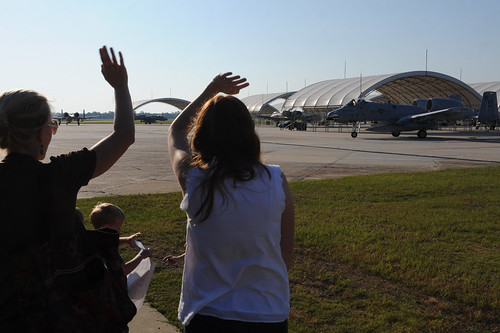
51st Fighter Wing Public Affairs
The 75th Expeditionary Fighter Squadron from Moody Air Force base, Ga., landed nine A-10C Thunderbolt II aircraft at Osan Air Base, Republic of Korea, April 30, 2012. The 75th EFS deployed approximately 250 Airmen and 12 aircraft to Korea as part of a routine theater support package. The A-10C Thunderbolt II aircraft is designed to provide close air support for ground troops and can also carry air-to-air missiles. (U.S. Air Force photo by Staff Sgt. Craig Cisek) Hi-res
5/1/2012 - OSAN AIR BASE, Republic of Korea -- Nine A-10C Thunderbolt II aircraft emblazoned with shark teeth on the noses arrived April 30, 2012, signaling the beginning of the 75th Expeditionary Fighter Squadron's six-month rotation at Osan Air Base.
Approximately 250 Airmen and 12 aircraft from the 75th EFS "Tiger Sharks," based at the 23rd Wing at Moody Air Force Base, Ga., deployed to the Republic of Korea as part of the theater security package, a continuous fighter squadron rotation to Osan and Kunsan air bases.
"This deployment will enhance our combat capabilities and provide a strong deterrent, ensuring peace and stability for the Republic of Korea," said Lt. Gen. Jan-Marc Jouas, 7th Air Force commander.
While at Osan, 75th EFS pilots will fly a combination of close air support, airborne forward air controller and search and rescue training sorties. They will work alongside joint and ROK military partners, strengthening relationships and improving capabilities to defend against any threat.
Previously, F-16 Fighting Falcons from the 388th Fighter Wing at Hill Air Force Base, Utah, operating out of Kunsan AB, fulfilled the theater support package requirement. The F-16s returned to Hill AFB April 11, 2012.
"We are here to show our friends in the Pacific that we are ready to help regardless of what happens," said Lt. Col. Dan Clayton, 75th EFS director of operations. The 75th EFS joins two other fighter squadrons permanently assigned to Mustang Country, but instead of hearing the familiar cries of "Pil Sung!" or "Harrumph!" they shout "Attack!"
The A-10s of the 75th EFS also sport stylized shark teeth on either side of the cockpit, a heritage paint scheme dating back to the 23rd Fighter Group in World War II when the squadron flew P-40 Warhawks and P-51 Mustangs over China.
The 75th Expeditionary Fighter Squadron from Moody Air Force base, Ga., landed nine A-10C Thunderbolt II aircraft at Osan Air Base, Republic of Korea, April 30, 2012. The 75th EFS deployed approximately 250 Airmen and 12 aircraft to Korea as part of a routine theater support package. The A-10C Thunderbolt II aircraft is designed to provide close air support for ground troops and can also carry air-to-air missiles. (U.S. Air Force photo by Staff Sgt. Craig Cisek) Hi-res
Source
Moody Airmen support Korea
by Airman 1st Class Jarrod Grammel
23d Wing Public Affairs
A-10C Thunderbolt II prepare to depart for a deployment at Moody Air Force Base, Ga., April 23, 2012. The aircraft are assigned to the 75th Fighter Squadron that recently had Airmen deploy for six months in support of operations at Osan Air Base, Republic of Korea. (U.S. Air Force photo by Staff Sgt. Ciara Wymbs) Hi-res
5/1/2012 - MOODY AIR FORCE BASE, Ga. -- On April 22, couples embraced and parents played with their children one last time while waiting to board an aircraft bound for Osan Air Base, Republic of Korea.
Approximately 250 pilots, maintenance and other support personnel deployed to support A-10C Thunderbolt IIs. The 75th Fighter Squadron trains to provide close air support, forward air control and personnel recovery capabilities, enabling the U.S. Pacific Command commander to carry out his mission in a time of war. The team of Airmen is deployed as an expeditionary force for approximately six months.
However, for the Airmen on the flightline waiting to leave, many had mixed feelings. The excitement of seeing a new part of the world was balanced with leaving their loved ones behind.
"I'm excited to travel and get the opportunity to experience other cultures," said Staff Sgt. Brandon Hill, 23d Aircraft Maintenance Squadron electrical and environmental craftsman. "It hurts to be leaving my home. I know it will be hard at first but I will be looking forward to getting back home."
Airman 1st Class Kody Fields, 23d Aircraft Maintenance Squadron A-10 crew chief, had similar feelings. This will be his first deployment, and he will be leaving behind his wife, Amy, and son, Titus.
"It is bittersweet," said Fields. "I'm glad to get out there to complete the mission and do my family name proud. But it's going to be hard not coming home to my family at night. "It is exciting to go out there and do what I'm trained to do," he added. "This is what I joined for. It is an excellent opportunity to get out there and get some real experience."
For these professionals, the mission of providing air power stays the same, only the place has changed.
As the hours passed and the sun went down, the Airmen said their final goodbyes and as they boarded a plane, they took their last step on Moody until their return in six months.
A-10C Thunderbolt II, assigned to the 75th Fighter Squadron taxi down the flightline prior to take off at Moody Air Force Base, Ga., April 23, 2012. Airmen assigned to the 75th FS and 23d Aircraft Maintenance Squadron deployed to support operations at Osan Air Base, Republic of Korea as an air expeditionary fighter squadron. (U.S. Air Force photo by Staff Sgt. Ciara Wymbs) Hi-res
Families of Airmen assigned to the 75th Fighter Squadron wave goodbye to deploying Airmen at Moody Air Force Base, Ga., April 23, 2012. While at Osan, 75th EFS pilots will fly a combination of close air support, airborne forward air controller and search and rescue training sorties. (U.S. Air Force photo by Staff Sgt. Ciara Wymbs) Hi-res
Source
Subscribe to:
Posts (Atom)