Sunday, July 17, 2011

Barksdale Fighter Pilots to Set Aviation Record


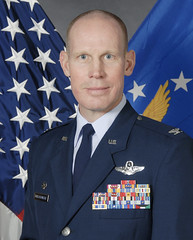
(L to R) Lt. Cols David Deaton, James Macaulay, Brady Glick and Marc Olson, pose for the "hero shot" after participating in a four-ship flight at Barksdale Air Force Base, La., July 15, 2011. During their flight, they surpassed the 20,000 combined hours mark—a feat never before accomplished by four pilots in the A-10. The four Barksdale-based Air Force Reserve fighter pilots are assigned to the 47th Fighter Squadron. (U.S. Air Force photo by Tech. Sgt. Jeff Walston)

by Tech. Sgt. Jeff Walston
307th Bomb Wing Public Affairs

7/15/2011 - BARKSDALE AFB, La. -- Four Barksdale-based Air Force Reserve fighter pilots made aviation history by setting a new record for combined hours in the cockpit of the A-10 Thunderbolt II fighter jet, July 15.

Colonel James Macaulay, Lt. Col. David Deaton, Lt. Col. Marc Olson and Lt. Col. Brady Glick, all assigned to the 47th Fighter Squadron, which is part of the 917th Fighter Group, participated in a four-ship flight during which the pilots surpassed the 20,000 combined hour mark--a feat never before accomplished by four pilots in the A-10.

This kind of feat does not happen overnight.

I'm grateful that God has blessed me by allowing me to serve my country for this long," Deaton said. "I never imagined when I graduated from the Air Force Academy in 1978, that I would still be doing what I love 33 years later."

This event marked the second record-setting sortie for this group of pilots. The four colonels set the previous record of 17,742 combined hours in the A-10 during a four-ship flight in 2008. Together, all four pilots have completed more than 10,000 sorties.

Immediately following the flight, Macaulay was promoted to the rank of colonel in a ceremony presided over by Col. Eric S. Overturf, the commander of the 442nd Fighter Wing at Whiteman Air Force Base, Mo.

"This milestone is really a testament to the professionalism of the maintainers and the durability of the 'Hawg," Macaulay said. "In 20,000 hours, none of us have punched out (ejected) or had a major mishap. For every hour we get in the seat of the jet, there's over 15 hours of maintenance and support that makes them fly."

In addition to the record breaking sortie, Macaulay also took the lead in A-10 flying hours with over 5,200.

"It's been a distinct honor to fly with the 47th Fighter Squadron, and the best attack pilots in the world," said Macaulay.

Some Airmen assigned to the 47th Fighter Squadron are schedule to deploy after the first of the year.

According to Overturf, the four-ship flight also set a record for being the "oldest on record." The total ages of the four pilots add up to a whopping 200 years and 2 months.

"Attack!!!!"

Source

Selfridge A-10s Reach Operational Milestone


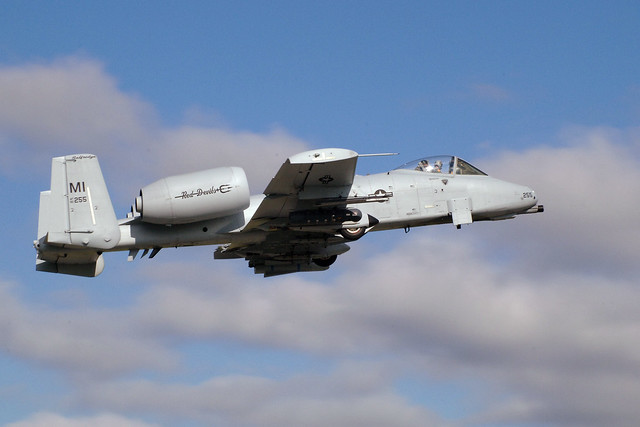
An A-10 Thunderbolt II takes off from Selfridge Air National Guard Base, Mich., July 12, 2011, on a training mission flown by the 107th Fighter Squadron, Michigan Air National Guard. (U.S. Air Force photo by John Swanson) Hi-res

Note: Pictured is A-10C 80-0255 from the 107th Fighter Squadron.

127th Wing Public Affairs

7/14/2011 - SELFRIDGE AIR NATIONAL GUARD BASE, Mich. -- -- The 127th Wing at Selfridge Air National Guard Base recently passed a major milestone when the wing's A-10s were declared Initial Operating Capable in late June.

Typically, a wing spends three years in the formal conversion process from one aircraft to another before reaching IOC status. The 127th Wing began converting to the A-10 in early 2009 and declared IOC status after 2.5 years. Previously, the wing's fighter squadron had flown F-16 Falcon aircraft.

"The men and women of the 127th Maintenance Group and the 127th Operations Group have done a marvelous job rising to the challenge and the milestone we passed on June 30 proves they have what it takes to operated this weapon system, should they be called to the fight," said Col. Gregory S. Holzhei, 127th Maintenance Group commander.

The A-10 is flown at Selfridge by the 107th Fighter Squadron, a component of the 127th Wing, which in turn is a component of the Michigan Air National Guard. The 107th is one of the oldest existing flying units in the U..S. military, tracing its roots back to the World War I era.

The A-10, also known as the Warthog, is the Air Force's primary air-to-ground attack aircraft. In addition to the A-10, the 127th Wing also flies the KC-135 Stratotanker, an aerial refueler, at Selfridge.

The 127th Wing, composed of about 1,700 Citizen-Airmen, is the host organization at Selfridge. In addition to the Wing, Selfridge is home to numerous other military and federal agencies, which fly a variety of helicopters and small, light fixed-wing aircraft.

Source

Wednesday, July 13, 2011

51st Fighter Wing commander takes final flight


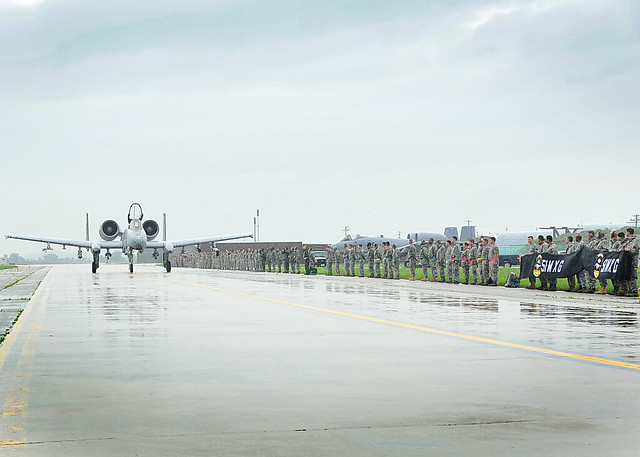
Col. Patrick Malackowski took his final flight as the 51st Fighter Wing commander here July 12. Members of the 51st Maintenance Squadron line up and say farewell during the wing commander's last stroll down the flight-line. Colonel Malackowski served as wing commander of the 51st FW since December 2009. He and his family will depart Osan Air Base, Republic of Korea and head to Hickam Air Force Base, Hawaii, where he will become the 13th Air Force vice commander. (U.S. Air Force photo by Staff Sgt. Daylena Gonzalez) Hi-res

by Staff Sgt. Daylena Gonzalez
51st Fighter Wing Public Affairs

7/12/2011 - OSAN AIR BASE, Republic of Korea -- Col. Patrick Malackowski took his final flight as the 51st Fighter Wing commander here July 12. Colonel Malackowski served as wing commander of the 51st FW since December 2009. He and his family will depart Osan Air Base, Republic of Korea and head to Hickam Air Force Base, Hawaii, where he will become the 13th Air Force vice commander.


Col. Patrick Malackowski took his final flight as the 51st Fighter Wing commander here July 12. Friends and family say farewell during the wing commander's last stroll down the flight-line. Colonel Malackowski served as wing commander of the 51st FW since December 2009. He and his family will depart Osan Air Base, Republic of Korea and head to Hickam Air Force Base, Hawaii, where he will become the 13th Air Force vice commander. (U.S. Air Force photo by Staff Sgt. Daylena Gonzalez) Hi-res


Col. Patrick Malackowski took his final flight as the 51st Fighter Wing commander here July 12. Colonel Malackowski served as wing commander of the 51st FW since December 2009. He and his family will depart Osan Air Base, Republic of Korea and head to Hickam Air Force Base, Hawaii, where he will become the 13th Air Force vice commander. (U.S. Air Force photo by Staff Sgt. Daylena Gonzalez) Hi-res


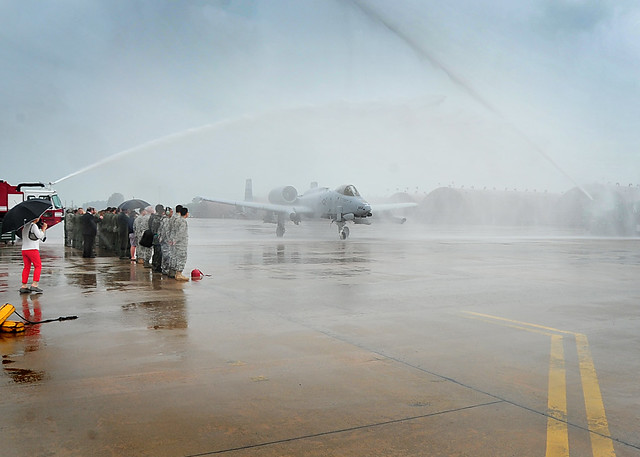
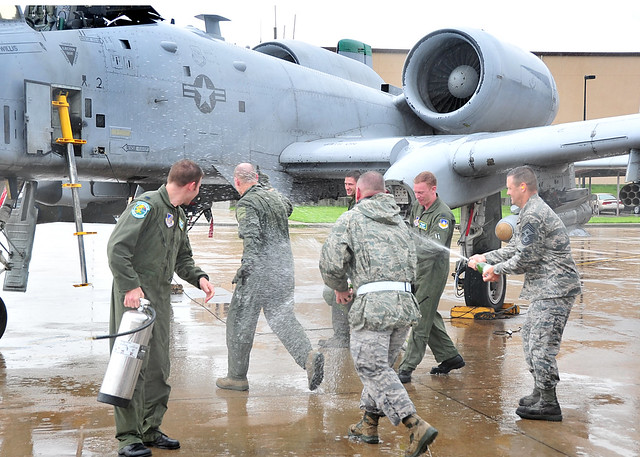
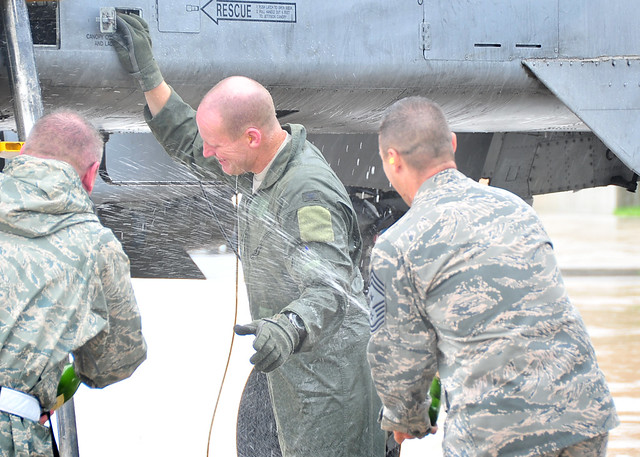
Col. Patrick Malackowski took his final flight as the 51st Fighter Wing commander here July 12. The 51st Command Chief Master Sergeant and crew members hose down the colonel with champagne and water, to celebrate his final flight. Colonel Malackowski served as wing commander of the 51st FW since December 2009. He and his family will depart Osan Air Base, Republic of Korea and head to Hickam Air Force Base, Hawaii, where he will become the 13th Air Force vice commander. (U.S. Air Force photo by Staff Sgt. Daylena Gonzalez) Hi-res


Col. Patrick Malackowski took his final flight as the 51st Fighter Wing commander here July 12. The 51st Command Chief Master Sergeant and crew members hose down the colonel with champagne and water, to celebrate his final flight. Colonel Malackowski served as wing commander of the 51st FW since December 2009. He and his family will depart Osan Air Base, Republic of Korea and head to Hickam Air Force Base, Hawaii, where he will become the 13th Air Force vice commander. (U.S. Air Force photo by Staff Sgt. Daylena Gonzalez) Hi-res

Source


Background info:

Official USAF online bio of Colonel Patrick C. Malackowski


Col. Patrick C. Malackowski is Commander, 51st Fighter Wing, Osan Air Base, Republic of Korea. The wing's mission is to plan, support and execute military operations, to include counterair, interdiction, close air support and inter-theater airlift. The 51st Fighter Wing consists of more than 5,861 people in four groups, to include an F-16 fighter squadron and an A-10 fighter squadron. The wing also supports five tenant units directly involved in warfighting activities. In addition, it maintains and administers 48 geographically separated units at 18 sites throughout the Korean peninsula, including seven munitions sites.

Colonel Malackowski entered the Air Force in 1986 after receiving his commission from the U.S. Air Force Academy. His previous assignments include weapons officer, numbered air force chief of training and readiness, operations officer, fighter squadron commander and Commander, 438th Air Expeditionary Group. Colonel Malackowski is a command pilot with more than 3,200 flying hours in the A-10. Before he assumed his current position, he served as Commander, 57th Operations Group, Nellis AFB, Nev.

EDUCATION
1986 Bachelor of Science degree in management, U.S. Air Force Academy, Colorado Springs, Colo.
1994 Squadron Officer School, Maxwell AFB, Ala.
1996 U.S. Air Force Weapons School, Nellis AFB, Nev.
1999 Air Command and Staff College, Maxwell AFB, Ala.
1999 Master of Science degree in Military Operational Art and Science, Air University, Maxwell AFB, Ala.
2005 U.S. Army War College, Carlisle Barracks, Carlisle, Pa.
2005 Master of Science degree in Strategic Studies, Army War College, Carlisle Barracks, Carlisle, Pa.

ASSIGNMENTS
1. May 1986 - January 1987, U.S. Air Force Academy Candidate Counselor, USAF Academy, Colo.
2. January 1987 - January 1988, Undergraduate Pilot Training, Williams AFB, Ariz.
3. February 1988 - September 1988, A-10 Upgrade Training, Davis Monthan AFB, Ariz.
4. October 1988 - July 1992, Flight Lead, Instructor Pilot, and Flight Examiner, 91st Tactical Fighter Squadron, and 81st Tactical Fighter Wing, RAF Bentwaters, United Kingdom
5. July 1992 - January 1995, Flight Examiner and Flight Commander, 354th Fighter Squadron, McChord AFB, Wash.
6. January 1995 - August 1998, Chief, Wing Flight Safety, and Wing Weapons and Tactics, 347th Wing, Moody AFB, Ga.
7. August 1998 - July 1999, Student, Air Command and Staff College, Maxwell AFB, Ala.
8. July 1999 - December 2000, Chief, Training and Readiness, 13th Air Force Headquarters, Andersen AFB, Guam
9. December 2000 - June 2002, Operations Officer, Weapons School A-10 Division, Nellis AFB, Nev.
10. July 2002 - July 2004, Commander, 81st Fighter Squadron, Spangdahlem Air Base, Germany
11. July 2004 - July 2005, Student, US Army War College, Carlisle Barracks, Pa.
12. July 2005 - November 2006, Deputy Commandant, USAF Weapons School, Nellis AFB, Nev.
13. December 2006 - December 2007, Commander, 438th Air Expeditionary Group, Al Asad Air Base, Iraq
14. January - June 2008, Deputy Commander, 57th Operations Group, Nellis AFB, Nev.
15. June 2008 - December 2009, Commander, 57th Operations Group, Nellis AFB, Nev.
16. December 2009 - present, Commander, 51st Fighter Wing, Osan AB, Republic of Korea

FLIGHT INFORMATION
Rating: Command pilot
Flight hours: More than 3,400
Aircraft flown: T-37, T-38 and A-10

MAJOR AWARDS AND DECORATIONS
Bronze Star with oak leaf cluster
Meritorious Service Medal with four oak leaf clusters
Air Medal with three oak leaf clusters
Air Force Achievement Medal
Aerial Achievement Medal with two oak leaf clusters
Air Force Commendation Medal
Afghanistan Campaign Medal
Iraq Campaign Medal
Global War on Terrorism Service Medal
Kuwait Liberation Medal, Government of Kuwait

EFFECTIVE DATES OF PROMOTION
Second Lieutenant May 28, 1986
First Lieutenant May 28, 1988
Captain May 28, 1990
Major September 1, 1997
Lieutenant Colonel February 1, 2002
Colonel July 1, 2007

Source

Tuesday, July 12, 2011

Not A-10-related, but great archived music

Updated July 13, 2011

When I was a teenager, working in a paper manufactury, I loved the unique music of Golden Earring from the Netherlands. And now, with the vidcaps on YouTube: It's still fascinating.

It's very nice to remember all of that.

My most favorite song:


Anyone who can send me a current online ID of the following historic album (probably a mixed album, only released in the Netherlands)?

"Golden Earring - Volume I"

She flies on strange wings - Part 1
I can't get a hold on hor
Murdock 9 - 6182
This is the time of the year
Landing
Another 45 miles

Buddy Joe
Holy holy Life
Where will I be
Jessica
In my house
Please go

Since years I'm checking my best music store at Berlin, Germany, for this special album, but without any results.


Enjoy


Update July 13, 2011:

Today, I got kind feedback from Sander Wittenaar, one of my blog's visitors. He told me: The record you are listing is Golden Earring - Superstarshine Vol. 1. If you google for it it has been available on eBay or Marktplaats.nl.

Many thanks, Sander!

Q&A with the boss: GSUs, what's the point?

by Col. Eric S. Overturf, 442nd Fighter Wing commander
Released by 442nd Fighter Wing Public Affairs

7/11/2011 - WHITEMAN AIR FORCE BASE, Mo. -- Why do we have GSUs and what purpose do they serve?

Air Force Reserve Command wanted to put all A-10 combat power in one wing so we could more efficiently train and deploy pilots, maintainers and combat support. The 442nd Fighter Wing already had the wing structure they were looking for, so we became the host wing.

How will our jobs be affected?

The addition of GSUs will be transparent to most people here at Whiteman. Locally, we won't lose any jobs, but there will be some benefits. You will have the opportunity for upward advancement in other parts of the wing, the opportunity to support deployments and TDYs and we will now have backfill when we are short in any area of the wing (to include the GSUs.) We also now have the networking with other experienced A-10 pilots and maintainers that we can share information and get answers about things from others within our own wing.

Will we lose any aircraft as a result of the GSUs?

No. We will continue to retain 24 aircraft. We will however, assist the 917th FG at Barksdale, which provides two A-10s to the Air National Guard Air Force Reserve Test Center (AATC) in Tucson, Ariz. Instead of the 917th FG providing both aircraft, we will provide one aircraft and accompanying maintenance personnel to go to Tucson TDY on a voluntary basis.

What is the reporting structure?

The GSUs are organized as fighter groups so they have a group commander who reports directly to me, just like our operations, maintenance and mission support groups here. I will spend a lot of time on the phone with them and we will do teleconferencing at least once a month. Also I plan to visit each GSU quarterly.

What additional tasks will the 442nd have?

The only ones who should be affected by this are the wing staff and personnel functions. For example, our judge advocate will be responsible for all legal issues at not just here, but also at the GSUs now. We will be doing the funding and hiring actions at the GSUs as well. The wing hasn't yet been given any additional manpower to support this, so I've requested the Site Action Task Force from AFRC to evaluate our requirements in hopes of getting additional positions to assist our Force Support Squadron and wing staff with the extra work.

How will this affect deployments?

There won't be more deployments necessarily, but there will be more opportunities to deploy. We will be able to share in what the GSUs are doing. The intent of putting all the A-10 combat power together is to allow the wing to support AEF deployments, which I have already volunteered us to do this upcoming year.

When you say 442nd FW, how will we differentiate who you're talking about now?

When I say "we, it means the entire fighter wing, including the GSUs. Otherwise, I'll make sure to say Whiteman, Barksdale, Moody or Davis-Monthan personnel.

How can I find out if the GSUs are hiring?

As with any reserve position, you can look on Reserve Management Vacancy System, which you can get on through www.afpc.afrc.af.mil. For full-time positions, you can check www.usajobs.com. Also, we are going to begin directly notifying you of available positions at the GSUs through Whiteman e-mail.

What are some of the problems we're having?

The biggest problems we are having are getting the manning documents straightened out. For example, Barksdale was part of a bomb wing and now they're part of a fighter wing. We have to work on getting documents realigned under the right wing. Also, we are establishing the roles and responsibilities of each person within the wing both at Whiteman and at the GSUs. Two of the GSUs are total force integration units, who work side-by-side with active duty units as well as with the tenant-host units. The civilian hiring process can also be complicated. Even when a position needs to be filled and we've found the right person for it, it can take a long time to complete the hiring process.

Why should I care about these GSUs?

This makes you part of the largest fighter wing in AFRC. That comes with benefits of additional opportunities for mobility, potential opportunities for full-time employment for those who are interested in moving to one of the GSU locations, chance to travel and the chance to share in additional TDYs and deployments. You can also join in the pride of knowing that you're part of the only reserve unit that provides A-10 combat power support.


The 442nd Fighter Wing is responsible for the host wing at Whiteman Air Force Base, Mo. as well as three geographically separated units: the 476th Fighter Group, Moody AFB, Ga.; the 917th Fighter Group, Barksdale AFB, La.; and the 924th Fighter Group, Davis-Monthan AFB, Ariz. Col. Eric Overturf is the wing commander for the 442nd FW. Full size

Source

Sunday, July 10, 2011

A-10C 80-0217 from Osan is now a 122nd Fighter Wing jet

For related pictures and background info please check the well-recommended Warthog Territory Forums for topic Proud New Papa. It's first-hand info, posted by Weasel Keeper (WTF user name), the dedicated crew chief. Please note: The "Hog's" tail already got the new IN tailcode but it still wears Osan's checkertail paint on the rudder. Very impressive.

Saturday, July 9, 2011

From the archives: A-10 with Miner "49er" ladder door art caught at Tallil in 2003

Updated July 10, 2011

Anyone who can identify this "Hog" by serial number? This official USAF photo was taken during Operation Iraqi Freedom's main combat phase at the occupied Tallil Airfield in southern Iraq.


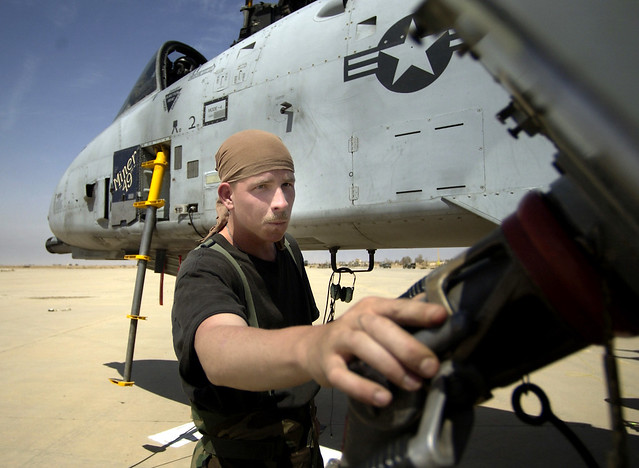
OPERATION IRAQI FREEDOM -- Staff Sgt. Jason M. Smith, a fuels troop with the 392nd Air Expeditionary Wing, refuels an A-10 Thunderbolt II April 3 at a forward deployed location in southern Iraq. (U.S. Air Force photo by Staff Sgt. Shane A. Cuomo)


Update July 10, 2011:

I got feedback from Joe "Dice-man" Hodges and Warthog News contributor Brian Walter, both from the United States, who identified this aircraft as A-10 81-0949. In 2003 it belonged to the 103rd Fighter Squadron, 111th Fighter Wing (Pennsylvania ANG).


This photo was taken on March 5, 2009. (Photo by Brian Walter) Full size

The following well-known official USAF picture was taken at Ahmed Al Jaber AB, Kuwait, at the beginning of Operation Iraqi Freedom:


OPERATION IRAQI FREEDOM -- Maintenance troops work on an A-10 Thunderbolt II on March 23 at a forward-deployed Operation Iraqi Freedom location. The tank-killing A-10 is affectionately known as the Warthog. (U.S. Air Force photo by Senior Airman JoAnn S. Makinano)

Local Boy becomes June Pilot for a Day

by Airman 1st Class Jerilyn Quintanilla
355th Fighter Wing Public Affairs

7/6/2011 - DAVIS-MONTHAN AIR FORCE BASE, Ariz. -- Seven-year-old Michael Castillo toured the base June 24, as a participant in the Pilot for a Day Program.

The purpose of the program is to give local children with illnesses an enjoyable day completely devoted to them and their interest in aviation.

Accompanying Michael were his grandparents, Gilbert and Maria Castillo, and cousins Angel, 12, and Lanysa, 9.

Michael's day began by meeting his host pilot, Capt. Aaron "Scar" Celusta, an A-10 pilot assigned to the 357th Fighter Squadron, at the visitors' center. Captain Celusta escorted Michael and his family to the 357th FS where he presented Michael with his very own flight suit, complete with a personalized name tag and squadron patches.

Once suited up, Michael and his family listened to a pilot briefing, toured the squadron and checked out life support gear.

After finishing up at the 357th FS, Captain Celusta took Michael and his family on a tour of the base fire department, where he rode in a fire truck and saw the fire hose in action.

From there, Michael and his family took a trip to the flightline where he saw an A-10 static display. Michael then went from one static display to another, this time to see the HC-130 where they made their way to the cockpit.

Following his tours of the statics Michael got the inside scoop at the 48th Rescue Squadron. Home to the Pararescuemen, Michael toured the squadron getting a rare glimpse of the different tools the PJ's use to complete their mission of combat search and rescue, ranging from diving gear, the Jaws of Life, a boat, and a parachute.

Their next stop was back to the squadron for lunch, during which Captain Celusta presented a few gifts to Michael. He received a 357th FS t-shirt, and a few photos of the A-10 signed by the pilots. The group then headed to the 355th Operations Group, where they got to experience an A-10 simulator, a system that replicates flying the aircraft over a virtual map as realistically as possible.

After the simulator, they headed off to the air traffic control tower where the group got a bird's eye view of the entire base and flight line. The air traffic controllers also presented Michael with an occupational badge and certificate making him an honorary air traffic controller.

The last stop of the day was to the 355th Security Forces Squadron military working dog unit where Staff Sgt. Michael Ruiz, his military working dog Emor and Staff Sgt. Aaron Escalante put on a demonstration for Michael and his family.

The Pilot for a Day Program originated at Randolph Air Force Base, Texas, in 1994 and has since been implemented at several other Air Force bases. Davis-Monthan hosted its first program participant in August 2000.


DAVIS-MONTHAN AIR FORCE BASE, Ariz. -Capt. Aaron Celusta, a pilot assigned to the 357th Fighter Squadron, explains the different functions of his helmet to Pilot for a Day participant Michael Castillo at the 355th Operations Group here June 24. (U.S. Air Force photo by Airman Jerilyn Quintanilla) Hi-res


DAVIS-MONTHAN AIR FORCE BASE, Ariz. -Capt. Aaron Celusta, a pilot assigned to the 357th Fighter Squadron, presents Pilot for a Day participant, Michael Castillo, with a squadron t-shirt here June 24. As part of his tour, Michael and his family got to see parts of the base to include the 357th Fighter Squadron, the air traffic control tower, the D-M Fire Department and several aircraft static displays. (U.S. Air Force photo by Airman Jerilyn Quintanilla) Hi-res

Source
Friday, July 8, 2011

A-10 West Demonstration Team performs in Idaho


The A-10 West Demonstration Team from Tucson, Arizona performs in the Celebration of Flight air show at the Caldwell Industrial Airport in Caldwell, Idaho on June 25. (U.S. Air Force photo by Tech. Sgt. Becky Vanshur)

Thursday, July 7, 2011

From the archives: The OIF story of "Killer Chick"

At first, just the known pictures:


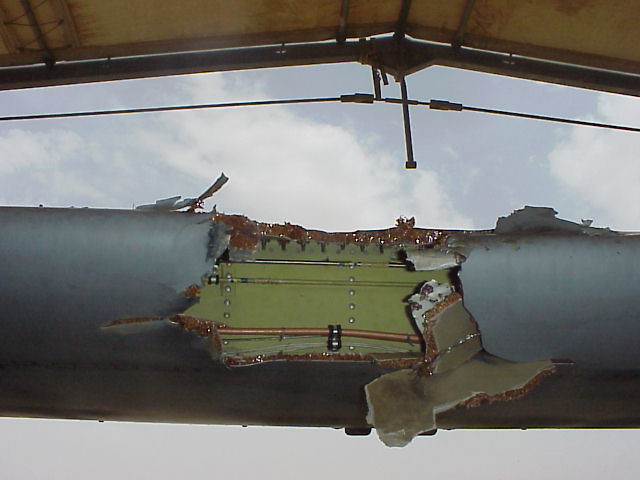
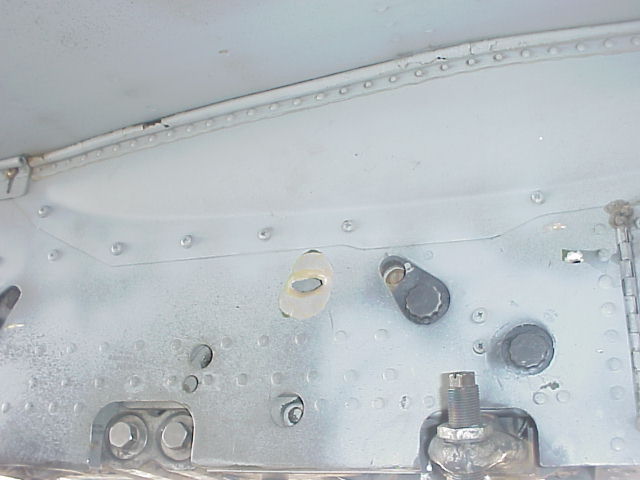
Right horizontal stabilizer and aft fuselage.


Right horizontal stabilizer.


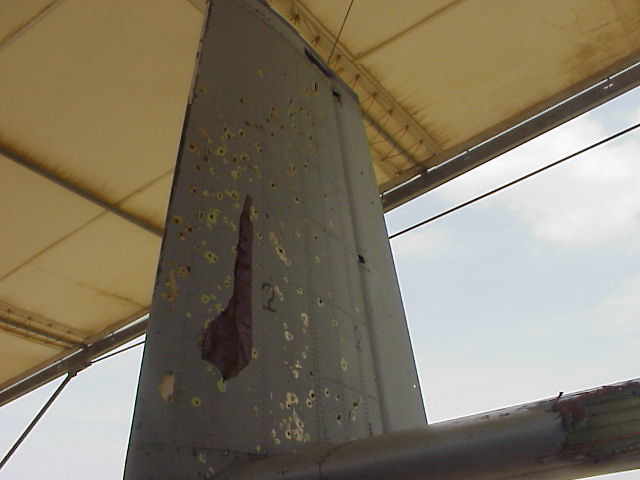
Right vertical stabilizer.


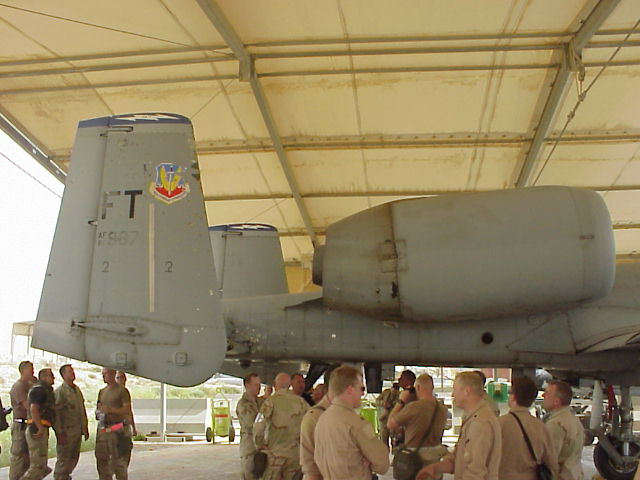
Rear view of both right horizontal and vertical stabilizers.


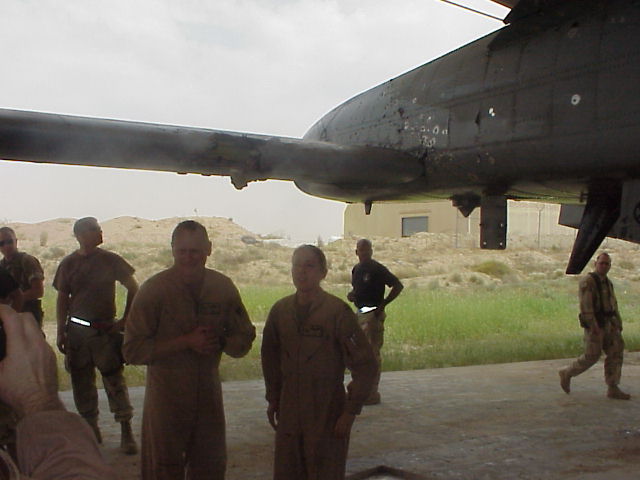
Right wing. Note the other A-10s on the flightline.


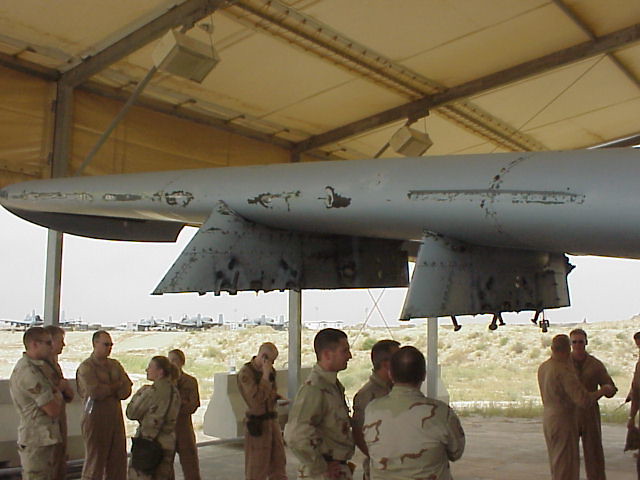
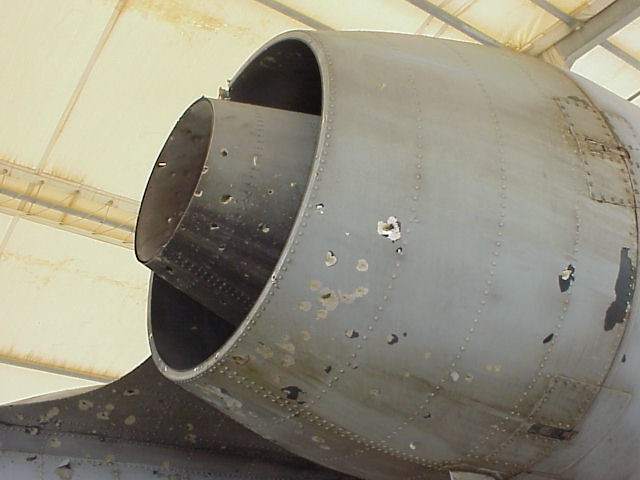
Right engine nacelle.


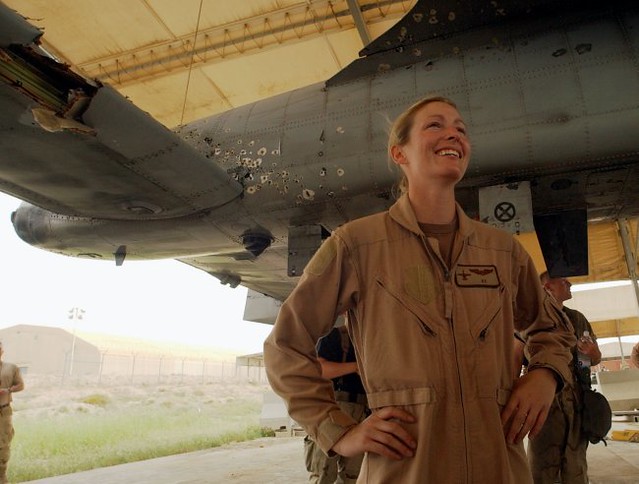
She's happy...

Please tell me: Who took these important pictures at Ahmed Al Jaber AB, Kuwait, published on Aircraft Resource Center? I need the photographer's full ID for photo credits, and I would like to get related hi-res versions.
Other related pictures:


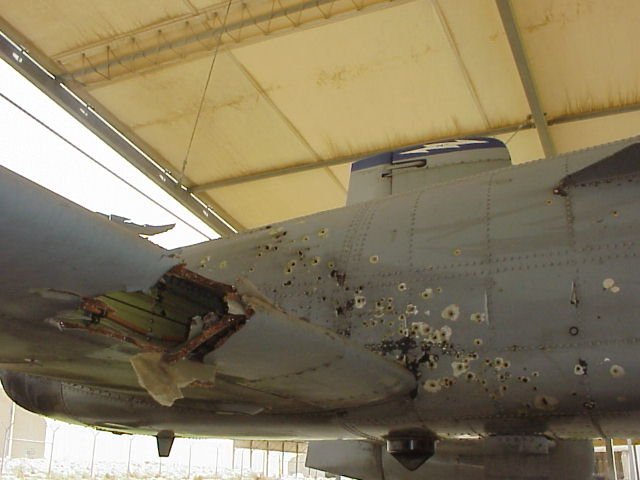
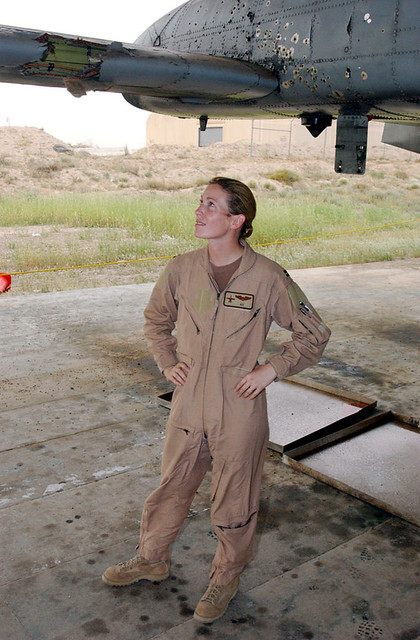
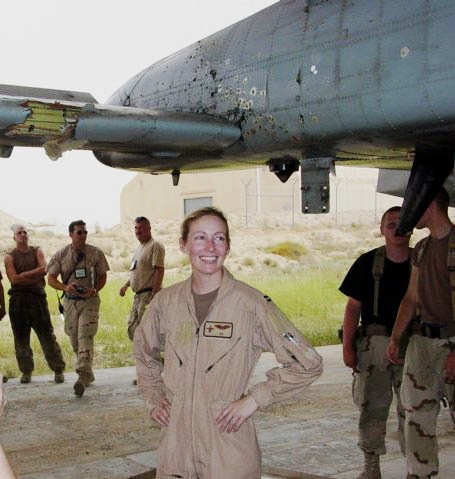
Warthog out of battle. OPERATION IRAQI FREEDOM -- Capt. Kim, an A-10 Thunderbolt II pilot deployed with the 332nd Air Expeditionary Wing, surveys the battle damage to her airplane. Kim's A-10 was hit over Baghdad during a close air support mission on April 7. (Courtesy photo)


Recovery at Ahmed Al Jaber AB:


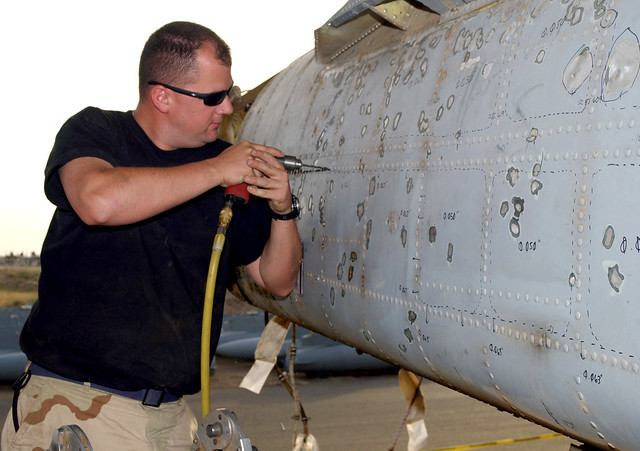
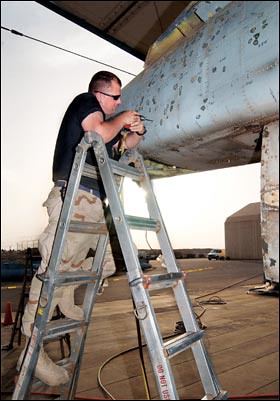
OPERATION IRAQI FREEDOM -- Tech. Sgt. Mike Emmendorfer drills out rivets while repairing battle damage on an A-10 Thunderbolt II that was shot by enemy fire over Iraq. Emmendorfer is a depot aircraft structural maintenance craftsman with the 649th Combat Logistics Support Squadron from Hill Air Force Base, Utah. He is deployed to a desert base in Southwest Asia. (U.S. Air Force photo by Master Sgt. Stefan Alford) Hi-res


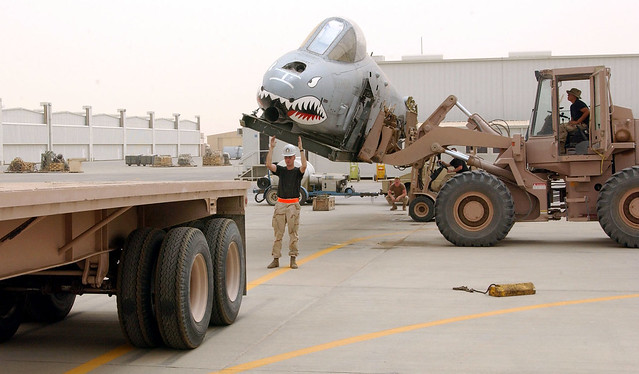
OPERATION IRAQI FREEDOM -- Tech. Sgt. Jeff McElhoe guides the crane operator to place an A-10 fuselage in position so the shipping cradle can be moved underneath. The aircraft received severe battle damage during a combat mission over Iraq in April and will be shipped back to the United States for repair. (U.S. Air Force photo by Tech. Sgt. Dave Buttner)


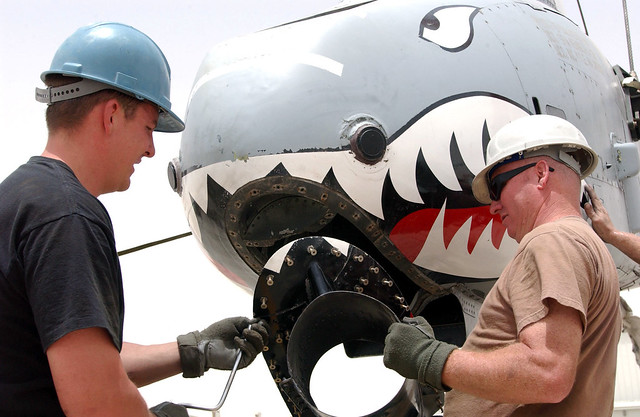
OPERATION IRAQI FREEDOM -- Staff Sgt. Scott Long and Tech. Sgt. Jeff McElhoe remove the gun faring from the nose of an A-10 to prevent damage while it is loaded on its shipping cradle. The aircraft received severe battle damage during a combat mission over Iraq in April and will be shipped back to the United States for repair. Scott and McElhoe are part of an aircraft battle damage repair team from the 469th CLSS, Hill Air Force Base, Utah who specialize in battle and crash damage repair on A-10 aircraft. (U.S. Air Force photo by Tech. Sgt. Dave Buttner)


OPERATION IRAQI FREEDOM -- Master Sgt. Mark Kellie guides in a flatbed truck in preparation for loading an A-10 fuselage. The aircraft received severe battle damage during a combat mission over Iraq in April and will be shipped back to the United States for repair. (U.S. Air Force photo by Tech. Sgt. Dave Buttner)


From Airman Magazine, May 2004:


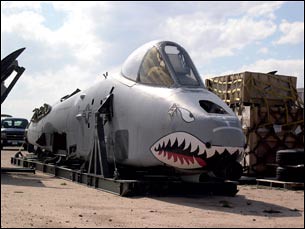
Tech. Sgt. Michael Emmendorfen patches the holes of A-10 aircraft 81-987 days after it was riddled with antiaircraft fire over Baghdad. The Hill repair team couldn't save the jet, so it was dismantled and shipped to Davis-Monthan.


An A-10 that was severely wounded over the skies of Baghdad during the height of Operation Iraqi Freedom. The A-10's existence lies in the balance at the Aerospace Maintenance and Regeneration Center at Davis-Monthan Air Force Base, Arizona. (U.S. Air Force photo by Terry Vanden-Heuvel)


Members of an aircraft battle damage repair team fine-tune their skills on the rear fuselage of a decommissioned Warthog at Hill. To make the training realistic, explosive ordnance teams use C-4 explosives to blow holes in the aircraft to simulate antiaircraft artillery damage.


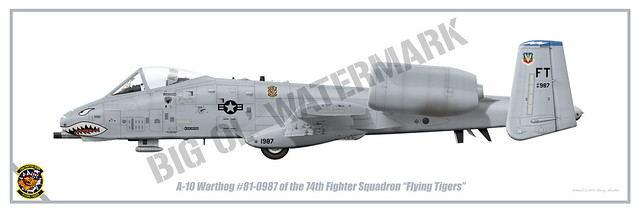
Drawing of A-10 81-0987:


Artwork by Warthog News contributor Barry Munden from the United States.