Saturday, November 13, 2010

355th Fighter Wing A-10s caught at D-M October 14, 2010

At Davis-Monthan AFB, Arizona, Warthog News contributor James O'Rear from the United States had the opportunity to take the following shots:


A-10C 81-0952 from the 357th Fighter Squadron in brand new 357th FS/CC colors. (Photo by James O'Rear) Full size


A-10C 80-0155 sporting a SNIPER pod on station 2. (Photo by James O'Rear) Full size

355th Fighter Wing A-10s cought at D-M November 8, 2010

At Davis-Monthan AFB, Arizona, Warthog News contributor Ned Harris from the United States had the opportunity to take the following shots:


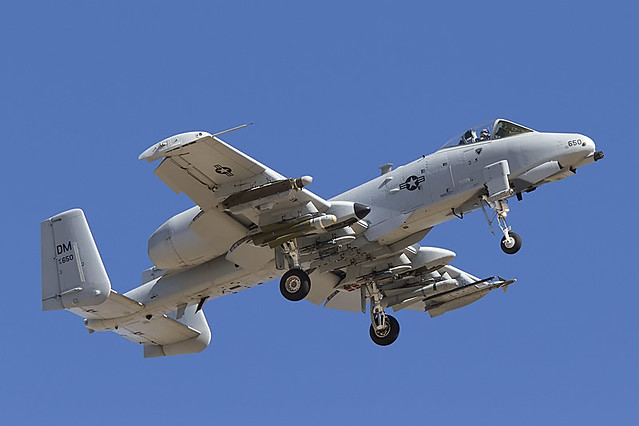
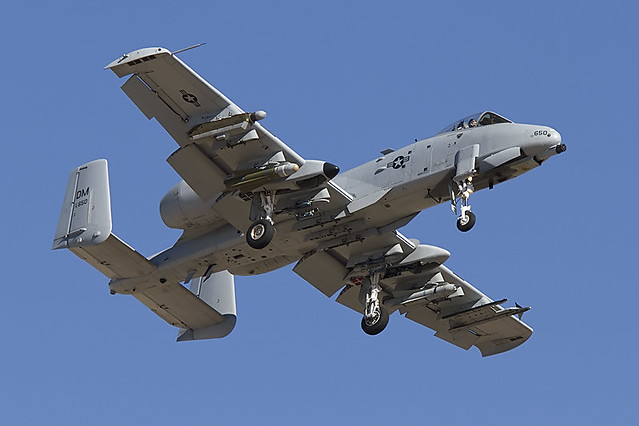
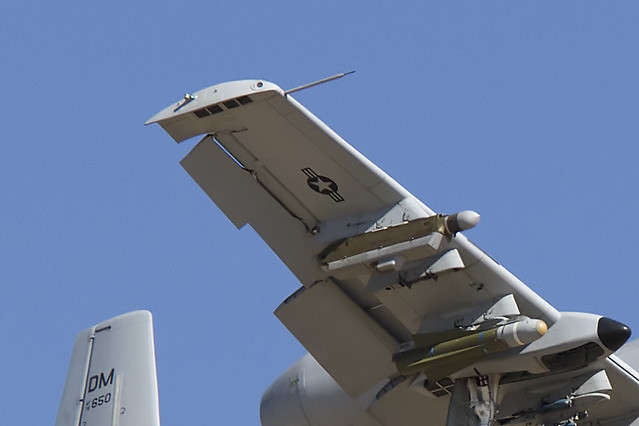
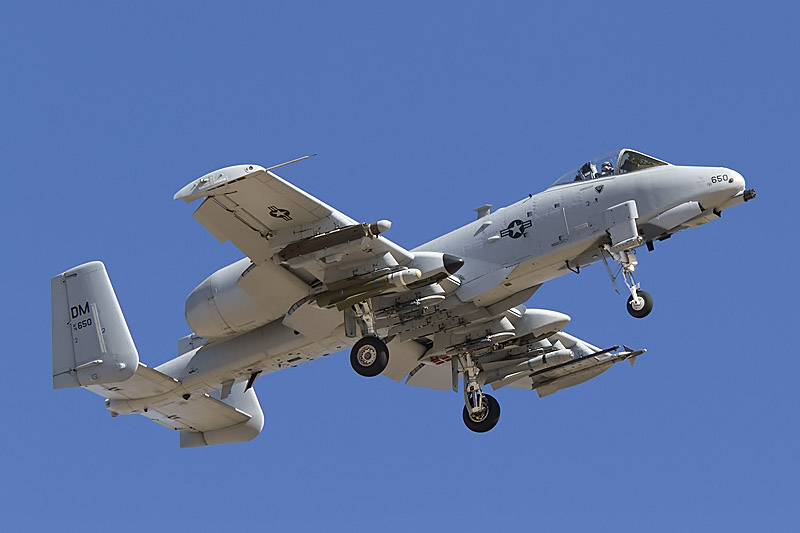
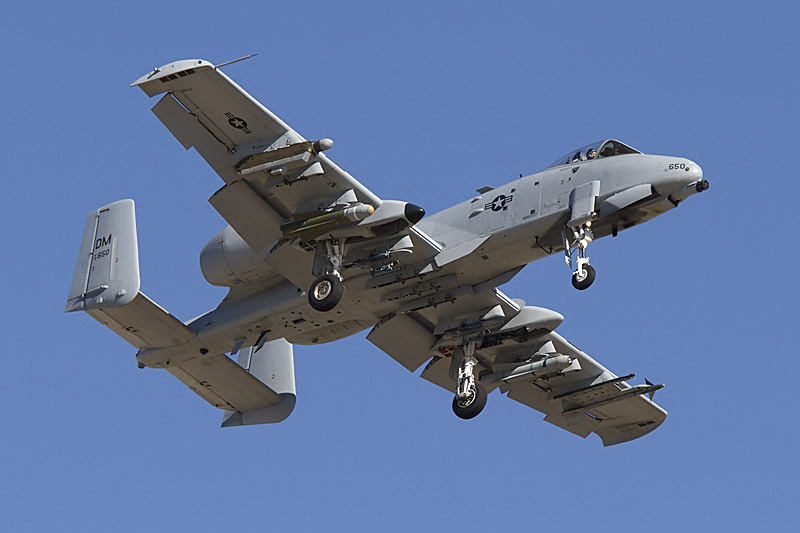
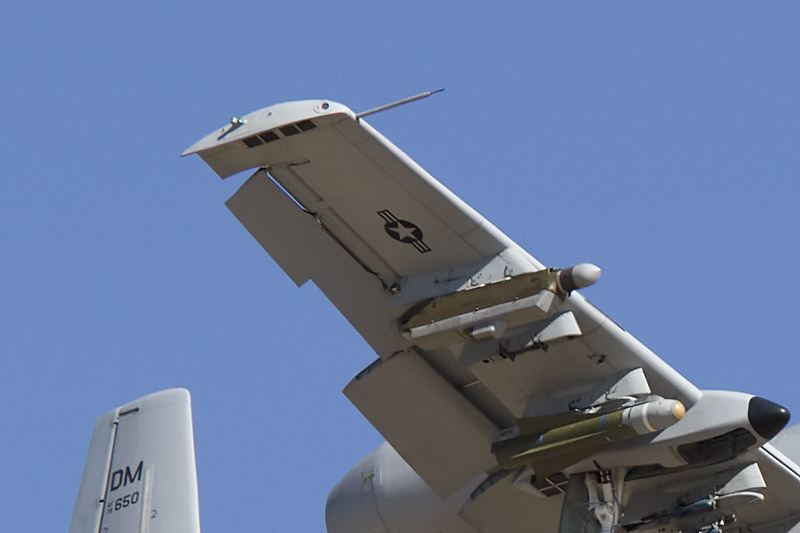
A-10 78-0650 with AN/ALQ-131 ECM pod. Note: this is the first time I've seen this ECM pod painted any color but gray. (Photo by Ned Harris) Full size


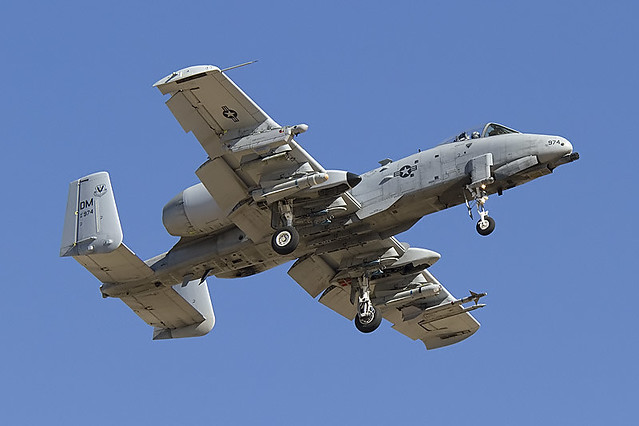
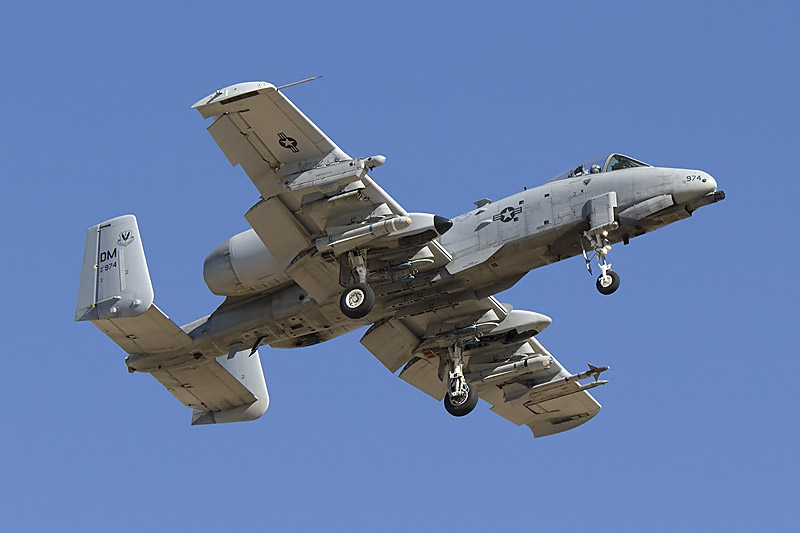
A-10 81-0974 with AN/ALQ-131 ECM pod. (Photo by Ned Harris) Full size


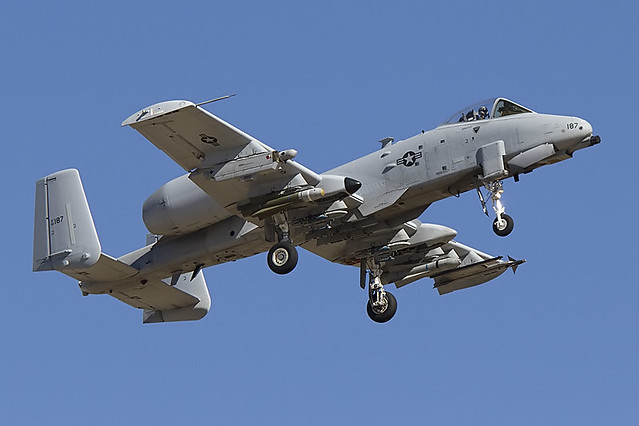
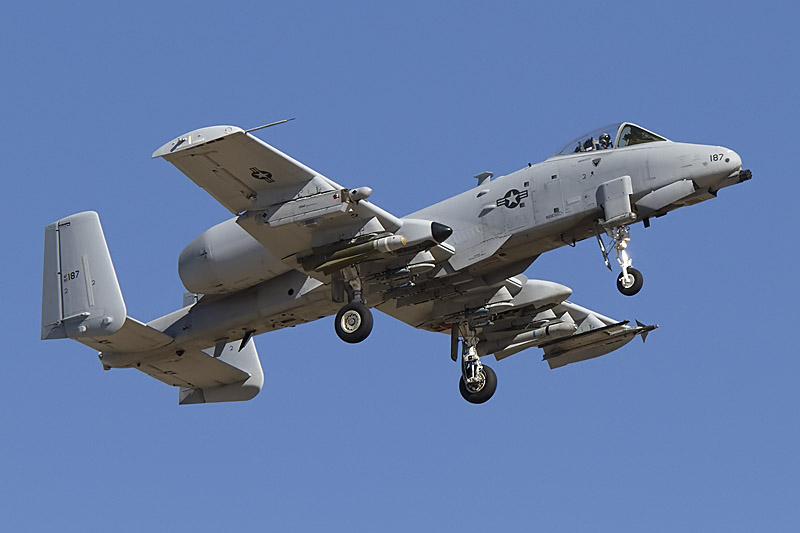
A-10 80-0187 with ECM pod + BDU-33 bombs. (Photo by Ned Harris) Full size


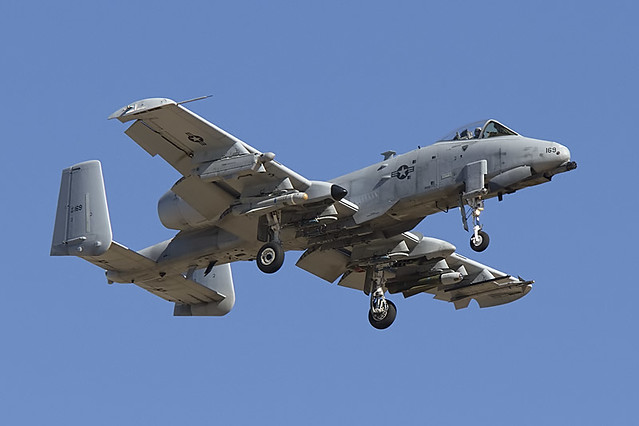
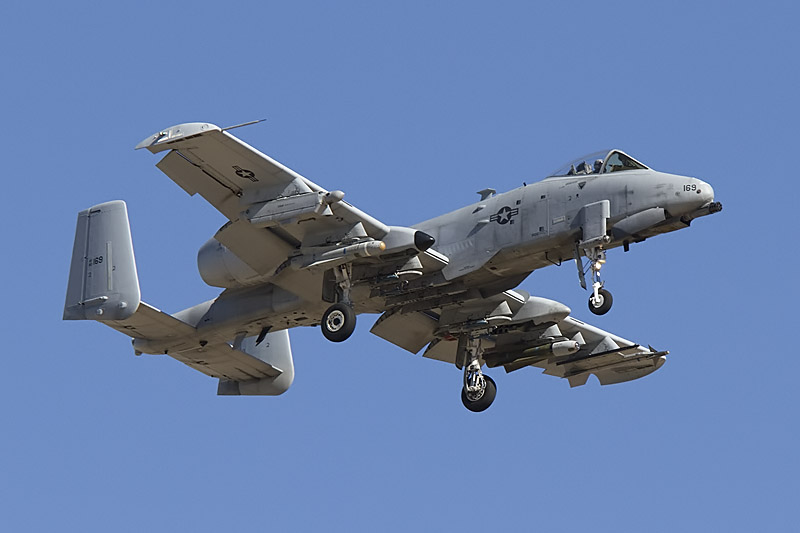
A-10 80-0169 with ECM pod. (Photo by Ned Harris) Full size


A-10 78-0650 with AN/ALQ-131 ECM pod. (Photo by Ned Harris) Full size


A-10 with AN/ALQ-131 ECM pod. This was the first day I have seen this pod painted any color other than gray. (Photo by Ned Harris) Full size


A-10 81-0974 with AN/ALQ-131 ECM pod. (Photo by Ned Harris) Full size


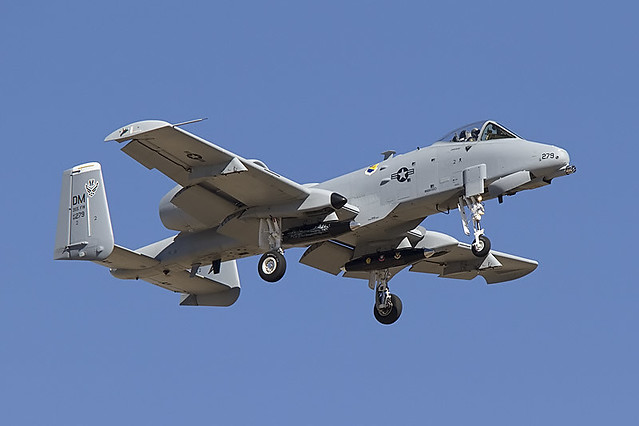
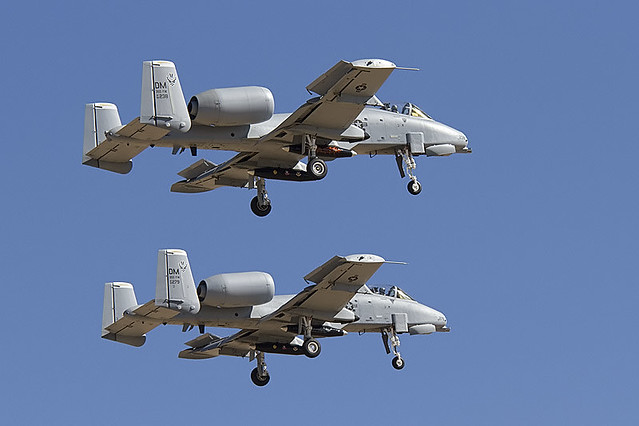
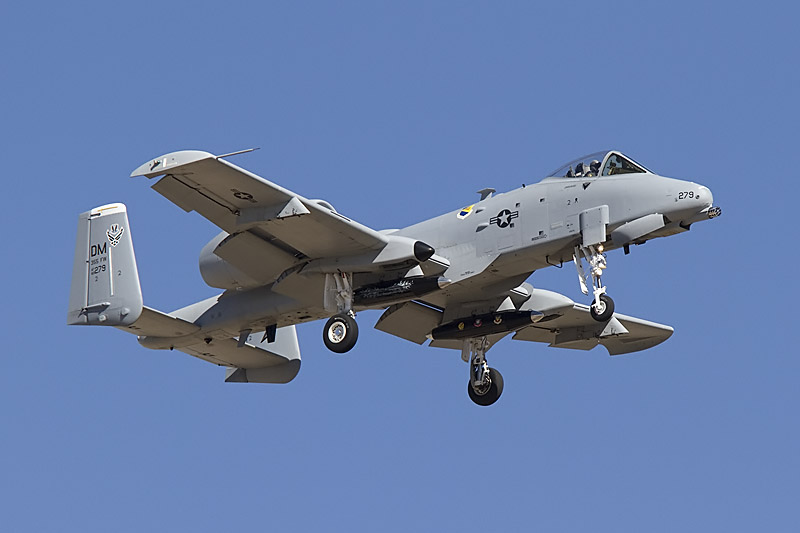
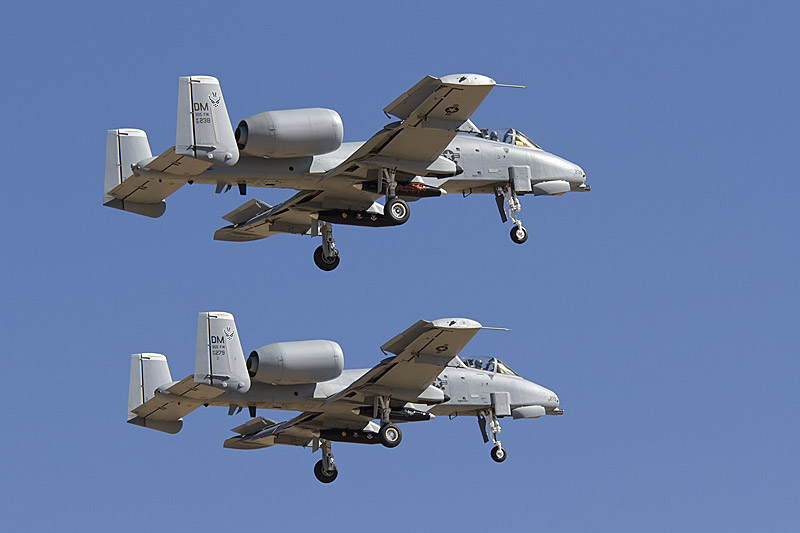
A-10 80-0279 A-10 West coast demo plane with travel pods. Returning to Davis-Monthan AFB. (Photo by Ned Harris) Full size


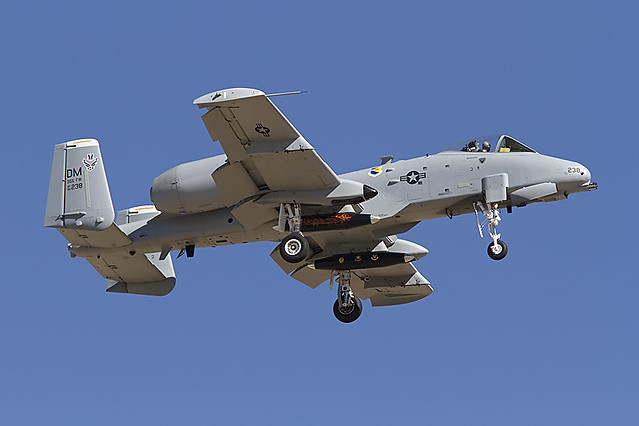
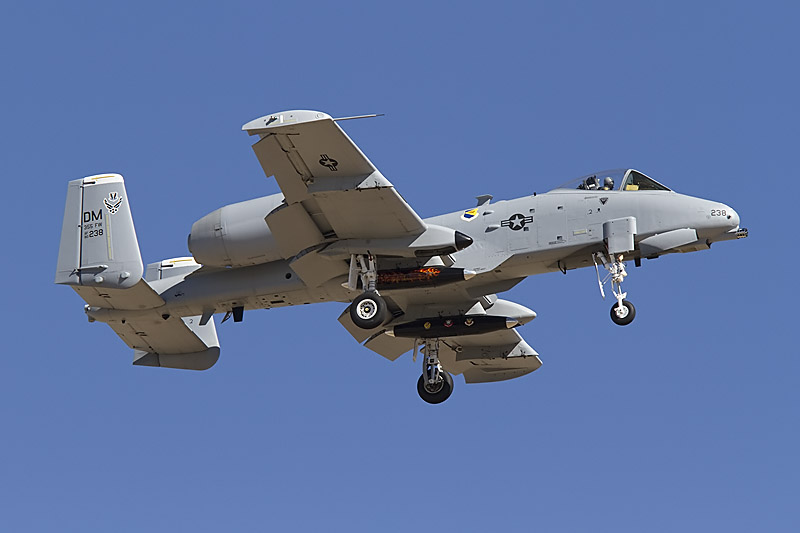
A-10 80-0238 A-10 west coast demo plane with travel pods. (Photo by Ned Harris) Full size


A-10 West Coast Demo Team. (Photo by Ned Harris) Full size


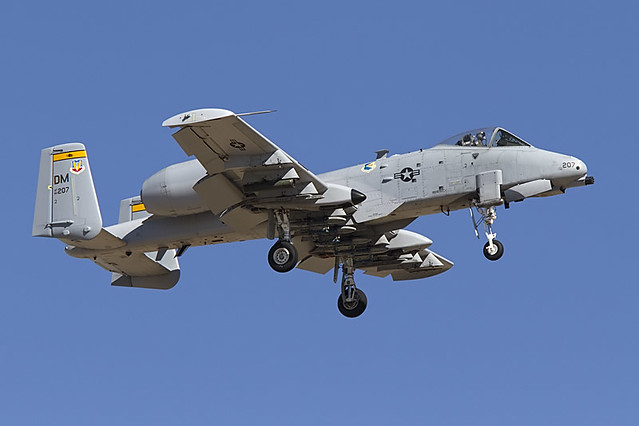
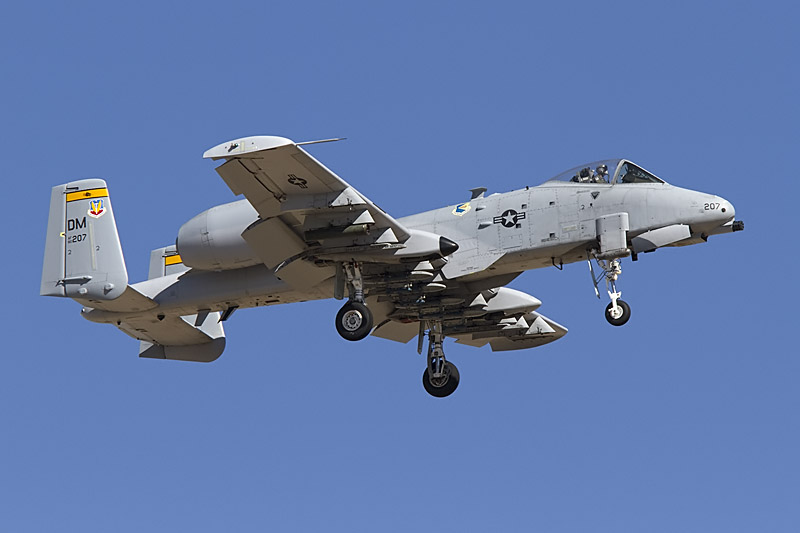
A-10 80-0207. (Photo by Ned Harris) Full size

Please note: Additional info will be uploaded soon.

422nd TES A-10C caught at Nellis November 10, 2010

At Nellis AFB, Nevada, Warthog News contributor Bruce Smith from the United States had the opportunity to take the following shot:


A-10C 79-0169 from the 422nd Test and Evaluation Squadron. (Photo by Bruce Smith) Full size

Friday, November 12, 2010

US, French pilots swap, bump elbows on first deployment


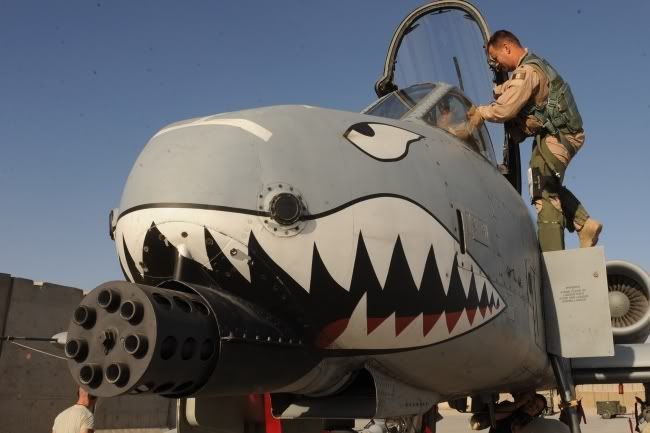
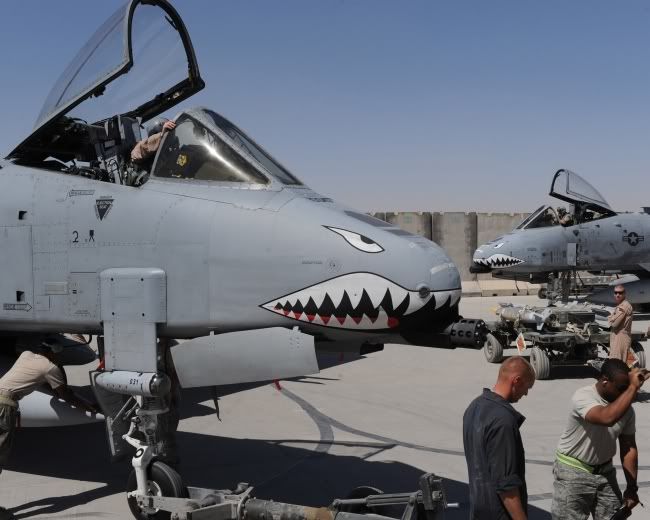
French Air Force Maj. Yann Malard exits an A-10C Thunderbolt II after a mission Nov. 10, 2010, at Kandahar Airfield, Afghanistan. Major Malard, from Nancy, France, is an assistant duty officer with the 75th Expeditionary Fighter Squadron. He is deployed with the American unit as part of the three-year foreign exchange pilot program. (U.S. Air Force photo by Tech. Sgt. Chad Chisholm) Hi-res

by Senior Airman Melissa B. White
451st Air Expeditionary Wing Public Affairs

11/12/2010 - KANDAHAR AIRFIELD, Afghanistan -- A U.S. Air Force pilot traded spaces with a French Air Force pilot who moved into a different American flying squadron, but now both are serving simultaneously at Kandahar Airfield, Afghanistan, on their first deployments with the new units.

"I never thought we'd be here at the same time, especially on our first deployments," said U.S. Air Force Maj. Skyler Hester, an instructor pilot currently assigned to the French 1/3 Fighter Squadron. "We're doing great things out here, supporting the ongoing missions, and I'm hearing that they've absorbed him pretty well in his new squadron."

Major Hester, originally an F-16 Fighting Falcon pilot, is now operating the French Air Force's Mirage 2000D aircraft. He took the place of Maj. Yann Malard, who is now with the 75th Expeditionary Fighter Squadron currently deployed from Moody, Air Force Base, Ga., flying the A-10C Thunderbolt II. Both made the swap under the foreign exchange pilot program.

"We do this so we can learn how our partner nations execute the mission with the similarities and differences we have," said Major Hester. "We fight the same war, we do it in the same places and we just absorb and learn how they operate and overcome challenges; it formulates bonds between the countries."

Both pilots arrived into Afghanistan within two weeks of each other. Major Malard arrived at the end of September and Major Hester arrived in October. However, there is a major difference between the two assignments: Major Malard is here with his unit for six months, whereas Major Hester's unit is here for two months, and he said both have their advantages and disadvantages.

"It's nice being out here for only two months, but these guys come out here more frequently than the American units," said Major Hester, who hails from Kalaheo, Hawaii. "However, with the longer deployments you get more familiarization with the mission and area and more of an experience, but it adds to the cost our families pay."

Major Hester is flying the Mirage 2000D, the French's conventional air-to-ground, close-air support aircraft. It is a two-seater aircraft which Major Hester described as being "incredibly similar to the F-16 in its basic systems."

Major Malard is flying the A-10, which is known for its maneuverability at low speeds and low altitudes to provide close-air support for troops in contact.

"The A-10 is a fantastic aircraft," said Major Malard, who hails from Nancy, France. "It's a lot slower than the Mirage, but the good thing is that you're able to work lower and feel closer to the guys on the ground. It's really important for us to have that connection with the ground forces."

This deployment, however, isn't their first run-in with each other. When Major Hester first arrived at his assignment in France, Major Malard was still there.

"Before he left, we ran a mission together but in separate aircraft and we fought basic fighter movements against each other," said Major Hester, who hasn't seen the pilot much since then. "He seems like he'd be a great A-10 guy and I heard that he absorbed into the squadron very well."

Already a good portion into their three-year exchange program, the pilots have developed relationships and learned more about the new cultures that constantly surround them.

"I like working with the Americans and sharing their culture," said Major Malard. "9/11 had a huge impact in France too, and we have been close to the U.S. Us working together like this is proof that two countries can be so close together. I also appreciate the way the squadron and their wives have accepted and helped me and my family."

With the constant demand for close-air support throughout Afghanistan, there's no telling when and if these two pass each other in the sky again.

"It's an amazing feeling to be supporting our ground troops," said Major Malard. "It's the same way I felt when I was flying the Mirage ... and the French, Italian, German or anyone else probably feel the same way. I'm glad to be there to help when the ground forces need it the most."


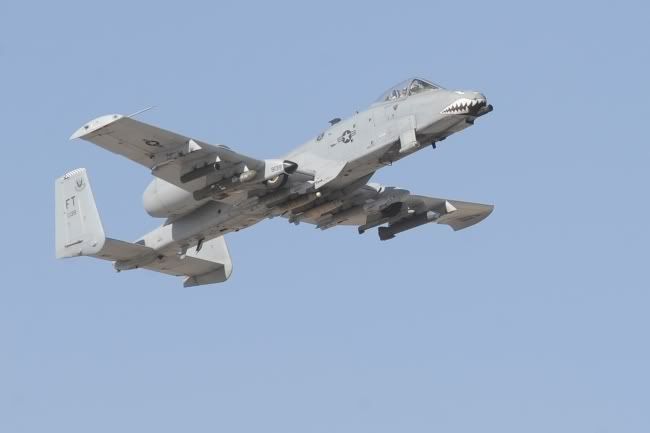
French Air Force Maj. Yann Malard takes off in an A-10C Thunderbolt II, Nov. 10, 2010, at Kandahar Airfield, Afghanistan. Major Malard, from Nancy, France, is an assistant duty officer with the 75th Expeditionary Fighter Squadron. Major Malard is deployed with the American unit as part of the three-year foreign exchange pilot program. (U.S. Air Force photo by Tech. Sgt. Chad Chisholm) Hi-res

Note: Pictured is A-10C 79-0139 from the 75th Fighter Squadron. Sniper XR targeting pod on station 2.

Source

A-10 maintainers shine light on dark mission


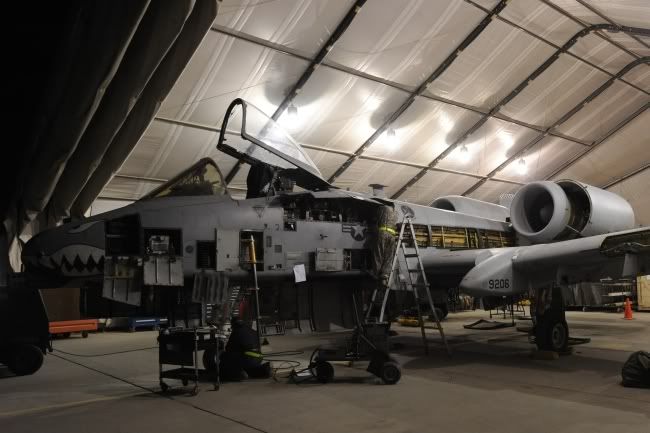
Airmen of the 451st Expeditionary Maintenance Squadron A-10 Aircraft Maintenance Unit perform a phase inspection on an A-10C Thunderbolt II, Nov. 10, 2010, at Kandahar Airfield, Afghanistan. A phase inspection is an extensive process of servicing the airframe integrity, hydraulic system and wiring systems to make sure they are compliant with standards. (U.S. Air Force photo by Tech. Sgt. Chad Chisholm) Hi-res

Note: Pictured is A-10C 79-0206.

by Senior Airman Melissa B. White
451st Air Expeditionary Wing Public Affairs

11/12/2010 - KANDAHAR AIRFIELD, Afghanistan -- Half a world away, most people at Kandahar Airfield, Afghanistan, aren't awake at the same time their American friends and family members are going about their days, but that's not the case for some Airmen supporting the 24/7 missions of Operation Enduring Freedom.

At midnight, the tarmac is a significantly quieter place, but it's still bustling with activity as maintainers tend to their A-10C Thunderbolt II aircraft on the parking ramp to ensure they are always "attack ready."

"I like working at night because it's quiet, not as bright and a lot cooler," said Senior Airman Jefferson Jeanniton, 451st Expeditionary Aircraft Maintenance Squadron A-10 Aircraft Maintenance Unit aerospace propulsion journeyman. "I don't mind seeing the stars either. I look up, and it's just straight sky; we don't get that too much back home because there are a lot more clouds ... I think I've only seen clouds once since I've been here."

Moving into the winter season with nighttime temperatures dropping down to the 40s, these Airmen -- some already wearing their watch hats -- don't seem too worried about the dropping temperatures which have been recorded as low as five degrees Fahrenheit.

"It's fine with me ... it just means I'll have to wear more clothes," laughed Airman Jeanniton, who hails from Deltona, Fla. "I like being outdoors, and it's relaxing out here at night."

Working at night may present some challenges, though, as not everything is quite obvious or easily seen by the naked eye as compared to working during daylight hours.

"Light is a definite issue," said Airman Jeanniton. "When I open up the panels to work on the jet, it's really dark inside, so it's hard to see. We rely on flashlights and head lamps a lot."

The Airmen must also remain very aware of their surroundings at night when they're directing the jets to different sections of the flightline. To meet demands of the war, the swelling A-10 mission has physically left them with little room to breathe.

"We've taken our safety observations to a whole new level and we just had an inspection team come through here this week and they said our guys are doing a great job to keep up with the mission," said Chief Master Sgt. Jeffrey Leonard, 451st EAMXS A-10 AMU superintendent. "In an austere, combat environment like we're in, it's hard to do work like this, but they're staying motivated and, in the end, it's all about saving lives," he said referring to the A-10 support of the ground fights across America.

With more than 150 Airmen spanning across 13 different career fields, the Airmen in this AMU are kept busy supporting the around-the-clock operations by performing crew chief duties, weapons maintenance, electronics, avionics, and plans and scheduling to name a few.

"I feel like I'm really contributing to the war effort," said Senior Airman Thomas Wilson, 451st EAMXS A-10 AMU crew chief. "There are a lot of jobs to do, so we're always out here doing something."

The maintenance Airmen make sure the A-10s of the 75th Expeditionary Fighter Squadron are always mission ready. They have provided support for nearly 1,000 sorties, expending nearly 160 bomb units and more than 63,000 rounds of 30mm ammunition against enemy forces since they arrived here at the end of September.

"It's a war out there, and our guys get pretty stoked when they see the pilots come back with less munitions than they left with because it shows how they're contributing to the war effort," said Chief Leonard, who hails from Lexington, N.C. "A million times over we have people come up to us, no matter whether they're Army or NATO ground forces, and they thank us and tell us how we saved 10 of their buddies --in just one day, just one mission."

The A-10 is known for its maneuverability at low air speeds, enabling pilots to provide close air support for troops in contact. Each aircraft is armed with one 30mm GAU-8/A seven-barrel Gatling gun and can carry up to 16,000 pounds of ordnance.

"My favorite part of the job is getting dirty and the thrill of running engines," said Airman Jeanniton, who is on his second deployment. "I'm thrilled to be part of the mission. The best thing to hear is the gun going off and seeing the pilots come back with less ammo ... it means they were protecting our ground forces and we contributed to that."

Day or night, the members of the 451st EAMXS A-10 AMU are maintaining mission capabilities and keeping the aircraft "attack ready" for when they're called upon to keep coalition forces safe on the ground.

Source

Moody Airmen supply airpower in Afghanistan


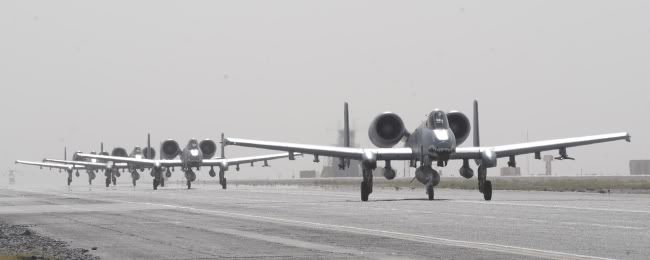
KANDAHAR AIRFIELD, Afghanistan-- A group of A-10C Thunderbolt IIs deployed from the 75th Fighter Squadron, Moody Air Force Base, Ga., line up on arrival Sept.27. In the last few weeks, the 75th Expeditionary Fighter Squadron "Tiger Shark" aircraft have released more than 60,000 rounds of 30 mm ammunition during their many missions. (U.S. Air Force photo by Tech. Sgt. Chad Chisholm) Hi-res

by Capt. Penny Carroll
451st Air Expedtionary Wing Public Affairs

11/12/2010 - KANDAHAR AIRFIELD, Afghanistan -- Since their arrival at Kandahar Airfield at the end of September, members of the 75th Expeditionary Fighter Squadron, deployed here from the 23rd Fighter Group, Moody Air Force Base, Ga., have proven they are integral to the application of airpower in Afghanistan.

Almost 400 Airmen deployed to the southern Afghanistan NATO base from Moody as the A-10 component of the 451st Air Expeditionary Wing, which flies numerous aircraft types supporting a variety of missions throughout the country.

"We in the A-10 community are the best CAS (close air support) players in the world. That is not arrogance, but a statement of fact, and a requirement," said Lt. Col. Derek Oaks, 75th EFS commander, describing the unit's performance in Afghanistan. "The thousands of soldiers tromping through dangerous territory who often call on us to apply lethal force within meters of their position demand that we are the best."

With more than 900 missions flown in the past few weeks, the 75th EFS and its supporting maintenance squadron have kept its planes in the air more than 4,000 hours. The "Tiger Sharks" have released more than 160 weapons in support of combat operations, and over 60,000 rounds of 30 mm ammunition from the plane's Avenger Gatling gun around which the jet is built. The unit maintains an intense 24-hour operations tempo, always ready to support ground troops when needed.

The Tiger Sharks have been to Afghanistan now at least five times, and Colonel Oaks says that in each deployment their goal is to further the efforts of NATO, the U.S., and the Afghan people.

"This time has been no different," he said, "although we have been called on to perform in critical situations quite a bit more than in the past. The aircraft, the pilots and all of the support personnel have performed magnificently. We plan on building on the Tiger Shark legacy that so many before us have entrusted us with."

The 451st AEW provides a persistent and powerful airpower presence in the Afghanistan area of operations, to include tactical airlift, close air support, intelligence, surveillance and reconnaissance, command and control, airborne datalink, combat search and rescue, casualty evacuation and aeromedical evacuation capabilities whenever and wherever needed.


KANDAHAR AIRFIELD, Afghanistan-- With more than 900 missions flown in the past few weeks, the 75th Expeditionary Fighter Squadron and its supporting maintenance squadron have kept its planes in the air more than 4,000 hours. (U.S. Air Force photo by Tech. Sgt. Chad Chisholm) Hi-res

Note: Pictured in the foreground is A-10C 81-0947.

Source

184th Fighter Squadron pilot talks about Afghanistan combat deployment


Andy Vaughan


BizAv Warrior: Andy Vaughan

By David A. Lombardo
Aviation International News
November 10, 2010

Some in the business aviation industry leave behind their families and jobs to serve in active war zones. In the continuing AIN series intended to recognize those in our community who defend the way of life we continue to enjoy back home, senior editor David A. Lombardo spoke with Hawker Beechcraft test and demonstration pilot Andy Vaughan about his recent service in Afghanistan. This is Vaughan's story. If you or someone you know in business aviation is in harm's way on our behalf, we'd like to hear from you.

Andy Vaughan
Captain and A-10 Warthog pilot–Arkansas Air National Guard
AT-6 test and demonstration pilot Hawker Beechcraft

My dad is David Vaughan, v-p of marketing for Jet Aviation Teterboro. Since before I was born he has run FBOs all over the country, first for Butler Aviation then Signature. He has been a major influence in my life," Andy Vaughan, an A-10 Warthog pilot and captain in the Arkansas Air National Guard, told AIN.

"Over the years we've lived in Fort Lauderdale, Newark, Baltimore and Houston, but from 1980 to 1989, until I was about 14, we lived in Louisville. Dad would take me to work with him and there was an Air National Guard unit on the airport. I loved watching those F-4 Phantoms and knew that's what I wanted to do," he said.

Vaughan started flying at age 15 when the family lived in Baltimore. "I went to Purdue University for a business degree, joined the flying club and continued to get my ratings until I graduated in 1998. I then went to Embry-Riddle Daytona for an MBA, graduated in 2000 and went to work for Raytheon as a Beechcraft contract pilot," he said.

After about a year Vaughan joined the Air National Guard, and he went on active duty to attend basic flight training, A-10 school and survival school.

"I chose to join the Guard over active-duty Air Force so I could have more control over my military career and continue working in general aviation. I was on active duty about seven years, got out in 2008 and transferred into the Arkansas Air National Guard because it had recently converted from the F-16 to the A-10."

Vaughan returned to Hawker Beechcraft to fly King Airs and piston products and has since moved up to be a test and demonstration pilot on the new AT-6 Texan II.

"We've partnered with Lockheed Martin to build the aircraft and we've essentially put all the components and software from the A-10 into the AT-6 turboprop and upgraded the engine to a 1,600-shp PT6-68D," he said.

This past spring Vaughan was deployed to Kandahar Air Base, Afghanistan, to provide close air support for U.S. and Nato ground forces. He flew 32 combat sorties in the A-10, for a total of 130 combat hours providing close air support and gathering intelligence, surveillance and reconnaissance data for American and Nato forces in convoys, foot patrols, during IED (improvised explosive device) route-clearing operations and responding to "troops in contact" situations.

Much of that time was spent searching for IEDs by loitering at altitude in a given area looking for a heat signature on the ground that would indicate something had recently been buried.

"An average sortie for me was six to eight hours, which would include air-to-air refueling two or three times. We're just up there watching areas of interest with our targeting pod looking for guys planting IEDs," he said.

"The A-10 is built around a GAU-8 30-mm cannon; we have a lot of firepower, but there are tight rules of engagement. I would watch someone plant an IED but then I had to track him back to his house while waiting for authorization to engage him. If he actually entered his house before I got the OK to engage, we weren't allowed to fire because of the heavy emphasis on not incurring collateral casualties. You can only engage upon approval and then only if he's out in the open.

"Too many times I've watched convoys get hit with an IED in a road only to have the Taliban open fire with machine guns on the rest of the convoy. I provide air support and do my best to keep the hostile fire down and simultaneously provide directions to the medevac, but it can be very frustrating," he said.

Vaughan says Hawker Beech has always been supportive of his career in the Guard. "The company has been completely understanding and accommodating of my military duties. While I was away my coworkers stepped up and filled in for me by picking up my duties and flying extra hours."

He concluded, "Being in the U.S. one day and Afghanistan the next gives you a different perspective of what we have in this country. We live in the greatest country in the world and I hope people appreciate it. Being in the military has shown me just how good we've got it here.

Source

Thursday, November 11, 2010

917th Wing is shaping futures

Released by 917th Wing Public Affairs:


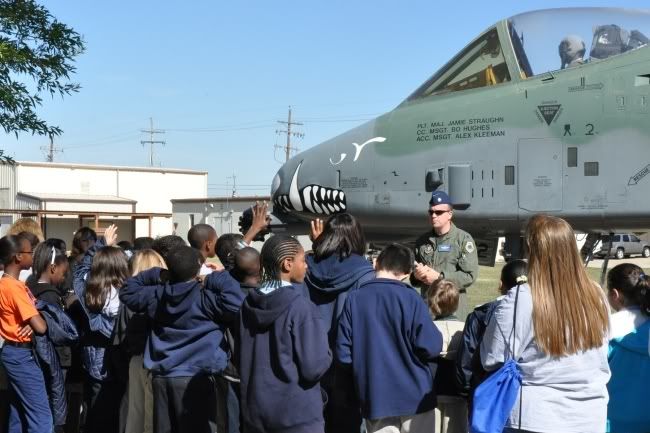
11/10/2010 - Lt. Col. Peter Olson, a Regular Air Force instructor pilot assigned to the 47th Fighter Squadron, fields questions from a group of Meadowview Elementary School 5th Grade students during a briefing about the A-10 Thunderbolt II at Barksdale Air Force Base, La., Nov. 8, 2010. The students are attending STARBASE Louisiana, at Barksdale, one of 60 national STARBASE sites. It is sponsored by the 917th Wing of the Air Force Reserve Command. The program presents an exciting 25-hour hands on/minds on aviation and aerospace curriculum to area 5th grade students and their teachers. The DoD program is committed to addressing the critical needs in STEM education - Science, Technology, Engineering and Mathematics - STARBASE Louisiana introduces its students to exciting STEM education topics, inspiring these young minds to further explore these topics in future course work. Meadowview Elementary is part of the Bossier Parish School System. (U.S. Air Force photo by Tech. Sgt. Jeff Walston) Hi-res

Moody honors its retirees


MOODY AIR FORCE BASE, Ga. -- Airmen from Moody put on a static display as part of a special day hosted for retirees in celebration of Retiree Appreciation Week here Nov. 6. The event is held annually and Moody encourages retirees to participate and get useful information as well as any needed shots or vaccines. (U.S. Air Force photo by Airman 1st Class Joshua Green) Hi-res

Note: The A-10C outside the hangar is the 74th Fighter Squadron's flagship.

by Airman 1st Class Nicholas Benroth
23rd Wing Public Affairs

11/9/2010 - MOODY AIR FORCE BASE, Ga. -- Although most retirees are no longer a part of active duty operations, they are an important of the military's history.

With a theme of 'To remember those that are still serving,' this year's Retiree Appreciation Week was held from Oct. 31 to Nov. 6 and commemorated all that the previous servicemembers have done.

"This theme represents Moody showing the retirees they are not forgotten," said retired Chief Master Sgt. James Ingram, 23rd Wing Retiree Affairs Office director. "We want the retiree community to know that we still thank them for their service. This week of events was for them.

"It's great to see Moody set aside a week to offer as many activities to the retirees as possible," said Mr. Ingram. "It's great to the effort this many people put in to give back to the retirees and show their appreciation."

The week consisted of events ranging from specials at the Commissary, Moody Field Club, Bowling Center, Quiet Pines Golf Course and Skills Development Center, to a golf tournament on Nov. 5, where retirees had the chance to compete for prizes.

The highlight of the week was Nov. 6, when retirees and their spouses came to base for a day of events dedicated to showing what programs are open to retirees and their families.

The day started off at the Freedom I Fitness Center with welcome remarks by Mr. Ingram and the staff of the Retiree Affairs Office. There were also booths attendees could visit, ranging from a disabled veterans group to base agencies advertising what they offer.

Members of the 23rd Aerospace Medicine Squadron also administered flu shots to the retirees.

After the morning events at the fitness center wrapped up, retirees visited different sites around base, including the Heritage Park, and static displays of Moody's aircraft past and present.

"We are thankful to the service these retirees provided in the past. It's also great they got a chance to see the Heritage Park," said Col. Gary Henderson, 23rd WG commander.

"The park will provide future Airmen the opportunity to learn about the history of the 23rd WG. These retirees are an important part of that history."

Moody is scheduled to hold the next Retiree Appreciation Week from Oct. 30 to Nov. 5, 2011.

Monday, November 8, 2010

Arkansas community shows support for veterans

Released today by 917th Wing Public Affairs:


11/8/2010 - Families of the Fouke, Ark community observe two 917th Wing A-10 Thunderbolt II as they flyover the Fouke, Ark. Veterans Park Dedication, Nov. 6, 2010. The park was dedicated after several years of fundraising and hard work put in by the local community. The city raised approximately $120,000 for the park that will honor past, present and future veterans. (U.S. Air Force photo by MSgt Greg Steele) Hi res

Source