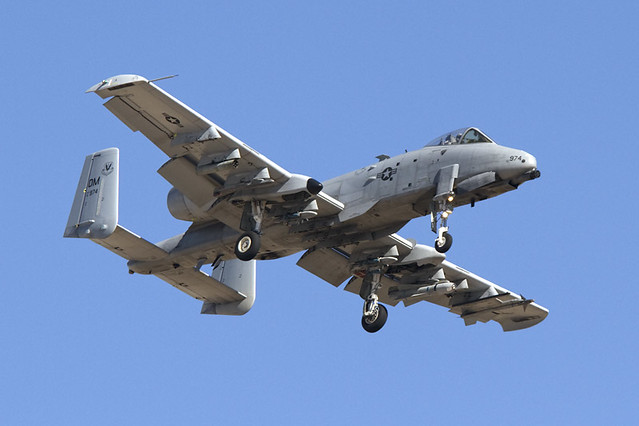
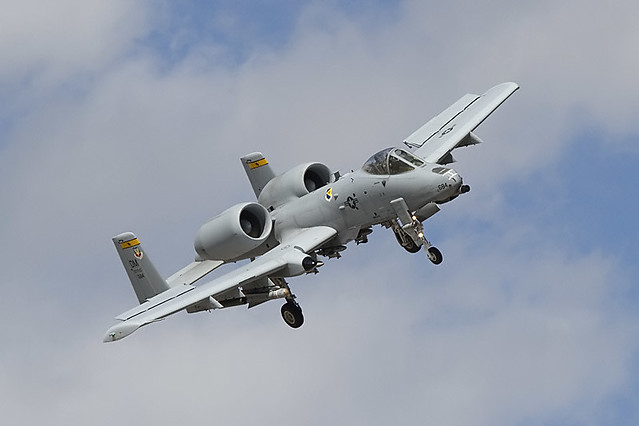
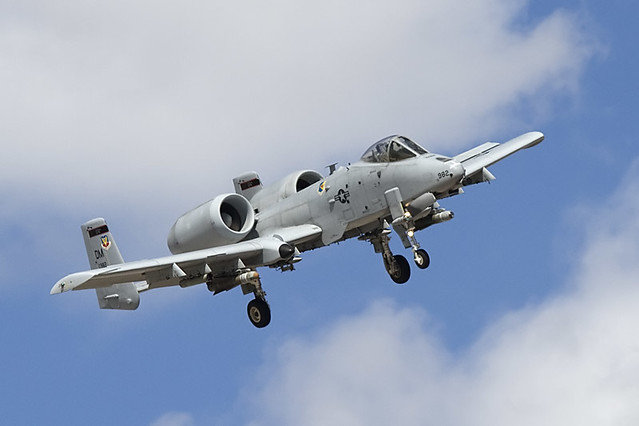
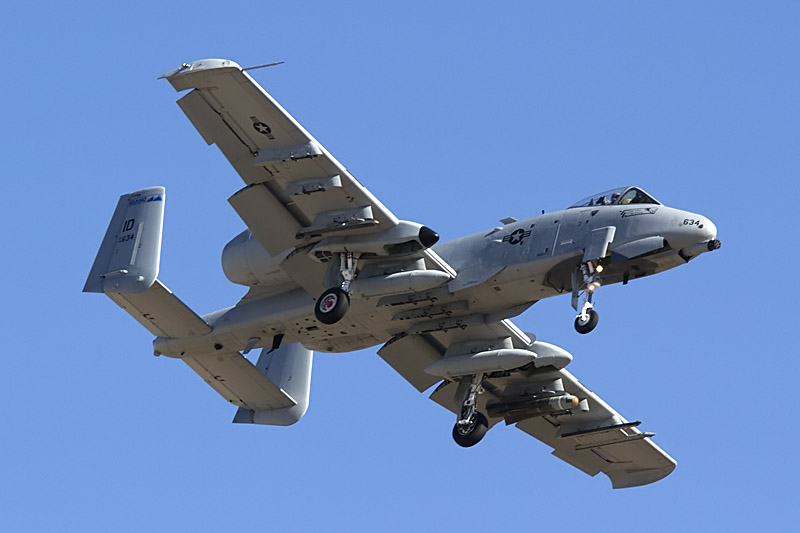
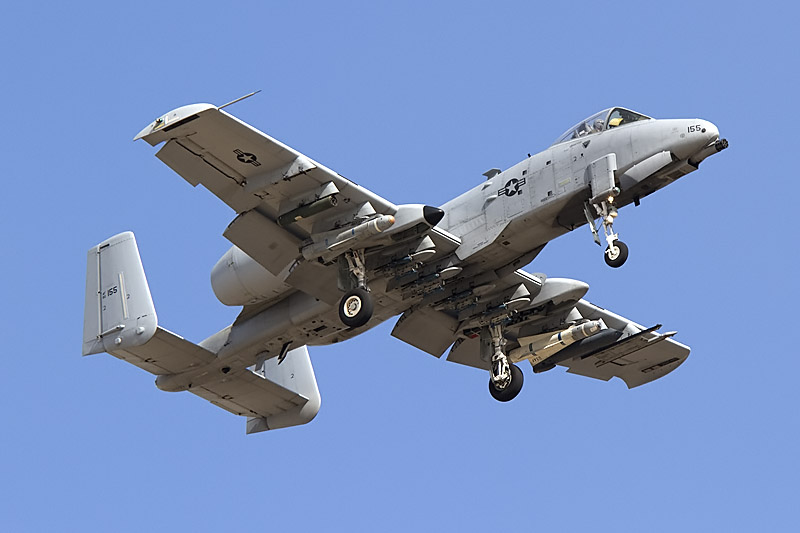
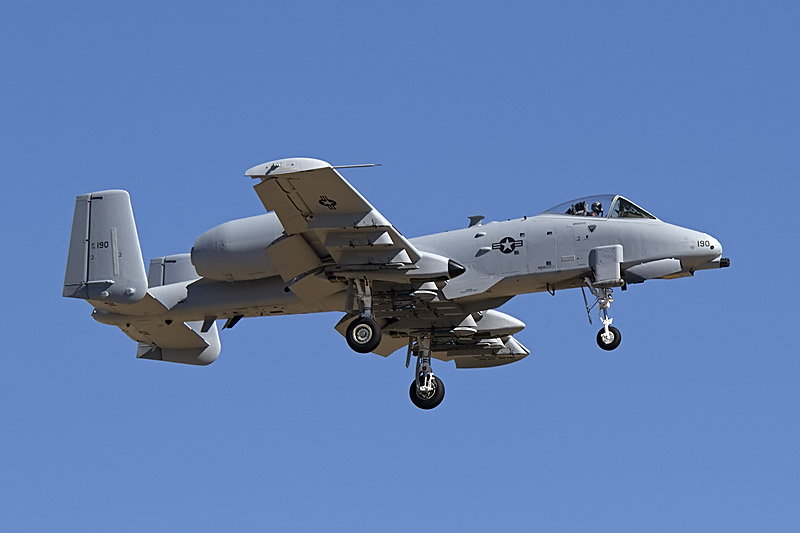
A-10C 78-0634 from the 190th Fighter Squadron, 124th Wing (Idaho ANG). (Photo by Ned Harris) Full size
Friday, November 5, 2010
190th Fighter Squadron A-10C caught at D-M October 28, 2010
At Davis-Monthan AFB, Warthog News contributor Ned Harris from the United States had the opportunity to take the following shot:

A-10C 78-0634 from the 190th Fighter Squadron, 124th Wing (Idaho ANG). (Photo by Ned Harris) Full size
355th Fighter Wing A-10s caught at D-M October 28, 2010
At Davis-Monthan AFB, Arizona, Warthog News contributor Ned Harris from the United States had the opportunity to take the following pictures:

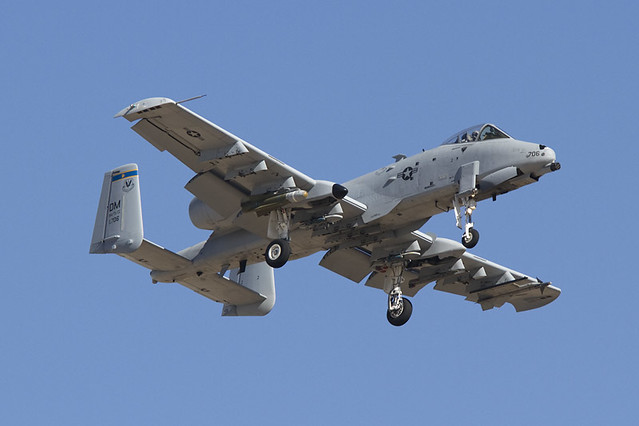
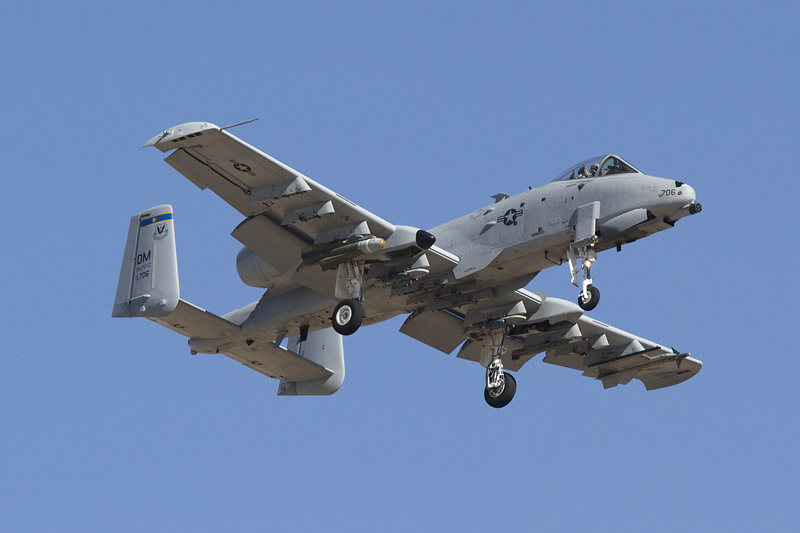
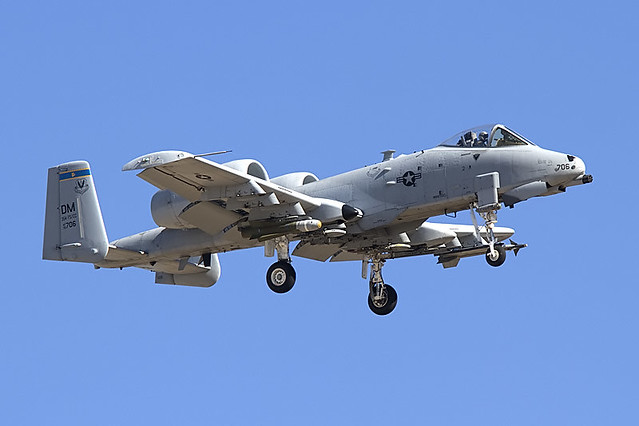
A-10C 78-0706, marked 354 FS/CC, with a hole in the nose. (Photo by Ned Harris) Full size

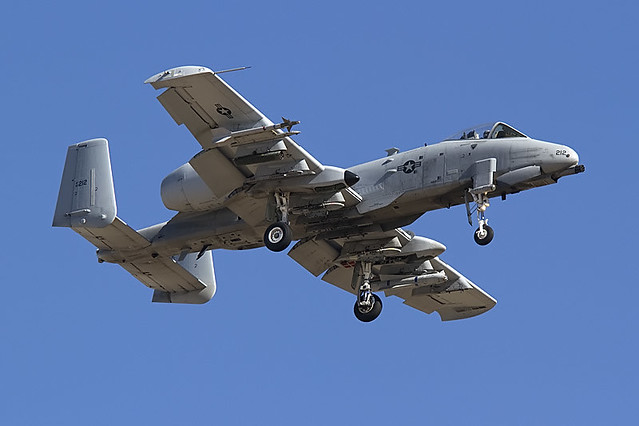
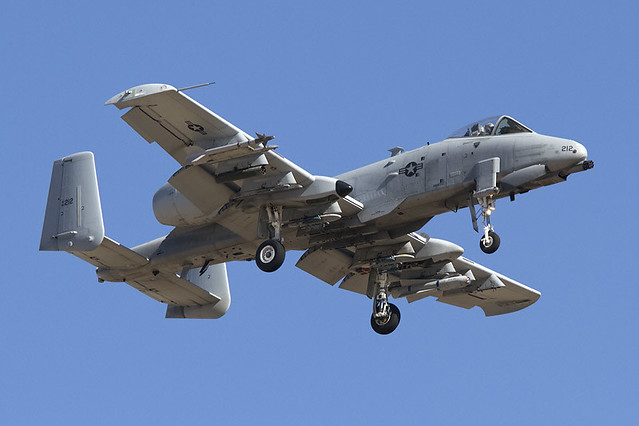
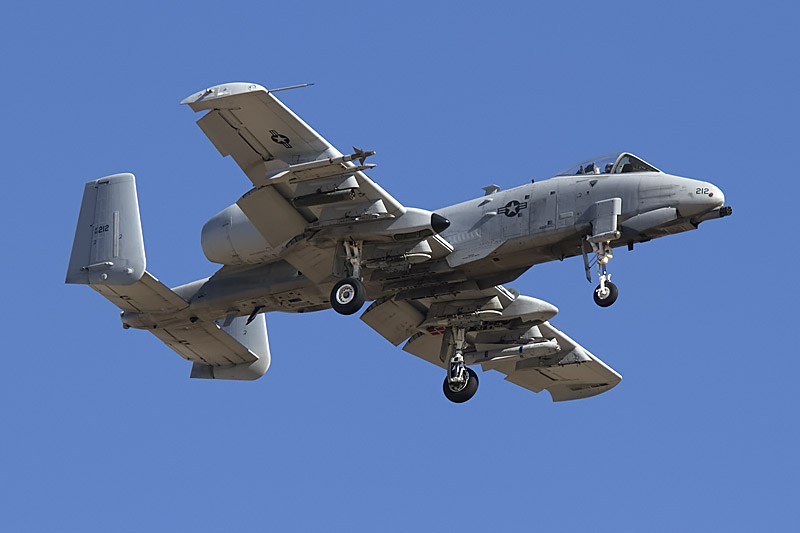
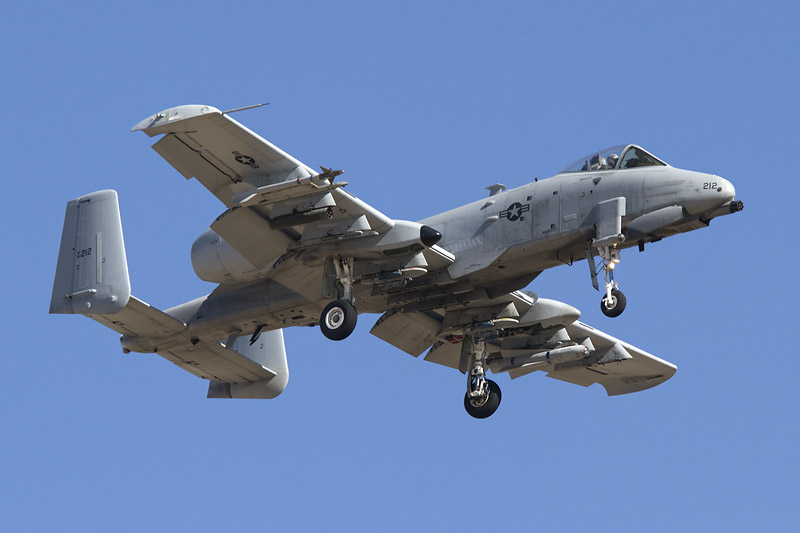
A-10C 80-0212, a Desert Storm veteran. (Photo by Ned Harris) Full size

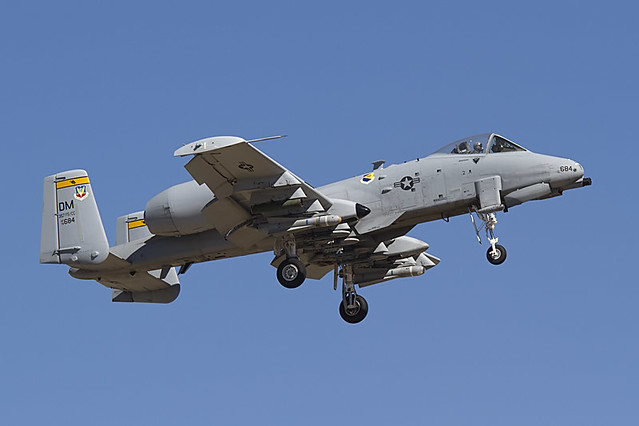
A-10C 78-0684, marked 357 FS/CC. (Photo by Ned Harris) Full size

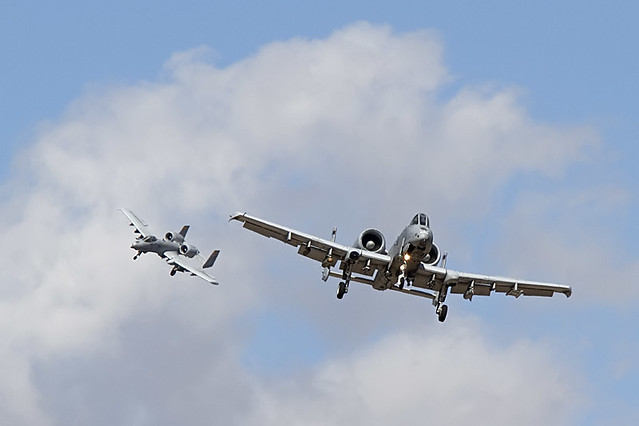
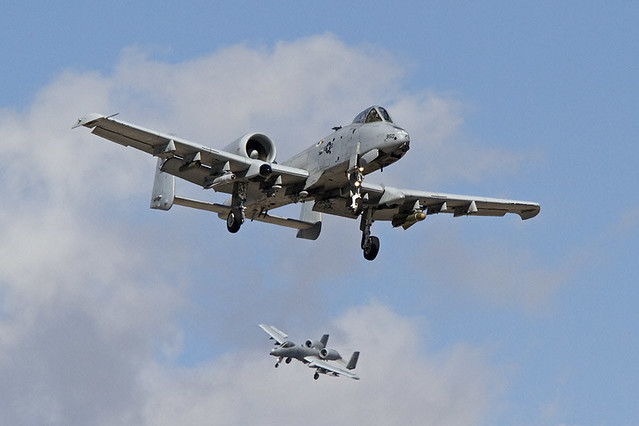
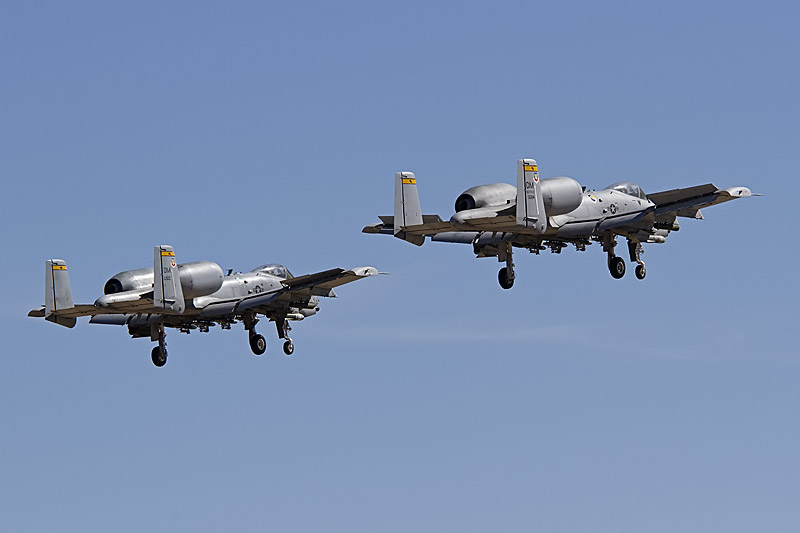
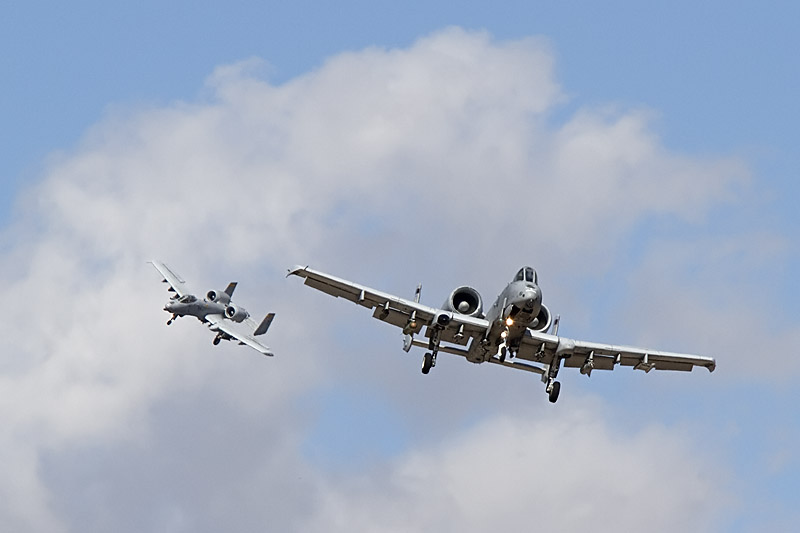
Two A-10Cs from the 357th Fighter Squadron landing. (Photo by Ned Harris) Full size

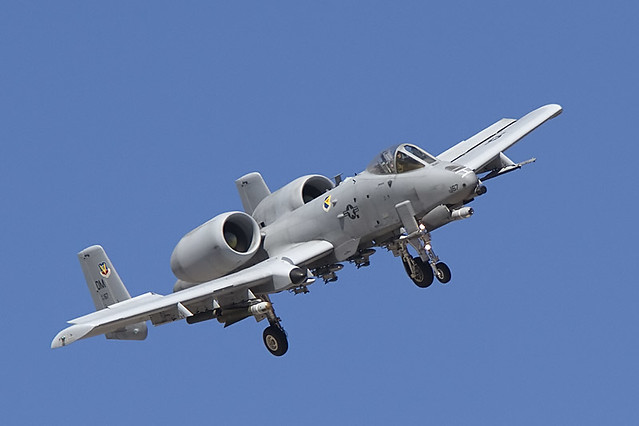
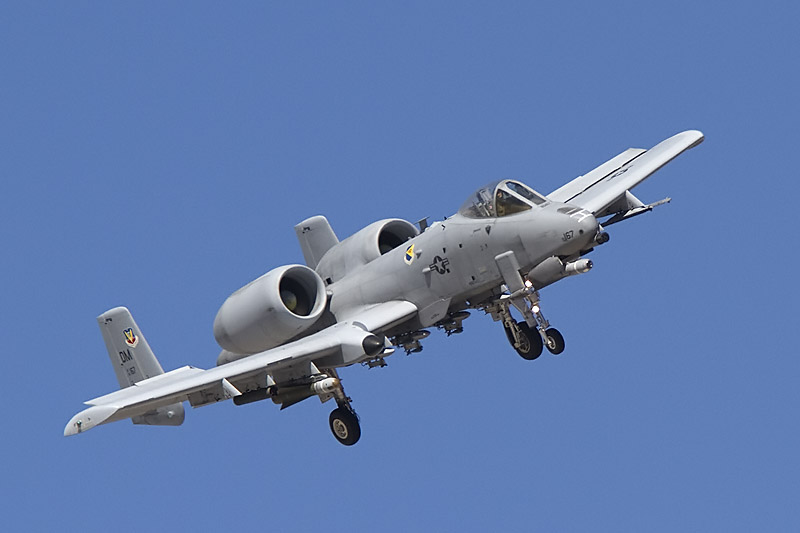
A-10C 80-0167. (Photo by Ned Harris) Full size
A-10C 78-0706, marked 354 FS/CC, with a hole in the nose. (Photo by Ned Harris) Full size
A-10C 80-0212, a Desert Storm veteran. (Photo by Ned Harris) Full size
A-10C 78-0684, marked 357 FS/CC. (Photo by Ned Harris) Full size
Two A-10Cs from the 357th Fighter Squadron landing. (Photo by Ned Harris) Full size
A-10C 80-0167. (Photo by Ned Harris) Full size
Thursday, November 4, 2010
355th Fighter Wing A-10s caught at D-M October 26, 2010
At Davis-Monthan AFB, Arizona, Warthog News contributor Ned Harris had the opportunity to take the following pictures:

A-10 81-0974. (Photo by Ned Harris) Full size

A-10 80-0212. (Photo by Ned Harris) Full size

A-10 78-0706, marked 354 FS/CC. Note: Hole in the nose, possibly from a refueling accident? (Photo by Ned Harris) Full size

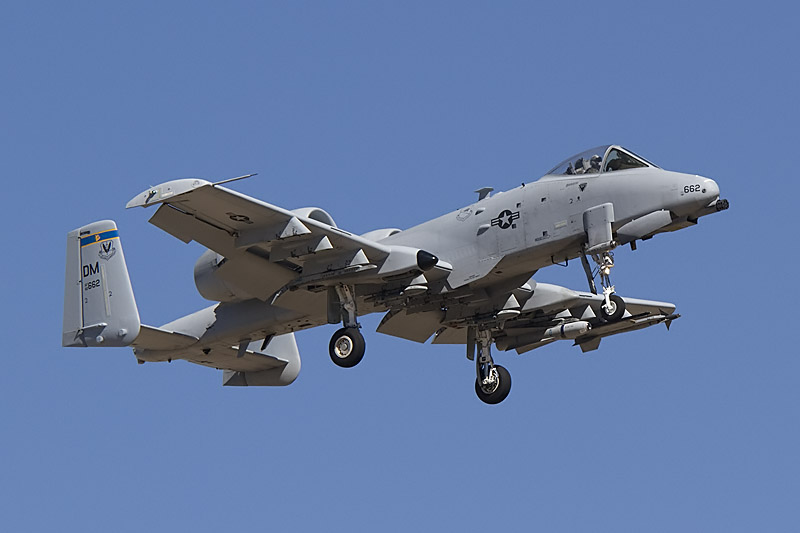
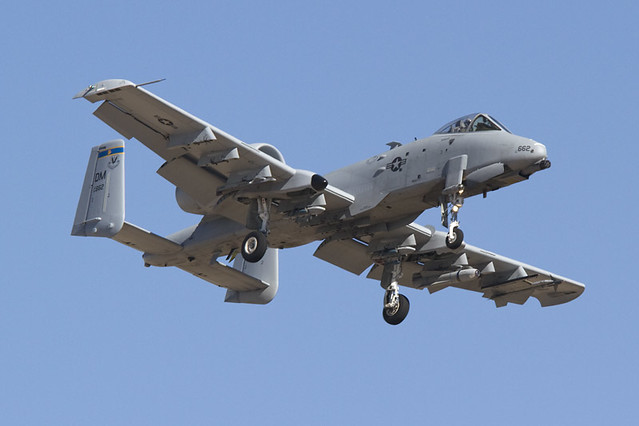
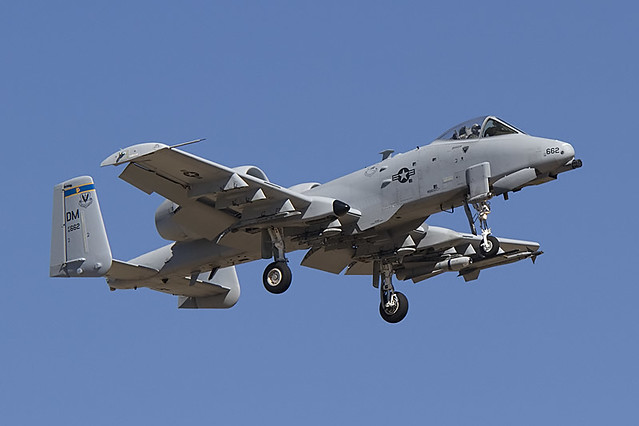
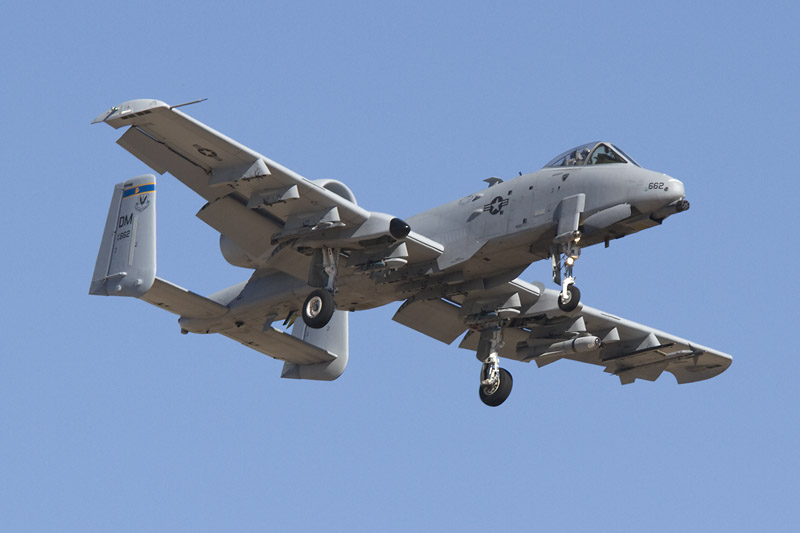
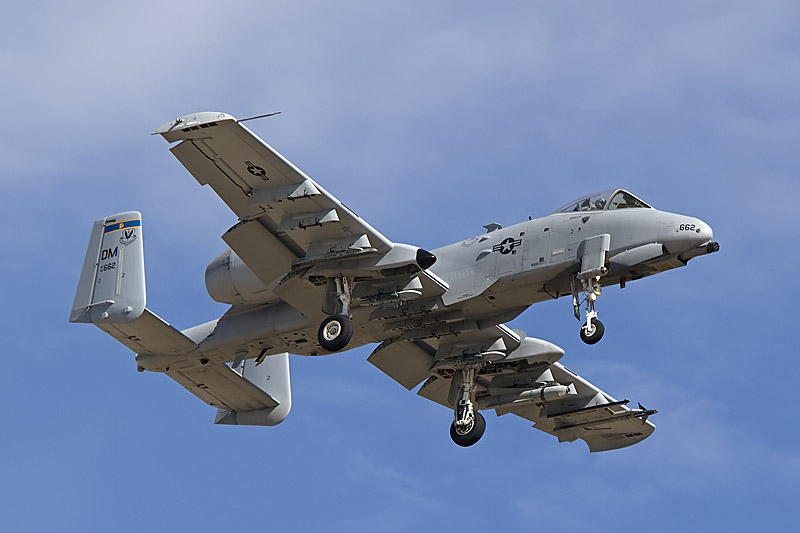
A-10 82-0662. (Photo by Ned Harris) Full size

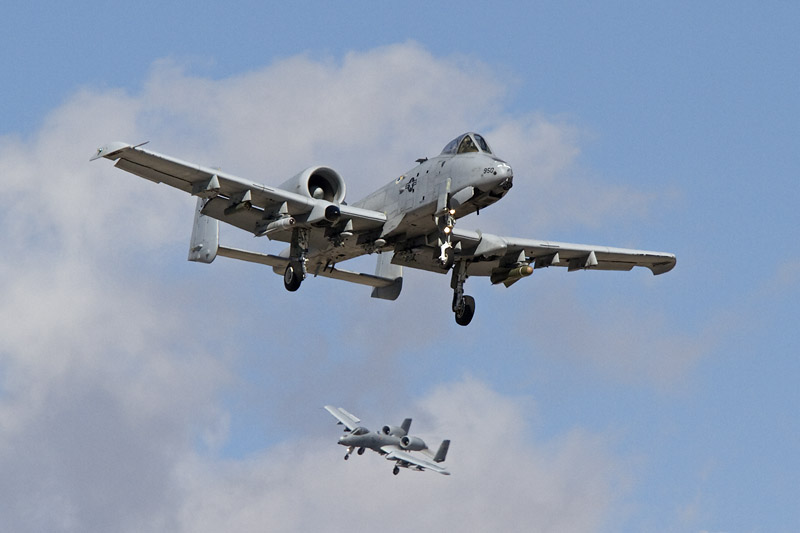
A-10s coming into Davis-Monthan AFB. (Photo by Ned Harris) Full size

Lead + wingman. (Photo by Ned Harris) Full size

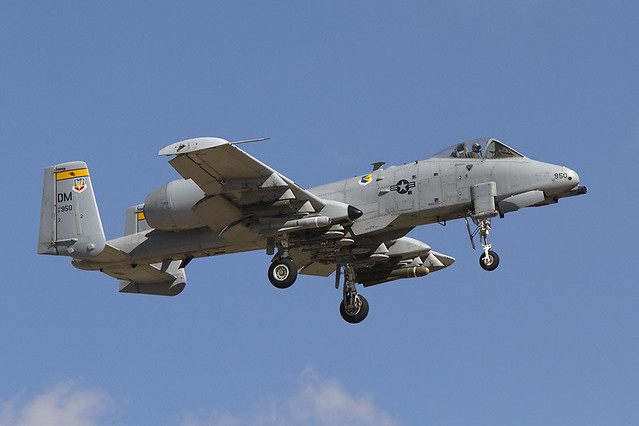
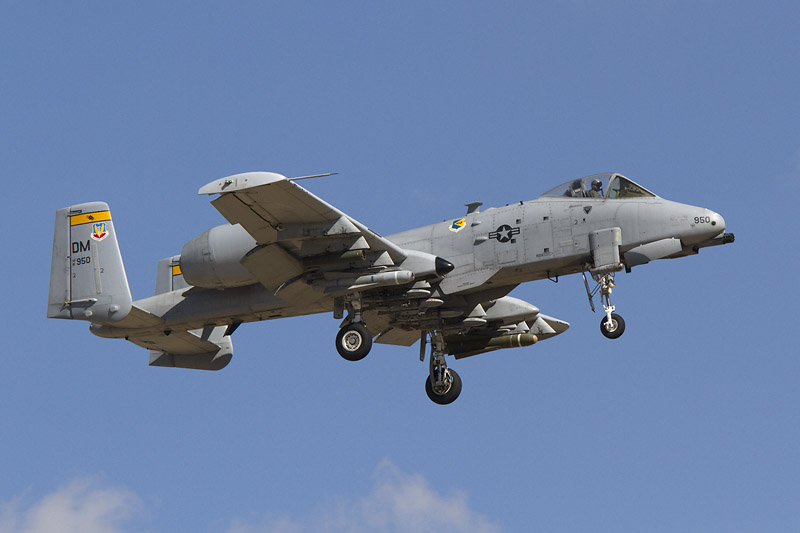
A-10 81-0950. (Photo by Ned Harris) Full size

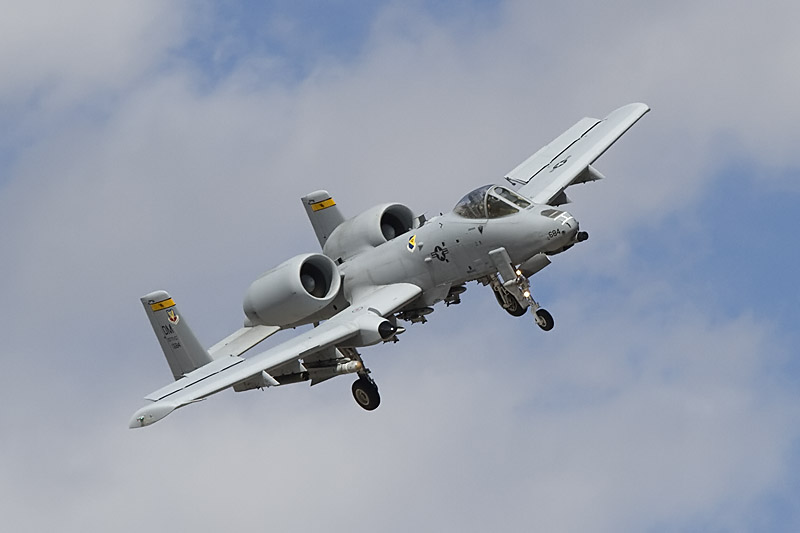
A-10 78-0684, marked 357th FS/CC. (Photo by Ned Harris) Full size

A-10 78-0684, marked 357 FS/CC. (Photo by Ned Harris) Full size

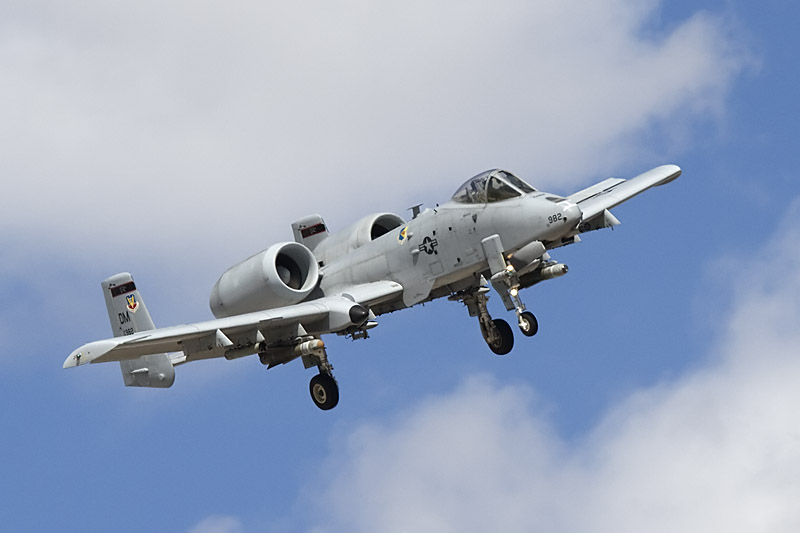
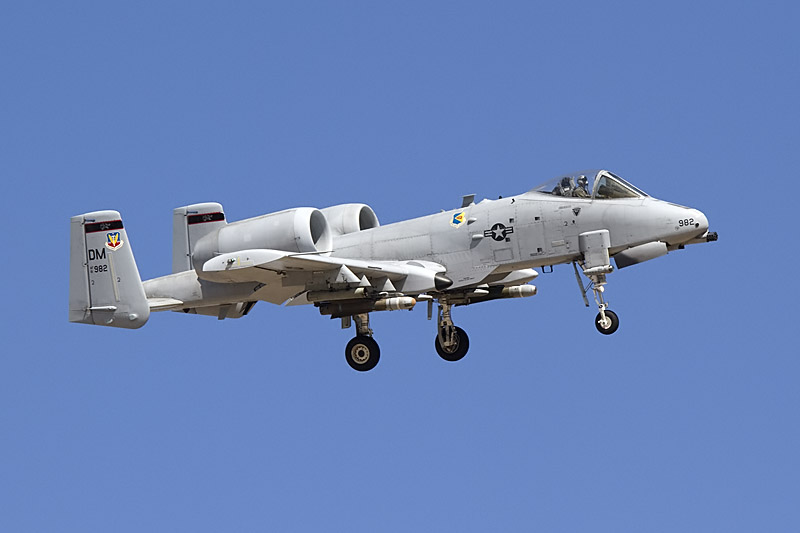
A-10 81-0982. (Photo by Ned Harris) Full size

A-10 81-0982. (Photo by Ned Harris) Full size
A-10 81-0974. (Photo by Ned Harris) Full size
A-10 80-0212. (Photo by Ned Harris) Full size
A-10 78-0706, marked 354 FS/CC. Note: Hole in the nose, possibly from a refueling accident? (Photo by Ned Harris) Full size
A-10 82-0662. (Photo by Ned Harris) Full size
A-10s coming into Davis-Monthan AFB. (Photo by Ned Harris) Full size
Lead + wingman. (Photo by Ned Harris) Full size
A-10 81-0950. (Photo by Ned Harris) Full size
A-10 78-0684, marked 357th FS/CC. (Photo by Ned Harris) Full size
A-10 78-0684, marked 357 FS/CC. (Photo by Ned Harris) Full size
A-10 81-0982. (Photo by Ned Harris) Full size
355th Fighter Wing A-10s caught at D-M October 22, 2010
At Davis-Monthan AFB, Arizona, Warthog News contributor Ned Harris from the United States had the opportunity to take the following pictures:

A-10 82-0662. (Photo by Ned Harris) Full size

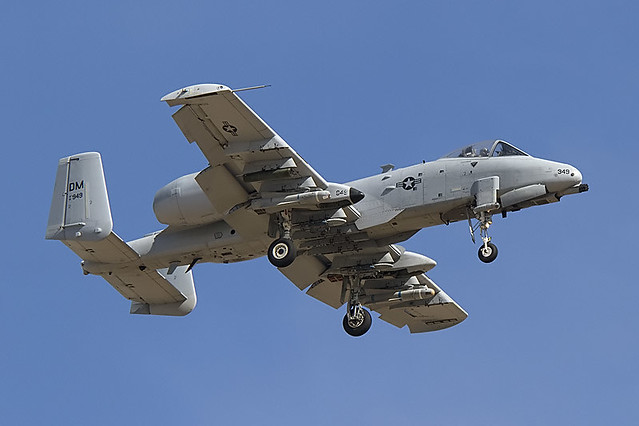
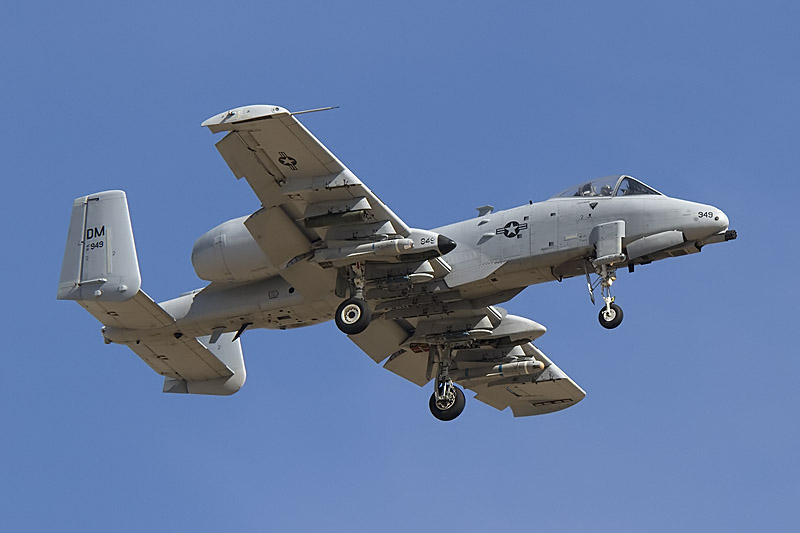
A-10 81-0949. (Photo by Ned Harris) Full size

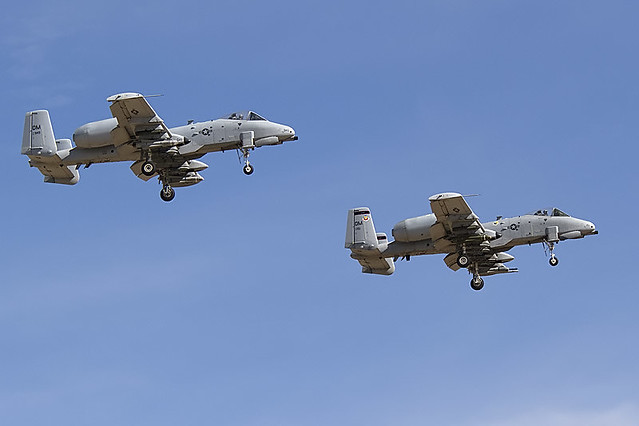
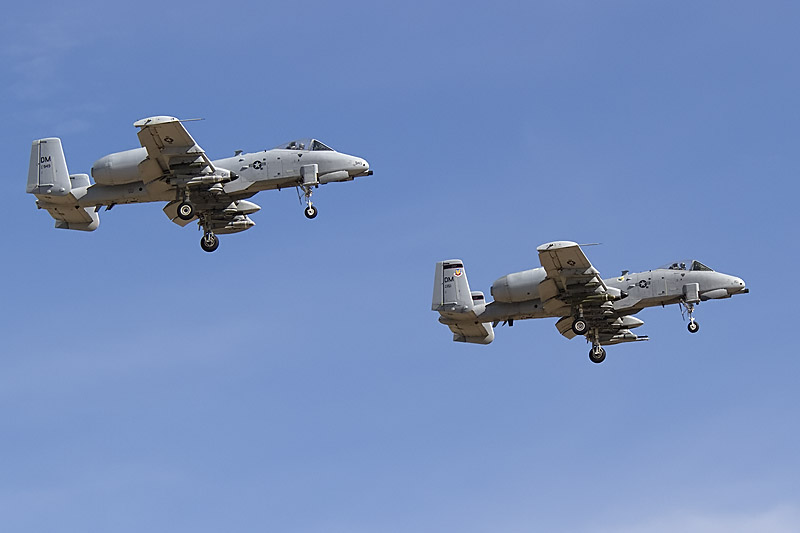
Formation landing. (Photo by Ned Harris) Full size

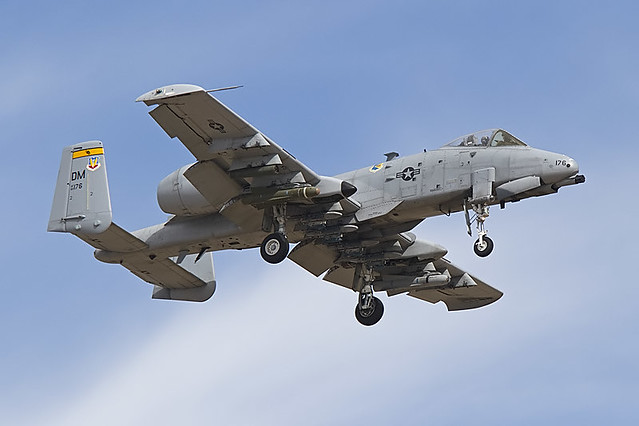
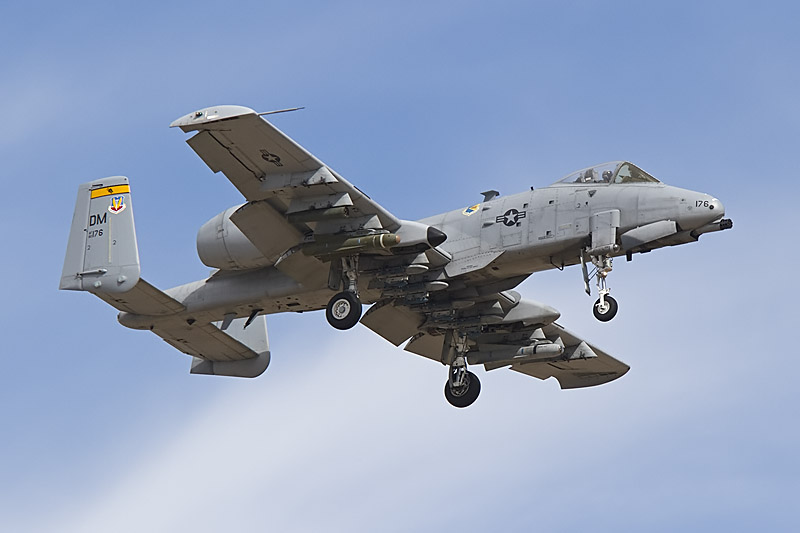
A-10 80-0176. (Photo by Ned Harris) Full size
A-10 82-0662. (Photo by Ned Harris) Full size
A-10 81-0949. (Photo by Ned Harris) Full size
Formation landing. (Photo by Ned Harris) Full size
A-10 80-0176. (Photo by Ned Harris) Full size
355th Fighter Wing A-10 caught at D-M October 20, 2010
At Davis-Monthan AFB, Warthog News contributor Ned Harris from the United States had the opportunity to take the following picture:

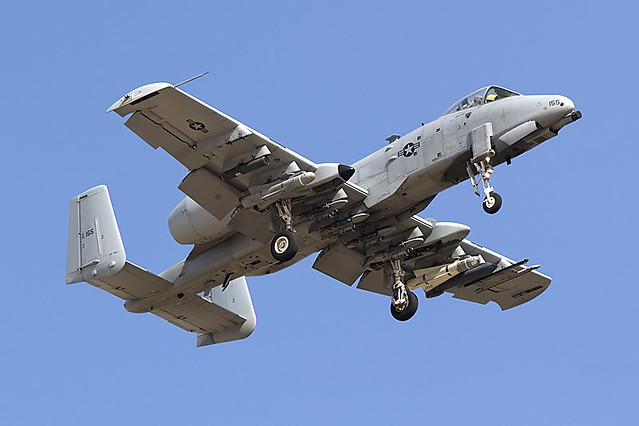
A-10 80-0155. (Photo by Ned Harris) Full size
355th Fighter Wing A-10s caught at D-M October 18, 2010
Two 25th Fighter Squadron A-10s from Osan caught at D-M October 14, 2010
At Davis-Monthan AFB, Arizona, Warthog News contributor James O'Rear from the United States had the opportunity to take the following shots:

A-10A 78-0615 on final to Davis-Monthan AFB, Arizona. (Photo by James O'Rear) Full size

A-10A 78-0632 on final to Davis-Monthan AFB, Arizona. (Photo by James O'Rear) Full size
Please note:
Both Hogs are from the 25th Fighter Squadron, 51st Fighter Wing (PACAF), Osan AB, Republic of Korea. They has been carrying long-range ferry tanks on stations ...
According to the Warthog Territory Forums, they will get their A-10C upgrade at Hill AFB. See: Osan Jets...
A-10A 78-0615 on final to Davis-Monthan AFB, Arizona. (Photo by James O'Rear) Full size
A-10A 78-0632 on final to Davis-Monthan AFB, Arizona. (Photo by James O'Rear) Full size
Please note:
Both Hogs are from the 25th Fighter Squadron, 51st Fighter Wing (PACAF), Osan AB, Republic of Korea. They has been carrying long-range ferry tanks on stations ...
According to the Warthog Territory Forums, they will get their A-10C upgrade at Hill AFB. See: Osan Jets...
Wednesday, November 3, 2010
Remembering the history of the Flying Tigers
by Airman 1st Class Nicholas Benroth
23rd Wing Public Affairs
11/1/2010 - MOODY AIR FORCE BASE, Ga. -- Members from the Flying Tiger Association, including family members and friends, gathered at Moody from Oct. 28 to 30 to attend the 68th annual Flying Tigers Reunion. The association is made up of flying tigers of the past and present.
During the reunion, Flying Tigers learned about the wing's current mission and capabilities through events hosted by various units around base.
The events included briefings, displays at the 820th Base Defense Group, static displays of the A-10C Thunderbolt II, HC-130P Combat King and HH-60G Pave Hawk, combat search and rescue demonstrations and the opportunity to see an aircraft from the original flying tiger days.
"This reunion is to remember those who are fallen and can't join us," said retired Col. Steve Bonner a member of the Flying Tigers. "It's important to remember the history and the sacrifices that all these members made."
Mr. Bonner was a pilot during World War II and flew the P-40 over China from 1943 to 1944.
The history of the Flying Tigers dates back to 1939 when the American Volunteer Group, commanded by U.S. Army Air Corps Lt. Gen. Claire Lee Chennault, the AVG disbanded and passed on their legacy and continued to fly as the 23rd Fighter Group.
The group was nicknamed the "Flying Tigers" and became famous for the shark teeth painted on the P-40, which were thought to intimidate enemies.
After World War II, the Flying Tigers were inactivated and reactivated several times, flying different fighter aircraft at different locations before being reactivated as the 23rd Wing.
"It's great to see the Flying Tigers are still active to this day," said retired Gen. Jimmie Adams, a former 347th Tactical Fighter Wing commander. "They have achieved a lot to keep themselves on top."
The Flying Tigers have been a strong force throughout history and continue to be on the front lines of combat in Afghanistan today.
"We have more than 1,000 Flying Tigers that are deployed right now," said Col. Gary Henderson, 23rd Wing commander. "They are out there protecting our freedom and our country, just as these members did."

"MOODY AIR FORCE BASE, Ga. -- When an aircraft has lived through its operational life, it is usually either used for scrap metal or taken to the “Boneyard” near Davis-Monthan Air Force Base, Ariz. However, a squadron here will keep a retired A-10A Thunderbolt II as a ground instructional training aircraft. (U.S. Air Force photo by Airman 1st Class Benjamin Wiseman)(RELEASED) Hi-res
23rd Wing Public Affairs
11/1/2010 - MOODY AIR FORCE BASE, Ga. -- Members from the Flying Tiger Association, including family members and friends, gathered at Moody from Oct. 28 to 30 to attend the 68th annual Flying Tigers Reunion. The association is made up of flying tigers of the past and present.
During the reunion, Flying Tigers learned about the wing's current mission and capabilities through events hosted by various units around base.
The events included briefings, displays at the 820th Base Defense Group, static displays of the A-10C Thunderbolt II, HC-130P Combat King and HH-60G Pave Hawk, combat search and rescue demonstrations and the opportunity to see an aircraft from the original flying tiger days.
"This reunion is to remember those who are fallen and can't join us," said retired Col. Steve Bonner a member of the Flying Tigers. "It's important to remember the history and the sacrifices that all these members made."
Mr. Bonner was a pilot during World War II and flew the P-40 over China from 1943 to 1944.
The history of the Flying Tigers dates back to 1939 when the American Volunteer Group, commanded by U.S. Army Air Corps Lt. Gen. Claire Lee Chennault, the AVG disbanded and passed on their legacy and continued to fly as the 23rd Fighter Group.
The group was nicknamed the "Flying Tigers" and became famous for the shark teeth painted on the P-40, which were thought to intimidate enemies.
After World War II, the Flying Tigers were inactivated and reactivated several times, flying different fighter aircraft at different locations before being reactivated as the 23rd Wing.
"It's great to see the Flying Tigers are still active to this day," said retired Gen. Jimmie Adams, a former 347th Tactical Fighter Wing commander. "They have achieved a lot to keep themselves on top."
The Flying Tigers have been a strong force throughout history and continue to be on the front lines of combat in Afghanistan today.
"We have more than 1,000 Flying Tigers that are deployed right now," said Col. Gary Henderson, 23rd Wing commander. "They are out there protecting our freedom and our country, just as these members did."
"MOODY AIR FORCE BASE, Ga. -- When an aircraft has lived through its operational life, it is usually either used for scrap metal or taken to the “Boneyard” near Davis-Monthan Air Force Base, Ariz. However, a squadron here will keep a retired A-10A Thunderbolt II as a ground instructional training aircraft. (U.S. Air Force photo by Airman 1st Class Benjamin Wiseman)(RELEASED) Hi-res
Retired A-10 to serve as unique training tool
by Airman 1st Class Brigitte N. Brantley-Sisk
23rd Wing Public Affairs
11/1/2010 - MOODY AIR FORCE BASE, Ga. -- When an aircraft has lived through its operational life, it is usually either used for scrap metal or taken to the "Boneyard" near Davis-Monthan Air Force Base, Ariz.
However, the 23rd Component Maintenance Squadron has found a way to keep a retired A-10A Thunderbolt II at Moody as a ground instructional training aircraft.
"Normally what we have to do when we want hands-on training with an aircraft is plan it out in advance," said Master Sgt. Jeffery Knudsen, 23rd Component Maintenance Squadron aircraft fuels system section chief. "That it means it not only takes away from someone else training with, it is off the flightline for that amount of time.
"Having the A-10 as a GITA will benefit us because we can do our training whenever its needed," he added.
The A-10's training use is furthered by the fact it won't remain as a single piece, but will instead be separated.
"Current plans are to divide the aircraft into two pieces: the fuselage and the wing section," said Sergeant Knudsen. "Training with the separate pieces benefits us because we don't have this opportunity otherwise.
"Our training guides only show portions of the system at a time, while this will allow trainees to see the entire system," he added. "Furthermore, a nonoperational aircraft doesn't present a chemical hazard so we can get inside as well without having to use the otherwise required ventilators and respirators."
The 23rd Equipment Maintenance Squadron metals technology section is currently building stands for the separate parts of the A-10.
"These stands will allow for more up-close and confined spaces training," said Tech. Sgt. David Land, 23rd EMS aircraft metals technician. "The wings of an A-10 are about six feet off the ground, so separate stands will allow for a better view of the underside of the fuselage, which is where a lot of the fuel work happens. There will also be a catwalk to allow trainees to have an overview of the aircraft."
This overview will be further enhanced by another planned modification.
"We are also going to remove part of the aircraft skin so we can see the underlying structures and systems," said Sergeant Knudsen. "All of the modifications to this aircraft will allow us to pass on an overall better understanding of the A-10, both inside and out."
The first A-10 Thunderbolt II was used in 1975 and was designed especially for close air support. Moody received the aircraft in 2007.
source
23rd Wing Public Affairs
11/1/2010 - MOODY AIR FORCE BASE, Ga. -- When an aircraft has lived through its operational life, it is usually either used for scrap metal or taken to the "Boneyard" near Davis-Monthan Air Force Base, Ariz.
However, the 23rd Component Maintenance Squadron has found a way to keep a retired A-10A Thunderbolt II at Moody as a ground instructional training aircraft.
"Normally what we have to do when we want hands-on training with an aircraft is plan it out in advance," said Master Sgt. Jeffery Knudsen, 23rd Component Maintenance Squadron aircraft fuels system section chief. "That it means it not only takes away from someone else training with, it is off the flightline for that amount of time.
"Having the A-10 as a GITA will benefit us because we can do our training whenever its needed," he added.
The A-10's training use is furthered by the fact it won't remain as a single piece, but will instead be separated.
"Current plans are to divide the aircraft into two pieces: the fuselage and the wing section," said Sergeant Knudsen. "Training with the separate pieces benefits us because we don't have this opportunity otherwise.
"Our training guides only show portions of the system at a time, while this will allow trainees to see the entire system," he added. "Furthermore, a nonoperational aircraft doesn't present a chemical hazard so we can get inside as well without having to use the otherwise required ventilators and respirators."
The 23rd Equipment Maintenance Squadron metals technology section is currently building stands for the separate parts of the A-10.
"These stands will allow for more up-close and confined spaces training," said Tech. Sgt. David Land, 23rd EMS aircraft metals technician. "The wings of an A-10 are about six feet off the ground, so separate stands will allow for a better view of the underside of the fuselage, which is where a lot of the fuel work happens. There will also be a catwalk to allow trainees to have an overview of the aircraft."
This overview will be further enhanced by another planned modification.
"We are also going to remove part of the aircraft skin so we can see the underlying structures and systems," said Sergeant Knudsen. "All of the modifications to this aircraft will allow us to pass on an overall better understanding of the A-10, both inside and out."
The first A-10 Thunderbolt II was used in 1975 and was designed especially for close air support. Moody received the aircraft in 2007.
source
Subscribe to:
Posts (Atom)