Posted 7/31/2009 Updated 7/31/2009
by Capt. David Faggard
455th Air Expeditionary Wing Public Affairs
7/31/2009 - BAGRAM AIR FIELD, Afghanistan -- Nothing ever goes by the book, but this is a classic example of Airpower supporting ground forces--primarily the Afghanistan National Army--with Close Air Support and air-drop capabilities.
The day could be like any other day, but the calls came in -- Coalition forces, engaged with the enemy on the ground were running low on ammunition and needed a re-supply.
Like a swarm of bees overhead looking to sting, U.S. Army AH-64 Apache helicopters, deployed from the 159th Combat Aviation Brigade of the 101st Airborne from Ft. Campbell, Ky. and U.S. Air Force A-10 Warthogs deployed from Moody AFB, Ga. weren't going to let anything happen to their allies fighting on the ground.
Captain Matthew Clementz, one of the Apache gunship pilots that day with Task Force Attack said that between his Apaches and the A-10 Warthogs, they cleared the way of insurgents for the airdrop and that there was "good interaction with eachother."
In classic fashion, a workhorse of modern warfare was ready to assist. Lumbering over enemy terrain, the C-130 Hercules and crew assigned to the 774th Expeditionary Airlift Squadron here had the ammunition destined for the Afghans fighting for their lives on the ground.
At the helm of the 25-year- old-airplane was Capt. D.J. Spisso deployed from Savannah, Georgia's 165th Airlift Wing and he knew this mission would be different.
The success of the mission rested in the hands of an aircrew blended of active-duty, Guard and Reserve Airmen from various units from the U.S., to include Schenectady, N.Y.; Savannah, Ga.; Little Rock, Ark.; Saint Joseph's, Mo. and Mansfield, Ohio.
"This was a complete team effort," Capt. Spisso said. "It was difficult terrain, communications were scarce and we made it; it was a good drop."
And making the drop right on target is important when the good guys are in need according to Capt. Spisso, a pilot whom is employed by the civilian airline Airtran when not in an Air Force uniform.
"It's something you feel good about-- helping Coalition partners in need," he said. "Coalition members coming together for a common good," the Citadel graduate said and that's just what happened "we're willing to do whatever it takes to get the job done."
And fortunately for the Afghan soldiers on the ground fighting the enemy, the Air Force's commitment to Total Force and joint operations paid off and the 'Herk-drivers' hit their mark.
Editor's Note: The location, date and time were intentionally left out of this story for security concerns.
Source
Friday, July 31, 2009
Airpower delivers 'critical' ammunition to Afghanistan National Army soldiers on the ground
Load Crew of the Quarter Competition
Released by 355th Fighter Wing Public Affairs:

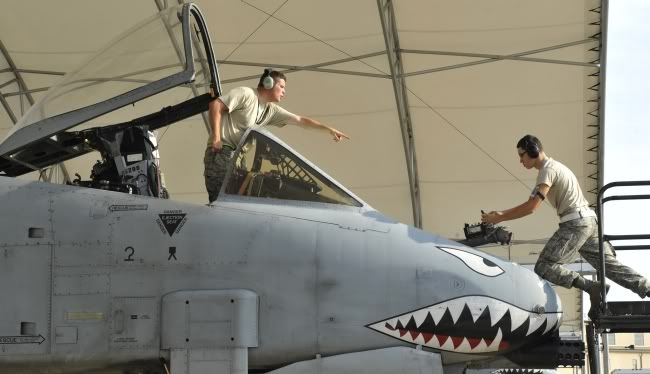
Airman First Class Crystal Simms and Staff Sgt. Brian Marchand of the 355th Aircraft Maintenance Squadron prepare to load a MK-82 bomb onto an A-10 during the Load Crew of the Quarter Competition at Davis-Monthan AFB, Arizona, July 24, 2009. (U.S. Air Force photo by Senior Airman Noah R. Johnson) Hi-res

Staff Sgt. Brian Marchand of the 355th Aircraft Maintenance Squadron prepares a MK-82 bomb before loading it onto an A-10 during the Load Crew of the Quarter Competition at Davis-Monthan AFB, Arizona, July 24, 2009. (U.S. Air Force photo by Senior Airman Noah R. Johnson) Hi-res
Source
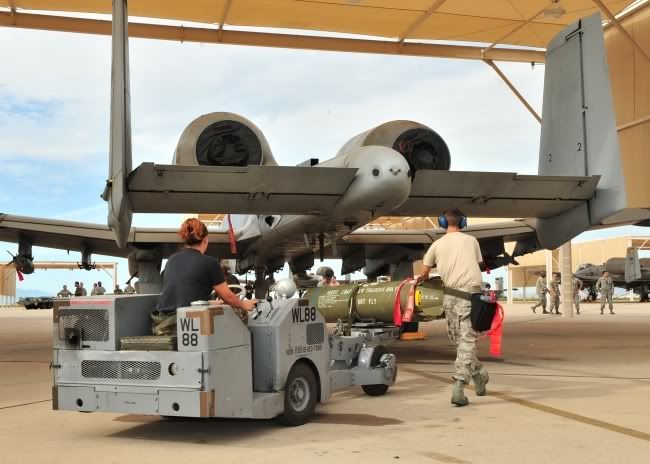
Airman First Class Crystal Simms and Staff Sgt. Brian Marchand of the 355th Aircraft Maintenance Squadron prepare to load a MK-82 bomb onto an A-10 during the Load Crew of the Quarter Competition at Davis-Monthan AFB, Arizona, July 24, 2009. (U.S. Air Force photo by Senior Airman Noah R. Johnson) Hi-res

Staff Sgt. Brian Marchand of the 355th Aircraft Maintenance Squadron prepares a MK-82 bomb before loading it onto an A-10 during the Load Crew of the Quarter Competition at Davis-Monthan AFB, Arizona, July 24, 2009. (U.S. Air Force photo by Senior Airman Noah R. Johnson) Hi-res
Source
Labels:
355th Fighter Wing,
Davis-Monthan
Thursday, July 30, 2009
More 23rd Fighter Wing A-10Cs are returning from Bagram AB to Moody AFB
Updated 31 July 2009
By Joachim Jacob
According to Portuguese photographer and Warthog News contributor André Inácio, on July 28, 2009, five A-10Cs from the 23rd Fighter Group, 23rd Fighter Wing, Moody AFB, Georgia, arrived at Lajes Field, Azores, for stopover on their way from Bagram AB, Afghanistan, to CONUS. They departed Lajes Field on July 30, 2009. Logged and photographed were: 78-0697 (74th FS), 79-0192 (74th FS), 80-0140 (74th FS), 80-0226 (74th FS) and 81-0944. With the exception of 81-0944 (without unit markings, ex 190th FS, 124th Wg, Idaho ANG), these jets were deployed with the original 75th Expeditionary Fighter Squadron aircraft package. 81-0944 was one of the replacements, deployed after partial A-10 groundings do to wing cracks.
And here are the pictures (added 31 July 2009):

A-10C 80-0140 arrives. (Photo by André Inácio)

A-10C 78-0697 arrives. (Photo by André Inácio)

A-10C 80-0226 arrives. (Photo by André Inácio)

A-10C 79-0192 arrives. (Photo by André Inácio)

A-10C 81-0944 arrives. (Photo by André Inácio)
Note: Only A-10C 78-0697 carries mission markings (I'm surprised).
Special thanks to André Inácio for providing these shots exclusively.
By Joachim Jacob
According to Portuguese photographer and Warthog News contributor André Inácio, on July 28, 2009, five A-10Cs from the 23rd Fighter Group, 23rd Fighter Wing, Moody AFB, Georgia, arrived at Lajes Field, Azores, for stopover on their way from Bagram AB, Afghanistan, to CONUS. They departed Lajes Field on July 30, 2009. Logged and photographed were: 78-0697 (74th FS), 79-0192 (74th FS), 80-0140 (74th FS), 80-0226 (74th FS) and 81-0944. With the exception of 81-0944 (without unit markings, ex 190th FS, 124th Wg, Idaho ANG), these jets were deployed with the original 75th Expeditionary Fighter Squadron aircraft package. 81-0944 was one of the replacements, deployed after partial A-10 groundings do to wing cracks.
And here are the pictures (added 31 July 2009):
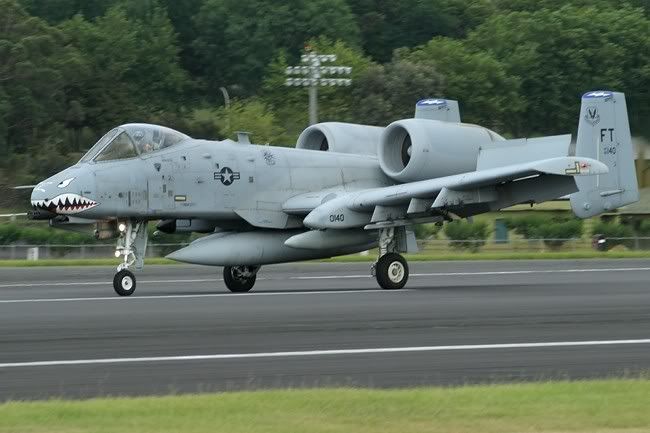
A-10C 80-0140 arrives. (Photo by André Inácio)
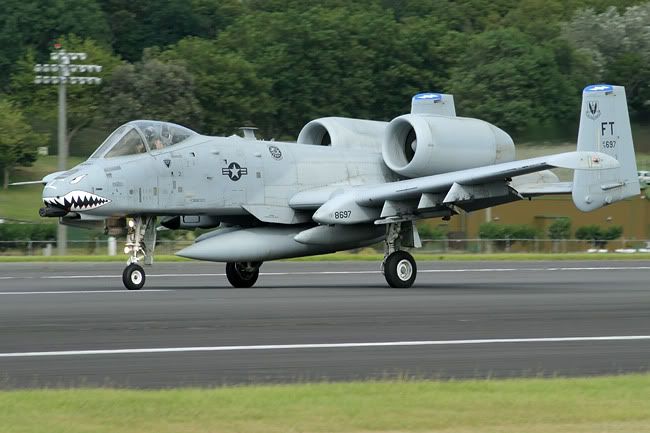
A-10C 78-0697 arrives. (Photo by André Inácio)
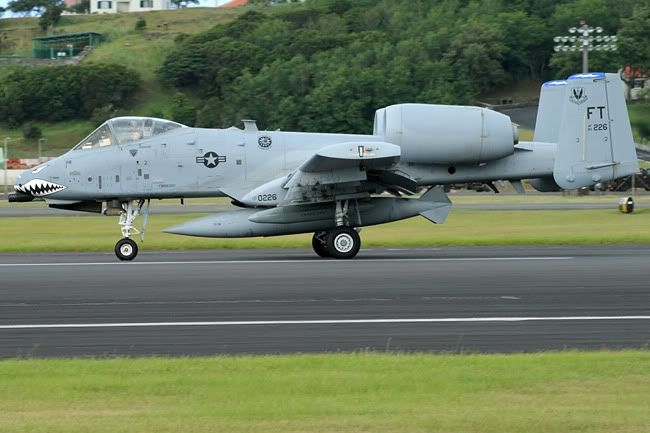
A-10C 80-0226 arrives. (Photo by André Inácio)

A-10C 79-0192 arrives. (Photo by André Inácio)
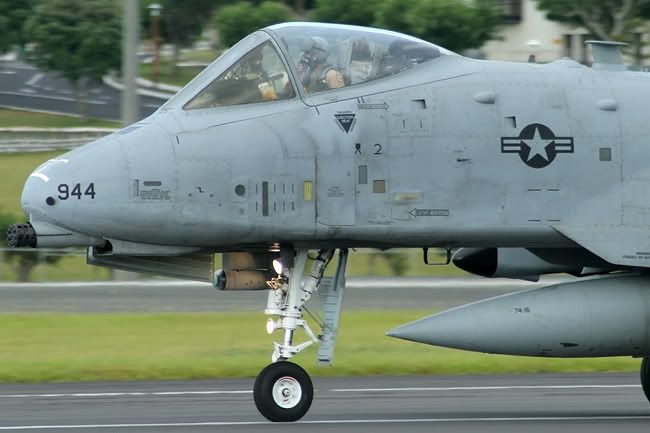
A-10C 81-0944 arrives. (Photo by André Inácio)
Note: Only A-10C 78-0697 carries mission markings (I'm surprised).
Special thanks to André Inácio for providing these shots exclusively.
'Just do it' ... it works in all aspects of life
The following commentary was published in the Commander's Corner of Sandy Hog Gazette (111th Fighter Wing newspaper), August 2009 public online PDF issue:
By Lt. Col. Bill Griffin, 103rd Fighter Squadron Commander
If you just do your job correctly, it all works. Every person in the wing is relied upon to do their job correctly. Unit Manning Documents (UMDs) are built to work but only if you are trained and actually do your job. This concept starts with the Soldier, Sailor, Marine or Airman on the ground with a gun in his hand and goes through every link in the chain and you're one of those links.
Just do your job first then if you have time, help somewhere else you have experience. Just realize you might not be the Subject Matter Expert anymore and AFIs change so be careful with the "help" you provide. Most of the write ups found in any inspection come directly from guidance in an AFI not being followed. Lesson Learned: get in the books.
JUST DO IT. The 111 FW just did it - extremely well, again. The IG inspectors were impressed by the attitudes of our unit members, and rightly so. You should roam confidently knowing you're part of a winning team. Attitude goes a long way – either way, positive or negative, so you may as well have a positive attitude. Positive attitudes paid huge dividends on this last inspection and positive attitudes will take us safely and efficiently to the end of the A-10 mission. As long as we fly even just one jet, we must do the job like we are preparing for combat – lives depend on it. While we will not deploy in combat in the A-10 again, a small number of pilots, maintainers and weapons loaders will deploy to MacDill later this year to spin up Joint Terminal Area Controllers (JTACs) who will. This will require every member of the 111 FW to do their job as if the entire
squadron was deploying.
We must set the JTACs up to win on the battlefield. Vince Lombardi said "Winning isn't everything. It's the only thing." And he was just talking about a football game. Basics – get back to basics and do them well, and I will assure you success.
We understand the stresses around here. We are all in this together and on the same team, so take care of yourself first and provide mutual support to your teammates. Manage stress – go to the gym, run, swim, but do something to affect a positive means of managing stress. Do something to challenge yourself and go beyond your comfort level – learn a new hobby, skill or sport, but do it smartly and learn from someone fully trained and accredited in the activity. Be goal oriented but set timelines and goals that are attainable. For whatever reason, we now call the same old stuff by new names and think we're on to something. ORM (Operational Risk Management) used to be called "common sense." Either way, get it and employ
it.
So far this article reads like something out of Airman Magazine, so in that spirit I'll continue with "Finish Strong." While I'm not a fan of some of the Air Force's goofy slogans, this one applies, especially as we enter our final year of aviation. The 103rd Fighter Squadron just celebrated its 85th birthday in June. And while the 103rd Observation Squadron has grown into the 103rd Fighter Squadron, our goal is to go out with dignity and the throttles pushed up doing things right. It will take the work of every 111 FW member to make that happen so, in short, JUST DO IT.
Source
By Lt. Col. Bill Griffin, 103rd Fighter Squadron Commander
If you just do your job correctly, it all works. Every person in the wing is relied upon to do their job correctly. Unit Manning Documents (UMDs) are built to work but only if you are trained and actually do your job. This concept starts with the Soldier, Sailor, Marine or Airman on the ground with a gun in his hand and goes through every link in the chain and you're one of those links.
Just do your job first then if you have time, help somewhere else you have experience. Just realize you might not be the Subject Matter Expert anymore and AFIs change so be careful with the "help" you provide. Most of the write ups found in any inspection come directly from guidance in an AFI not being followed. Lesson Learned: get in the books.
JUST DO IT. The 111 FW just did it - extremely well, again. The IG inspectors were impressed by the attitudes of our unit members, and rightly so. You should roam confidently knowing you're part of a winning team. Attitude goes a long way – either way, positive or negative, so you may as well have a positive attitude. Positive attitudes paid huge dividends on this last inspection and positive attitudes will take us safely and efficiently to the end of the A-10 mission. As long as we fly even just one jet, we must do the job like we are preparing for combat – lives depend on it. While we will not deploy in combat in the A-10 again, a small number of pilots, maintainers and weapons loaders will deploy to MacDill later this year to spin up Joint Terminal Area Controllers (JTACs) who will. This will require every member of the 111 FW to do their job as if the entire
squadron was deploying.
We must set the JTACs up to win on the battlefield. Vince Lombardi said "Winning isn't everything. It's the only thing." And he was just talking about a football game. Basics – get back to basics and do them well, and I will assure you success.
We understand the stresses around here. We are all in this together and on the same team, so take care of yourself first and provide mutual support to your teammates. Manage stress – go to the gym, run, swim, but do something to affect a positive means of managing stress. Do something to challenge yourself and go beyond your comfort level – learn a new hobby, skill or sport, but do it smartly and learn from someone fully trained and accredited in the activity. Be goal oriented but set timelines and goals that are attainable. For whatever reason, we now call the same old stuff by new names and think we're on to something. ORM (Operational Risk Management) used to be called "common sense." Either way, get it and employ
it.
So far this article reads like something out of Airman Magazine, so in that spirit I'll continue with "Finish Strong." While I'm not a fan of some of the Air Force's goofy slogans, this one applies, especially as we enter our final year of aviation. The 103rd Fighter Squadron just celebrated its 85th birthday in June. And while the 103rd Observation Squadron has grown into the 103rd Fighter Squadron, our goal is to go out with dignity and the throttles pushed up doing things right. It will take the work of every 111 FW member to make that happen so, in short, JUST DO IT.
Source
National Guard Bureau Chief comes to Idaho
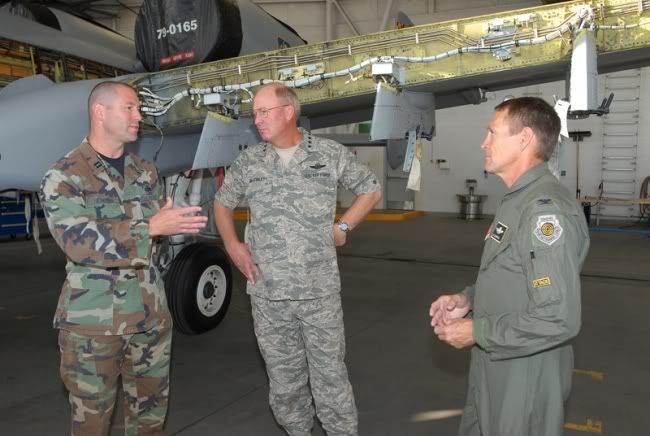
Colonel James Compton and Captain Eric Newman explain the modifications being made to an A-10 Thunderbolt II to Chief of the National Guard Bureau Gen Craig McKinley during a visit to Gowen Field in Boise, Idaho. Colonel Compton is the Commander of the 124th Wing and Captain Newman is a Maintenance Officer with the 124th Maintenance Squadron, Idaho Air National Guard in Boise. The A-10 in the background could be 79-0165, according to the serial number on the air intake cover. (Air Force photo by Master Sgt Tom Gloeckle) Full size
by Capt Tracy Giles
124th Wing Public Affairs
7/28/2009 - GOWEN FIELD, Boise, Idaho -- Chief of the National Guard Bureau Gen. Craig R. McKinley visited here July 23 and 24 to see Soldiers and Airmen from Idaho, Oregon and Montana in action.
During day one of his jam-packed agenda, General McKinley visited 116th Cavalry Brigade Combat Team Soldiers in the field as they performed annual training maneuvers in preparation for future deployments.
He flew aboard a Blackhawk helicopter to the Idaho Army National Guard's Orchard Training Area in the desert 20 miles south of Boise. During his visit, the general was able to experience first-hand the unique training opportunities that Idaho's training range offers.
Day two of his visit included a visit to Airmen from both Idaho and Oregon. Idaho Airmen from the 124th Aircraft Maintenance Squadron gave the general a rundown on the Air Force's new A-10 assembly-line maintenance concept being conducted here.
Called the Consolidated Install Program and known locally as the "mod line," some 54 Idaho Airmen are upgrading warfighting capabilities of roughly one third of the Air Force's A-10 fleet. The program is projected to save more than $3 million in manpower costs and 26,000 labor hours during the yearlong program. It is the first time an Air National Guard unit has been tasked to implement a total force initiative in the A-10 community.
"Just seeing the mod line here tells me it was picked because of (the Idaho Air National Guard's) maintenance capabilities," he said. "There's not another ramp in the United States and the Guard that can equate to this kind of capability. It's very impressive."
McKinley also visited members of the Oregon Air Guard's 173rd Fighter Wing who are based here temporarily while their runway in Klamath Falls, Or. undergoes repair.
"I'm constantly amazed at the ingenuity, creativity and adaptability of our Airmen," McKinley said. "They do great work."
Maj. Gen. Larry Lafrenz, Idaho National Guard Commanding General, said it was an honor to have General McKinley come here to visit.
"His visit coincided with the brigade having its annual training. It gave him a real insight on what the Army does and how we train at our training facility here in Boise," Lafrenz said. "The A-10 mod line and the Oregon F-15's we're hosting give the Chief a real good look at what we do here."
Also coinciding with the general's visit was an Employer Bosslift sponsored by the Idaho chapter of the Employer Support of the Guard and Reserve. He was the keynote speaker at a dinner event for more than 200 employers from Idaho and Oregon and during his speech he recognized the work of the Idaho ESGR chapter.
"Idaho is a state that continually puts emphasis on support to employers and education of employers." McKinley said. "People in Idaho are taking care of Guard and Reserve members. You can't put a price on that."
Source
Wednesday, July 29, 2009
Weapons ready!
Stand-alone news photo released by 455th Air Expeditionary Wing Public Affairs:

Providing weapons for the fight, Staff Sgt. Todd Wolf, a Saint Joseph, Mo. native now deployed from Charleston Air Force Base's 437th Maintenance Squadron in South Carolina, works with Airman 1st Class Michael Chiniquy deployed from the 23rd Maintenance Group at Moody AFB, Georgia, to deliver weapons to their awaiting A-10 Thunderbolt II, also known as the Warthog. The A-10 is well-liked by ground commanders in combat due to its high payload, ability to stay on station over targets and the GAU-8 high explosive dispensing cannon in the nose of the aircraft. The A-10 plays a pivotal role in Afghanistan's Operation Enduring Freedom. (U.S. Air Force photo by Capt. David Faggard)
Hi-res
For the same picture see also: Deployed Moody Airman delivers weapons
Providing weapons for the fight, Staff Sgt. Todd Wolf, a Saint Joseph, Mo. native now deployed from Charleston Air Force Base's 437th Maintenance Squadron in South Carolina, works with Airman 1st Class Michael Chiniquy deployed from the 23rd Maintenance Group at Moody AFB, Georgia, to deliver weapons to their awaiting A-10 Thunderbolt II, also known as the Warthog. The A-10 is well-liked by ground commanders in combat due to its high payload, ability to stay on station over targets and the GAU-8 high explosive dispensing cannon in the nose of the aircraft. The A-10 plays a pivotal role in Afghanistan's Operation Enduring Freedom. (U.S. Air Force photo by Capt. David Faggard)
Hi-res
For the same picture see also: Deployed Moody Airman delivers weapons
Tuesday, July 28, 2009
A-10C maintainers prepare for ORE
Photos released by 23rd Fighter Wing Public Affairs 7/27/2009:

Several A-10C Thunderbolt II aircraft stand ready at Moody AFB, Georgia, July 22, 2009, in case of a possible deployment. The 23rd Wing recently held a Phase I Operational Readiness Exercise to test its capabilities to rapidly deploy Airmen and assets in the event of a short-notice tasking. (U.S. Air Force photo by Senior Airman Schelli Jones) Hi-res

Staff Sgt. Nathan Flitcraft, 23rd Component Maintenance Squadron aircraft fuels systems, instructs Airman 1st Class Armando Del Valle II, 23rd CMS aircraft fuels systems, on proper techniques while performing an in-flight refuel check here July 22. They perform the check to prepare for a possible deployment. (U.S. Air Force photo by Senior Airman Schelli Jones) Hi-res
Hi-res

Members of the 23rd Component Maintenance Squadron prepare for a shift turnover here July 22. During a shift turnover, both shift workers and supervisors discuss what tasks were completed and what needs to be accomplished. (U.S. Air Force photo by Senior Airman Schelli Jones) Hi-res

Airman 1st Class Havilah Kornhaber, 23rd Aircraft Maintenance Squadron crew chief, fastens tridairs here July 22. Airman Kornhaber fastened the tridairs to replace old ones and secure a panel on an A-10C Thunderbolt II. (U.S. Air Force photo by Senior Airman Schelli Jones) Hi-res
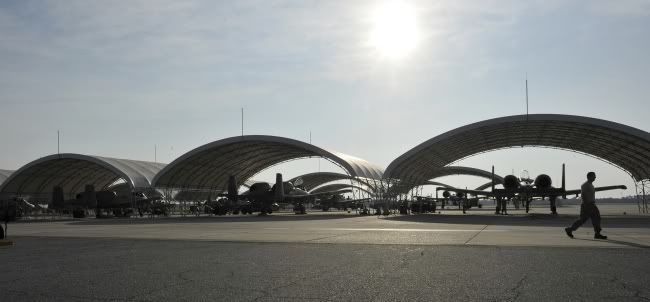
Several A-10C Thunderbolt II aircraft stand ready at Moody AFB, Georgia, July 22, 2009, in case of a possible deployment. The 23rd Wing recently held a Phase I Operational Readiness Exercise to test its capabilities to rapidly deploy Airmen and assets in the event of a short-notice tasking. (U.S. Air Force photo by Senior Airman Schelli Jones) Hi-res
Staff Sgt. Nathan Flitcraft, 23rd Component Maintenance Squadron aircraft fuels systems, instructs Airman 1st Class Armando Del Valle II, 23rd CMS aircraft fuels systems, on proper techniques while performing an in-flight refuel check here July 22. They perform the check to prepare for a possible deployment. (U.S. Air Force photo by Senior Airman Schelli Jones) Hi-res
Members of the 23rd Component Maintenance Squadron prepare for a shift turnover here July 22. During a shift turnover, both shift workers and supervisors discuss what tasks were completed and what needs to be accomplished. (U.S. Air Force photo by Senior Airman Schelli Jones) Hi-res
Airman 1st Class Havilah Kornhaber, 23rd Aircraft Maintenance Squadron crew chief, fastens tridairs here July 22. Airman Kornhaber fastened the tridairs to replace old ones and secure a panel on an A-10C Thunderbolt II. (U.S. Air Force photo by Senior Airman Schelli Jones) Hi-res
Labels:
23rd Fighter Group,
23rd Wing,
Moody
Sunday, July 26, 2009
A-10 attack jets from Arkansas to train over Tucson this week
By Carol Ann Alaimo
Arizona Daily Star
Tucson, Arizona | Published: 07.26.2009
A squadron of A-10 attack jets from Arkansas will swoop into Tucson early this week.
Warplanes from the Air National Guard's 188th Fighter Wing of Fort Smith, Ark., will be in town the last week of July and first week of August to train for war in the desert.
The eight visiting jets are here as part of Operation Snowbird, a program based at Davis-Monthan Air Force base that hosts U.S. and allied pilots to prepare for upcoming deployments.
The A-10s will fly about 20 missions a day. Most will be during daylight hours, but there will be some night flights, said 1st Lt. Mary Pekas, a D-M spokeswoman.
D-M already flies dozens of its own A-10s as the nation's largest training base for the aircraft.
So even with several more in town, the impact on residents should be minimal, Pekas said.
Source
Note: Since May 14, 2009, the 188th Fighter Wing's public website www.arftsmn.ang.af.mil/home.asp (still outdated as of December 15, 2005, and only related to their former F-16Cs) is not more online. In this case, the only available official online source for 188th Fighter Wing news is the Arkansas National Guard's public website, on which some 188th Fighter Wing's base newspaper issues of "The Flying Razorbacks" were published. But unfortunately, since the April 2009 PDF issue, there's no further update. Excuse me, but that looks to me like a very bad job of 188th Fighter Wing Public Affairs, still ignoring the work of their wing's Warthog people...
Arizona Daily Star
Tucson, Arizona | Published: 07.26.2009
A squadron of A-10 attack jets from Arkansas will swoop into Tucson early this week.
Warplanes from the Air National Guard's 188th Fighter Wing of Fort Smith, Ark., will be in town the last week of July and first week of August to train for war in the desert.
The eight visiting jets are here as part of Operation Snowbird, a program based at Davis-Monthan Air Force base that hosts U.S. and allied pilots to prepare for upcoming deployments.
The A-10s will fly about 20 missions a day. Most will be during daylight hours, but there will be some night flights, said 1st Lt. Mary Pekas, a D-M spokeswoman.
D-M already flies dozens of its own A-10s as the nation's largest training base for the aircraft.
So even with several more in town, the impact on residents should be minimal, Pekas said.
Source
Note: Since May 14, 2009, the 188th Fighter Wing's public website www.arftsmn.ang.af.mil/home.asp (still outdated as of December 15, 2005, and only related to their former F-16Cs) is not more online. In this case, the only available official online source for 188th Fighter Wing news is the Arkansas National Guard's public website, on which some 188th Fighter Wing's base newspaper issues of "The Flying Razorbacks" were published. But unfortunately, since the April 2009 PDF issue, there's no further update. Excuse me, but that looks to me like a very bad job of 188th Fighter Wing Public Affairs, still ignoring the work of their wing's Warthog people...
Saturday, July 25, 2009
Flying Tigers break records, employ precision engagement
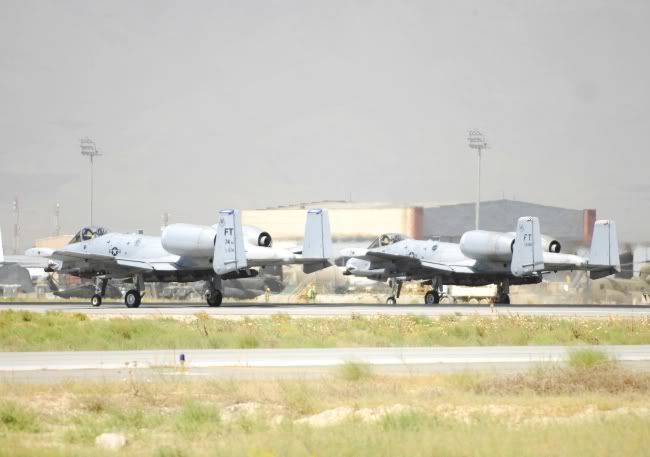
Two Warthogs from the 74th Expeditionary Fighter Squadron sit on the tarmac awaiting clearance to launch on a mission in support of Operation Enduring Freedom. The 74th EFS, deployed from Moody AFB, Georgia, recently surpassed 12,200 combat flight hours - a record. From left: A-10C 78-0674 from the 74th Fighter Squadron (marked 74 FS as squadron bird) and A-10C 78-0596 from the 75th Fighter Squadron. (U.S. Air Force photo by Tech. Sgt. John Jung) Hi-res
Posted 7/25/2009 Updated 7/25/2009
by Tech. Sgt. John Jung
455th Air Expeditionary Wing Public Affairs
7/25/2009 - BAGRAM AIRFIELD, Afghanistan -- In the past five months, the 74th Expeditionary Fighter Squadron, deployed from Moody Air Force Base, Ga., set a record number of combat flying hours in the A-10 Thunderbolt II - 12,200 to date - breaking a former record held by their sister squadron, whom they replaced in March.
During that span of time the 74th EFS 'Flying Tigers,' who trace their roots back to the American Volunteer Group of WWII, have employed hundreds of 500-pound bombs, 2.75-inch rockets and more than 54,000 30-mm high explosive shells, according to Lt. Col. Philip Weilhouwer, 74th EFS commander.
"What the team of the 74th Expeditionary Fighter Squadron and 74th Aircraft Maintenance Unit have accomplished is fly more than 2,800 missions in support of troops on the ground. Whether we drop [bombs] or shoot doesn't really matter, it's whether we've supported the guys on the ground, and if they are protected and they get the mission accomplished is what counts," said Col. Philip Weilhouwer.
The partnership between the operations and maintenance groups is one to be envied as the Flying Tigers have not gone a single day where there were not A-10s airborne conducting operations in the skies over Afghanistan.
The A-10 'Warthog,' as it is affectionately nicknamed, excels in its role of precision engagement, close air support and airborne intelligence, surveillance and reconnaissance for American and Coalition ground forces throughout Afghanistan.
Among the Warthog's large array of weapons is the GAU-8 Gatling gun mounted on internal pylons in the aircraft that makes the enemy 'fear the Hog" most when it comes to precision engagement and close air support. The GAU-8 is capable of firing upwards of 4,000 rounds of high explosive 30-mm shells per minute in a very compact footprint.
"The 30-mm is the preferred weapon of the ground commander," said Maj. Kevin Eilers, a veteran A-10 pilot. "It's a distinct advantage in a close-in fight, because I can confidently target a bad guy with almost surgical precision. There's just a lower risk of unintentional casualties."
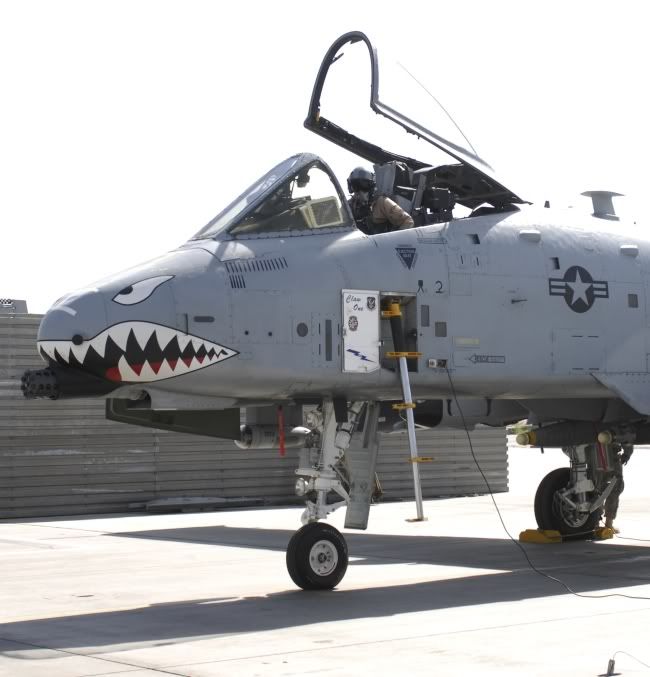
Lt. Col. Philip Weilhouwer, 74th Expeditionary Fighter Squadron commander, readies his Warthog for a mission in the skies of Afghanistan. His A-10 squadron has a lineage prior to WWII and were known as the Flying Tigers and recently they've completed over 12,000 combat hours – a feat for any fighting unit. The native of East Windsor, Connecticut, is currently deployed from Moody AFB, Georgia. Note: Ladder door art "Claw One" and 20 mission markings. (U.S. Air Force photo by Tech. Sgt. John Jung) Hi-res
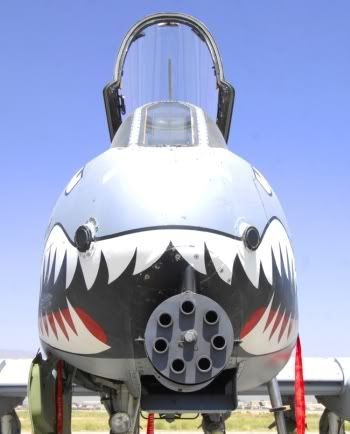
The Airmen who fly, maintain and support the 'Warthog' strive to uphold the proud heritage of the unit, which traces its roots to the American Volunteer Group, better known as the 'Flying Tigers' of WWII. The Warthog, like P-40 Warhawk of WWII, still sports the iconic gaping smile of a shark's mouth. Within that smile rests the GAU-8, 30-mm Gatling gun, capable of unleashing a torrent of high explosive rounds. (U.S. Air Force photo by Tech. Sgt. John Jung) Hi-res

Captain Kyle Lanto, an A-10 pilot with the 455th Air Expeditionary Wing's 74th Expeditionary Fighter Squadron, checks munitions on his 'Warthog,' during his preflight inspection here. Capt. Lanto is deployed from Moody AFB, Georgia, and is a native of Rantoul, Illinois. Capt. Lanto is a graduate of Eastern Carolina University is currently deployed in support of Operation Enduring Freedom in Afghanistan. Capt. Lanto's A-10 squadron has a lineage prior to WWII and were known as the Flying Tigers and recently they've completed over 12,000 combat hours – a feat for any fighting unit. (U.S. Air Force photo by Tech. Sgt. John Jung) Hi-res
Source
Thursday, July 23, 2009
Stand-alone A-10 Afghanistan shot on DefenseLINK
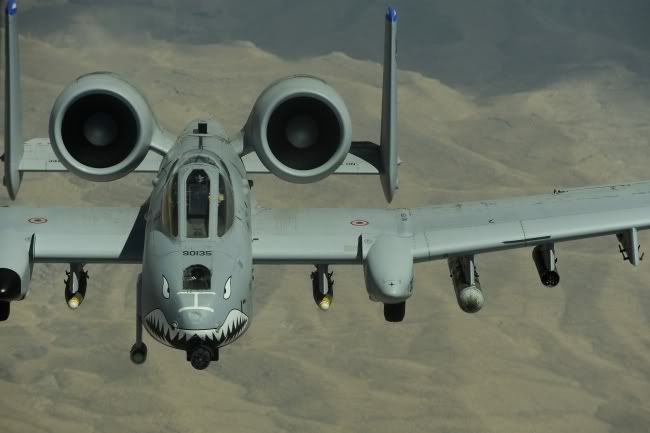
A-10 79-0135 from the 74th Fighter Squadron flies a combat mission over Afghanistan June 14, 2009. (DoD photo by Staff Sgt. Jason Robertson, U.S. Air Force) Hi-res
Wednesday, July 22, 2009
Team Osan: Ready to fight-tonight!
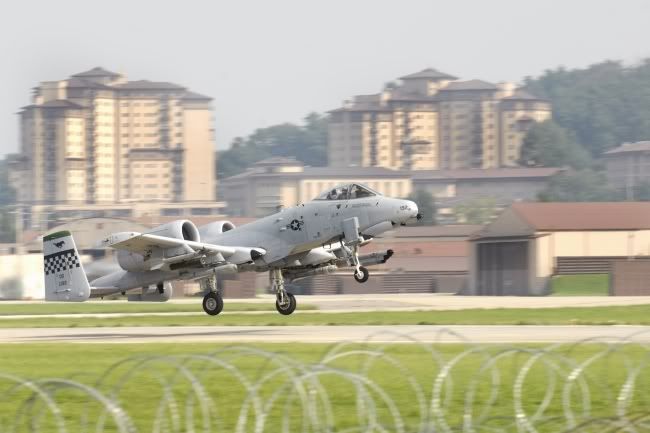
A-10 80-0192 from the 25th Fighter Squadron takes off the runway at Osan AB, Republic of Korea, during exercise Beverly Bulldog 09-03 July 22, 2009. (U.S. Air Force photo by Senior Airman Stephenie Wade) Hi-res
Labels:
25th Fighter Squadron,
51st Fighter Wing,
Osan
23rd FG welcomes new commander
Posted 7/21/2009 Updated 7/22/2009
by Senior Airman Frances Locquiao
23rd Wing Public Affairs
7/21/2009 - MOODY AIR FORCE BASE, Ga. -- History takes place once again as a group with a rich and illustrious heritage receives a new leader during a change of command ceremony here.
Col. Ellwood Hinman IV took reigns of the 23rd Fighter Group from Col. Michael O'Dowd, who will be moving to the 93rd Air Ground Operations Wing.
"To the Flying Tigers of the 23rd Fighter Group, I am very proud to join you as a fellow member of this premier organization," said the new commander. "The opportunity to lead Airmen, to command the 23rd FG, to join the proud heritage and storied legacy of the Flying Tigers, to fly the A-10 again, to live in Valdosta and to become part of the special relationship between the base and the community is almost too good to be true."
Before Colonel O'Dowd officially handed over command of the 23rd FG, he thanked his Airmen for their hard work over the past two years.
"I declare with great admiration and pride toward each of you--mission accomplished and exceptionally well done," he said. "You are at home within the sound of the guns and it was in the call to battle these past two years that your greatest moments availed."
During Colonel Hinman's previous assignment, he served as a policy advisor to the Secretary of Defense at the Pentagon, Washington, D.C. From 2006 to 2007, he attended the Marine Corps War College in Marine Corps Base Quantico, Va., and was a distinguished graduate. He is a command pilot with more than 3,000 flying hours in the A-10, T-37, F-117A and T-38.
"Colonel Hinman's consistent outstanding performance and varied background make him uniquely qualified to lead this group," said Col. Gary Henderson, 23rd Wing commander. "His experiences flying several different aircraft and working with our joint and coalition partners are notable."
During Colonel Hinman's speech, he revealed his vision for the 23rd FG.
"As your commander, building 'people first' leaders, 'safety first' operations and 'integrity first' Airmen will be my top priority," said Colonel Hinman. "It is through our collective commitment to these principles and to those from our past that will allow us to succeed."
The 23rd FG directs the flying operations for the largest combat-coded A-10 fighter organization in the Air Force, consisting of two 24-aircraft, combat-ready A-10C Thunderbolt II squadrons and an operations support squadron.
The group ensures overall combat readiness of more than 80 pilots and 135 operations support personnel and plans and executes worldwide contingency taskings in coordination with 23rd Wing rescue assets.
In addition, the group is responsible for all Moody airfield operations, encompassing more than 5,500 square miles of airspace and more than 75,000 operations, as well as Grand Bay Aerial Gunnery Range operations.
"It's absolutely essential that we remain fully combat-ready," said Colonel Hinman. "It's also paramount that we put safety first and foremost as we train and prepare for future deployments."
Colonel Hinman has master's degrees in arts, political science and public administration from Midwestern State University, Texas, in addition to a bachelor's degree in science from the U.S. Air Force Academy, Colo.
The colonel and his wife, Jennifer, have three sons, Parker, Hunter and Chase.
"Jennifer and I are honored and stand ready to serve the fine men and women of this outstanding organization," said Colonel Hinman. "I look forward to leading you and working in partnership with the 476th Fighter Group and with fellow group commanders in the 23rd Wing."

Airmen salute as the Moody Air Force Honor Guard presents the colors during a change of command ceremony here July 20, 2009. Col. Michael O'Dowd relinquished command of the 23rd Fighter Group to Col. Ellwood Hinman IV. (U.S. Air Force photo by Tech. Sgt. Jeffrey Allen)

Colonel Michael O'Dowd, 23rd Fighter Group outgoing commander, hands over the guidon to Col. Gary Henderson, 23rd Wing commander, at the 23rd FG change of command ceremony here July 20, 2009. Colonel O'Dowd has been the 23rd FG commander for two years. (U.S. Air Force photo by Tech. Sgt. Jeffrey Allen)

Colonel Ellwood Hinman IV, 23rd Fighter Group incoming commander, receives the guidon from Col. Gary Henderson, 23rd Wing commander, during the 23rd FG change of command ceremony here July 20, 2009. The 23rd FG directs the flying operations of the largest A-10 fighter organization in the U.S. Air Force. (U.S. Air Force photo by Tech. Sgt. Jeffrey Allen)

Colonel Gary Henderson, 23rd Wing commander, and Col. Michael O'Dowd, 23rd Fighter Group outgoing commander, applaud after Col. Ellwood Hinman IV took reigns of the 23rd FG change of command ceremony here July 20, 2009. (U.S. Air Force photo by Tech. Sgt. Jeffrey Allen)

Colonel Ellwood Hinman IV, 23rd Fighter Group incoming commander, gives his remarks after accepting command from Col. Gary Henderson, 23rd Wing commander, at the 23rd FG change of command ceremony here July 20, 2009. (U.S. Air Force photo by Tech. Sgt. Jeffrey Allen)
Source
by Senior Airman Frances Locquiao
23rd Wing Public Affairs
7/21/2009 - MOODY AIR FORCE BASE, Ga. -- History takes place once again as a group with a rich and illustrious heritage receives a new leader during a change of command ceremony here.
Col. Ellwood Hinman IV took reigns of the 23rd Fighter Group from Col. Michael O'Dowd, who will be moving to the 93rd Air Ground Operations Wing.
"To the Flying Tigers of the 23rd Fighter Group, I am very proud to join you as a fellow member of this premier organization," said the new commander. "The opportunity to lead Airmen, to command the 23rd FG, to join the proud heritage and storied legacy of the Flying Tigers, to fly the A-10 again, to live in Valdosta and to become part of the special relationship between the base and the community is almost too good to be true."
Before Colonel O'Dowd officially handed over command of the 23rd FG, he thanked his Airmen for their hard work over the past two years.
"I declare with great admiration and pride toward each of you--mission accomplished and exceptionally well done," he said. "You are at home within the sound of the guns and it was in the call to battle these past two years that your greatest moments availed."
During Colonel Hinman's previous assignment, he served as a policy advisor to the Secretary of Defense at the Pentagon, Washington, D.C. From 2006 to 2007, he attended the Marine Corps War College in Marine Corps Base Quantico, Va., and was a distinguished graduate. He is a command pilot with more than 3,000 flying hours in the A-10, T-37, F-117A and T-38.
"Colonel Hinman's consistent outstanding performance and varied background make him uniquely qualified to lead this group," said Col. Gary Henderson, 23rd Wing commander. "His experiences flying several different aircraft and working with our joint and coalition partners are notable."
During Colonel Hinman's speech, he revealed his vision for the 23rd FG.
"As your commander, building 'people first' leaders, 'safety first' operations and 'integrity first' Airmen will be my top priority," said Colonel Hinman. "It is through our collective commitment to these principles and to those from our past that will allow us to succeed."
The 23rd FG directs the flying operations for the largest combat-coded A-10 fighter organization in the Air Force, consisting of two 24-aircraft, combat-ready A-10C Thunderbolt II squadrons and an operations support squadron.
The group ensures overall combat readiness of more than 80 pilots and 135 operations support personnel and plans and executes worldwide contingency taskings in coordination with 23rd Wing rescue assets.
In addition, the group is responsible for all Moody airfield operations, encompassing more than 5,500 square miles of airspace and more than 75,000 operations, as well as Grand Bay Aerial Gunnery Range operations.
"It's absolutely essential that we remain fully combat-ready," said Colonel Hinman. "It's also paramount that we put safety first and foremost as we train and prepare for future deployments."
Colonel Hinman has master's degrees in arts, political science and public administration from Midwestern State University, Texas, in addition to a bachelor's degree in science from the U.S. Air Force Academy, Colo.
The colonel and his wife, Jennifer, have three sons, Parker, Hunter and Chase.
"Jennifer and I are honored and stand ready to serve the fine men and women of this outstanding organization," said Colonel Hinman. "I look forward to leading you and working in partnership with the 476th Fighter Group and with fellow group commanders in the 23rd Wing."
Airmen salute as the Moody Air Force Honor Guard presents the colors during a change of command ceremony here July 20, 2009. Col. Michael O'Dowd relinquished command of the 23rd Fighter Group to Col. Ellwood Hinman IV. (U.S. Air Force photo by Tech. Sgt. Jeffrey Allen)
Colonel Michael O'Dowd, 23rd Fighter Group outgoing commander, hands over the guidon to Col. Gary Henderson, 23rd Wing commander, at the 23rd FG change of command ceremony here July 20, 2009. Colonel O'Dowd has been the 23rd FG commander for two years. (U.S. Air Force photo by Tech. Sgt. Jeffrey Allen)
Colonel Ellwood Hinman IV, 23rd Fighter Group incoming commander, receives the guidon from Col. Gary Henderson, 23rd Wing commander, during the 23rd FG change of command ceremony here July 20, 2009. The 23rd FG directs the flying operations of the largest A-10 fighter organization in the U.S. Air Force. (U.S. Air Force photo by Tech. Sgt. Jeffrey Allen)
Colonel Gary Henderson, 23rd Wing commander, and Col. Michael O'Dowd, 23rd Fighter Group outgoing commander, applaud after Col. Ellwood Hinman IV took reigns of the 23rd FG change of command ceremony here July 20, 2009. (U.S. Air Force photo by Tech. Sgt. Jeffrey Allen)
Colonel Ellwood Hinman IV, 23rd Fighter Group incoming commander, gives his remarks after accepting command from Col. Gary Henderson, 23rd Wing commander, at the 23rd FG change of command ceremony here July 20, 2009. (U.S. Air Force photo by Tech. Sgt. Jeffrey Allen)
Source
Labels:
23rd Fighter Group,
23rd Wing,
Moody
Tuesday, July 21, 2009
D-M A-10Cs caught at Lajes Field enroute Afghanistan
Updated 23 July 2009

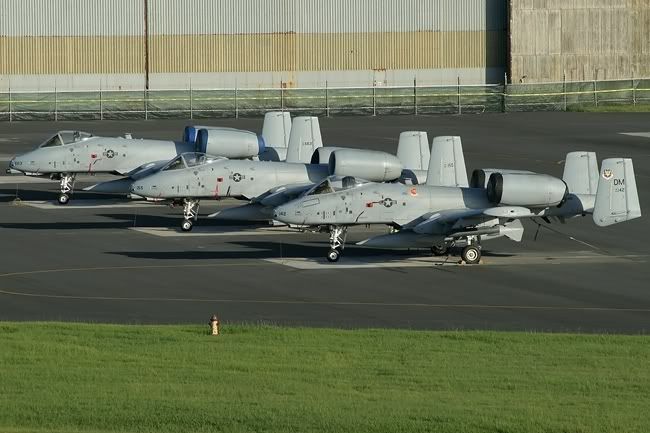
A-10C 80-0246 still without new unit markings. (Photo by André Inácio)

A-10C 80-0150. (Photo by André Inácio)

A-10C 78-0709 still without new unit markings. (Photo by André Inácio)

A-10C 80-0179. (Photo by André Inácio)

A-10C 79-0202. (Photo by André Inácio)


Special thanks to Portuguese photographer and Warthog News contributor André Inácio for his permission to post his exclusive shots for first time on my blog!
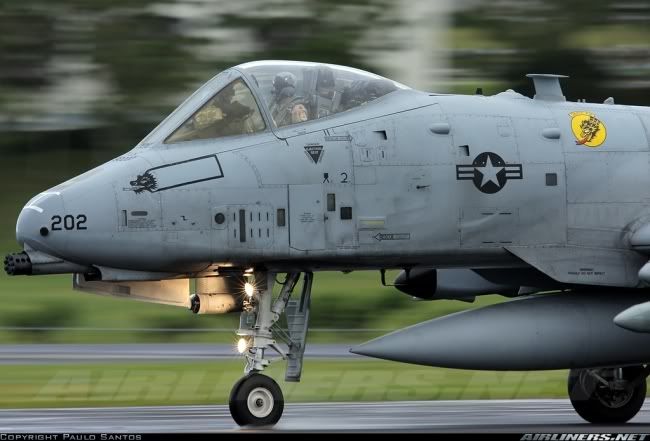
Additional picture from Portuguese photographer and Warthog News contributor Paulo Santos, first-published on airliners.net:

Close-up shot of A-10C 79-0202. (Photo by Paulo Santos) Hi-res
Related info:
D-M A-10Cs logged at Lajes Field enroute Afghanistan
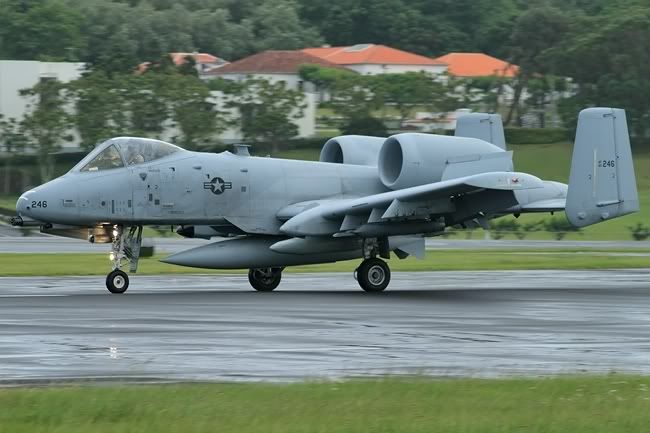
A-10C 80-0246 still without new unit markings. (Photo by André Inácio)
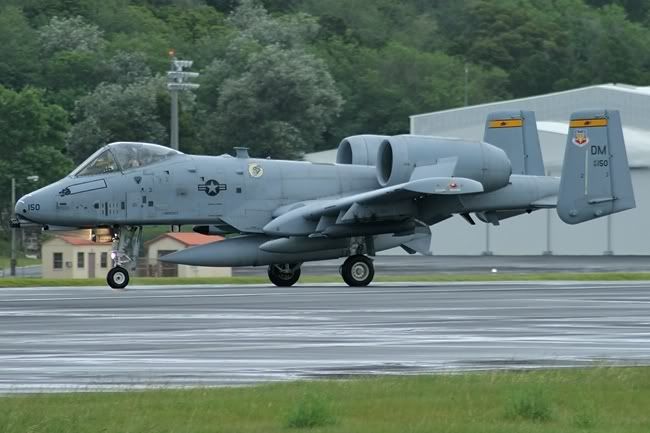
A-10C 80-0150. (Photo by André Inácio)
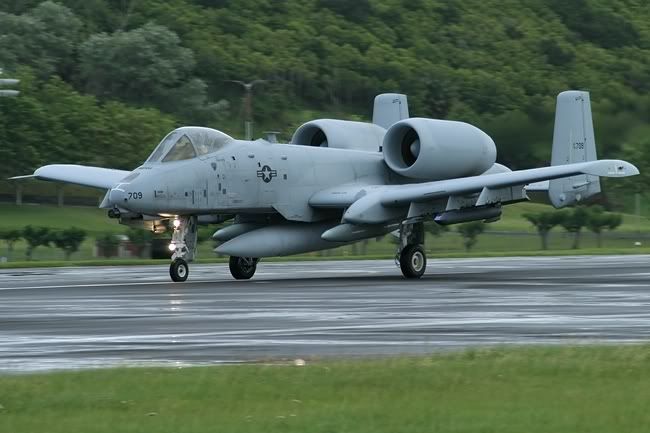
A-10C 78-0709 still without new unit markings. (Photo by André Inácio)
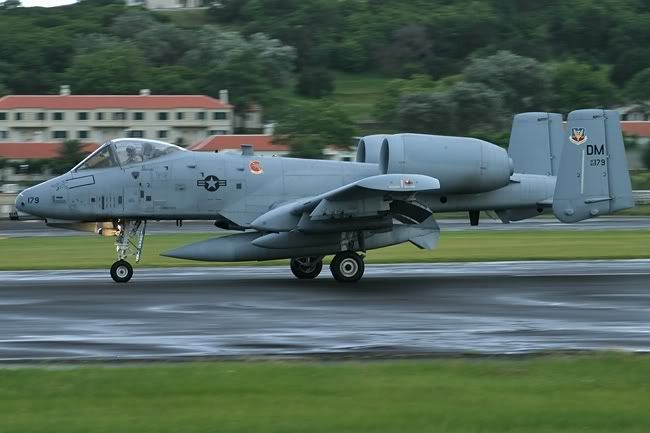
A-10C 80-0179. (Photo by André Inácio)
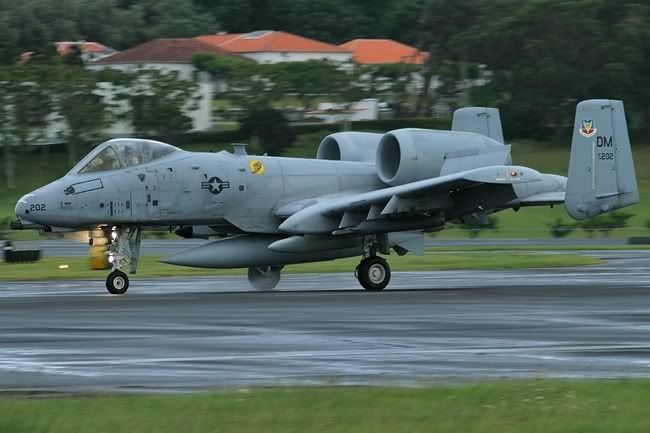
A-10C 79-0202. (Photo by André Inácio)
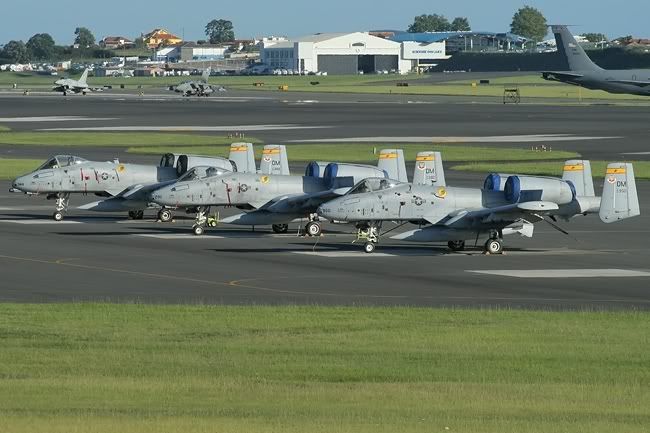
Special thanks to Portuguese photographer and Warthog News contributor André Inácio for his permission to post his exclusive shots for first time on my blog!
Additional picture from Portuguese photographer and Warthog News contributor Paulo Santos, first-published on airliners.net:
Close-up shot of A-10C 79-0202. (Photo by Paulo Santos) Hi-res
Related info:
D-M A-10Cs logged at Lajes Field enroute Afghanistan
Historic Flying Tigers Excel at Close Air Support Mission in Afghanistan
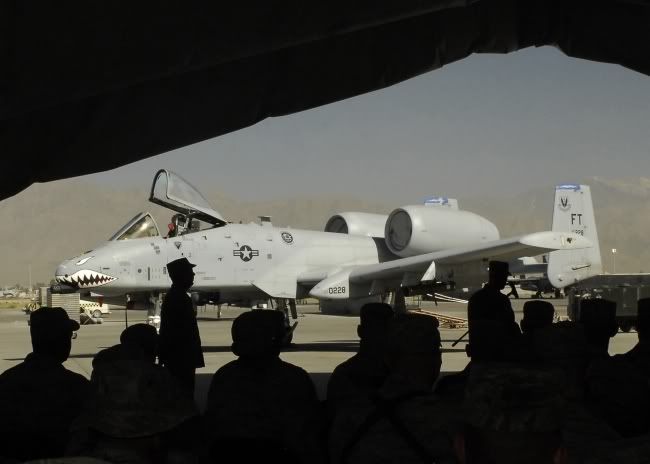
A-10 80-0228 from the 74th Fighter Squadron and currently deployed with the 74th Expeditionary Fighter Squadron represents the 455th Expeditionary Aircraft Maintenance Unit, during a Change of Command Ceremony at Bagram AB, Afghanistan, July 20, 2009. The Warthog's mission is to provide close air support and precision engagement missions throughout Afghanistan on a daily basis in support of Coalition ground forces. (U.S. Air Force photo by Senior Airman Felicia Juenke) Hi-res
by Tech. Sgt. John Jung
455th Air Expeditionary Wing Public Affairs
7/21/2009 - BAGRAM AIRFIELD, Afghanistan -- They trace their heritage back to the famous Flying Tigers of WWII's war-torn China. In homage to the storied Airmen of the past, the 74th Expeditionary Fighter Squadron still has the iconic sharks face painted on the front of their A-10 Thunderbolt II's, lovingly nicknamed the "Warthog."
The Warthog's mission is to provide close air support and precision engagement missions throughout Afghanistan on a daily basis in support of Coalition ground forces.
But before the pilots ever get in the Warthog, it's the 74th Aircraft Maintenance Unit that gets the aircraft airborne. There has not been a single day in the deployment of the 74th EFS that squadron didn't have at least two aircraft airborne providing support to their warrior counterparts on the ground.
"Just like the Airmen that defended China in World War II, the 74th AMU is often short on resources, maintain aging aircraft and must make do with what they can," said Capt. James Schieser, 74th Expeditionary Aircraft Maintenance Unit, Officer-in-Charge. "The strong leadership, dedication and perseverance of our non-commissioned officers, senior non-commissioned officers and officer corps, are what ensure every aircraft is fully mission-capable. The maintainers of the 74th AMU understand, with the Flying Tiger legacy they inherited, failure is not an option."
To date the Flying Tigers have broken records by flying upwards of 12,000 mission hours, expending more than 100 tons of ordinance in the CAS mission since arriving in February 2009. However, many times all it took was a show of force to end an engagement.
"We seek to avoid civilian casualties in all our operations - period," said Senior Master Sgt. Victor Castillo, 74th AMU Weapons Section Superintendent. "We have a variety of methods we use including loading of precision guided munitions, monthly updates of aircraft digital maps, and daily maintenance of our targeting systems to ensure the safety of innocent civilians on the ground."
But when enemy combatants don't flee after a show of force, the Warthog can deliver a precise strike to protect Coalition ground forces.
Army Specialist Jason Dorsey, "C" Company, 178th Infantry, saw firsthand the precision and power of the Warthog.
"The A-10s were a valuable asset to us on ground missions here in Afghanistan. Their speed and precise targeting provided great support for us and kept the bad guys' heads down during firefights," Spc. Dorsey said.
"We have so many soldiers coming in from the field to thank us - it's their stories of desperately needing 'air' and seeing an A-10 flying overhead providing cover for them that kept us energized and motivated," said Senior Master Sgt. Thomas E. Moore, 74th AMU Lead Production Superintendent. "It kept us working hard even when it seemed all we were doing was launching and recovering jets 24/7."
Senior Airman Gabriel Ramirez, from the 455th Aircraft Maintenance Squadron's 74th Aircraft Maintenance Unit, installs an environmental control panel on the A-10 Thunderbolt, here July 20, 2009. Airman Ramirez is deployed from the 23rd Aircraft Maintenance Squadron, Moody AFB, Georgia, and hails from Altus, Oklahoma. (U.S. Air Force photo by Senior Airman Felicia Juenke)
Staff Sgt. James Irvin, from the 455th Aircraft Maintenance Squadron's 74th Aircraft Maintenance Unit, performs an air cycle machine inspection to ensure the A-10 Thunderbolt functions properly, here July 20, 2009. Sergeant Irvin is deployed from the 23rd Aircraft Maintenance Squadron, Moody AFB, Georgia, and hails from Kerrville, Texas. They support Coalition forces on a daily basis in support of Operation Enduring Freedom. (U.S. Air Force photo by Senior Airman Felicia Juenke) Hi-res
Senior Airman Jacob McDonald, from the 455th Aircraft Maintenance Squadron's 74th Aircraft Maintenance Unit, talks to the pilot of an A-10 Thunderbolt during a "Red ball," which is when the pilot talks to the ground crew before take off if they feel anything is wrong with the aircraft so that it can get repaired, here July 20, 2009. Airman McDonald is deployed from the 23rd Aircraft Maintenance Squadron, Moody AFB, Georgia, and hails from Canon City, Colorado. They support Coalition forces on a daily basis in support of Operation Enduring Freedom. (U.S. Air Force photo by Senior Airman Felicia Juenke) Hi-res
Aircraft art is just one way for Airmen to represent what base they are from; this A-10 Thunderbolt is from the 23rd Aircraft Maintenance Squadron, Moody AFB, Georgia. The A-10 has excellent maneuverability at low air speeds and altitude, and are highly accurate weapons-delivery platforms. They support Coalition forces on a daily basis in support of Operation Enduring Freedom. (U.S. Air Force photo by Senior Airman Felicia Juenke) Hi-res
The tail of A-10 79-0172 from the 74th Fighter Squadron. (U.S. Air Force photo by Senior Airman Felicia Juenke) Hi-res
Load crew competition tests maintainers
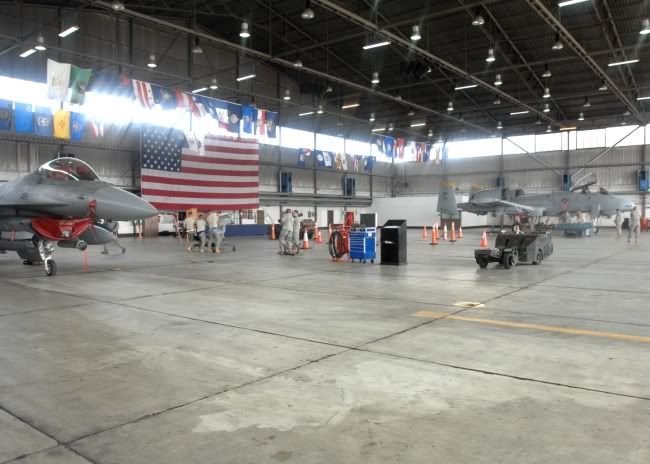
Members of the 52nd Aircraft Maintenance Squadron and the 23rd and 81st Fighter Squadrons at Spangdahlem AB, Germany, compete as inspectors look on and judge during the load crew competition July 17, 2009. Members from the fighter squadrons put together three-man teams and competed against each other to load weapons onto the F-16 Fighting Falcon and A-10 Warthog in the fastest time, as well as a jammer driver contest that tested various members from each squadron on how fast and accurately they could maneuver the MJ1, which is used to load weapons on the aircraft. (U.S. Air Force photo by Senior Airman Jenifer H. Calhoun) Hi-res

Left: The weapons load crew competition trophy sits as members of the 52nd Aircraft Maintenance Squadron, 81st Fighter Squadron weapons load crew team, compete in the Weapons Load Crew Competition July 17, 2009. (U.S. Air Force photo by Senior Airman Jenifer H. Calhoun)

Right: Airman 1st Class Troy Roberts, 52nd Aircraft Maintenance Squadron and 81st Fighter Squadron weapons load crew team member, prepares a weapon to be loaded onto an A-10 Thunderbolt II July 17, 2009. (U.S. Air Force photo by Senior Airman Jenifer H. Calhoun) Hi-res
Source
Serbian air force members visit base

Capt. Jeffery Dennis, 81st Fighter Squadron, sits in the pilot's seat of an A-10 Warthog and explains its features to distinguished visitors from the Serbian air force July 16, 2009. Four members of the Serbian air force came to Spangdahlem to learn how a fighter squadron runs as part of their visit to the 603rd Air and Space Operations Center located at Ramstein AB, Germany. (U.S. Air Force photo by Senior Airman Benjamin Wilson) Hi-res

Capt. Jeffery Dennis, 81st Fighter Squadron, describes the elements of an A-10 Thunderbolt II to Sasa Jovanovic, B-2 Spirit desk officer for the 204th Air Base of the Serbian air force, and Col. Zlatko Sobot, chief of Serbian Air Force and Air Defense Operation Center, during their visit to Spangdahlem AB July 16, 2009. (U.S. Air Force photo by Senior Airman Benjamin Wilson) Hi-res

Capt. Jeffery Dennis, 81st Fighter Squadron, explains the components of an A-10 Thunderbolt II simulator to Lt. Col. Roberto Delakroce, B-2 Spirit chief for the 204th Air Base of the Serbian air force, during his visit to Spangdahlem AB July 16, 2009. (U.S. Air Force photo by Senior Airman Benjamin Wilson) Hi-res

Lt. Col. Roberto Delakroce, B-2 Spirit chief for the 204th Air Base of the Serbian air force, flies an A-10 Thunderbolt II during his visit to Spangdahlem AB, July, 16, 2009. (U.S. Air Force photo by Senior Airman Benjamin Wilson) Hi-res

Capt. Jeffery Dennis, 81st Fighter Squadron, explains the proper technique for executing air-to-air tactics to Maj. Darko Glisic, A-2 desk officer for the Serbian Air Force and Air Defense Command, as Col. Zlatko Sobot, chief of Serbian Air Force and Air Defense Operation Center, observes during their visit to Spangdahlem AB July 16, 2009. (U.S. Air Force photo by Senior Airman Benjamin Wilson Hi-res

Capt. Jeffery Dennis, 81st Fighter Squadron, instructs Maj. Darko Glisic, A-2 desk officer for the Serbian Air Force and Air Defense Command, as he flies in a simulated "dog fight" during his visit to Spangdahlem AB July 16, 2009. (U.S. Air Force photo by Senior Airman Benjamin Wilson) Hi-res
Source
Osan AB Kicks of Beverly Bulldog 09-03

Staff Sgt. Joshua Johnson and Senior Airman Ray Meza build an A-10 nose tire assembly July 20, 2009, during Osan's Operational Readiness Exercise Beverly Bulldog 09-03. Both are aero repairmen from the 51st Maintenance Squadron. (U.S. Air Force photo by Senior Airman Stephenie Wade) Hi-res
Labels:
25th Fighter Squadron,
51st Fighter Wing,
Osan
Monday, July 20, 2009
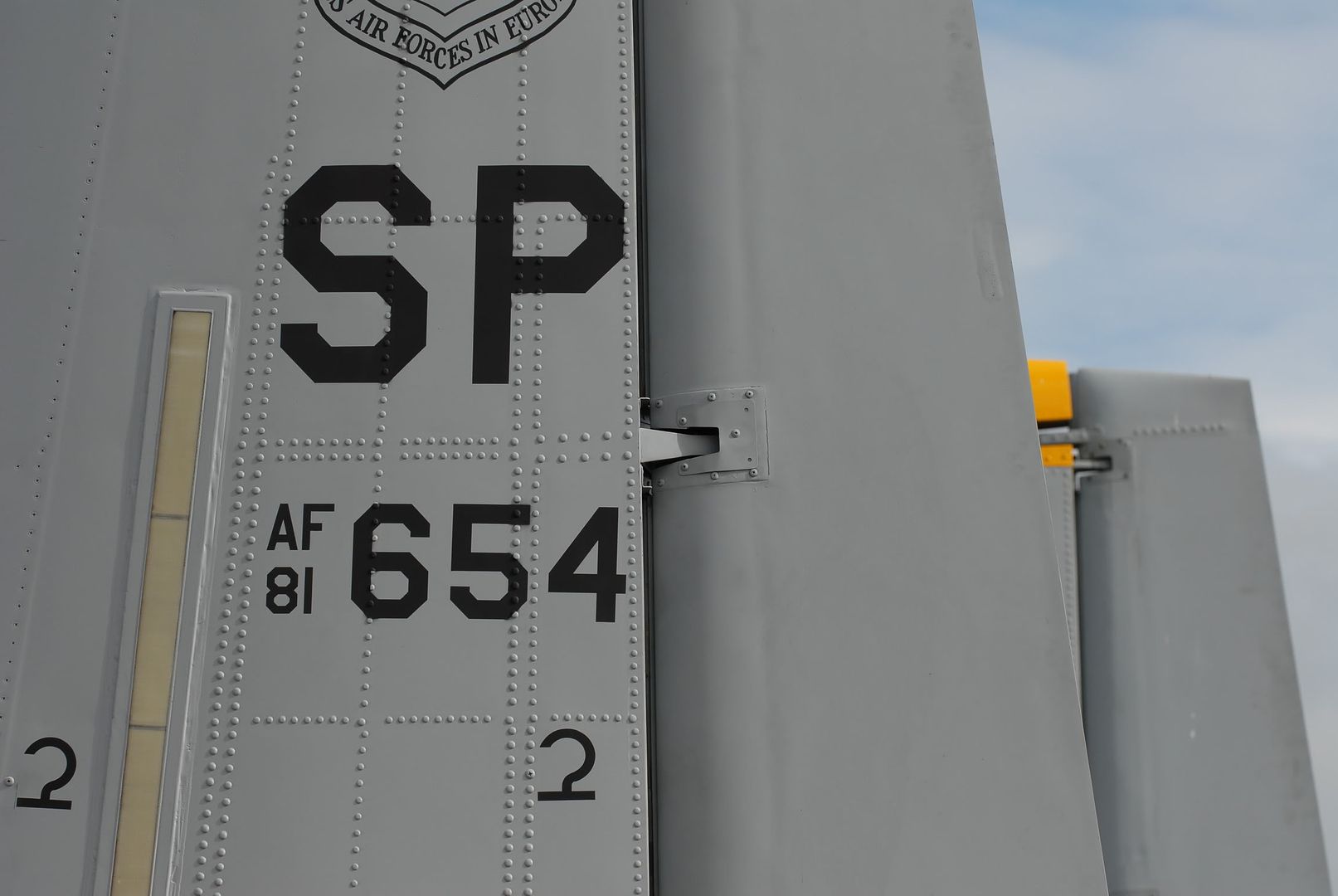
Bad paint job - A-10C 82-0654 still with wrong serial number markings
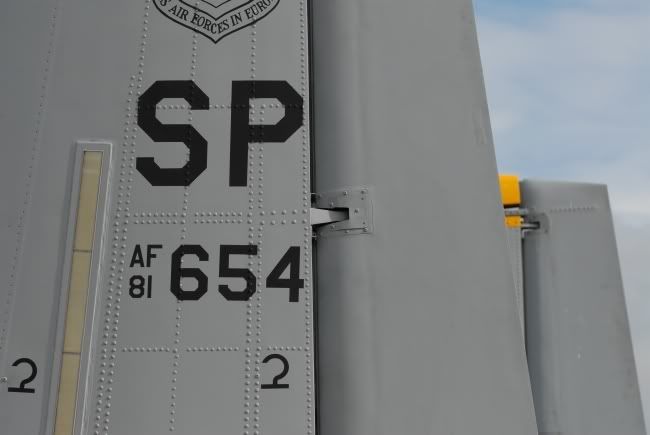
A-10C 82-0654 from the 81st Fighter Squadron, 52nd Fighter Wing, Spangdahlem AB, Germany, on static display at RIAT Fairford, United Kingdom, July 18-19, 2009. Probably since his A-10C upgrade the jet is marked as Fiscal Year 1981 (FY 81) aircraft by mistake. (Photo by Steve Huckvale) Hi-res
A-10C 82-0654 also participated as static display at Volkel Airshow 2009 (officially called Luchtmachtdagen 2009 by Netherland's Koninklijke Luchtmacht) on June 19-20, 2009. The wrong serial number is also painted in front of the aircraft's windshield. See: 81st Fighter Squadron A-10s caught during Volkel Airshow 2009
Special thanks to Warthog News contributor Steve Huckvale from U.K. for providing this very interesting close-up shot!
Sunday, July 19, 2009
81st Fighter Squadron A-10s caught at Spangdahlem AB, July 16, 2009

A-10 81-0960 from the 81st Fighter Squadron lands at Spangdahlem AB, Germany, July 16, 2009. (Photo by Mike Becker) Full size
Wing’s newest members see A-10’s up close

During the field trip at Saylor Creek target range on July 11, 2009, many members from the Idaho Air National Guard 124th Wing and the 124th Student Flight watch for their first time as the 190th Fighter Squadron's A-10 aircraft fly by them shooting ground weapons at targets near by. (U.S. Air Force photo by Tech Sgt. Becky Vanshur) Hi-res
by Tech Sgt Becky Vanshur
124th Wing Public Affairs Office
7/17/2009 - GOWEN FIELD, Boise, Idaho -- More than 50 wing members, including more than 30 new members in the 124th Wing Student Flight, gathered for a field trip to Saylor Creek Training Area south of Mountain Home Air Force Base July 11.
The Saylor Creek visit - the first of its kind - was proposed by State Command Chief Master Sgt. Pete Glick for the student flight members and expanded to include the rest of the wing.
Many of the guard members have never seen weapons being shot from the A-10 aircraft, especially up close. Tech. Sgt. Perry Sharp from the 124th Wing Chaplain's Support Staff said, "I was surprised by the speed of the aircraft. It was an uplifting experience."
The members of the Student Flight got to experience the capabilities of the A-10 aircraft and see the pilots practice their accuracy and skills.
Student flight member Edward Griffith said, "This experience has inspired me to continue with my dreams of becoming a fighter pilot in the Air Force."
A-10 Pilot 1st Lt. Ryan Brown of the 190th Fighter Squadron gave an overview on the different targets located at Saylor Creek and an informative description on how the pilots hit their targets.
Tech. Sgt. Steven Vinsonhaler, NCO in charge of the student flight, said he hopes to keep the idea of two Saylor Creek visits yearly going.
"The turn out was definitely a success, especially for the student flight side. Many of the individuals of the student flight were interested in becoming pilots and now this trip has furthered that interest into a future goal for them. The wing members were excited to see the impact and end result of dropping bombs...an overall powerful trip that is a learning experience and an increase for morale." he said.
Source
Labels:
124th Wing,
190th Fighter Squadron,
Boise
The 355th Fighter Wing makes deployment history
by Doug Herndon
355th Fighter Wing History Office
7/17/2009 - DAVIS-MONTHAN AIR FORCE BASE, Ariz. -- Airmen from the 355th Fighter Wing made Air Force history last week by deploying the first A-10C aircraft and maintenance support elements to Afghanistan. The bulk of the deployment occurred Saturday with more than 100 personnel, primarily from the 355th Maintenance group departing on a chartered flight.
"They are motivated and ready to deploy," said Master Sgt. Jose Silva, first sergeant for the 355th Aircraft Maintenance Squadron.
The Airmen are expected to be gone for six months and return around the beginning of the new year.
Wing personnel are no strangers to Operation Enduring Freedom. Since the beginning of OEF in 2001, the wing's 354th FS "Bulldogs," maintenance and support personnel have deployed four times to Bagram Airfield. The current deployment comes at a time when the President has ordered an increase in the number of military forces in the region.
Along with the deployment notification, the 355th Maintenance Group was also tasked with two major projects: a precision engagement software upgrade, known as Suite 5, and attaching the Sniper Advanced Targeting Pods to the jets.
The Suite 5 upgrade, which required uploading the software on the jet's computer system, had to be tested before pilots could train on the new system. The new software, which enhances the display in the cockpit with a much clearer and sharper image, was loaded and made completely functional in less than 60 days.
Another combat milestone will be reached during this deployment as the Bulldogs become the first A-10C unit to utilize the Sniper Advanced Targeting Pod in combat. The Sniper ATP allows pilots to locate, identify and track targets on the battlefield. Once the pods were received through the 355th Logistic Readiness Squadron, maintainers, with the aid of Lockheed Martin representatives, prepared the pods for the installation process. After the final checks, the Bulldogs spent several months flying both day and night missions to train on the newly installed equipment.
"Our maintenance personnel worked twelve- to fourteen-hour days, to include weekends. They really burned the midnight oil to ensure these projects were completed," said Mr. Bruce Black, 355th MXG deputy commander.
Source
355th Fighter Wing History Office
7/17/2009 - DAVIS-MONTHAN AIR FORCE BASE, Ariz. -- Airmen from the 355th Fighter Wing made Air Force history last week by deploying the first A-10C aircraft and maintenance support elements to Afghanistan. The bulk of the deployment occurred Saturday with more than 100 personnel, primarily from the 355th Maintenance group departing on a chartered flight.
"They are motivated and ready to deploy," said Master Sgt. Jose Silva, first sergeant for the 355th Aircraft Maintenance Squadron.
The Airmen are expected to be gone for six months and return around the beginning of the new year.
Wing personnel are no strangers to Operation Enduring Freedom. Since the beginning of OEF in 2001, the wing's 354th FS "Bulldogs," maintenance and support personnel have deployed four times to Bagram Airfield. The current deployment comes at a time when the President has ordered an increase in the number of military forces in the region.
Along with the deployment notification, the 355th Maintenance Group was also tasked with two major projects: a precision engagement software upgrade, known as Suite 5, and attaching the Sniper Advanced Targeting Pods to the jets.
The Suite 5 upgrade, which required uploading the software on the jet's computer system, had to be tested before pilots could train on the new system. The new software, which enhances the display in the cockpit with a much clearer and sharper image, was loaded and made completely functional in less than 60 days.
Another combat milestone will be reached during this deployment as the Bulldogs become the first A-10C unit to utilize the Sniper Advanced Targeting Pod in combat. The Sniper ATP allows pilots to locate, identify and track targets on the battlefield. Once the pods were received through the 355th Logistic Readiness Squadron, maintainers, with the aid of Lockheed Martin representatives, prepared the pods for the installation process. After the final checks, the Bulldogs spent several months flying both day and night missions to train on the newly installed equipment.
"Our maintenance personnel worked twelve- to fourteen-hour days, to include weekends. They really burned the midnight oil to ensure these projects were completed," said Mr. Bruce Black, 355th MXG deputy commander.
Source
D-M Airmen deploy in support of Operation Enduring Freedom
by 1st Lt. Mary Pekas
355th Fighter Wing Public Affairs
7/17/2009 - DAVIS-MONTHAN AIR FORCE BASE, Ariz. -- Nearly 300 Airmen and a number of A-10 Thunderbolt II aircraft from the 355th Fighter Wing here deployed to Afghanistan last week to support Operation Enduring Freedom.
The wing deployed pilots, maintainers and support personnel primarily from the 354th Fighter Squadron and the 355th Maintenance Group for a tour that will last approximately six months.
The 354th FS "Bulldogs" and the 355th MXG operate and maintain the A-10, an attack aircraft primarily used to provide close air support to ground forces. The A-10 mission also includes combat search and rescue, and forward air control for other combat aircraft.
"The 355th Fighter Wing is ready for combat," said Col. Robert Singleton, 355th Fighter Wing vice commander. "We are sending America's best warriors into harm's way, confident in their ability to successfully execute their mission."
The wing's last A-10 deployment was in 2007 at Bagram Air Field, Afghanistan, where its pilots flew more than 10,000 hours. Between deployments, the team of pilots and maintenance personnel take advantage of the unique, strategic training opportunities here in our desert landscape.
"The pilots of the 354th Fighter Squadron, under the leadership of Lt. Col. Michael Millen, have honed their skills on the incredible training ranges in southern Arizona. Our highly skilled maintainers have learned to generate combat capability during high operations tempos and temperature extremes," said the colonel. "The terrain, the weather, the airspace - few places offer such ideal training grounds."
While preparation is important to combat success, the colonel added that the Davis-Monthan and Tucson communities enable the mission in other ways.
"What brings our Airmen the most comfort is knowing their families are welcomed and cared for in this community," said Colonel Singleton. "With that assurance, our warriors can focus on bringing the fight to the enemy, and protecting our joint and coalition partners on the ground."
Source
355th Fighter Wing Public Affairs
7/17/2009 - DAVIS-MONTHAN AIR FORCE BASE, Ariz. -- Nearly 300 Airmen and a number of A-10 Thunderbolt II aircraft from the 355th Fighter Wing here deployed to Afghanistan last week to support Operation Enduring Freedom.
The wing deployed pilots, maintainers and support personnel primarily from the 354th Fighter Squadron and the 355th Maintenance Group for a tour that will last approximately six months.
The 354th FS "Bulldogs" and the 355th MXG operate and maintain the A-10, an attack aircraft primarily used to provide close air support to ground forces. The A-10 mission also includes combat search and rescue, and forward air control for other combat aircraft.
"The 355th Fighter Wing is ready for combat," said Col. Robert Singleton, 355th Fighter Wing vice commander. "We are sending America's best warriors into harm's way, confident in their ability to successfully execute their mission."
The wing's last A-10 deployment was in 2007 at Bagram Air Field, Afghanistan, where its pilots flew more than 10,000 hours. Between deployments, the team of pilots and maintenance personnel take advantage of the unique, strategic training opportunities here in our desert landscape.
"The pilots of the 354th Fighter Squadron, under the leadership of Lt. Col. Michael Millen, have honed their skills on the incredible training ranges in southern Arizona. Our highly skilled maintainers have learned to generate combat capability during high operations tempos and temperature extremes," said the colonel. "The terrain, the weather, the airspace - few places offer such ideal training grounds."
While preparation is important to combat success, the colonel added that the Davis-Monthan and Tucson communities enable the mission in other ways.
"What brings our Airmen the most comfort is knowing their families are welcomed and cared for in this community," said Colonel Singleton. "With that assurance, our warriors can focus on bringing the fight to the enemy, and protecting our joint and coalition partners on the ground."
Source
Friday, July 17, 2009
81st Fighter Squadron A-10s caught at Pampa Range, Belgium, July 2009
Osan Departs for Red Flag Alaska
by Staff Sgt. Brian Ferguson
51st Fighter Wing Public Affairs
7/17/2009 - OSAN AIR BASE, Republic of Korea -- Airmen from Osan Air Base joined military members from across the world this week to participate in what is considered the most intense training opportunity available to combat flying units- RED FLAG-Alaska 09-03, scheduled for July 23 - Aug. 7.
This Pacific Air Forces commander-directed field training exercise for U.S. and coalition forces provides joint offensive counter-air, interdiction, close air support, combat search and rescue, and large force employment training in a simulated combat environment.
"Red Flag Alaska provides a high intensity training opportunity that is not available on the Korean Peninsula," said Col. Mark D. Mattison, Red Flag Alaska deployed forces commander. "It is the culmination of a six month training plan for combat flying units. You can only get that training at a Red Flag."
What makes the training so intense is the presence of a dedicated aggressor unit. In addition to focusing on air combat at the tactical and operational levels, the aggressor role expands training opportunities across the board, to include ground, space and cyberspace. This provides the most realistic simulated combat environment possible.
"Outside of combat, Red Flag is the only training opportunity where you can pull all the different building blocks of training together," said Colonel Mattison, who is also the vice commander of the 51st Fighter Wing. "In addition, the Red Flag Alaska airspace and range complex offer an area the size of South Korea for training."
Airmen from Osan's two fighter squadrons, the 25th and the 36th, as well as their maintenance squadrons and support personnel, will participate in the 10-day exercise. Support squadrons from across Osan will also help to get almost 300 people to and from Alaska.
The fighter squadrons, however, are not the only squadrons that have been working for the last three months to prepare.
In early May, wing leadership approached the Maintenance Group with a challenge: "fly dual external tanks on our A-10s to Red Flag."
"Dual tanks had not been used since at least 2002 here in Korea," said Capt. Donald Hutchison 25th Aircraft Maintenance Unit, officer in charge. "The challenges to ready the aircraft have been a huge undertaking that required a team effort by our ops sisters, the logistics readiness squadron and maintenance squadrons to accomplish."
"Despite the long hours, to include weekends in preparation, our commitment is high," said Captain Hutchison."The maintainers have truly worked tirelessly and are excited about the flying opportunity going to Red Flag brings."
Originally named Cope Thunder, the exercise was moved to Eielson Air Force Base, Alaska, from Clark Air Base, Philippines, in 1992, after the eruption of Mount Pinatubo forced the curtailment of operations, June 15, 1991. Cope Thunder was re-designated Red Flag-Alaska in 2006.
The Alaska exercises take place over Alaskan and Western Canadian airspace. The entire airspace is made up of 17 permanent military operations areas and high altitude training areas, plus two restricted areas, for a total airspace of more than 67,000 square miles.
"Our pilots plan, brief and fly missions against very capable, professional aggressors in the air and on the ground," said Colonel Mattison. "The opportunity to debrief with the aggressors and learn from our mistakes makes us the best Air Force in the world."

A-10s 81-0973 and 80-0153, together with two F-16C Fighting Falcons fly over the Republic of Korea. Airmen from Osan joined Airmen from across the world to participate in Red Flag Alaska 09-03, scheduled for July 23 - Aug. 7. The exercise is considered by many as the most intense training opportunity available to combat flying units. (U.S. Air Force photo by Lt. Col. Judd Fancher) Hi-res
Source
51st Fighter Wing Public Affairs
7/17/2009 - OSAN AIR BASE, Republic of Korea -- Airmen from Osan Air Base joined military members from across the world this week to participate in what is considered the most intense training opportunity available to combat flying units- RED FLAG-Alaska 09-03, scheduled for July 23 - Aug. 7.
This Pacific Air Forces commander-directed field training exercise for U.S. and coalition forces provides joint offensive counter-air, interdiction, close air support, combat search and rescue, and large force employment training in a simulated combat environment.
"Red Flag Alaska provides a high intensity training opportunity that is not available on the Korean Peninsula," said Col. Mark D. Mattison, Red Flag Alaska deployed forces commander. "It is the culmination of a six month training plan for combat flying units. You can only get that training at a Red Flag."
What makes the training so intense is the presence of a dedicated aggressor unit. In addition to focusing on air combat at the tactical and operational levels, the aggressor role expands training opportunities across the board, to include ground, space and cyberspace. This provides the most realistic simulated combat environment possible.
"Outside of combat, Red Flag is the only training opportunity where you can pull all the different building blocks of training together," said Colonel Mattison, who is also the vice commander of the 51st Fighter Wing. "In addition, the Red Flag Alaska airspace and range complex offer an area the size of South Korea for training."
Airmen from Osan's two fighter squadrons, the 25th and the 36th, as well as their maintenance squadrons and support personnel, will participate in the 10-day exercise. Support squadrons from across Osan will also help to get almost 300 people to and from Alaska.
The fighter squadrons, however, are not the only squadrons that have been working for the last three months to prepare.
In early May, wing leadership approached the Maintenance Group with a challenge: "fly dual external tanks on our A-10s to Red Flag."
"Dual tanks had not been used since at least 2002 here in Korea," said Capt. Donald Hutchison 25th Aircraft Maintenance Unit, officer in charge. "The challenges to ready the aircraft have been a huge undertaking that required a team effort by our ops sisters, the logistics readiness squadron and maintenance squadrons to accomplish."
"Despite the long hours, to include weekends in preparation, our commitment is high," said Captain Hutchison."The maintainers have truly worked tirelessly and are excited about the flying opportunity going to Red Flag brings."
Originally named Cope Thunder, the exercise was moved to Eielson Air Force Base, Alaska, from Clark Air Base, Philippines, in 1992, after the eruption of Mount Pinatubo forced the curtailment of operations, June 15, 1991. Cope Thunder was re-designated Red Flag-Alaska in 2006.
The Alaska exercises take place over Alaskan and Western Canadian airspace. The entire airspace is made up of 17 permanent military operations areas and high altitude training areas, plus two restricted areas, for a total airspace of more than 67,000 square miles.
"Our pilots plan, brief and fly missions against very capable, professional aggressors in the air and on the ground," said Colonel Mattison. "The opportunity to debrief with the aggressors and learn from our mistakes makes us the best Air Force in the world."

A-10s 81-0973 and 80-0153, together with two F-16C Fighting Falcons fly over the Republic of Korea. Airmen from Osan joined Airmen from across the world to participate in Red Flag Alaska 09-03, scheduled for July 23 - Aug. 7. The exercise is considered by many as the most intense training opportunity available to combat flying units. (U.S. Air Force photo by Lt. Col. Judd Fancher) Hi-res
Source
Labels:
25th Fighter Squadron,
51st Fighter Wing,
Osan
476th Fighter Group brings total-force integration to Flying Tigers
by Bo Joyner
Air Force Reserve Command Public Affairs
7/16/2009 - MOODY AIR FORCE BASE, Ga. -- Thanks to Total Force Integration, Air Force Reservists are now helping put the bite into the shark teeth-sporting A-10s of the 23rd Fighter Group at Moody Air Force Base, Ga. The 23rd FG is the home of the world-famous Flying Tigers, and the group's A-10C Thunderbolt IIs are the only Air Force aircraft authorized to feature the unique nose art.
Now, for the first time in the nearly 70-year history of the 23rd FG, Air Force Reserve pilots, maintainers and medical specialists are working alongside their active-duty Flying Tiger counterparts on a daily basis. Air Force Reserve Command's 476th FG recently stood up as a classic associate unit linked to the 23rd FG. The 476th FG is home to the 76th Fighter Squadron, 476th Maintenance Squadron and 476th Aerospace Medicine Flight.
While the 476th has officially existed since February, the group conducted a formal activation ceremony July 11 at Moody presided over by Col. Mark Clemons, commander of the 442nd Fighter Wing, which serves as the group's higher headquarters. The 442nd, based at Whiteman Air Force Base, Mo., oversees the 476th FG's administrative and mission-support needs not provided by Moody's host, active-duty wing.
The group works under its own command structure but integrates its operations with the 23rd Wing's 74th and 75th Fighter Squadrons and 23rd Maintenance Group. The Reservists bring a broad range of experience and provide continuity that increases the 23rd FG's overall operational capability. TFI is the Air Force's overall plan to capitalize on the strengths of both the active duty and Reserve by integrating regular and Reserve forces in day-to-day operations.
At Moody, TFI is quickly taking hold.
"We've come a long way since last spring when about four of us started building the 476th Fighter Group here," said Col. Greg Eckfeld, the 476th commander.
The group currently has approximately 115 people -- traditional Reservists, air reserve technicians and civilians. Eventually, the 476th will grow to about 230 traditional Reservists and full-timers, including 20 in the 76th FS, 160 in the 476th MXS and 23 in the medical flight. The remaining people will serve on the group staff.
"We've been focused on hiring, and we will continue to focus on hiring until we're fully manned," Colonel Eckfeld said. "We're bringing in qualified individuals with a lot of experience who are adding to the synergy we have going with the Flying Tigers."
Once hired, new members of the 476th FG are wasting no time blending in with their active-duty counterparts at Moody.
"We're integrated with the 23rd in training and operations, on the flight line, in the maintenance shops, and with the AEF (aerospace expeditionary force) rotations the Flying Tigers are going through," the colonel said. "We've already deployed two pilots for a 60-day rotation and have a crew chief deployed right now and another pilot and two more crew chiefs lined up to go."
"We'll be sending even more people in the next AEF cycle," said Chief Master Sgt. Stacy Walker, 476th MXS aircraft maintenance unit superintendent. "As our squadron grows, we'll be able to deploy more of our Reservists."
In the meantime, the Reservists helping maintain the A-10Cs at Moody are sharing their years of knowledge and experience with the Flying Tigers' active-duty maintainers.
"There are a lot of young active-duty troops here, and they lean heavily on us," Chief Walker said. "And their leadership encourages it. Our maintainers average 20 to 25 years of experience, so we have a lot to bring to the fight."
"The Reservists definitely bring a lot of experience and expertise with them," said Tech. Sgt. Travis Stroyick, a maintainer with the active-duty 23rd MXG. "When I have a master sergeant out there who's been working on A-10s for 20 years, I'm definitely going to use him to share his knowledge with my younger troops."
"From a flying standpoint, as the active-duty pilots come and go, having Reserve pilots here will give us a base of continuity to work from," said Capt. Brian Hatch, a Reserve pilot with the 76th FS. "Right now, we're the new ones, so we are relying heavily on the active duty to get us spun up. But, eventually, we'll be the ones counted on to provide the experience and continuity. In addition, we'll volunteer for deployments to lighten the load on the active-duty pilots so they don't have to go again and again. It takes a little bit of the burden off of them."
The 476th FG has reached initial operational capability status, and Colonel Eckfeld believes the group will be fully operational in a couple of years. He said the plan is for the group to launch and recover its first A-10 autonomously August 1.
They almost pulled that feat off during a modified flying operation in March.
"We recently recovered two cross-country jets, one piloted by a Reservist and the other by an active-duty member, where we relied on the active duty in a very limited manner," Chief Walker said. "We pulled it off primarily on our own."
The group reached another milestone during its March unit training assembly when the medical squadron conducted its first personal health assessments.
"The 476th Aerospace Medicine Flight is an extremely important part of our operation here, and it is almost fully manned," Colonel Eckfeld said.
In addition to several medical technician positions, the 476th AMDF includes flight surgeons, nurses and a dentist who monitor the group's medical readiness.
The colonel said the cooperation between the active duty and the Reserve has been phenomenal.
"We've received a very warm reception from the 23rd Fighter Group," he said.
"They're converting from the A- to the C-model, they had a UCI (unit compliance inspection) last summer, they have an ORI (operational readiness inspection) coming up in September, and they have AEF deployments on-going. Yet, they still have taken the time to aggressively work our integration. We're excited about being here at Moody and proud to be partners with the world-famous Flying Tigers."
Source
Related info:
Tigers with new stripes -- AFRC activates new associate A-10 unit at Moody AFB
476th Fighter Group (AFRC) video clip released
Air Force Reserve Command Public Affairs
7/16/2009 - MOODY AIR FORCE BASE, Ga. -- Thanks to Total Force Integration, Air Force Reservists are now helping put the bite into the shark teeth-sporting A-10s of the 23rd Fighter Group at Moody Air Force Base, Ga. The 23rd FG is the home of the world-famous Flying Tigers, and the group's A-10C Thunderbolt IIs are the only Air Force aircraft authorized to feature the unique nose art.
Now, for the first time in the nearly 70-year history of the 23rd FG, Air Force Reserve pilots, maintainers and medical specialists are working alongside their active-duty Flying Tiger counterparts on a daily basis. Air Force Reserve Command's 476th FG recently stood up as a classic associate unit linked to the 23rd FG. The 476th FG is home to the 76th Fighter Squadron, 476th Maintenance Squadron and 476th Aerospace Medicine Flight.
While the 476th has officially existed since February, the group conducted a formal activation ceremony July 11 at Moody presided over by Col. Mark Clemons, commander of the 442nd Fighter Wing, which serves as the group's higher headquarters. The 442nd, based at Whiteman Air Force Base, Mo., oversees the 476th FG's administrative and mission-support needs not provided by Moody's host, active-duty wing.
The group works under its own command structure but integrates its operations with the 23rd Wing's 74th and 75th Fighter Squadrons and 23rd Maintenance Group. The Reservists bring a broad range of experience and provide continuity that increases the 23rd FG's overall operational capability. TFI is the Air Force's overall plan to capitalize on the strengths of both the active duty and Reserve by integrating regular and Reserve forces in day-to-day operations.
At Moody, TFI is quickly taking hold.
"We've come a long way since last spring when about four of us started building the 476th Fighter Group here," said Col. Greg Eckfeld, the 476th commander.
The group currently has approximately 115 people -- traditional Reservists, air reserve technicians and civilians. Eventually, the 476th will grow to about 230 traditional Reservists and full-timers, including 20 in the 76th FS, 160 in the 476th MXS and 23 in the medical flight. The remaining people will serve on the group staff.
"We've been focused on hiring, and we will continue to focus on hiring until we're fully manned," Colonel Eckfeld said. "We're bringing in qualified individuals with a lot of experience who are adding to the synergy we have going with the Flying Tigers."
Once hired, new members of the 476th FG are wasting no time blending in with their active-duty counterparts at Moody.
"We're integrated with the 23rd in training and operations, on the flight line, in the maintenance shops, and with the AEF (aerospace expeditionary force) rotations the Flying Tigers are going through," the colonel said. "We've already deployed two pilots for a 60-day rotation and have a crew chief deployed right now and another pilot and two more crew chiefs lined up to go."
"We'll be sending even more people in the next AEF cycle," said Chief Master Sgt. Stacy Walker, 476th MXS aircraft maintenance unit superintendent. "As our squadron grows, we'll be able to deploy more of our Reservists."
In the meantime, the Reservists helping maintain the A-10Cs at Moody are sharing their years of knowledge and experience with the Flying Tigers' active-duty maintainers.
"There are a lot of young active-duty troops here, and they lean heavily on us," Chief Walker said. "And their leadership encourages it. Our maintainers average 20 to 25 years of experience, so we have a lot to bring to the fight."
"The Reservists definitely bring a lot of experience and expertise with them," said Tech. Sgt. Travis Stroyick, a maintainer with the active-duty 23rd MXG. "When I have a master sergeant out there who's been working on A-10s for 20 years, I'm definitely going to use him to share his knowledge with my younger troops."
"From a flying standpoint, as the active-duty pilots come and go, having Reserve pilots here will give us a base of continuity to work from," said Capt. Brian Hatch, a Reserve pilot with the 76th FS. "Right now, we're the new ones, so we are relying heavily on the active duty to get us spun up. But, eventually, we'll be the ones counted on to provide the experience and continuity. In addition, we'll volunteer for deployments to lighten the load on the active-duty pilots so they don't have to go again and again. It takes a little bit of the burden off of them."
The 476th FG has reached initial operational capability status, and Colonel Eckfeld believes the group will be fully operational in a couple of years. He said the plan is for the group to launch and recover its first A-10 autonomously August 1.
They almost pulled that feat off during a modified flying operation in March.
"We recently recovered two cross-country jets, one piloted by a Reservist and the other by an active-duty member, where we relied on the active duty in a very limited manner," Chief Walker said. "We pulled it off primarily on our own."
The group reached another milestone during its March unit training assembly when the medical squadron conducted its first personal health assessments.
"The 476th Aerospace Medicine Flight is an extremely important part of our operation here, and it is almost fully manned," Colonel Eckfeld said.
In addition to several medical technician positions, the 476th AMDF includes flight surgeons, nurses and a dentist who monitor the group's medical readiness.
The colonel said the cooperation between the active duty and the Reserve has been phenomenal.
"We've received a very warm reception from the 23rd Fighter Group," he said.
"They're converting from the A- to the C-model, they had a UCI (unit compliance inspection) last summer, they have an ORI (operational readiness inspection) coming up in September, and they have AEF deployments on-going. Yet, they still have taken the time to aggressively work our integration. We're excited about being here at Moody and proud to be partners with the world-famous Flying Tigers."
Source
Related info:
Tigers with new stripes -- AFRC activates new associate A-10 unit at Moody AFB
476th Fighter Group (AFRC) video clip released
Tuesday, July 14, 2009
D-M A-10Cs logged at Lajes Field enroute Afghanistan
As on Scramble Message Board reported, twelve A-10Cs from the 355th Fighter Wing, Davis-Monthan AFB, Arizona, arrived as Mazda 11-16 and Mazda 21-26 at Lajes Field, Azores, in the evening hours on July 11, 2009. Supporting tankers were two 305th AMW KC-10s and one IA ANG and one NE ANG KC-135.
Portuguese photographer and Warthog News contributor André Inácio logged eleven of them:
78-0709, 79-0202, 80-0142, 80-0150, 80-0155, 80-0179, 80-0280, 80-0246, 81-0948, 81-0950, 82-0663
Related info:
Additional OEF A-10 unit for Kandahar, Afghanistan?
Hundreds from D-M will fight Taliban
Portuguese photographer and Warthog News contributor André Inácio logged eleven of them:
78-0709, 79-0202, 80-0142, 80-0150, 80-0155, 80-0179, 80-0280, 80-0246, 81-0948, 81-0950, 82-0663
Related info:
Additional OEF A-10 unit for Kandahar, Afghanistan?
Hundreds from D-M will fight Taliban
Sunday, July 12, 2009
Tigers with new stripes -- AFRC activates new associate A-10 unit at Moody AFB
by Master Sgt. Bill Huntington
442nd Fighter Wing Public Affairs

On A-10C 79-0141, Tech. Sgt. Scott Lopez, an A-10 Thunderbolt II crew chief with the 476th Maintenance Squadron, reveals the name of A-10 pilot, Lt. Col. Bill James, in a special unit-activation ceremony held at Moody AB, Georgia, July 11, 2009. Colonel James is the commander of the newly activated 76th Fighter Squadron, part of an Air Force Reserve Command A-10 associate unit here. The parent unit of the 476th MXS, the also newly-formed 476th Fighter Group, fly's the 23rd Wing's aircraft in a program that is a partnership with the Regular Air Force. (U.S. Air Force photo by Master Sgt. Bill Huntington) Hi-res
7/11/2009 - MOODY AIR FORCE BASE, Ga. -- The Air Force's historic Flying Tigers officially came to the Air Force Reserve Command as the 476th Fighter Group was activated in a ceremony here, July 11.
The stand up of the 476th FG -- with its subordinate units, the 76th Fighter Squadron, the 476th Maintenance Squadron and the 476th Aerospace Medicine Flight -- is also historic as it officially brings Total Force Integration to Moody AFB with 476th Citizen Airmen flying and maintaining the 23rd Wing's A-10C Thunderbolt II aircraft in the Air Force's first A-10 fighter- associate unit partnership.
During the ceremony Col. Greg Eckfeld, 476th FG commander, spoke of the great distance the group has come since its start in 2008 as a detachment of the 442nd Fighter Wing, which is based at Whiteman AFB, Mo.
"A little more than a year ago I arrived at Moody, excited, but wondering how I, and a group of four other initial personnel , were going to grow this organization and if we could integrate Citizen Airmen from the Air Force Reserve with our active-duty counterparts," Colonel Eckfeld said. "I can say without question, we have been successful."
According to the colonel, this has been accomplished while supporting real-world, combat operations with pilots and crew chiefs deploying for Operation Enduring Freedom in Afghanistan.
Colonel Eckfeld also thanked his people for all of their hard work in making it happen and emphasized his gratitude to Moody's host unit for their contributions in the effort to make TFI a reality.
"My future challenge and primary goals are, first, recruiting and then integrating traditional reservists and Air Reserve Technicians into the busy operations tempo of the 23rd Wing," Colonel Eckfeld said. "Our challenge is building integrated organizations that operate seamlessly with both active-duty personnel and reservists working side by side in this busy environment."
The event, presided over by Col. Mark Clemons, 442nd FW commander, followed the time-honored tradition of unfurling each unit's guidon flags, and introducing the new commanders. It included a special salute to the 476th FG and 76th FS commanders by their respective aircraft crew chiefs as commanders' names were revealed painted on the sides of two A-10s.
Underscoring the group's pioneering role in the Air Force, Colonel Clemons recounted the 76th Fighter Squadron's heritage from its start in China as the American Volunteer Group and subsequent organization as an official Army Air Forces squadron during World War II.
"Once again, the 76th is pioneering new ways of applying combat aerospace power," Colonel Clemons said of the 76th FS. "With its reincarnation as the 76th Fighter Squadron, this proud and storied unit will be the first-ever A-10 associate unit, flying a unique combat aircraft, which has been modified for the digital age - the A-10C."
Group members, standing in formation, rendered salutes to their new leaders as the ceremony progressed. Recognizing the significance of the event, some later expressed their pride, as well as a determination to become a TFI team player.
"We are here and we are ready to support the active-duty," said Master Sgt. Stacey Moore, 476th AMDF. "We are stepping forward in a new thing and we are going to make it work."

Col. Mark Clemons, 442nd Fighter Wing commander, and Col. Greg Eckfeld, 476th Fighter Group commander, reveal the newly-activated 476th FG's guidon flag in a special activation ceremony at Moody Air Force Base, Ga., July 11, 2009. The 476th FG, an Air Force Reserve Command A-10 Thunderbolt II unit will fly the 23rd Wing's -- Moody's host unit -- A-10s in a partnership with the Regular Air Force. The 442nd FW, based at Whiteman AFB, Mo., is the 476th FG's parent unit. (U.S. Air Force photo by Master Sgt. Bill Huntington) Hi-res

Col. Greg Eckfeld, 476th Fighter Group commander, addresses the newly-activated 476th FG. (U.S. Air Force photo by Master Sgt. Bill Huntington) Hi-res

Lt. Col. Stuart Moore, 76th Fighter Squadron director of operations, leads the assembled, newly-activated 476th Fighter Group in a salute to the Group's commander Col. Greg Eckfeld. (U.S. Air Force photo by Master Sgt. Bill Huntington) Hi-res
Source
Related info:
476th Fighter Group (AFRC) vido clip released
442nd Fighter Wing Public Affairs

On A-10C 79-0141, Tech. Sgt. Scott Lopez, an A-10 Thunderbolt II crew chief with the 476th Maintenance Squadron, reveals the name of A-10 pilot, Lt. Col. Bill James, in a special unit-activation ceremony held at Moody AB, Georgia, July 11, 2009. Colonel James is the commander of the newly activated 76th Fighter Squadron, part of an Air Force Reserve Command A-10 associate unit here. The parent unit of the 476th MXS, the also newly-formed 476th Fighter Group, fly's the 23rd Wing's aircraft in a program that is a partnership with the Regular Air Force. (U.S. Air Force photo by Master Sgt. Bill Huntington) Hi-res
7/11/2009 - MOODY AIR FORCE BASE, Ga. -- The Air Force's historic Flying Tigers officially came to the Air Force Reserve Command as the 476th Fighter Group was activated in a ceremony here, July 11.
The stand up of the 476th FG -- with its subordinate units, the 76th Fighter Squadron, the 476th Maintenance Squadron and the 476th Aerospace Medicine Flight -- is also historic as it officially brings Total Force Integration to Moody AFB with 476th Citizen Airmen flying and maintaining the 23rd Wing's A-10C Thunderbolt II aircraft in the Air Force's first A-10 fighter- associate unit partnership.
During the ceremony Col. Greg Eckfeld, 476th FG commander, spoke of the great distance the group has come since its start in 2008 as a detachment of the 442nd Fighter Wing, which is based at Whiteman AFB, Mo.
"A little more than a year ago I arrived at Moody, excited, but wondering how I, and a group of four other initial personnel , were going to grow this organization and if we could integrate Citizen Airmen from the Air Force Reserve with our active-duty counterparts," Colonel Eckfeld said. "I can say without question, we have been successful."
According to the colonel, this has been accomplished while supporting real-world, combat operations with pilots and crew chiefs deploying for Operation Enduring Freedom in Afghanistan.
Colonel Eckfeld also thanked his people for all of their hard work in making it happen and emphasized his gratitude to Moody's host unit for their contributions in the effort to make TFI a reality.
"My future challenge and primary goals are, first, recruiting and then integrating traditional reservists and Air Reserve Technicians into the busy operations tempo of the 23rd Wing," Colonel Eckfeld said. "Our challenge is building integrated organizations that operate seamlessly with both active-duty personnel and reservists working side by side in this busy environment."
The event, presided over by Col. Mark Clemons, 442nd FW commander, followed the time-honored tradition of unfurling each unit's guidon flags, and introducing the new commanders. It included a special salute to the 476th FG and 76th FS commanders by their respective aircraft crew chiefs as commanders' names were revealed painted on the sides of two A-10s.
Underscoring the group's pioneering role in the Air Force, Colonel Clemons recounted the 76th Fighter Squadron's heritage from its start in China as the American Volunteer Group and subsequent organization as an official Army Air Forces squadron during World War II.
"Once again, the 76th is pioneering new ways of applying combat aerospace power," Colonel Clemons said of the 76th FS. "With its reincarnation as the 76th Fighter Squadron, this proud and storied unit will be the first-ever A-10 associate unit, flying a unique combat aircraft, which has been modified for the digital age - the A-10C."
Group members, standing in formation, rendered salutes to their new leaders as the ceremony progressed. Recognizing the significance of the event, some later expressed their pride, as well as a determination to become a TFI team player.
"We are here and we are ready to support the active-duty," said Master Sgt. Stacey Moore, 476th AMDF. "We are stepping forward in a new thing and we are going to make it work."

Col. Mark Clemons, 442nd Fighter Wing commander, and Col. Greg Eckfeld, 476th Fighter Group commander, reveal the newly-activated 476th FG's guidon flag in a special activation ceremony at Moody Air Force Base, Ga., July 11, 2009. The 476th FG, an Air Force Reserve Command A-10 Thunderbolt II unit will fly the 23rd Wing's -- Moody's host unit -- A-10s in a partnership with the Regular Air Force. The 442nd FW, based at Whiteman AFB, Mo., is the 476th FG's parent unit. (U.S. Air Force photo by Master Sgt. Bill Huntington) Hi-res

Col. Greg Eckfeld, 476th Fighter Group commander, addresses the newly-activated 476th FG. (U.S. Air Force photo by Master Sgt. Bill Huntington) Hi-res

Lt. Col. Stuart Moore, 76th Fighter Squadron director of operations, leads the assembled, newly-activated 476th Fighter Group in a salute to the Group's commander Col. Greg Eckfeld. (U.S. Air Force photo by Master Sgt. Bill Huntington) Hi-res
Source
Related info:
476th Fighter Group (AFRC) vido clip released
Friday, July 10, 2009
Additional OEF A-10 unit for Kandahar, Afghanistan?
There are signs Air Combat Command (ACC) and U.S. Air Forces Central (USAFCENT) will establish a second A-10 expeditionary fighter squadron for Operation Enduring Freedom (OEF) at Kandahar Airfield, Afghanistan.
On July 2, 2009, the 451st Air Expeditionary Group at Kandahar Airfield, Afghanistan, transitioned to the 451st Air Expeditionary Wing. Brigadier General Guy M. Walsh, former commander of the 175th Wing, Maryland Air National Guard, and an A-10 pilot, assumed command of the 451st AEW.

Brigadier General Guy M. Walsh stands ready to give his first remarks as the new Wing commander for the 451st Air Expeditionary Wing here after an assumption of command and activation ceremony July 2, 2009. The 451st transitioned from a group to a wing at 7 a.m. as Lt. General Gary L. North, 9th Air Force and Air Forces Central commander, handed Gen. Walsh the guidon. General Walsh was the wing commander for the 175th Wing, Maryland Air National Guard, Baltimore, Maryland, before accepting his assignment here. (U.S. Air Force photo by 1st Lt. Noelle Caldwell)
In his first remarks, Brigadier General Guy M. Walsh announced an A-10 deployment in the near future. See video 451st AEW Activation
On the other hand, elements from the 81st Fighter Squadron, 52nd Fighter Wing (USAFE), Spangdahlem AB, Germany, still are slated to deploy with at least twelve of their upgraded A-10Cs to deploy as 81st Expeditionary Fighter Squadron to Bagram AB, Afghanistan, as part of USAF's upcoming AEF 1/2 (Cycle 8) rotation (September - December 2009).
On July 8, 2009, the Arizona Daily Star reported: "Hundreds of Tucson airmen are headed to Afghanistan to help shore up the U.S. military's renewed focus on the region. About 300 pilots, aircraft mechanics and support personnel from Davis-Monthan Air Force Base are due to leave by week's end for a six-month tour overseas. A squadron of D-M's A-10 Thunderbolt II attack jets will lead the way, departing first. The jets will be followed a day or two later by remaining personnel from D-M's 354th "Bulldogs" Fighter Squadron and the 355th Maintenance Group."
That suggest, elements of the 354th Fighter Squadron will deploy as 354th Expeditionary Fighter Squadron.
With the headline "D-M Airmen Kandahar Deployment", today 355th Fighter Wing Public Affairs released the following pictures:

Col. Robert Singleton, the 355th Fighter Wing vice commander, talks to Airmen as they prepare to deploy to Kandahar, Afghanistan July 6, 2009, in support of Operation Enduring Freedom. (U.S. Air Force photo by Airman 1st Class Brittany Dowdle) Hi-res

Several Airmen load pallets onto a plane, preparing for a deployment to Kandahar, Afghanistan July 6, 2009, in support of Operation Enduring Freedom. (U.S. Air Force photo by Airman 1st Class Brittany Dowdle) Hi-res

Several D-M Airmen move their bags onto a truck in preparation for their deployment to Kandahar, Afghanistan July 6, 2009, in support of Operation Enduring Freedom. (U.S. Air Force photo by Airman 1st Class Brittany Dowdle) Hi-res

A group of Airmen walk to their plane July 6, 2009. The Airmen are deploying to Kandahar, Afghanistan in support of Operation Enduring Freedom. (U.S. Air Force photo by Airman 1st Class Brittany Dowdle) Hi-res
Related info:
451st makes history, stands up as wing
451st AEW Activation (Video)
Hundreds from D-M will fight Taliban (Arizona Daily Star)
On July 2, 2009, the 451st Air Expeditionary Group at Kandahar Airfield, Afghanistan, transitioned to the 451st Air Expeditionary Wing. Brigadier General Guy M. Walsh, former commander of the 175th Wing, Maryland Air National Guard, and an A-10 pilot, assumed command of the 451st AEW.

Brigadier General Guy M. Walsh stands ready to give his first remarks as the new Wing commander for the 451st Air Expeditionary Wing here after an assumption of command and activation ceremony July 2, 2009. The 451st transitioned from a group to a wing at 7 a.m. as Lt. General Gary L. North, 9th Air Force and Air Forces Central commander, handed Gen. Walsh the guidon. General Walsh was the wing commander for the 175th Wing, Maryland Air National Guard, Baltimore, Maryland, before accepting his assignment here. (U.S. Air Force photo by 1st Lt. Noelle Caldwell)
In his first remarks, Brigadier General Guy M. Walsh announced an A-10 deployment in the near future. See video 451st AEW Activation
On the other hand, elements from the 81st Fighter Squadron, 52nd Fighter Wing (USAFE), Spangdahlem AB, Germany, still are slated to deploy with at least twelve of their upgraded A-10Cs to deploy as 81st Expeditionary Fighter Squadron to Bagram AB, Afghanistan, as part of USAF's upcoming AEF 1/2 (Cycle 8) rotation (September - December 2009).
On July 8, 2009, the Arizona Daily Star reported: "Hundreds of Tucson airmen are headed to Afghanistan to help shore up the U.S. military's renewed focus on the region. About 300 pilots, aircraft mechanics and support personnel from Davis-Monthan Air Force Base are due to leave by week's end for a six-month tour overseas. A squadron of D-M's A-10 Thunderbolt II attack jets will lead the way, departing first. The jets will be followed a day or two later by remaining personnel from D-M's 354th "Bulldogs" Fighter Squadron and the 355th Maintenance Group."
That suggest, elements of the 354th Fighter Squadron will deploy as 354th Expeditionary Fighter Squadron.
With the headline "D-M Airmen Kandahar Deployment", today 355th Fighter Wing Public Affairs released the following pictures:
Col. Robert Singleton, the 355th Fighter Wing vice commander, talks to Airmen as they prepare to deploy to Kandahar, Afghanistan July 6, 2009, in support of Operation Enduring Freedom. (U.S. Air Force photo by Airman 1st Class Brittany Dowdle) Hi-res
Several Airmen load pallets onto a plane, preparing for a deployment to Kandahar, Afghanistan July 6, 2009, in support of Operation Enduring Freedom. (U.S. Air Force photo by Airman 1st Class Brittany Dowdle) Hi-res
Several D-M Airmen move their bags onto a truck in preparation for their deployment to Kandahar, Afghanistan July 6, 2009, in support of Operation Enduring Freedom. (U.S. Air Force photo by Airman 1st Class Brittany Dowdle) Hi-res
A group of Airmen walk to their plane July 6, 2009. The Airmen are deploying to Kandahar, Afghanistan in support of Operation Enduring Freedom. (U.S. Air Force photo by Airman 1st Class Brittany Dowdle) Hi-res
Related info:
451st makes history, stands up as wing
451st AEW Activation (Video)
Hundreds from D-M will fight Taliban (Arizona Daily Star)
Thursday, July 9, 2009
Hundreds from D-M will fight Taliban
A-10 pilots, support crews off to Afghanistan this week
By Carol Ann Alaimo
Arizona Daily Star
Tucson, Arizona | Published: 07.08.2009
Hundreds of Tucson airmen are headed to Afghanistan to help shore up the U.S. military's renewed focus on the region.
About 300 pilots, aircraft mechanics and support personnel from Davis-Monthan Air Force Base are due to leave by week's end for a six-month tour overseas.
A squadron of D-M's A-10 Thunderbolt II attack jets will lead the way, departing first. The jets will be followed a day or two later by remaining personnel from D-M's 354th "Bulldogs" Fighter Squadron and the 355th Maintenance Group.
The units, both part of the base's 355th Fighter Wing, operate and maintain the A-10. The aircraft's main role is providing close air support to ground troops, and it has been widely used in both Iraq and Afghanistan.
"The 355th Fighter Wing is ready for combat. We are sending America's best warriors into harm's way, confident in their ability to successfully execute their mission," said a statement from Col. Robert Singleton, the wing's vice commander.
While the airmen are away, they can take comfort "knowing their families are welcomed and cared for in this community," Singleton said.
The units last deployed in 2007 to Bagram Air Base in Afghanistan.
During that tour, D-M personnel flew nearly 1,400 combat missions, mostly providing airborne backup to ground troops driving the Taliban from southern Afghanistan.
Since then, the Taliban have reclaimed some ground, a trend cited by Navy Adm. Mike Mullen, chairman of the Joint Chiefs of Staff, in his recent announcement that America's military focus was shifting from Iraq to Afghanistan.
"I am gravely concerned about the progress they have made in the south and inside Pakistan," Mullen said of the Taliban in a statement in May on the Pentagon's Web site.
Singleton said D-M's pilots are well-prepared for war because they've been practicing under prime conditions in Southern Arizona.
"The terrain, the weather, the airspace — few places offer such ideal training grounds," he said.
Source
By Carol Ann Alaimo
Arizona Daily Star
Tucson, Arizona | Published: 07.08.2009
Hundreds of Tucson airmen are headed to Afghanistan to help shore up the U.S. military's renewed focus on the region.
About 300 pilots, aircraft mechanics and support personnel from Davis-Monthan Air Force Base are due to leave by week's end for a six-month tour overseas.
A squadron of D-M's A-10 Thunderbolt II attack jets will lead the way, departing first. The jets will be followed a day or two later by remaining personnel from D-M's 354th "Bulldogs" Fighter Squadron and the 355th Maintenance Group.
The units, both part of the base's 355th Fighter Wing, operate and maintain the A-10. The aircraft's main role is providing close air support to ground troops, and it has been widely used in both Iraq and Afghanistan.
"The 355th Fighter Wing is ready for combat. We are sending America's best warriors into harm's way, confident in their ability to successfully execute their mission," said a statement from Col. Robert Singleton, the wing's vice commander.
While the airmen are away, they can take comfort "knowing their families are welcomed and cared for in this community," Singleton said.
The units last deployed in 2007 to Bagram Air Base in Afghanistan.
During that tour, D-M personnel flew nearly 1,400 combat missions, mostly providing airborne backup to ground troops driving the Taliban from southern Afghanistan.
Since then, the Taliban have reclaimed some ground, a trend cited by Navy Adm. Mike Mullen, chairman of the Joint Chiefs of Staff, in his recent announcement that America's military focus was shifting from Iraq to Afghanistan.
"I am gravely concerned about the progress they have made in the south and inside Pakistan," Mullen said of the Taliban in a statement in May on the Pentagon's Web site.
Singleton said D-M's pilots are well-prepared for war because they've been practicing under prime conditions in Southern Arizona.
"The terrain, the weather, the airspace — few places offer such ideal training grounds," he said.
Source
Tuesday, July 7, 2009
A-10Cs to recieve new sniper pods
by Airman 1st Class Brigitte Brantley
23rd Wing Public Affairs
7/7/2009 - MOODY AIR FORCE BASE, Ga. -- This fall, Moody pilots operating in the skies over Iraq and Afghanistan will be armed with new targeting pods designed to increase the already lethal capabilities of the A-10C Thunderbolt II.
The new sniper pods will replace the Litening Advanced Targeting Pods currently in use.
A number of the 23rd Fighter Group's A-10Cs will upgrade to the Sniper Advanced Targeting Pods, which are already used by other fighter squadrons in Arizona and Germany.
"It's the Air Force's pod of choice and is already in use in combat as well as in several active duty units who are equipped with both the A-10Cs and other aircraft including the B-1B Lancer, F-15Es and F-16s," said Lt. Col. Derek Oaks, 75th Fighter Squadron commander. "Aside from the new improvements, it's important to focus on the basic abilities that any targeting pod gives to the A-10C.
"There are some differences in its capabilities, ranges, weight and mechanization, but the way they will be utilized is essentially the same," added the colonel. "It has a longer range, a stronger laser and is about 100 pounds lighter, but the software to use it and how it attaches to the plane is the same and doesn't require any special installation.
The sniper pods are used for many purposes, including non-traditional intelligence, surveillance and reconnaissance to monitor potential enemy location or movements and also to escort convoys with a great stand-off range which helps allow for a better opportunity to pinpoint potential threats.
They are capable of searching for and recognizing improvised explosive devices from a medium altitude and passing on relevant information to the ground commander. The pods can also direct laser-guided bombs into targets by generating enough laser energy for the bomb to see and track until impact as well as mark targets day or night for other aircraft.
"The use of sniper pods in the deployed environment is essential to our success while downrange," said Capt. Ryan Hayde, 75th FS chief of weapons and tactics. "Without their use, we would not be able to complete the mission.
"With the way the new sniper pods were designed to seamlessly integrate with our A-10Cs, there's no delay in having them ready to use or train with," he added.
Together, the 74th FS and the 75th FS have logged more than 18,000 combat flight hours in the A-10Cs while deployed.
Source
23rd Wing Public Affairs
7/7/2009 - MOODY AIR FORCE BASE, Ga. -- This fall, Moody pilots operating in the skies over Iraq and Afghanistan will be armed with new targeting pods designed to increase the already lethal capabilities of the A-10C Thunderbolt II.
The new sniper pods will replace the Litening Advanced Targeting Pods currently in use.
A number of the 23rd Fighter Group's A-10Cs will upgrade to the Sniper Advanced Targeting Pods, which are already used by other fighter squadrons in Arizona and Germany.
"It's the Air Force's pod of choice and is already in use in combat as well as in several active duty units who are equipped with both the A-10Cs and other aircraft including the B-1B Lancer, F-15Es and F-16s," said Lt. Col. Derek Oaks, 75th Fighter Squadron commander. "Aside from the new improvements, it's important to focus on the basic abilities that any targeting pod gives to the A-10C.
"There are some differences in its capabilities, ranges, weight and mechanization, but the way they will be utilized is essentially the same," added the colonel. "It has a longer range, a stronger laser and is about 100 pounds lighter, but the software to use it and how it attaches to the plane is the same and doesn't require any special installation.
The sniper pods are used for many purposes, including non-traditional intelligence, surveillance and reconnaissance to monitor potential enemy location or movements and also to escort convoys with a great stand-off range which helps allow for a better opportunity to pinpoint potential threats.
They are capable of searching for and recognizing improvised explosive devices from a medium altitude and passing on relevant information to the ground commander. The pods can also direct laser-guided bombs into targets by generating enough laser energy for the bomb to see and track until impact as well as mark targets day or night for other aircraft.
"The use of sniper pods in the deployed environment is essential to our success while downrange," said Capt. Ryan Hayde, 75th FS chief of weapons and tactics. "Without their use, we would not be able to complete the mission.
"With the way the new sniper pods were designed to seamlessly integrate with our A-10Cs, there's no delay in having them ready to use or train with," he added.
Together, the 74th FS and the 75th FS have logged more than 18,000 combat flight hours in the A-10Cs while deployed.
Source
Thursday, July 2, 2009
98th Range wing commander prepares to step down

Col. Mark Koechle, 98th Range Wing commander, taxis his A-10 Thunderbolt II after flying his final flight before relinquishing command of the 98th Range Wing at Nellis AFB, Nevada, June 30, 2009. The 98th RANW integrates and provides support for test and training programs that have a direct effect on the war-fighting capabilities of the combat air forces. (U.S. Air Force photo by Senior Airman Larry E. Reid Jr.)
(A hi-res picture is still not available)
Innovative maintainers save time, lives of front line troops

An A-10 Thunderbolt II sits in the 455th Expeditionary Maintenance Squadron hangar for a phase inspection July 2, 2009. Maintainers here have implemented a new phase inspection process that cuts maintenance time on the aircraft in half and ensures the aircraft can provide close air support for ground troops in Afghanistan. (U.S. Air Force photo by Staff Sgt. Jason Lake) Hi-res
by Staff Sgt. Jason Lake
455th Air Expeditionary Wing Public Affairs
7/2/2009 - BAGRAM AIR FIELD, Afghanistan -- In an effort to keep as many close air support aircraft airborne in theater, maintainers here have come up with an innovative phase maintenance process that is being hailed by senior leaders in U.S. Central Command.
A-10 Thunderbolt II maintainers, deployed from the 23rd Maintenance Group at Moody Air Force Base, Ga., have implemented a new process that cuts phase maintenance time on the aircraft in half. The process was key to the 74th Expeditionary Fighter Squadron's A-10 pilots surpassing 5,000 total combat flight hours in May with the help of the 336th Expeditionary Fighter Squadron's F-15 Strike Eagles.
According to Bagram's A-10 phase dock flight chief, Tech. Sgt. Marc Carlson, more than 30 maintainers here thoroughly inspect the A-10 aircraft from top to bottom, inside and out after every 500 hours of flight. At home station, the process takes approximately two weeks and in deployed areas - five days. Here, under a new process, it takes just two and a half days.
"During this inspection, every system and area of the aircraft is inspected and anything that needs to be repaired or replaced is done," said Capt. Dan Vigo, 455th Expeditionary Maintenance Squadron operations officer. "The process here is being performed in two and a half days. The A-10 fleet not only flew all those missions in May, but the average time to phase for the fleet was improved nearly 100 hours higher than before."
One reason for the quicker turnaround is that for the first time, an A-10C unit has used all its back shops in the de-paneling and initial inspection process simultaneously.
"The normal process has the phase technicians de-paneling first, then each of the [back] shops would show up anywhere between days two and four to start inspections," he said. "Under our new construct, every shop starts their inspection as soon as they de-panel their area, thus saving valuable time."
On the front lines, where ground troops come in contact with the enemy on a daily basis, every minute counts. Maj. Pete Lommen, 455th EMXS commander, said it's the maintainers' job to keep enough aircraft airworthy to provide constant overwatch.
"Airplanes break, plain and simple," he said. "These airplanes are more vital than most because they must stay operational to save lives throughout Afghanistan. When they aren't flying, they aren't protecting American and coalition lives."
The process, lauded by Lt. Gen. Gary North, U.S. Air Forces Central Command and 9th Air Force commander during a recent visit here, is already being shared with the next A-10 unit coming into the theater. Master Sgt. Jerry Savoy said this allows the incoming unit to practice on home station aircraft and increase their proficiency with the new process before combat operations.
The 455th EMXS production supervisor is also convinced the new phase process can be applied to similar airframes.
"This phase process will work on any aircraft mission design series," said Sergeant Savoy, a 23-year aircraft maintenance veteran. "It's compatible with not only phase inspections, but the isochronal inspections performed on Air Force heavy aircraft as well."

Staff Sgt. James Cole, 455th Expeditionary Maintenance Squadron structures technician, removes screws from an inspection panel during a phase inspection on the A-10 Thunderbolt July 2, 2009. The aircraft is A-10 81-0964 from the 74th Fighter Squadron. (U.S. Air Force photo by Staff Sgt. Jason Lake) Hi-res

Right: Staff Sgt. Brad Rackley, 455th Aircraft Maintenance Squadron engine inspection technician, inspects an A-10 Thunderbolt auxiliary power unit combustion canister during a phase inspection here July 2, 2009. (U.S. Air Force photo by Staff Sgt. Jason Lake) Hi-res

Left: Airman 1st Class Felipe Madriaga, 455th Expeditionary Maintenance Squadron phase inspection technician, inspects an A-10 Thunderbolt elevator bushing during a phase inspection here July 2, 2009. (U.S Air Force photo by Staff Sgt. Jason Lake) Hi-res
Source
25th AMU "Crew Dogs" help get the mission accomplished
by Staff Sgt. Terri Barriere
51st Fighter Wing Public Affairs
7/2/2009 - OSAN AIR BASE, Republic of Korea -- While it might seem like waking up every day and going to work knowing the fate of a multi-million dollar aircraft, a pilot's life and the Air Force mission are in your hands is a big responsibility, it's one tactical aircraft maintainer's take on every day.
Tactical aircraft maintainers, otherwise known as crew chiefs, are responsible for ensuring all maintenance on tactical aircraft is accomplished, they also maintain support equipment and forms and records.
"We are air power ... because without us, jets wouldn't make it off the ground. It's our maintenance and oversight that keeps them flying, and it's because of that we have one of the most critical missions on Osan," said Senior Airman Brady Christianson, 25th Aircraft Maintenance Unit crew chief.
Though no two days as a crew chief are exactly the same, among some of the primary daily duties of a crew chief are servicing aircraft, performing end of runway inspections, post-flight, pre-flight and phase inspections, as well as troubleshooting, aircraft structures, systems, components and related equipment.
Crew chiefs are also responsible for advising on problems maintaining; servicing and inspecting aircraft and related aerospace equipment; diagnosing and solving maintenance problems on aircraft systems; removing and installing aircraft components and supervising and performing aircraft jacking, lifting and towing operations.
"The bottom line is ... we maintain. We look after the general welfare of the aircraft," said Staff Sgt. Ryan Adams-Brady, 25th AMU crew chief. "At the end of the day, our job is to safely get fully mission capable aircraft up - by any means necessary."
And although "by any means necessary" means sometimes having to work long hours in the elements, sacrificing weekends and off time in order to get the mission accomplished, job satisfaction keeps the "crew dogs" moving full speed ahead.
"I don't mind the hard work and manual labor ... it's good exercise," said Senior Airman Michael Goulet. "We bust our butts all day, but at the end of the day it's all good ... it was all worth it. "When you've been working on a jet all week and finally at the end of the week it flies ... it was well worth the work."
Airman Goulet said he also takes pride in knowing that when a jet has gone up and come back, it was able to do its job because he did his.
Pride also motivates Senior Airman Bradly Christiansen who said he personally gets satisfaction from just knowing he's put in an honest day's work.
"Walking through the BX still dirty from work makes me feel good because I know I've earned my paycheck," he said. "You see folks stare ... but you know it's because you really worked hard that day."
However, while it might be job satisfaction that keeps Airmen Goulet and Christiansen motivated, for others it's the realization that the Air Force places a large responsibility in their hands.
"You really hold the pilot's life in your hand ... if you miss any little thing, something could happen to the pilot and the jet," said Staff Sgt. Derria Kemp, 25th AMU crew chief. "It's not the pilot's job to worry about whether or not the jet is good to go before he flies. They should be able to put total trust in us and our ability to do our job ... and that's a big responsibility, but even the new guys just jump right into it."
And though every crew chief deals with the stress of that responsibility on a daily basis, being at Osan offers another unique challenge for the crew dogs here.
"When you're at any other base that's not in a deployed location, your base is training for the real mission," said Sergeant Adams-Brady. "However, for us, the real mission is here and that keeps us a little more busy than usual because we have to make sure the jets are always in tip top shape and ready to go."
So what keeps the unit together when the job is especially tough? The crew dogs agree it's the bond between them.
Airman Christiansen said camaraderie keeps them together because they recognize they are all working hard to get the mission accomplished together.
"We work really hard, striving to meet the same goals ... as a family," he said. "We know what we do for the Air Force, and when we go to work in the morning, we know we are going to accomplish that together."

Airman 1st Class Matthew Henderson, 25th AMU assistant dedicated crew chief, prepares to launch A-10 177 from the flightline here June 23, 2009. (U.S. Air Force photo by Staff Sgt. Terri Barriere) Hi-res

Crew chiefs from the 25th Aircraft Maintenance Unit perform a post-flight inspection on an A-10 after its flight here June 23, 2009. (U.S. Air Force photo by Staff Sgt. Terri Barriere) Hi-res

Left: Staff Sgt. LeThomas Lee, 25th Aircraft Maintenance Unit dedicated crew chief, fixes a nose landing gear after a flight June 23, 2009. (U.S. Air Force photo by Staff Sgt. Terri Barriere) Hi-res

Right: Airman 1st Class Matthew Henderson, 25th Aircraft Maintenance Unit assistant dedicated crew chief, uses a flashlight to check the nose wheel on an A-10 during a post-flight isnpection here June 23, 2009. (U.S. Air Force photo by Staff Sgt. Terri Barriere) Hi-res

Left: Staff Sgt. Christopher Moulton, 25th Aircraft Maintenance Unit dedicated crew chief, looks through a technical order before inspecting the intakes and exhaust on an A-10 June 23, 2009. (U.S. Air Force photo by Staff Sgt. Terri Barriere) Hi-res
Source
51st Fighter Wing Public Affairs
7/2/2009 - OSAN AIR BASE, Republic of Korea -- While it might seem like waking up every day and going to work knowing the fate of a multi-million dollar aircraft, a pilot's life and the Air Force mission are in your hands is a big responsibility, it's one tactical aircraft maintainer's take on every day.
Tactical aircraft maintainers, otherwise known as crew chiefs, are responsible for ensuring all maintenance on tactical aircraft is accomplished, they also maintain support equipment and forms and records.
"We are air power ... because without us, jets wouldn't make it off the ground. It's our maintenance and oversight that keeps them flying, and it's because of that we have one of the most critical missions on Osan," said Senior Airman Brady Christianson, 25th Aircraft Maintenance Unit crew chief.
Though no two days as a crew chief are exactly the same, among some of the primary daily duties of a crew chief are servicing aircraft, performing end of runway inspections, post-flight, pre-flight and phase inspections, as well as troubleshooting, aircraft structures, systems, components and related equipment.
Crew chiefs are also responsible for advising on problems maintaining; servicing and inspecting aircraft and related aerospace equipment; diagnosing and solving maintenance problems on aircraft systems; removing and installing aircraft components and supervising and performing aircraft jacking, lifting and towing operations.
"The bottom line is ... we maintain. We look after the general welfare of the aircraft," said Staff Sgt. Ryan Adams-Brady, 25th AMU crew chief. "At the end of the day, our job is to safely get fully mission capable aircraft up - by any means necessary."
And although "by any means necessary" means sometimes having to work long hours in the elements, sacrificing weekends and off time in order to get the mission accomplished, job satisfaction keeps the "crew dogs" moving full speed ahead.
"I don't mind the hard work and manual labor ... it's good exercise," said Senior Airman Michael Goulet. "We bust our butts all day, but at the end of the day it's all good ... it was all worth it. "When you've been working on a jet all week and finally at the end of the week it flies ... it was well worth the work."
Airman Goulet said he also takes pride in knowing that when a jet has gone up and come back, it was able to do its job because he did his.
Pride also motivates Senior Airman Bradly Christiansen who said he personally gets satisfaction from just knowing he's put in an honest day's work.
"Walking through the BX still dirty from work makes me feel good because I know I've earned my paycheck," he said. "You see folks stare ... but you know it's because you really worked hard that day."
However, while it might be job satisfaction that keeps Airmen Goulet and Christiansen motivated, for others it's the realization that the Air Force places a large responsibility in their hands.
"You really hold the pilot's life in your hand ... if you miss any little thing, something could happen to the pilot and the jet," said Staff Sgt. Derria Kemp, 25th AMU crew chief. "It's not the pilot's job to worry about whether or not the jet is good to go before he flies. They should be able to put total trust in us and our ability to do our job ... and that's a big responsibility, but even the new guys just jump right into it."
And though every crew chief deals with the stress of that responsibility on a daily basis, being at Osan offers another unique challenge for the crew dogs here.
"When you're at any other base that's not in a deployed location, your base is training for the real mission," said Sergeant Adams-Brady. "However, for us, the real mission is here and that keeps us a little more busy than usual because we have to make sure the jets are always in tip top shape and ready to go."
So what keeps the unit together when the job is especially tough? The crew dogs agree it's the bond between them.
Airman Christiansen said camaraderie keeps them together because they recognize they are all working hard to get the mission accomplished together.
"We work really hard, striving to meet the same goals ... as a family," he said. "We know what we do for the Air Force, and when we go to work in the morning, we know we are going to accomplish that together."
Airman 1st Class Matthew Henderson, 25th AMU assistant dedicated crew chief, prepares to launch A-10 177 from the flightline here June 23, 2009. (U.S. Air Force photo by Staff Sgt. Terri Barriere) Hi-res
Crew chiefs from the 25th Aircraft Maintenance Unit perform a post-flight inspection on an A-10 after its flight here June 23, 2009. (U.S. Air Force photo by Staff Sgt. Terri Barriere) Hi-res
Left: Staff Sgt. LeThomas Lee, 25th Aircraft Maintenance Unit dedicated crew chief, fixes a nose landing gear after a flight June 23, 2009. (U.S. Air Force photo by Staff Sgt. Terri Barriere) Hi-res
Right: Airman 1st Class Matthew Henderson, 25th Aircraft Maintenance Unit assistant dedicated crew chief, uses a flashlight to check the nose wheel on an A-10 during a post-flight isnpection here June 23, 2009. (U.S. Air Force photo by Staff Sgt. Terri Barriere) Hi-res
Left: Staff Sgt. Christopher Moulton, 25th Aircraft Maintenance Unit dedicated crew chief, looks through a technical order before inspecting the intakes and exhaust on an A-10 June 23, 2009. (U.S. Air Force photo by Staff Sgt. Terri Barriere) Hi-res
Source
Labels:
25th Fighter Squadron,
51st Fighter Wing,
Osan
81st Fighter Squadron A-10 caught at Spangdalem AB, July 1, 2009
Updated 3 July 2009

Unknown "clean" A-10 from the 81st Fighter Squadron, 52nd Fighter Wing (USAFE), Spangdahlem AB, Germany. (Photo by Philipp Jakob Schumacher). Full size

Probably the same aircraft. (Photo by Oliver Jonischkeit) Full size

Unknown "clean" A-10 from the 81st Fighter Squadron, 52nd Fighter Wing (USAFE), Spangdahlem AB, Germany. (Photo by Philipp Jakob Schumacher). Full size

Probably the same aircraft. (Photo by Oliver Jonischkeit) Full size
Wednesday, July 1, 2009
Moody A-10Cs caught at Lajes Field, Azores
Updated 8 July 2009
On June 13, 2009, A-10Cs 81-0967 and 81-0979, both from the 74th Fighter Squadron, 23rd Fighter Group, 23rd Wing, Moody AFB, Georgia, were caught at Lajes Field, Azores, either enroute to Bagram AB, Afghanistan, or on their way back home.
In an email from July 4, 2009, photographer André Inácio told me that both aircraft arrived June 11 and departed June 13.
Photographer Paulo Santos noted: This was some strange way to leave our island! After take-off, they came back, with A-10C 81-0979 doing an emergency landing! Someone forgot to close some kind of hatch, and it opened inflight!

A-10C 81-0979 returns after his first departure, doing an emergency landing. (Photo by Fábio Pinheiro) Hi-res

A-10C 81-0979 ready for takeoff for the second time that day on runway 33. (Photo by Paulo Santos) Hi-res

A-10C 81-0967 ready for takeoff for the second time that day on runway 33. (Photo by Fábio Pinheiro) Hi-res
Visible loadout: MXU-648 baggage pods on stations 4 and 8, external fuel tank on station 6.
Special thanks to Portuguese photographers André Inácio, Fábio Pinheiro and Paulo Santos for permission to post their photos and info on my blog!
On June 13, 2009, A-10Cs 81-0967 and 81-0979, both from the 74th Fighter Squadron, 23rd Fighter Group, 23rd Wing, Moody AFB, Georgia, were caught at Lajes Field, Azores, either enroute to Bagram AB, Afghanistan, or on their way back home.
In an email from July 4, 2009, photographer André Inácio told me that both aircraft arrived June 11 and departed June 13.
Photographer Paulo Santos noted: This was some strange way to leave our island! After take-off, they came back, with A-10C 81-0979 doing an emergency landing! Someone forgot to close some kind of hatch, and it opened inflight!

A-10C 81-0979 returns after his first departure, doing an emergency landing. (Photo by Fábio Pinheiro) Hi-res

A-10C 81-0979 ready for takeoff for the second time that day on runway 33. (Photo by Paulo Santos) Hi-res

A-10C 81-0967 ready for takeoff for the second time that day on runway 33. (Photo by Fábio Pinheiro) Hi-res
Visible loadout: MXU-648 baggage pods on stations 4 and 8, external fuel tank on station 6.
Special thanks to Portuguese photographers André Inácio, Fábio Pinheiro and Paulo Santos for permission to post their photos and info on my blog!
Labels:
23rd Fighter Group,
23rd Wing,
74th Fighter Squadron,
Lajes,
Moody
Battle Creek A-10s caught at London IAP, Canada
Two A-10s from the 172th Fighter Squadron, 110th Fighter Wing (Michigan ANG), Battle Creek, Michigian, were caught just after arrival at London International Airport (YXU/CYXU), London, Ontario, Canada, June 22, 2009. The following pictures were first-published on airliners.net. Visible loadouts: AN/AAQ-28 LITENING AT tageting pod on station 10, empty LAU-117/A rail for Maverick on station 9, MXU-648 baggage pod on station 6, CATM-65 Maverick on station 3.

A-10 80-0222 without unit markings. (Photo by Frank Robitaille) Hi-res

A-10 81-0998 still with 110th Fighter Wing unit markings. (Photo by Frank Robitaille) Hi-res
Special thanks to Frank Robitaille from Canada for permission to post his unique shots on my blog!

A-10 80-0222 without unit markings. (Photo by Frank Robitaille) Hi-res

A-10 81-0998 still with 110th Fighter Wing unit markings. (Photo by Frank Robitaille) Hi-res
Special thanks to Frank Robitaille from Canada for permission to post his unique shots on my blog!
A-10 Afghanistan Combat Summary for June 2009
by Joachim Jacob
From the "Airpower Summaries", released on USAF's public main website, for June 2009 I extracted and edited all available info related to A-10 Thunderbolt II combat missions in Afghanistan (Operation Enduring Freedom). The mostly daily airpower summaries for OEF and OIF are provided by Combined Air and Space Operations Center (CAOC) officials at Al Udeid AB, Qatar. According to the sources, all of the listed missions were confirmed successful by on-scene joint terminal attack controllers (JTACs).
Jun 1: Near Tarin Kowt, an F-15E Strike Eagle and A-10 Thunderbolt II conducted shows of force and launched flares to stop an enemy attack against a coalition forward base. The shooting stopped after the aircraft made their presence known, allowing base personnel to regroup and resume operations.
A convoy passing through Ghazni was attacked by anti-Afghan forces personnel with an improvised explosive device, but sustained no damage or injuries. The unit called in an A-10 for a show of force to prevent the enemy from making a follow-on attack.
Jun 2: An A-10 Thunderbolt II strafed enemy forces in a field near Ali Kheyl during an engagement between anti-Afghan gunmen and coalition and Afghan security forces. The aircraft followed up with shows of force to suppress the enemy, helping friendly forces disengage and regroup.
Jun 3: A flight of A-10 Thunderbolt IIs hunted enemy snipers near Shahidan. Using smoke rounds to verify targets followed up with 30mm cannon strafes of each hostile position, the aircraft ended the sniper's attack on Afghan and coalition forces.
Near Asadabad, F-15E Strike Eagles and A-10s engaged during two anti-Afghan forces attacks on Afghan and coalition personnel. The F-15Es used guided bomb unit-31s and a GBU-38 to take out a group of heavy grenade launchers manned by enemy personnel, then escorted a convoy with a damaged vehicle back to base. Nearby, A-10s dropped a series of GBU-38s to strike enemy forces in fighting positions along a treeline. The A-10s also performed a show of force to deter a second attack.
Jun 4: Near Ali Kheyl, an A-10 Thunderbolt II conducted strafing runs, engaging enemy forces fighting positions. Gunmen armed with assault weapons and rocket-propelled grenades had been firing on an Afghan National Army and Police convoy prior to the strafes.
A-10s conducted shows of force near Konduz, expending flares to deter an enemy RPG and gunfire attack on an Afghan and coalition convoy. The A-10s remained overhead to provide cover to the convoy's withdrawal.
During combat in Gardez, an A-10 flew a show of force for a coalition unit conducting an operation near the perimeter of their forward base. The unit came under fire from anti-Afghan forces using RPGs and automatic weapons prior to the maneuver, which stopped the attack.
Jun 5: No A-10 info
Jun 6: In the area near Gardez, an A-10 Thunderbolt II flew a show of force when anti-Afghan forces detonated a roadside bomb and started firing at and shelling an Afghan convoy from a nearby ridgeline. The show of force, emphasized with the expenditure of flares, stopped enemy fire so the convoy could move on to safety.
Jun 7: Not released
Jun 8: An A-10 Thunderbolt II carried out a show of force near Asmar and expended flares after a coalition observation post came under mortar attack. The jet's arrival ended the mortar fire.
Jun 9: An A-10 Thunderbolt II conducted strafing attacks anti-Afghan forces during a firefight in Asadabad. The aircraft also carried out shows of force and launched flares to deter an enemy counterattack.
In the Bagram area, an A-10 carried out a show of force to deter enemy aggression against a coalition forward base. Sentries at the installation had detected enemy forces preparing for an imminent attack, but the attack was prevented when the Thunderbolt arrived on scene. An F-15E also flew shows of force in the wider Bagram area to discourage additional enemy activity.
Jun 10: Near Konduz, A-10 Thunderbolt IIs conducted strafing runs to take out a group of anti-Afghan forces firing at and mortaring a coalition forward base from surrounding treelines. The aircraft performed a show of force and launched flares upon arrival, but when enemy gunmen continued firing, the aircraft used its 30mm Vulcan cannon to root out the positions. The aircraft marked enemy positions with smoke rounds and confirmed the locations with ground forces prior to opening fire, ensuring the right targets had been identified.
An A-10 was called in after enemy personnel attacked an Afghan National Army convoy and then fled the area in a van. The A-10 used a smoke round as warning shot to stop the van, which was then intercepted by ANA troops who captured the enemy personnel. The A-10 performed shows of force over the area to prevent outside enemy intervention.
Another A-10 and a coalition aircraft targeted anti-Afghan forces personnel with strafes and GBU-38s in Tarin Kowt. The jets struck groups of enemy gunmen armed with rocket-propelled grenade launchers and assault rifles after the shooters instigated a firefight.
An A-10 conducted several shows of force near Orgun to deter an enemy unit attacking a friendly convoy. The convoy was taking automatic weapons fire from several locations, which stopped after the aircraft's maneuvers.
Jun 11: In the vicinity of Asadabad, an A-10 Thunderbolt II used a GBU-38 to take out enemy gunmen who had been attacking a coalition observation post. Enemy personnel opened fire on the position and conducted rocket attacks. An additional A-10 conducted a show of force in the area to deter an attack against a coalition convoy.
Near Lashkar Gah, A-10s marked positions along a treeline with smoke rounds before engaging with their cannons in several strafing passes. The targets were enemy personnel dug in throughout the grove who were firing into a coalition forward base.
A coalition aircraft along with A-10s and F-15Es conducted shows of force in several other areas of Afghanistan including Asadabad, Sangin, Gereshk, and Lashkar Gah. The shows of force served as a warning, deterring enemy forces preparing attacks against Afghan and coalition units operating in those areas. It also prevented enemy gunmen from interfering with combined Afghan-coalition reconstruction missions intended to make Afghanistan civilians safer and more prosperous.
Jun 12: F-15Es and A-10 Thunderbolt IIs flew shows of force near Qalat, Gardez and Lashkar Gah to deter additional enemy attacks on convoys traveling through those areas. The presence of strike aircraft prevented anti-Afghan forces from acting, allowing Afghan and coalition combined forces humanitarian supply missions and security operations to succeed.
Jun 13: In the vicinity of Tarin Kowt, an A-10 Thunderbolt II flew shows of force, expending flares, to stop an imminent enemy attack on a coalition unit. The jet also provided armed overwatch for the unit as it proceeded to its objective.
Jun 14: An Air Force A-10 Thunderbolt II used its 30mm cannon to strafe enemy forces armed with assault rifles taking cover in a treeline. The A-10 then conducted a show of force to discourage any potential enemy counterattack.
An A-10 executed a show of force, expending flares, while flying cover for a coalition convoy moving through Shinkay. The unit's movement went smoothly, allowing them to deliver their supplies without anti-Afghan forces provoking violence.
Jun 15: Near Conduz, F-15E Strike Eagles and A-10 Thunderbolt IIs executed multiple strafing runs on a tree line containing enemy forces and eliminating the threat. In addition to 20 and 30mm munitions fired by the F15Es and A-10s, the A-10s expended smoke rounds to help mark targets prior to the strafing passes. The aircraft continued to provide ground forces armed overwatch and shows of force and expended flares to successful quell enemy activity.
A-10s near Ghazni carried out shows of force, expending flares, to stop enemy small-arms and rocket-propelled grenade fire on a friendly forces convoy which had been hit by an improvised explosive device. The aircraft performed multiple strafing passes with 30mm cannons on enemy forces engaged with coalition soldiers. Each pass hit their targets and were deemed successful by ground controllers.
Jun 16: An A-10 Thunderbolt II executed shows of force, expending flares, while flying cover for a coalition convoy moving through Bagram in Eastern Afghanistan. The aircraft deterred an enemy attack from taking place.
Jun 17: In Asadabad, A-10 Thunderbolts employed a combination of GBU-38s, strafes and 500-pound general purpose bombs against anti-Afghan forces. The fighters used enemy muzzle flashes to help locate some of the enemy shooters, and marked others using smoke rounds to ensure positive target identification.
An A-10 flew a show of force over Qalat, expending a number of flares, in order to deter enemy aggression. Anti-Afghan forces had been launching mortar attacks from a position within the town at Afghan security forces.
Jun 18: An A-10 Thunderbolt II carried out a show of force over the Asmar area. An Afghan and coalition forces foot patrol was walking through a village when enemy forces hiding in civilian buildings started firing RPGs and automatic weapons into the streets without regard for local residents. The A-10's appearance over town prompted the shooters to break off the attack.
In Ghazni, enemy personnel set up an improvised explosive device to attack a coalition convoy, shot at Afghan National Army personnel, then occupied a school and continued firing in a clear attempt to draw return fire onto civilians. Coalition personnel discovered the IED before it was detonated and were disarming it when the enemy started shooting, leading them to radio for a show of force to deter the enemy. An A-10 responded, flying a low pass over the school and expending flares. The maneuver caused anti-Afghan forces to stop firing and disperse from the village, ending their hostile action.
A-10s carried out shows of force over Orgun and Sheykhabad to deter enemy fire against coalition and Afghan security forces. Their attacks were stopped without further incident.
Jun 19: Not released
Jun 20: Not released
Jun 21: Not released
Jun 22: In the Orgun Area, an A-10 Thunderbolt II used general purpose 500-pound bombs to take out enemy forces in fighting positions along a ridgeline. The enemy positions had been targeting friendly forces with RPG and automatic weapons fire.
Jun 23: In Konduz, several A-10 Thunderbolt IIs were called in to provide support for friendly ground troops who were taking enemy fire after a convoy vehicle became stuck in the road. The aircraft's visible presence stopped enemy fire and allowed friendly soldiers to regroup and withdraw safely to continue on with their missions.
An A-10 flew a show of force and expended flares over Asadabad after enemy forces started shooting at an Afghan and coalition unit. The maneuver led enemy personnel to cease fire and withdraw.
Jun 24: No A-10 info
Jun 25: A-10 Thunderbolt IIs strafed anti-Afghan forces personnel in a Surkhabad orchard with their 30mm cannons. The enemy had opened fire on an Afghan and coalition ground unit with rocket-propelled grenades.
An A-10 carried out a show of force in the vicinity of Tirgari and performed tactical reconnaissance in order to protect a friendly convoy after one of the vehicles was hit by a roadside bomb. The unit was able to regroup and move on safely.
Jun 26: An A-10 Thunderbolt II flying over Bagram flew a show of force and expended numerous flares to deter enemy aggression against a coalition forward base. Enemy personnel had fired at the base with RPGs and machine guns but dispersed when the aircraft arrived.
Jun 27: Near Asadabad, an A-10 Thunderbolt II dropped GBU-38s on an enemy cave after gunmen inside shot at coalition and Afghan troops. The cave was collapsed and the enemy fighting position destroyed along with it.
An A-10 flew a show of force and expended flares while escorting a friendly convoy through Jalalabad. The show of force prevented an enemy attack from occurring.
Jun 28: A-10 Thunderbolt IIs flying cover for a friendly unit engaged enemy forces who were shooting at coalition troops returning to a forward base near Asadabad. After first flying a show of force and expending flares to warn away the attacking enemy gunmen, the aircraft next used smoke markers to suppress enemy fire then escalated to live strafing passes after the gunmen kept shooting. The enemy fighting positions were destroyed by the jets' cannons.
An A-10 flew a show of force during a convoy escort mission near Asadabad in order to prevent anti-Afghan forces from being able to take action. The convoy travelled past the area without incident, avoiding the possible threat posed by an enemy attack for friendly troops and area residents.
Jun 29: No A-10 info
Jun 30: No A-10 info
See also:
A-10 Afghanistan Combat Summary for May 2009
A-10 Afghanistan Combat Summary for April 2009
A-10 Afghanistan Combat Summary for March 2009
A-10 Afghanistan Combat Summary for February 2009
A-10 Afghanistan Combat Summary for January 2009
A-10 Afghanistan Combat Summary for December 2008
A-10 Afghanistan Combat Summary for November 2008
A-10 Afghanistan Combat Summary for October 2008
From the "Airpower Summaries", released on USAF's public main website, for June 2009 I extracted and edited all available info related to A-10 Thunderbolt II combat missions in Afghanistan (Operation Enduring Freedom). The mostly daily airpower summaries for OEF and OIF are provided by Combined Air and Space Operations Center (CAOC) officials at Al Udeid AB, Qatar. According to the sources, all of the listed missions were confirmed successful by on-scene joint terminal attack controllers (JTACs).
Jun 1: Near Tarin Kowt, an F-15E Strike Eagle and A-10 Thunderbolt II conducted shows of force and launched flares to stop an enemy attack against a coalition forward base. The shooting stopped after the aircraft made their presence known, allowing base personnel to regroup and resume operations.
A convoy passing through Ghazni was attacked by anti-Afghan forces personnel with an improvised explosive device, but sustained no damage or injuries. The unit called in an A-10 for a show of force to prevent the enemy from making a follow-on attack.
Jun 2: An A-10 Thunderbolt II strafed enemy forces in a field near Ali Kheyl during an engagement between anti-Afghan gunmen and coalition and Afghan security forces. The aircraft followed up with shows of force to suppress the enemy, helping friendly forces disengage and regroup.
Jun 3: A flight of A-10 Thunderbolt IIs hunted enemy snipers near Shahidan. Using smoke rounds to verify targets followed up with 30mm cannon strafes of each hostile position, the aircraft ended the sniper's attack on Afghan and coalition forces.
Near Asadabad, F-15E Strike Eagles and A-10s engaged during two anti-Afghan forces attacks on Afghan and coalition personnel. The F-15Es used guided bomb unit-31s and a GBU-38 to take out a group of heavy grenade launchers manned by enemy personnel, then escorted a convoy with a damaged vehicle back to base. Nearby, A-10s dropped a series of GBU-38s to strike enemy forces in fighting positions along a treeline. The A-10s also performed a show of force to deter a second attack.
Jun 4: Near Ali Kheyl, an A-10 Thunderbolt II conducted strafing runs, engaging enemy forces fighting positions. Gunmen armed with assault weapons and rocket-propelled grenades had been firing on an Afghan National Army and Police convoy prior to the strafes.
A-10s conducted shows of force near Konduz, expending flares to deter an enemy RPG and gunfire attack on an Afghan and coalition convoy. The A-10s remained overhead to provide cover to the convoy's withdrawal.
During combat in Gardez, an A-10 flew a show of force for a coalition unit conducting an operation near the perimeter of their forward base. The unit came under fire from anti-Afghan forces using RPGs and automatic weapons prior to the maneuver, which stopped the attack.
Jun 5: No A-10 info
Jun 6: In the area near Gardez, an A-10 Thunderbolt II flew a show of force when anti-Afghan forces detonated a roadside bomb and started firing at and shelling an Afghan convoy from a nearby ridgeline. The show of force, emphasized with the expenditure of flares, stopped enemy fire so the convoy could move on to safety.
Jun 7: Not released
Jun 8: An A-10 Thunderbolt II carried out a show of force near Asmar and expended flares after a coalition observation post came under mortar attack. The jet's arrival ended the mortar fire.
Jun 9: An A-10 Thunderbolt II conducted strafing attacks anti-Afghan forces during a firefight in Asadabad. The aircraft also carried out shows of force and launched flares to deter an enemy counterattack.
In the Bagram area, an A-10 carried out a show of force to deter enemy aggression against a coalition forward base. Sentries at the installation had detected enemy forces preparing for an imminent attack, but the attack was prevented when the Thunderbolt arrived on scene. An F-15E also flew shows of force in the wider Bagram area to discourage additional enemy activity.
Jun 10: Near Konduz, A-10 Thunderbolt IIs conducted strafing runs to take out a group of anti-Afghan forces firing at and mortaring a coalition forward base from surrounding treelines. The aircraft performed a show of force and launched flares upon arrival, but when enemy gunmen continued firing, the aircraft used its 30mm Vulcan cannon to root out the positions. The aircraft marked enemy positions with smoke rounds and confirmed the locations with ground forces prior to opening fire, ensuring the right targets had been identified.
An A-10 was called in after enemy personnel attacked an Afghan National Army convoy and then fled the area in a van. The A-10 used a smoke round as warning shot to stop the van, which was then intercepted by ANA troops who captured the enemy personnel. The A-10 performed shows of force over the area to prevent outside enemy intervention.
Another A-10 and a coalition aircraft targeted anti-Afghan forces personnel with strafes and GBU-38s in Tarin Kowt. The jets struck groups of enemy gunmen armed with rocket-propelled grenade launchers and assault rifles after the shooters instigated a firefight.
An A-10 conducted several shows of force near Orgun to deter an enemy unit attacking a friendly convoy. The convoy was taking automatic weapons fire from several locations, which stopped after the aircraft's maneuvers.
Jun 11: In the vicinity of Asadabad, an A-10 Thunderbolt II used a GBU-38 to take out enemy gunmen who had been attacking a coalition observation post. Enemy personnel opened fire on the position and conducted rocket attacks. An additional A-10 conducted a show of force in the area to deter an attack against a coalition convoy.
Near Lashkar Gah, A-10s marked positions along a treeline with smoke rounds before engaging with their cannons in several strafing passes. The targets were enemy personnel dug in throughout the grove who were firing into a coalition forward base.
A coalition aircraft along with A-10s and F-15Es conducted shows of force in several other areas of Afghanistan including Asadabad, Sangin, Gereshk, and Lashkar Gah. The shows of force served as a warning, deterring enemy forces preparing attacks against Afghan and coalition units operating in those areas. It also prevented enemy gunmen from interfering with combined Afghan-coalition reconstruction missions intended to make Afghanistan civilians safer and more prosperous.
Jun 12: F-15Es and A-10 Thunderbolt IIs flew shows of force near Qalat, Gardez and Lashkar Gah to deter additional enemy attacks on convoys traveling through those areas. The presence of strike aircraft prevented anti-Afghan forces from acting, allowing Afghan and coalition combined forces humanitarian supply missions and security operations to succeed.
Jun 13: In the vicinity of Tarin Kowt, an A-10 Thunderbolt II flew shows of force, expending flares, to stop an imminent enemy attack on a coalition unit. The jet also provided armed overwatch for the unit as it proceeded to its objective.
Jun 14: An Air Force A-10 Thunderbolt II used its 30mm cannon to strafe enemy forces armed with assault rifles taking cover in a treeline. The A-10 then conducted a show of force to discourage any potential enemy counterattack.
An A-10 executed a show of force, expending flares, while flying cover for a coalition convoy moving through Shinkay. The unit's movement went smoothly, allowing them to deliver their supplies without anti-Afghan forces provoking violence.
Jun 15: Near Conduz, F-15E Strike Eagles and A-10 Thunderbolt IIs executed multiple strafing runs on a tree line containing enemy forces and eliminating the threat. In addition to 20 and 30mm munitions fired by the F15Es and A-10s, the A-10s expended smoke rounds to help mark targets prior to the strafing passes. The aircraft continued to provide ground forces armed overwatch and shows of force and expended flares to successful quell enemy activity.
A-10s near Ghazni carried out shows of force, expending flares, to stop enemy small-arms and rocket-propelled grenade fire on a friendly forces convoy which had been hit by an improvised explosive device. The aircraft performed multiple strafing passes with 30mm cannons on enemy forces engaged with coalition soldiers. Each pass hit their targets and were deemed successful by ground controllers.
Jun 16: An A-10 Thunderbolt II executed shows of force, expending flares, while flying cover for a coalition convoy moving through Bagram in Eastern Afghanistan. The aircraft deterred an enemy attack from taking place.
Jun 17: In Asadabad, A-10 Thunderbolts employed a combination of GBU-38s, strafes and 500-pound general purpose bombs against anti-Afghan forces. The fighters used enemy muzzle flashes to help locate some of the enemy shooters, and marked others using smoke rounds to ensure positive target identification.
An A-10 flew a show of force over Qalat, expending a number of flares, in order to deter enemy aggression. Anti-Afghan forces had been launching mortar attacks from a position within the town at Afghan security forces.
Jun 18: An A-10 Thunderbolt II carried out a show of force over the Asmar area. An Afghan and coalition forces foot patrol was walking through a village when enemy forces hiding in civilian buildings started firing RPGs and automatic weapons into the streets without regard for local residents. The A-10's appearance over town prompted the shooters to break off the attack.
In Ghazni, enemy personnel set up an improvised explosive device to attack a coalition convoy, shot at Afghan National Army personnel, then occupied a school and continued firing in a clear attempt to draw return fire onto civilians. Coalition personnel discovered the IED before it was detonated and were disarming it when the enemy started shooting, leading them to radio for a show of force to deter the enemy. An A-10 responded, flying a low pass over the school and expending flares. The maneuver caused anti-Afghan forces to stop firing and disperse from the village, ending their hostile action.
A-10s carried out shows of force over Orgun and Sheykhabad to deter enemy fire against coalition and Afghan security forces. Their attacks were stopped without further incident.
Jun 19: Not released
Jun 20: Not released
Jun 21: Not released
Jun 22: In the Orgun Area, an A-10 Thunderbolt II used general purpose 500-pound bombs to take out enemy forces in fighting positions along a ridgeline. The enemy positions had been targeting friendly forces with RPG and automatic weapons fire.
Jun 23: In Konduz, several A-10 Thunderbolt IIs were called in to provide support for friendly ground troops who were taking enemy fire after a convoy vehicle became stuck in the road. The aircraft's visible presence stopped enemy fire and allowed friendly soldiers to regroup and withdraw safely to continue on with their missions.
An A-10 flew a show of force and expended flares over Asadabad after enemy forces started shooting at an Afghan and coalition unit. The maneuver led enemy personnel to cease fire and withdraw.
Jun 24: No A-10 info
Jun 25: A-10 Thunderbolt IIs strafed anti-Afghan forces personnel in a Surkhabad orchard with their 30mm cannons. The enemy had opened fire on an Afghan and coalition ground unit with rocket-propelled grenades.
An A-10 carried out a show of force in the vicinity of Tirgari and performed tactical reconnaissance in order to protect a friendly convoy after one of the vehicles was hit by a roadside bomb. The unit was able to regroup and move on safely.
Jun 26: An A-10 Thunderbolt II flying over Bagram flew a show of force and expended numerous flares to deter enemy aggression against a coalition forward base. Enemy personnel had fired at the base with RPGs and machine guns but dispersed when the aircraft arrived.
Jun 27: Near Asadabad, an A-10 Thunderbolt II dropped GBU-38s on an enemy cave after gunmen inside shot at coalition and Afghan troops. The cave was collapsed and the enemy fighting position destroyed along with it.
An A-10 flew a show of force and expended flares while escorting a friendly convoy through Jalalabad. The show of force prevented an enemy attack from occurring.
Jun 28: A-10 Thunderbolt IIs flying cover for a friendly unit engaged enemy forces who were shooting at coalition troops returning to a forward base near Asadabad. After first flying a show of force and expending flares to warn away the attacking enemy gunmen, the aircraft next used smoke markers to suppress enemy fire then escalated to live strafing passes after the gunmen kept shooting. The enemy fighting positions were destroyed by the jets' cannons.
An A-10 flew a show of force during a convoy escort mission near Asadabad in order to prevent anti-Afghan forces from being able to take action. The convoy travelled past the area without incident, avoiding the possible threat posed by an enemy attack for friendly troops and area residents.
Jun 29: No A-10 info
Jun 30: No A-10 info
See also:
A-10 Afghanistan Combat Summary for May 2009
A-10 Afghanistan Combat Summary for April 2009
A-10 Afghanistan Combat Summary for March 2009
A-10 Afghanistan Combat Summary for February 2009
A-10 Afghanistan Combat Summary for January 2009
A-10 Afghanistan Combat Summary for December 2008
A-10 Afghanistan Combat Summary for November 2008
A-10 Afghanistan Combat Summary for October 2008
Subscribe to:
Posts (Atom)