Thursday, July 2, 2009

98th Range wing commander prepares to step down


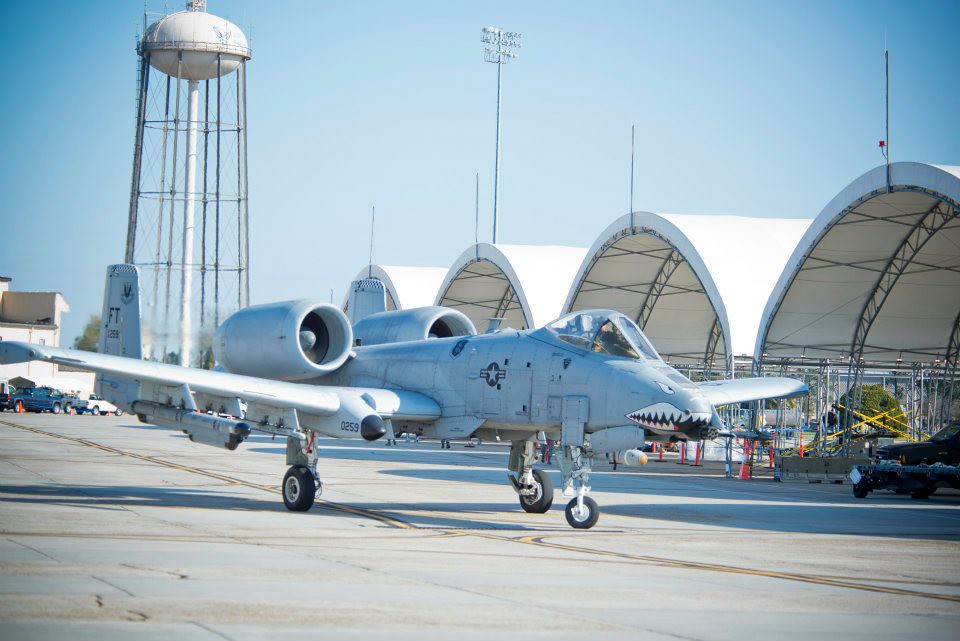
Col. Mark Koechle, 98th Range Wing commander, taxis his A-10 Thunderbolt II after flying his final flight before relinquishing command of the 98th Range Wing at Nellis AFB, Nevada, June 30, 2009. The 98th RANW integrates and provides support for test and training programs that have a direct effect on the war-fighting capabilities of the combat air forces. (U.S. Air Force photo by Senior Airman Larry E. Reid Jr.)

Innovative maintainers save time, lives of front line troops


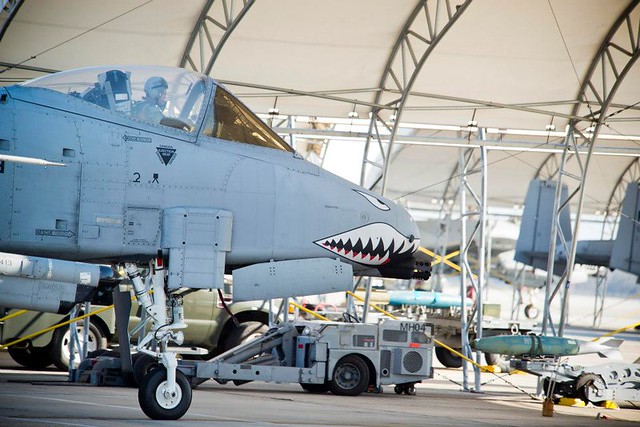
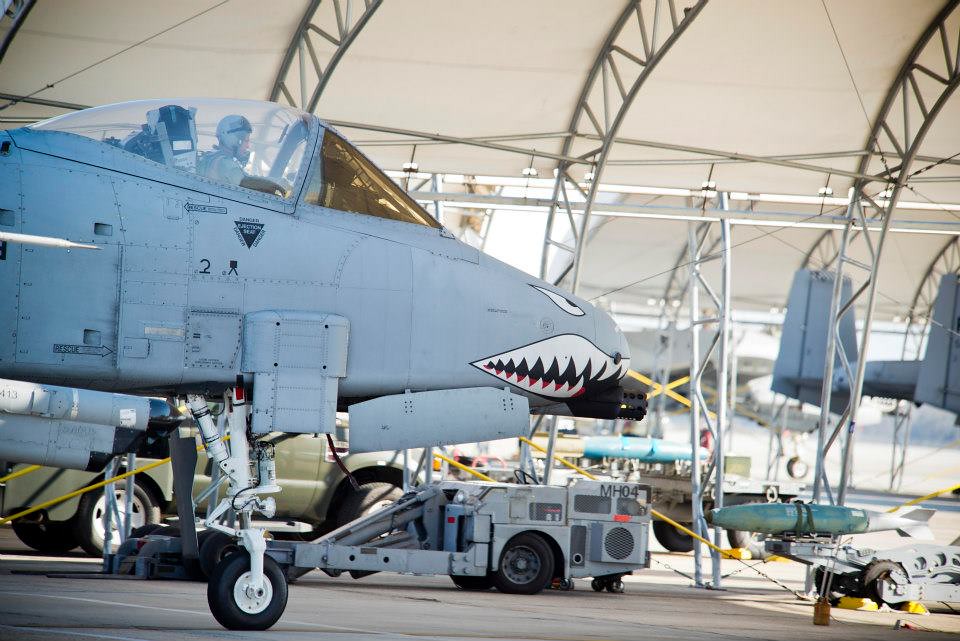
An A-10 Thunderbolt II sits in the 455th Expeditionary Maintenance Squadron hangar for a phase inspection July 2, 2009. Maintainers here have implemented a new phase inspection process that cuts maintenance time on the aircraft in half and ensures the aircraft can provide close air support for ground troops in Afghanistan. (U.S. Air Force photo by Staff Sgt. Jason Lake) Hi-res

by Staff Sgt. Jason Lake
455th Air Expeditionary Wing Public Affairs

7/2/2009 - BAGRAM AIR FIELD, Afghanistan -- In an effort to keep as many close air support aircraft airborne in theater, maintainers here have come up with an innovative phase maintenance process that is being hailed by senior leaders in U.S. Central Command.

A-10 Thunderbolt II maintainers, deployed from the 23rd Maintenance Group at Moody Air Force Base, Ga., have implemented a new process that cuts phase maintenance time on the aircraft in half. The process was key to the 74th Expeditionary Fighter Squadron's A-10 pilots surpassing 5,000 total combat flight hours in May with the help of the 336th Expeditionary Fighter Squadron's F-15 Strike Eagles.

According to Bagram's A-10 phase dock flight chief, Tech. Sgt. Marc Carlson, more than 30 maintainers here thoroughly inspect the A-10 aircraft from top to bottom, inside and out after every 500 hours of flight. At home station, the process takes approximately two weeks and in deployed areas - five days. Here, under a new process, it takes just two and a half days.

"During this inspection, every system and area of the aircraft is inspected and anything that needs to be repaired or replaced is done," said Capt. Dan Vigo, 455th Expeditionary Maintenance Squadron operations officer. "The process here is being performed in two and a half days. The A-10 fleet not only flew all those missions in May, but the average time to phase for the fleet was improved nearly 100 hours higher than before."

One reason for the quicker turnaround is that for the first time, an A-10C unit has used all its back shops in the de-paneling and initial inspection process simultaneously.

"The normal process has the phase technicians de-paneling first, then each of the [back] shops would show up anywhere between days two and four to start inspections," he said. "Under our new construct, every shop starts their inspection as soon as they de-panel their area, thus saving valuable time."

On the front lines, where ground troops come in contact with the enemy on a daily basis, every minute counts. Maj. Pete Lommen, 455th EMXS commander, said it's the maintainers' job to keep enough aircraft airworthy to provide constant overwatch.

"Airplanes break, plain and simple," he said. "These airplanes are more vital than most because they must stay operational to save lives throughout Afghanistan. When they aren't flying, they aren't protecting American and coalition lives."

The process, lauded by Lt. Gen. Gary North, U.S. Air Forces Central Command and 9th Air Force commander during a recent visit here, is already being shared with the next A-10 unit coming into the theater. Master Sgt. Jerry Savoy said this allows the incoming unit to practice on home station aircraft and increase their proficiency with the new process before combat operations.

The 455th EMXS production supervisor is also convinced the new phase process can be applied to similar airframes.

"This phase process will work on any aircraft mission design series," said Sergeant Savoy, a 23-year aircraft maintenance veteran. "It's compatible with not only phase inspections, but the isochronal inspections performed on Air Force heavy aircraft as well."


Staff Sgt. James Cole, 455th Expeditionary Maintenance Squadron structures technician, removes screws from an inspection panel during a phase inspection on the A-10 Thunderbolt July 2, 2009. Visible is A-10 81-0964 from the 74th Fighter Squadron. (U.S. Air Force photo by Staff Sgt. Jason Lake) Hi-res


Right: Staff Sgt. Brad Rackley, 455th Aircraft Maintenance Squadron engine inspection technician, inspects an A-10 Thunderbolt auxiliary power unit combustion canister during a phase inspection here July 2, 2009. (U.S. Air Force photo by Staff Sgt. Jason Lake) Hi-res


Left: Airman 1st Class Felipe Madriaga, 455th Expeditionary Maintenance Squadron phase inspection technician, inspects an A-10 Thunderbolt elevator bushing during a phase inspection here July 2, 2009. (U.S Air Force photo by Staff Sgt. Jason Lake) Hi-res

Source

25th AMU "Crew Dogs" help get the mission accomplished

by Staff Sgt. Terri Barriere
51st Fighter Wing Public Affairs

7/2/2009 - OSAN AIR BASE, Republic of Korea -- While it might seem like waking up every day and going to work knowing the fate of a multi-million dollar aircraft, a pilot's life and the Air Force mission are in your hands is a big responsibility, it's one tactical aircraft maintainer's take on every day.

Tactical aircraft maintainers, otherwise known as crew chiefs, are responsible for ensuring all maintenance on tactical aircraft is accomplished, they also maintain support equipment and forms and records.

"We are air power ... because without us, jets wouldn't make it off the ground. It's our maintenance and oversight that keeps them flying, and it's because of that we have one of the most critical missions on Osan," said Senior Airman Brady Christianson, 25th Aircraft Maintenance Unit crew chief.

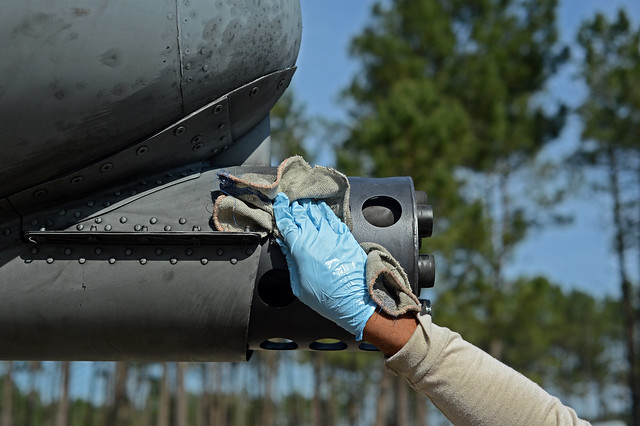
Though no two days as a crew chief are exactly the same, among some of the primary daily duties of a crew chief are servicing aircraft, performing end of runway inspections, post-flight, pre-flight and phase inspections, as well as troubleshooting, aircraft structures, systems, components and related equipment.

Crew chiefs are also responsible for advising on problems maintaining; servicing and inspecting aircraft and related aerospace equipment; diagnosing and solving maintenance problems on aircraft systems; removing and installing aircraft components and supervising and performing aircraft jacking, lifting and towing operations.

"The bottom line is ... we maintain. We look after the general welfare of the aircraft," said Staff Sgt. Ryan Adams-Brady, 25th AMU crew chief. "At the end of the day, our job is to safely get fully mission capable aircraft up - by any means necessary."

And although "by any means necessary" means sometimes having to work long hours in the elements, sacrificing weekends and off time in order to get the mission accomplished, job satisfaction keeps the "crew dogs" moving full speed ahead.

"I don't mind the hard work and manual labor ... it's good exercise," said Senior Airman Michael Goulet. "We bust our butts all day, but at the end of the day it's all good ... it was all worth it. "When you've been working on a jet all week and finally at the end of the week it flies ... it was well worth the work."

Airman Goulet said he also takes pride in knowing that when a jet has gone up and come back, it was able to do its job because he did his.

Pride also motivates Senior Airman Bradly Christiansen who said he personally gets satisfaction from just knowing he's put in an honest day's work.

"Walking through the BX still dirty from work makes me feel good because I know I've earned my paycheck," he said. "You see folks stare ... but you know it's because you really worked hard that day."

However, while it might be job satisfaction that keeps Airmen Goulet and Christiansen motivated, for others it's the realization that the Air Force places a large responsibility in their hands.

"You really hold the pilot's life in your hand ... if you miss any little thing, something could happen to the pilot and the jet," said Staff Sgt. Derria Kemp, 25th AMU crew chief. "It's not the pilot's job to worry about whether or not the jet is good to go before he flies. They should be able to put total trust in us and our ability to do our job ... and that's a big responsibility, but even the new guys just jump right into it."

And though every crew chief deals with the stress of that responsibility on a daily basis, being at Osan offers another unique challenge for the crew dogs here.

"When you're at any other base that's not in a deployed location, your base is training for the real mission," said Sergeant Adams-Brady. "However, for us, the real mission is here and that keeps us a little more busy than usual because we have to make sure the jets are always in tip top shape and ready to go."

So what keeps the unit together when the job is especially tough? The crew dogs agree it's the bond between them.

Airman Christiansen said camaraderie keeps them together because they recognize they are all working hard to get the mission accomplished together.

"We work really hard, striving to meet the same goals ... as a family," he said. "We know what we do for the Air Force, and when we go to work in the morning, we know we are going to accomplish that together."


Airman 1st Class Matthew Henderson, 25th AMU assistant dedicated crew chief, prepares to launch A-10 177 from the flightline here June 23, 2009. (U.S. Air Force photo by Staff Sgt. Terri Barriere) Hi-res


Crew chiefs from the 25th Aircraft Maintenance Unit perform a post-flight inspection on an A-10 after its flight here June 23, 2009. (U.S. Air Force photo by Staff Sgt. Terri Barriere) Hi-res


Left: Staff Sgt. LeThomas Lee, 25th Aircraft Maintenance Unit dedicated crew chief, fixes a nose landing gear after a flight June 23, 2009. (U.S. Air Force photo by Staff Sgt. Terri Barriere) Hi-res


Right: Airman 1st Class Matthew Henderson, 25th Aircraft Maintenance Unit assistant dedicated crew chief, uses a flashlight to check the nose wheel on an A-10 during a post-flight isnpection here June 23, 2009. (U.S. Air Force photo by Staff Sgt. Terri Barriere) Hi-res


Left: Staff Sgt. Christopher Moulton, 25th Aircraft Maintenance Unit dedicated crew chief, looks through a technical order before inspecting the intakes and exhaust on an A-10 June 23, 2009. (U.S. Air Force photo by Staff Sgt. Terri Barriere) Hi-res

Source

81st Fighter Squadron A-10 caught at Spangdalem AB, July 1, 2009


Unknown "clean" A-10 from the 81st Fighter Squadron, 52nd Fighter Wing (USAFE), Spangdahlem AB, Germany. (Photo by Philipp Jakob Schumacher). Full size

Wednesday, July 1, 2009

Moody A-10 caught at Lajes Field, Azores

The following picture was first-published on airliners.net.


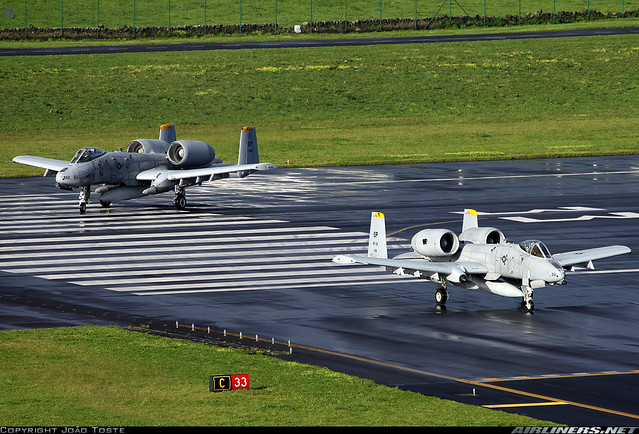
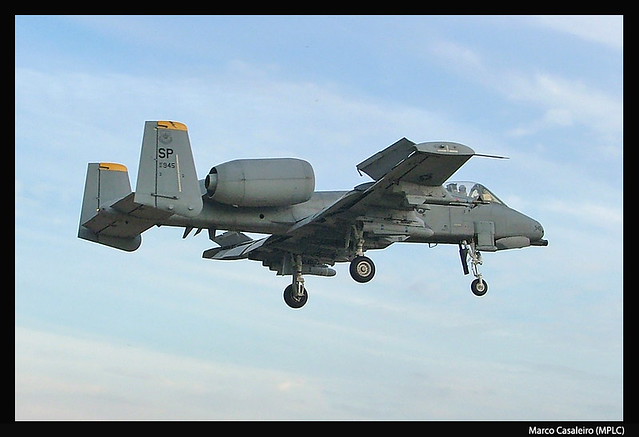
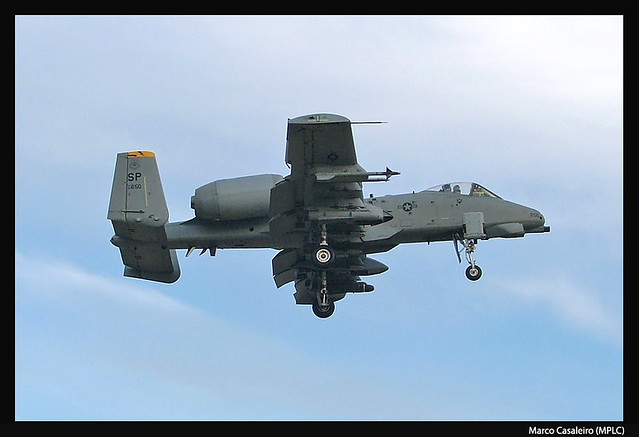
A-10 81-0979 from the 74th Fighter Squadron, 23rd Fighter Group, 23rd Wing, Moody AFB, Georgia, caught at Lajes Field, Azores, June 13, 2009 - either enroute to the 455th Air Expeditionary Wing at Bagram AB, Afghanistan, or on their way back home to Moody AFB. Visible loadout: MXU-648 baggage pods on stations 4 and 8, external fuel tank on station 6. (Photo by Paulo Santos) Hi-res

Photographer's comment: This was some strange way to leave our island! After take-off, they came back, with this A-10 doing an emergency landing! Someone forgot to close some kind of hatch, and it opened inflight! Her it is again, taking-off for the second time that day.

Special thanks to Paulo Santos from Portugal for permission to post his unique shot on my blog! And give me time to verify the circumstance of this very hot shot.

Battle Creek A-10s caught at London IAP, Canada

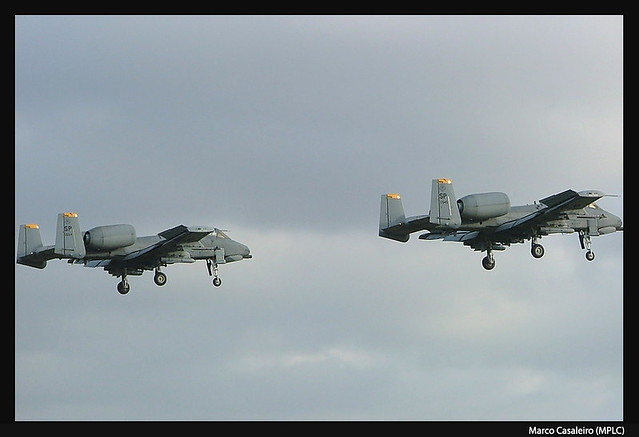
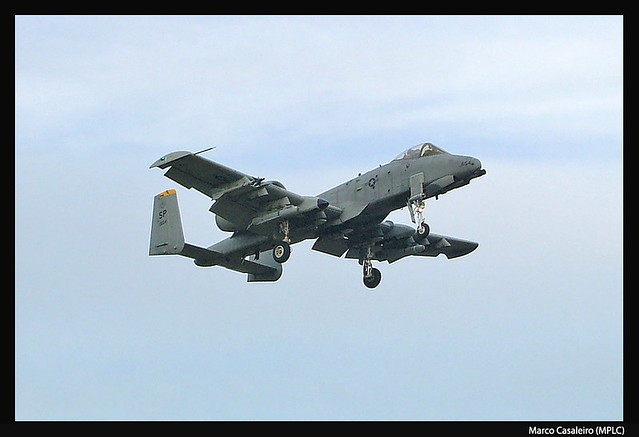
Two A-10s from the 172th Fighter Squadron, 110th Fighter Wing (Michigan ANG), Battle Creek, Michigian, were caught just after arrival at London International Airport (YXU/CYXU), London, Ontario, Canada, June 22, 2009. The following pictures were first-published on airliners.net. Visible loadouts: AN/AAQ-28 LITENING AT tageting pod on station 10, empty LAU-117/A rail for Maverick on station 9, MXU-648 baggage pod on station 6, CATM-65 Maverick on station 3.


A-10 80-0222 without unit markings. (Photo by Frank Robitaille) Hi-res


A-10 81-0998 still with 110th Fighter Wing unit markings. (Photo by Frank Robitaille) Hi-res

Special thanks to Frank Robitaille from Canada for permission to post his unique shots on my blog!

A-10 Afghanistan Combat Summary for June 2009

by Joachim Jacob

From the "Airpower Summaries", released on USAF's public main website, for June 2009 I extracted and edited all available info related to A-10 Thunderbolt II combat missions in Afghanistan (Operation Enduring Freedom). The mostly daily airpower summaries for OEF and OIF are provided by Combined Air and Space Operations Center (CAOC) officials at Al Udeid AB, Qatar. According to the sources, all of the listed missions were confirmed successful by on-scene joint terminal attack controllers (JTACs).

Jun 1: Near Tarin Kowt, an F-15E Strike Eagle and A-10 Thunderbolt II conducted shows of force and launched flares to stop an enemy attack against a coalition forward base. The shooting stopped after the aircraft made their presence known, allowing base personnel to regroup and resume operations.

A convoy passing through Ghazni was attacked by anti-Afghan forces personnel with an improvised explosive device, but sustained no damage or injuries. The unit called in an A-10 for a show of force to prevent the enemy from making a follow-on attack.

Jun 2: An A-10 Thunderbolt II strafed enemy forces in a field near Ali Kheyl during an engagement between anti-Afghan gunmen and coalition and Afghan security forces. The aircraft followed up with shows of force to suppress the enemy, helping friendly forces disengage and regroup.

Jun 3: A flight of A-10 Thunderbolt IIs hunted enemy snipers near Shahidan. Using smoke rounds to verify targets followed up with 30mm cannon strafes of each hostile position, the aircraft ended the sniper's attack on Afghan and coalition forces.

Near Asadabad, F-15E Strike Eagles and A-10s engaged during two anti-Afghan forces attacks on Afghan and coalition personnel. The F-15Es used guided bomb unit-31s and a GBU-38 to take out a group of heavy grenade launchers manned by enemy personnel, then escorted a convoy with a damaged vehicle back to base. Nearby, A-10s dropped a series of GBU-38s to strike enemy forces in fighting positions along a treeline. The A-10s also performed a show of force to deter a second attack.

Jun 4: Near Ali Kheyl, an A-10 Thunderbolt II conducted strafing runs, engaging enemy forces fighting positions. Gunmen armed with assault weapons and rocket-propelled grenades had been firing on an Afghan National Army and Police convoy prior to the strafes.

A-10s conducted shows of force near Konduz, expending flares to deter an enemy RPG and gunfire attack on an Afghan and coalition convoy. The A-10s remained overhead to provide cover to the convoy's withdrawal.

During combat in Gardez, an A-10 flew a show of force for a coalition unit conducting an operation near the perimeter of their forward base. The unit came under fire from anti-Afghan forces using RPGs and automatic weapons prior to the maneuver, which stopped the attack.

Jun 5: No A-10 info

Jun 6: In the area near Gardez, an A-10 Thunderbolt II flew a show of force when anti-Afghan forces detonated a roadside bomb and started firing at and shelling an Afghan convoy from a nearby ridgeline. The show of force, emphasized with the expenditure of flares, stopped enemy fire so the convoy could move on to safety.

Jun 7: Not released

Jun 8: An A-10 Thunderbolt II carried out a show of force near Asmar and expended flares after a coalition observation post came under mortar attack. The jet's arrival ended the mortar fire.

Jun 9: An A-10 Thunderbolt II conducted strafing attacks anti-Afghan forces during a firefight in Asadabad. The aircraft also carried out shows of force and launched flares to deter an enemy counterattack.

In the Bagram area, an A-10 carried out a show of force to deter enemy aggression against a coalition forward base. Sentries at the installation had detected enemy forces preparing for an imminent attack, but the attack was prevented when the Thunderbolt arrived on scene. An F-15E also flew shows of force in the wider Bagram area to discourage additional enemy activity.

Jun 10: Near Konduz, A-10 Thunderbolt IIs conducted strafing runs to take out a group of anti-Afghan forces firing at and mortaring a coalition forward base from surrounding treelines. The aircraft performed a show of force and launched flares upon arrival, but when enemy gunmen continued firing, the aircraft used its 30mm Vulcan cannon to root out the positions. The aircraft marked enemy positions with smoke rounds and confirmed the locations with ground forces prior to opening fire, ensuring the right targets had been identified.

An A-10 was called in after enemy personnel attacked an Afghan National Army convoy and then fled the area in a van. The A-10 used a smoke round as warning shot to stop the van, which was then intercepted by ANA troops who captured the enemy personnel. The A-10 performed shows of force over the area to prevent outside enemy intervention.

Another A-10 and a coalition aircraft targeted anti-Afghan forces personnel with strafes and GBU-38s in Tarin Kowt. The jets struck groups of enemy gunmen armed with rocket-propelled grenade launchers and assault rifles after the shooters instigated a firefight.

An A-10 conducted several shows of force near Orgun to deter an enemy unit attacking a friendly convoy. The convoy was taking automatic weapons fire from several locations, which stopped after the aircraft's maneuvers.

Jun 11: In the vicinity of Asadabad, an A-10 Thunderbolt II used a GBU-38 to take out enemy gunmen who had been attacking a coalition observation post. Enemy personnel opened fire on the position and conducted rocket attacks. An additional A-10 conducted a show of force in the area to deter an attack against a coalition convoy.

Near Lashkar Gah, A-10s marked positions along a treeline with smoke rounds before engaging with their cannons in several strafing passes. The targets were enemy personnel dug in throughout the grove who were firing into a coalition forward base.

A coalition aircraft along with A-10s and F-15Es conducted shows of force in several other areas of Afghanistan including Asadabad, Sangin, Gereshk, and Lashkar Gah. The shows of force served as a warning, deterring enemy forces preparing attacks against Afghan and coalition units operating in those areas. It also prevented enemy gunmen from interfering with combined Afghan-coalition reconstruction missions intended to make Afghanistan civilians safer and more prosperous.

Jun 12: F-15Es and A-10 Thunderbolt IIs flew shows of force near Qalat, Gardez and Lashkar Gah to deter additional enemy attacks on convoys traveling through those areas. The presence of strike aircraft prevented anti-Afghan forces from acting, allowing Afghan and coalition combined forces humanitarian supply missions and security operations to succeed.

Jun 13: In the vicinity of Tarin Kowt, an A-10 Thunderbolt II flew shows of force, expending flares, to stop an imminent enemy attack on a coalition unit. The jet also provided armed overwatch for the unit as it proceeded to its objective.

Jun 14: An Air Force A-10 Thunderbolt II used its 30mm cannon to strafe enemy forces armed with assault rifles taking cover in a treeline. The A-10 then conducted a show of force to discourage any potential enemy counterattack.

An A-10 executed a show of force, expending flares, while flying cover for a coalition convoy moving through Shinkay. The unit's movement went smoothly, allowing them to deliver their supplies without anti-Afghan forces provoking violence.

Jun 15: Near Conduz, F-15E Strike Eagles and A-10 Thunderbolt IIs executed multiple strafing runs on a tree line containing enemy forces and eliminating the threat. In addition to 20 and 30mm munitions fired by the F15Es and A-10s, the A-10s expended smoke rounds to help mark targets prior to the strafing passes. The aircraft continued to provide ground forces armed overwatch and shows of force and expended flares to successful quell enemy activity.

A-10s near Ghazni carried out shows of force, expending flares, to stop enemy small-arms and rocket-propelled grenade fire on a friendly forces convoy which had been hit by an improvised explosive device. The aircraft performed multiple strafing passes with 30mm cannons on enemy forces engaged with coalition soldiers. Each pass hit their targets and were deemed successful by ground controllers.

Jun 16: An A-10 Thunderbolt II executed shows of force, expending flares, while flying cover for a coalition convoy moving through Bagram in Eastern Afghanistan. The aircraft deterred an enemy attack from taking place.

Jun 17: In Asadabad, A-10 Thunderbolts employed a combination of GBU-38s, strafes and 500-pound general purpose bombs against anti-Afghan forces. The fighters used enemy muzzle flashes to help locate some of the enemy shooters, and marked others using smoke rounds to ensure positive target identification.

An A-10 flew a show of force over Qalat, expending a number of flares, in order to deter enemy aggression. Anti-Afghan forces had been launching mortar attacks from a position within the town at Afghan security forces.

Jun 18: An A-10 Thunderbolt II carried out a show of force over the Asmar area. An Afghan and coalition forces foot patrol was walking through a village when enemy forces hiding in civilian buildings started firing RPGs and automatic weapons into the streets without regard for local residents. The A-10's appearance over town prompted the shooters to break off the attack.

In Ghazni, enemy personnel set up an improvised explosive device to attack a coalition convoy, shot at Afghan National Army personnel, then occupied a school and continued firing in a clear attempt to draw return fire onto civilians. Coalition personnel discovered the IED before it was detonated and were disarming it when the enemy started shooting, leading them to radio for a show of force to deter the enemy. An A-10 responded, flying a low pass over the school and expending flares. The maneuver caused anti-Afghan forces to stop firing and disperse from the village, ending their hostile action.

A-10s carried out shows of force over Orgun and Sheykhabad to deter enemy fire against coalition and Afghan security forces. Their attacks were stopped without further incident.

Jun 19: Not released

Jun 20: Not released

Jun 21: Not released

Jun 22: In the Orgun Area, an A-10 Thunderbolt II used general purpose 500-pound bombs to take out enemy forces in fighting positions along a ridgeline. The enemy positions had been targeting friendly forces with RPG and automatic weapons fire.

Jun 23: In Konduz, several A-10 Thunderbolt IIs were called in to provide support for friendly ground troops who were taking enemy fire after a convoy vehicle became stuck in the road. The aircraft's visible presence stopped enemy fire and allowed friendly soldiers to regroup and withdraw safely to continue on with their missions.

An A-10 flew a show of force and expended flares over Asadabad after enemy forces started shooting at an Afghan and coalition unit. The maneuver led enemy personnel to cease fire and withdraw.

Jun 24: No A-10 info

Jun 25: A-10 Thunderbolt IIs strafed anti-Afghan forces personnel in a Surkhabad orchard with their 30mm cannons. The enemy had opened fire on an Afghan and coalition ground unit with rocket-propelled grenades.

An A-10 carried out a show of force in the vicinity of Tirgari and performed tactical reconnaissance in order to protect a friendly convoy after one of the vehicles was hit by a roadside bomb. The unit was able to regroup and move on safely.

Jun 26: An A-10 Thunderbolt II flying over Bagram flew a show of force and expended numerous flares to deter enemy aggression against a coalition forward base. Enemy personnel had fired at the base with RPGs and machine guns but dispersed when the aircraft arrived.

Jun 27: Near Asadabad, an A-10 Thunderbolt II dropped GBU-38s on an enemy cave after gunmen inside shot at coalition and Afghan troops. The cave was collapsed and the enemy fighting position destroyed along with it.

An A-10 flew a show of force and expended flares while escorting a friendly convoy through Jalalabad. The show of force prevented an enemy attack from occurring.

Jun 28: A-10 Thunderbolt IIs flying cover for a friendly unit engaged enemy forces who were shooting at coalition troops returning to a forward base near Asadabad. After first flying a show of force and expending flares to warn away the attacking enemy gunmen, the aircraft next used smoke markers to suppress enemy fire then escalated to live strafing passes after the gunmen kept shooting. The enemy fighting positions were destroyed by the jets' cannons.

An A-10 flew a show of force during a convoy escort mission near Asadabad in order to prevent anti-Afghan forces from being able to take action. The convoy travelled past the area without incident, avoiding the possible threat posed by an enemy attack for friendly troops and area residents.

Jun 29: No A-10 info

Jun 30: No A-10 info

See also:
A-10 Afghanistan Combat Summary for May 2009
A-10 Afghanistan Combat Summary for April 2009
A-10 Afghanistan Combat Summary for March 2009
A-10 Afghanistan Combat Summary for February 2009
A-10 Afghanistan Combat Summary for January 2009
A-10 Afghanistan Combat Summary for December 2008
A-10 Afghanistan Combat Summary for November 2008
A-10 Afghanistan Combat Summary for October 2008